
REVIEW · SIEM REAP
Cycle Angkor Backroad Bike Tour / E-Bike or Tuk Tuk
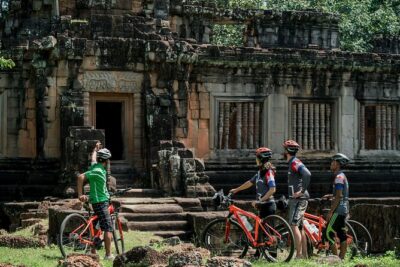
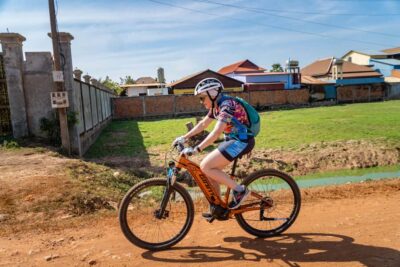
The best thing about this Angkor tour is the route between the temples. Instead of spending the day in a tuk tuk on the main road, you ride through shady forest paths and quieter lanes, then arrive at Bayon, Ta Prohm, and Angkor Wat with the temples as the main event. Guides such as Sotin, Steven, Voleak, Mony, and Mony’s fellow guides adjust the pace and explain both Khmer history and present-day Cambodian life.
I like the small-group limit of 12, the good-quality mountain bikes, and the steady supply of bottled water and snacks. I also like the lunch stop by a tropical garden and pond, which gives your legs a proper break. The drawback is simple: this is a long, active day. One outing covered about 45 kilometers, so you should be comfortable cycling for several hours, even though the route is generally flat and often shaded.
Key points to know before you ride
- Quiet temple connections: Forest trails keep you away from much of the main traffic and crowds.
- Three major temple stops: Bayon, Ta Prohm, and Angkor Wat receive the main attention, with Angkor Thom’s terraces and Baphuon also included.
- A full day on a bicycle: Plan on eight hours, with one reported ride reaching about 45 kilometers.
- A genuine food break: Lunch, fruit, local snacks, and bottled water are included.
- Helpful guides: English-speaking guides such as Steven, Sotin, Voleak, and Mony focus on safety, temple details, and local life.
- Angkor pass not included: The $55 tour price covers the guide, bike, helmet, food, water, and transport, but not entry to the archaeological park.
Why cycling changes your Angkor day
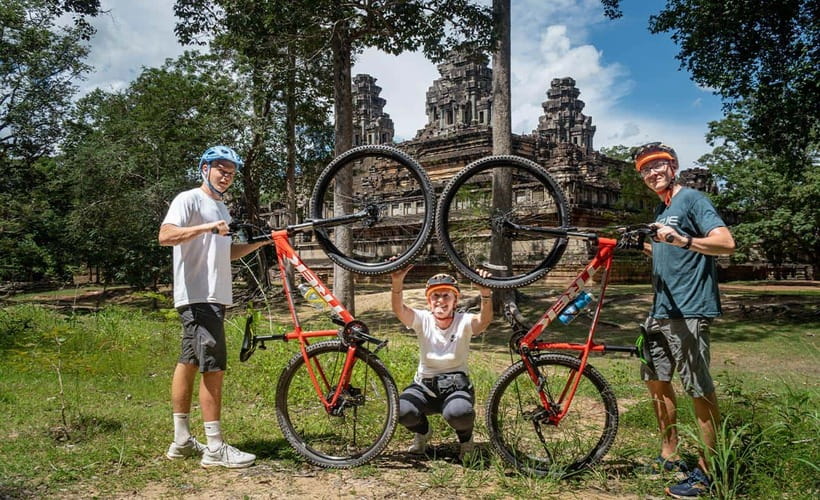
Angkor is often seen from the back seat of a tuk tuk. That works well in the heat, but it can make the huge temple zone feel like a string of quick stops. On a bicycle, the spaces between the monuments become part of the experience.
You hear the forest, notice village life, and get a better sense of the distance between the old city’s gates, temples, terraces, and reservoirs. The roads and trails are not simply wasted travel time. They help you understand that Angkor was an enormous urban center, not just three famous photo stops.
The cycling also lets you reach parts of the park away from the busiest entrances. The route uses forest tracks and less crowded paths where possible. That does not mean you will have every temple to yourself, but it can make the ride feel calmer than following the main tourist circuit all day.
The route is described as mostly flat and often shaded. That helps, but do not mistake flat for easy. Cambodia is hot, and cycling for much of a day takes effort. Your guide can set a pace suited to the group, and the tour has plenty of stops, but you should still arrive ready for a real workout.
More E-Bike Tours in Cambodia:
- Siem Reap Countryside Bike Tour / E-Bike or Tuk Tuk
★ 5.0 · 935 reviews - Angkor Sunrise Bike Tour / E-Bike or Tuk Tuk
★ 5.0 · 615 reviews - Phnom Penh Silk Island Bike Tour/ E-Bike or Tuk Tuk
★ 5.0 · 495 reviews
Meeting in Siem Reap and checking the bikes
Your morning pickup takes you from Krong Siem Reap to the Siem Reaper shop. There, you meet the guide, receive your bicycle and helmet, and go over the day’s plan before setting off.
This short briefing matters. You can get a feel for the bike, ask questions, and make sure the helmet fits properly. The bicycles have been described as clean, well maintained, and suitable for the route. One guide, Voleak, was particularly careful about checking safety and bike condition, while Sotin gave a full safety briefing before the ride.
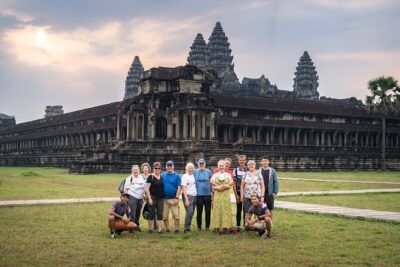
The small-group format is another practical plus. With a maximum of 12 people, the guide can keep an eye on the group and adjust the speed more easily than on a large coach excursion. Groups may sometimes be much smaller. One booking had just one participant, and the guide still ran the tour rather than cancelling it.
That sort of flexibility can make the day feel personal. It also means the exact mood may depend on the group size. A solo booking or small group may allow more questions and photo stops, while a full group could take longer to gather at each temple.
Entering Angkor Thom through the stone faces
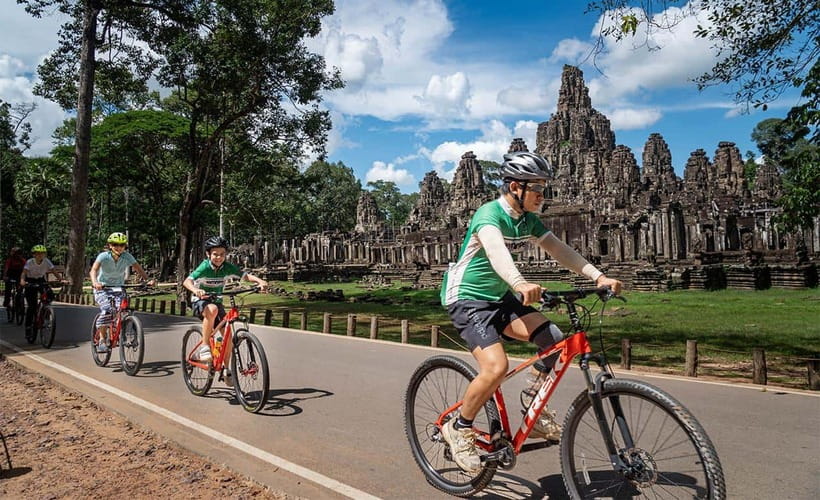
The first major stop is Angkor Thom, the great walled city that contains Bayon, Baphuon, the Terrace of the Elephants, and other remains. You enter through an ancient gate decorated with elephants and giant faces. It is an impressive introduction because the gate gives you a clear sense of scale before you reach the temples inside.
Bayon sits near the center of Angkor Thom. Its famous stone faces look in different directions from the towers, creating one of the most memorable scenes in the archaeological park. The guide explains the symbolism and the place of Bayon within the old Khmer Empire, helping you see more than a collection of carved faces.
The tour allows substantial time around Bayon and Angkor Thom. The published schedule assigns about two and a half hours to the Bayon section, though the precise division between cycling, walking, and guiding can vary. That is useful because Bayon rewards a slow look. From a distance it can seem like a mass of gray stone, but close up you find carvings, narrow passages, and changing views through the towers.
You also visit the Terrace of the Elephants and Baphuon Temple. The terrace is known for its long sculpted frontage and royal ceremonial role. Baphuon offers a different experience, with its tall temple form and broad approach. Together, these stops add context to Angkor Thom and prevent the day from becoming only a hunt for famous photographs.
Forest trails and the tree-covered Ta Prohm
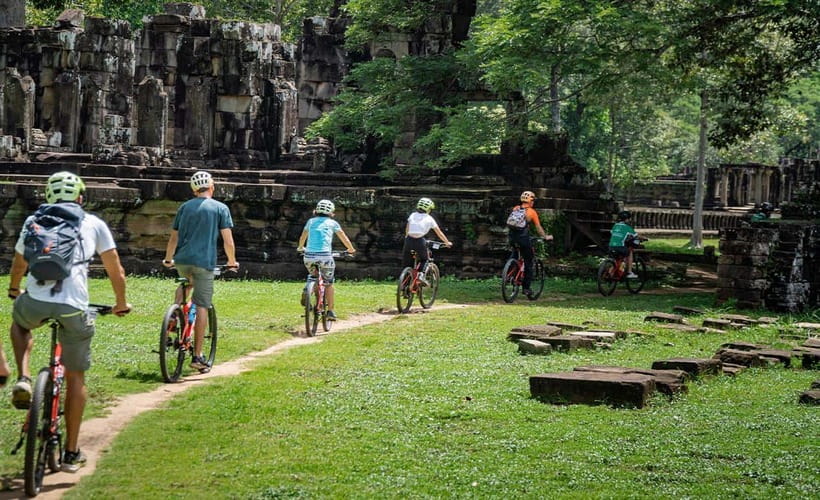
After Angkor Thom, the ride continues through forest paths toward Ta Prohm. This is one of the strongest parts of the day for anyone who wants a quieter way to move around the park.
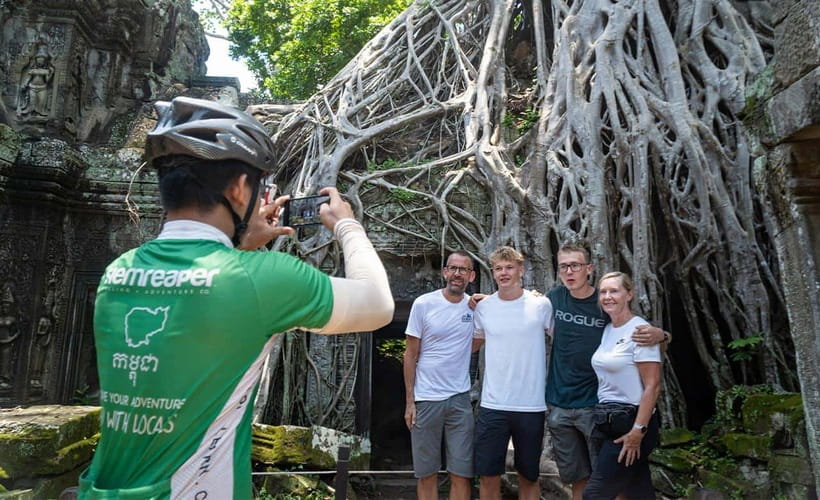
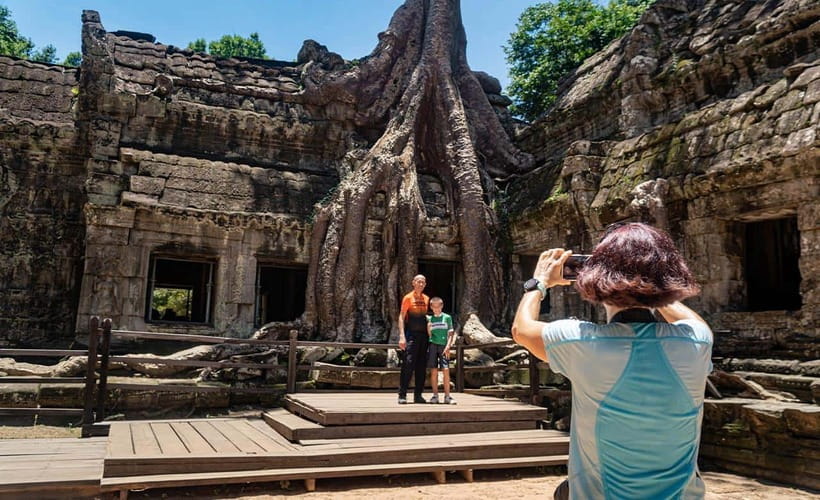
Ta Prohm is famous for trees growing over and around the temple ruins. Roots press against walls, branches spread across galleries, and the stonework feels caught between human construction and the forest. The temple was also featured in the film Tomb Raider, which brings extra attention but does not explain its real appeal. The atmosphere comes from the collision of tree, stone, shadow, and time.
Your guide leads the visit and points out the temple’s structure and carvings. You will have time for photos, but the stop is not only a photo session. Ta Prohm is a good place to slow down and notice how the site has been shaped by both builders and nature.
The trail approach gives this stop a useful build-up. You move through trees before reaching the ruins, rather than arriving directly beside them from a busy parking area. It is one reason I would choose the cycling version over a vehicle for an active visitor who wants the journey to feel connected to the temples.
Still, the forest route can be tiring. If you are not used to cycling in heat, you may find Ta Prohm arrives at the point when your energy is dropping. The included water and snack stops help, but you should bring sunglasses, wear cycling clothing, and pace yourself from the start.
Same city, a different ride:
- Siem Reap: Bike the Angkor Temples – Full-Day 30km Tour
★ 5.0 · 463 reviews - Siem Reap: Angkor Wat Sunrise Bike Tour & Jungle Breakfast
★ 5.0 · 415 reviews - Phnom Penh: Silk Islands Half-Day Bike Tour
★ 4.9 · 315 reviews - Siem Reap: Guided Countryside Bike Tour
★ 4.9 · 294 reviews
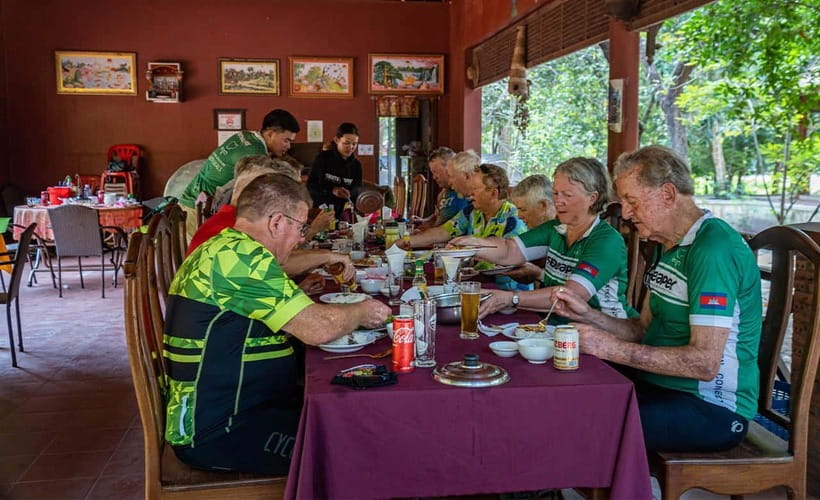
A Cambodian lunch beside the garden pond
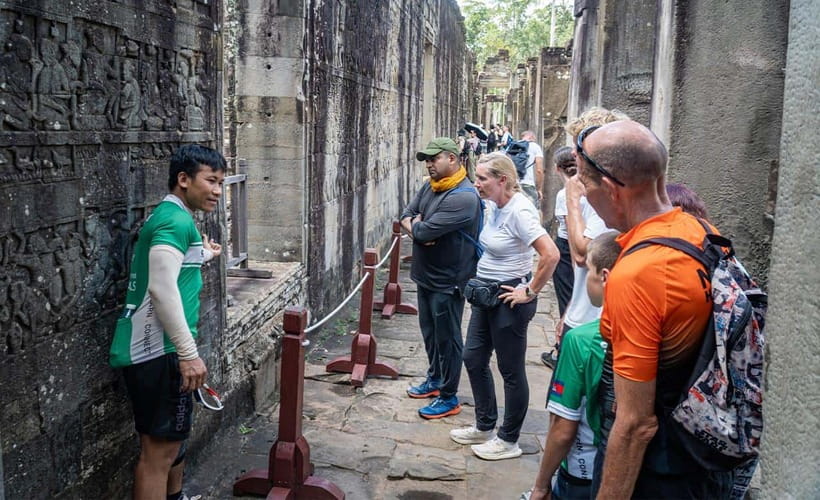
Lunch is served at a local restaurant, with the broader description placing the break beside a tropical garden and pond. You get about an hour to eat and rest before continuing.
This is more than a convenient meal between monuments. A proper sit-down lunch breaks up the day and gives you time to cool down. The food is Cambodian-style, and the tour also includes local snacks and fruit. One guide introduced a participant to street food that might otherwise have gone untried, while another outing included fresh fruit along the route.
The food is one of the tour’s better values. At $55 per person, you are not paying only for a bicycle and a guide. You are also getting lunch, snacks, bottled water, hotel pickup and drop-off, and a full day of guiding. The Angkor Archaeological Park entrance fee is separate, so include that extra cost when comparing the total price with other tours.
Lunch timing may affect your energy for the afternoon. One person felt the day could have been shortened in places, perhaps by trimming a meal or spending less time at certain stops. That is fair criticism if you prefer a compact temple visit. I would see the long break as a benefit if you like a slower day, want to ask questions, or need time to recover from the ride.
Seeing Angkor Wat later in the day
The final major temple visit is Angkor Wat, usually approached later in the afternoon after lunch and a rest. This timing is practical. You see the park’s best-known monument after the morning rush has eased, and the late light can bring out the long galleries, towers, and stone details.
Angkor Wat is the largest religious monument in the world and the clearest example of Khmer architectural ambition on this route. Its scale can be difficult to grasp from a single viewpoint. You walk through successive courtyards and galleries, with the central towers rising ahead and the moat and outer walls spreading far beyond them.
Your guide explains the site’s history and symbolism in a quieter setting. The visit is scheduled for about two and a half hours in the supplied timing, although the overall order can vary. That gives you enough time to see the main areas without treating Angkor Wat as a quick final photograph.
The late visit is one of the tour’s smartest choices. Angkor Wat is rarely empty, but arriving later can help you appreciate its size without the same level of morning pressure. You may find that the day’s bicycle ride makes the temple feel like a destination you have earned, rather than simply another stop reached by road.
The tradeoff is that you may be tired by then. If your main goal is to spend maximum energy at Angkor Wat, a vehicle-based tour may feel easier. If you want the complete route, the afternoon arrival works well.
How hard is the cycling?
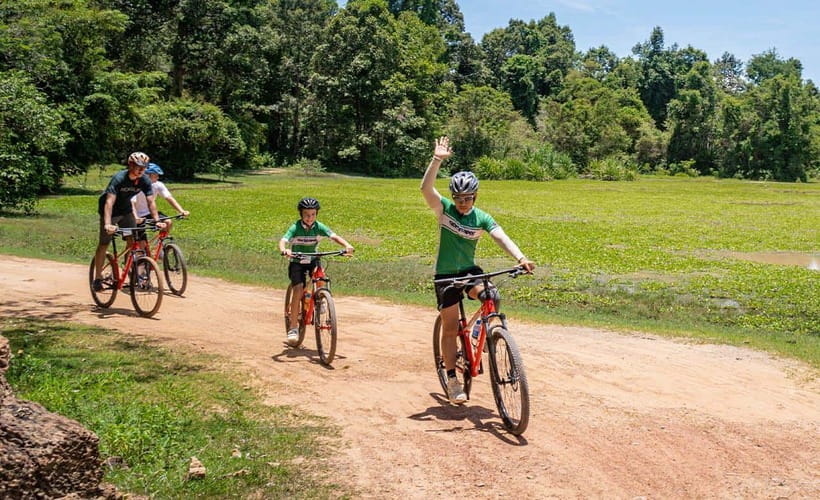
The tour is suitable for people who can ride a bicycle confidently for several hours. The route is generally flat, and much of it is shaded, but the distance can be considerable. One outing reached about 45 kilometers, so you should not book this expecting a gentle short spin.
The guide controls the pace, and the tour description presents the challenge as manageable and within your control. Regular stops, snacks, water, and temple visits break up the riding. Still, heat and humidity can make a flat road feel demanding.
Pregnant women should not book this activity. For everyone else, bring sunglasses, a camera, and suitable cycling clothes. The tour runs rain or shine, so a wet-weather forecast does not automatically mean cancellation. Flexible cancellation is available up to 24 hours before departure, and you can reserve now and pay later.
The experience is best for active adults, couples, solo riders, and families with older children who can manage a full day in the saddle. It is less suitable if you dislike heat, prefer air-conditioned transport, or want a short and highly efficient temple circuit.
Is $55 a fair price?
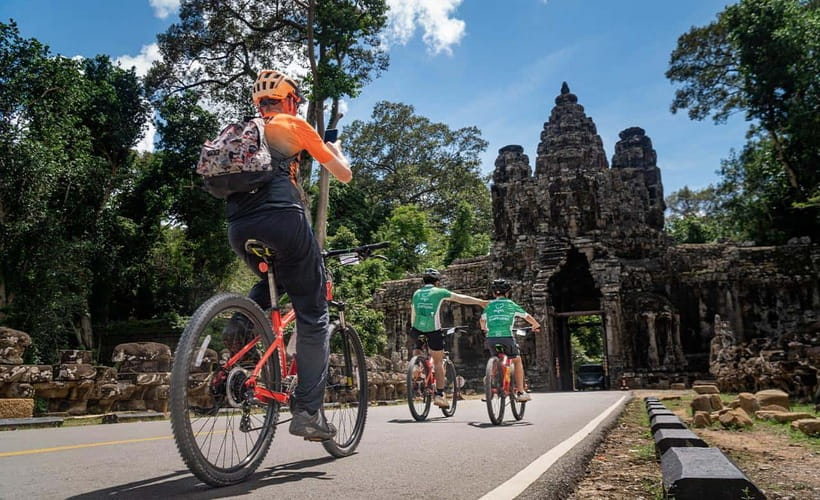
At $55 per person, the package offers solid value if you plan to spend the whole day at Angkor. Hotel pickup and drop-off, bicycle rental, helmet, English-speaking guide, lunch, bottled water, and snacks are included. You also get a small group rather than a large coach.
The key extra cost is the Angkor Archaeological Park entry ticket. That omission is normal for many temple tours, but you should add it to your budget before deciding. The tour is not the cheapest way to see Angkor if you only want transport between three monuments. Its value comes from the active route, local food, guide time, and quieter connections between the temples.
The guide can also shape the value. Steven is described as explaining both Angkor and daily life in Cambodia. Voleak adapted the tour to a rider’s skill and interests, took care with safety, and helped with photos. Sotin focused on a clear safety briefing, while other guides added fruit, local food, or small roadside discoveries.
Those touches matter because a bicycle tour can otherwise become simple point-to-point transport. Here, the guide is part of the experience, not just someone leading the way.
Practical details that affect your day
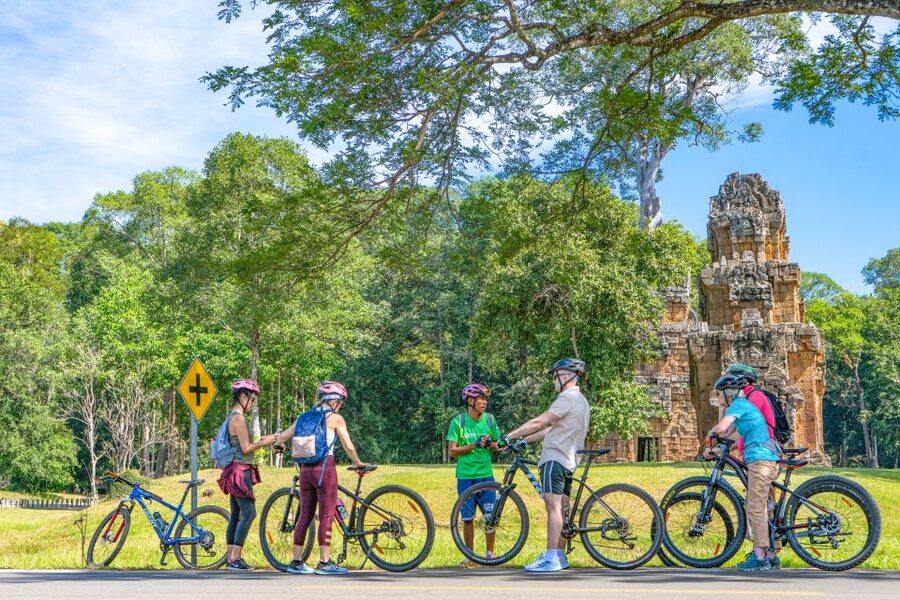
Pickup is optional, and if you use it, you should wait in your hotel lobby 15 minutes before the scheduled time. The tour returns to Siem Reap at about 4:00 pm, though the exact time can shift with group pace, temple stops, and conditions.
English is the guiding language. The group limit is 12 people. Bikes and helmets are supplied, but the activity information does not promise a choice of bicycle sizes or styles, so mention your needs when booking if that matters to you.
The title presents bicycle, e-bike, or tuk tuk choices, while the main tour details describe standard bicycles and helmets. If you need an e-bike or tuk tuk rather than a regular bicycle, confirm that option before paying.
Bring sunglasses, a camera, and cycling clothing. The tour takes place in rain or sunshine, so dress for heat and be ready for changing weather. Bottled water and snacks are included, but the long distance makes it wise to use every water stop rather than waiting until you feel thirsty.
Should you book this Angkor bicycle tour?
Book it if you want Angkor to feel like a place you move through, not just a row of monuments beside a road. The quiet forest trails, careful guides, good bikes, local lunch, and late Angkor Wat visit make this a strong choice for active visitors who want history with a physical challenge.
Skip it if you have limited stamina, want guaranteed vehicle comfort, or only have a few hours. The day is long, the park entrance fee costs extra, and the cycling can reach a serious distance.
For the right rider, $55 is a fair deal. You get the famous temples, but also the shaded paths, snack stops, guide conversation, and sense of scale that make Angkor easier to understand. Pack light, pace yourself, and let the temples take their time.
FAQ
How long does the Angkor backroad bike tour last?
The activity lasts about eight hours. Pickup is in the morning, and the return to Siem Reap is expected around 4:00 pm.
Which temples are included?
The route includes Angkor Thom, Bayon Temple, the Terrace of the Elephants, Baphuon Temple, Ta Prohm, and Angkor Wat.
Is lunch included?
Yes. A Cambodian-style lunch at a local restaurant is included, along with bottled water, snacks, and fruit.
Is the Angkor entrance ticket included?
No. Entrance to the Angkor Archaeological Park is not included in the $55 tour price.
What should I bring?
Bring sunglasses, a camera, and cycling clothing. The tour runs rain or shine.
Is the tour suitable for pregnant women?
No. The activity is listed as unsuitable for pregnant women.
Just added around Cambodia
- Phnom Penh: Mekong Islands Sunset Bike Tour include drinks★ 4.8 · 19 reviews
- Phnom Penh: Mekong Islands & Silk Islands Guided Bike Tour★ 4.9 · 48 reviews
- Ho Chi Minh City: 2-Day Bike & Kayak Mekong Delta Tour★ 4.9 · 64 reviews
- From Siem Reap: Angkor Wat Sunrise and Temples E-Bike Tour★ 5.0 · 52 reviews
- Explore the Village &Countryside By Bicycle-Half Day Morning★ 4.8 · 13 reviews
- Small Group Countryside Sunset Bike Tours★ 5.0 · 39 reviews
- Angkor Wat: Guided Sunrise Bike Tour w/ Breakfast and Lunch★ 4.8 · 48 reviews
- Siem Reap: Angkor Wat Sunrise Bike Tour & Jungle Breakfast★ 4.9 · 141 reviews
Siem Reap Bike Tours, compared.
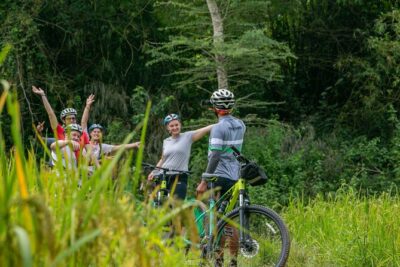
Siem Reap Countryside Bike Tour / E-Bike or Tuk Tuk
Read our review →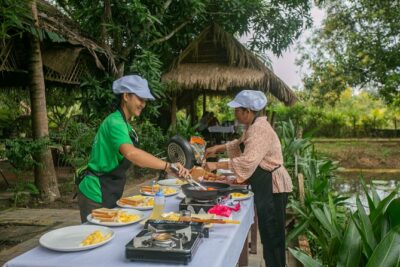
Angkor Wat Sunrise Bike Tour & Jungle Breakfast
Read our review →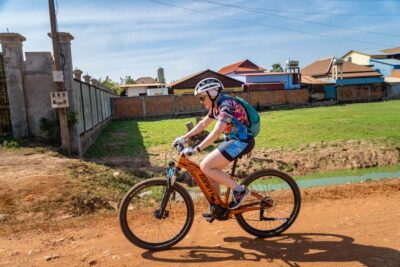
Angkor Wat Sunrise Bike Tour & Jungle Breakfast
Read our review →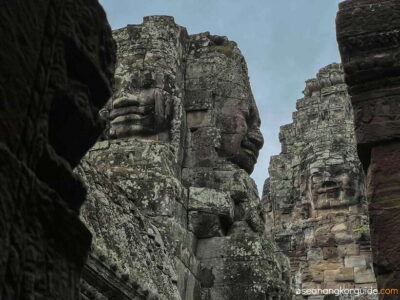
Angkor Wat: Guided Sunrise Bike Tour w/ Breakfast and Lunch
Read our review →Browse the lists this tour appears in