
REVIEW · MOUNTAIN
Bhutan Mountain Biking tour
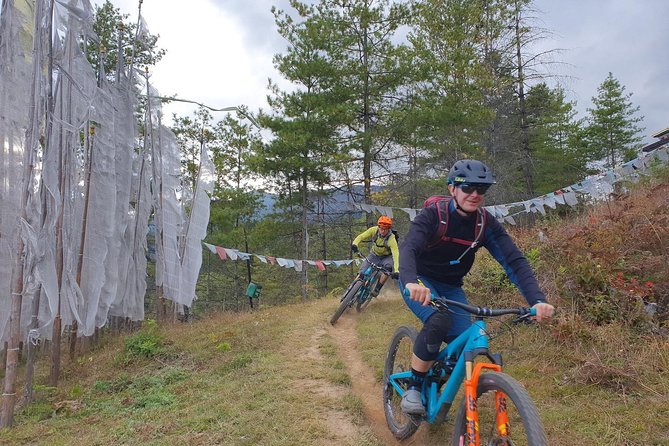
Bhutan is one of the rare places where a mountain bike takes you well beyond the usual sightseeing route. This 10-day private tour links Himalayan views, pine-forest singletrack, long road rides, technical descents, monasteries, village roads, and the famous Tiger’s Nest.
I like the strong mix of riding and culture, especially the ridge trail near Sewla and the quiet routes around Gangtey. I also like that the local team can adjust the trip from gentler cross-country riding to steep, technical enduro terrain. The main caution is simple: this is a demanding holiday, with several long riding days, high passes, and a bike that you must bring or rent separately.
Key points before you book
- Himalayan arrival: Sit on the left side of the plane for the best chance of seeing Everest, Kanchenjunga, Jomolhari, and Jichu Drakey before landing at Paro.
- Real trail riding: The itinerary includes the KC Trail, Wangditse singletrack, Madman Trail as an option, and the Sewla ridge ride.
- Culture with every stage: Visit Tamchog Lhakang, Buddha Point, Punakha Dzong, Gangtey Gonpa, Kyichu Lhakhang, and Tiger’s Nest.
- Private and flexible: Only your group rides together, and the route can be adjusted to match your ability and preferred style.
- A full-service package: Hotels, meals, transfers, guides, permits, the daily SDF, and a visa fee are included. Airfare, insurance, personal spending, and the bike are not.
- Strong guide support: Pelden, SP, ST, and Binesh are named in the company’s riding team, with particular praise for bike support, trail skills, and practical problem-solving.
What kind of mountain bike holiday is this?
Bhutan Rides designs this trip for people who would rather earn their cultural sightseeing with a climb than sit in a tour van all day. You still visit Bhutan’s major temples and fortresses, but the bike gets you into forests, villages, ridgelines, and trail systems that a standard cultural tour cannot reach.
The published route favors all-mountain and enduro riders, yet it is not locked to one style. The company says it can adapt the riding to different ability levels. That flexibility matters because the itinerary includes everything from easy acclimatization roads to technical singletrack and long descents.
You should still arrive in good shape. The schedule includes a 60-kilometer ride to Thimphu, a 16-kilometer climb toward Dochula Pass, a 40-kilometer road descent, a 45 to 50-kilometer day near Punakha, an 86-kilometer ride toward Phobjikha, and a 50-kilometer loop around Gangtey. Distances do not tell the whole story in Bhutan. Altitude, road climbs, rough trail, and repeated riding days add to the work.
This is a private activity, so your group is not tied to strangers or a fixed riding pace. That is useful if one rider wants more trail time while another prefers a shorter loop, though you should discuss those expectations before arrival.
More Mountain Bike Tours in the world:
- From Ubud: Downhill Bike Tour with Rice Terraces and Meal
★ 4.9 · 664 reviews - Waimea Canyon Downhill Bike Ride
★ 5.0 · 650 reviews - Ubud: Downhill Cycling with Volcano, Rice Terraces and Meal
★ 5.0 · 536 reviews
Day 1: Paro, bikes, and a gentle start
Your first Bhutan view may come before touchdown. The flight into Paro offers a remarkable look at the Himalayan range, including Everest, Kanchenjunga, Jomolhari, and Jichu Drakey. Ask at check-in for a left-side seat if the airline allows it.
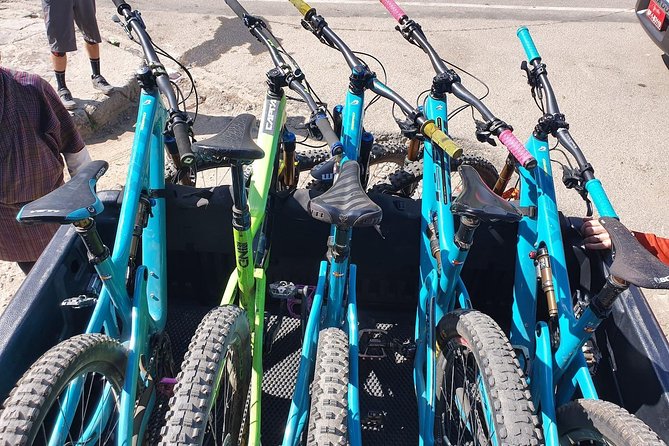
At Paro International Airport, the guide team meets you and transfers you by vehicle. The bikes are assembled at the hotel if you bring your own, or a supplied rental bike is prepared if arranged separately. This setup time is important. Use it to check saddle height, brakes, suspension, tires, pedals, and the dropper post before the serious trails begin.
The itinerary describes an easy spin around the Thimphu Valley on the opening day, though the day also begins in Paro and includes the transfer toward the capital. Treat this as a flexible arrival day rather than a major ride. The goal is to shake off the flight, check your equipment, and begin adjusting to Bhutan’s elevation.
One useful lesson from the company’s riding support is that mechanical problems are taken seriously. A rider arrived with a failed dropper post and the chief guide, SP, helped find a solution rather than letting the issue ruin the trip. That kind of hands-on assistance is especially valuable when you have brought an expensive bike a long way.
Day 2: A 60-kilometer road into Thimphu
The ride toward Thimphu is a scenic 60-kilometer introduction to Bhutan’s roads. It is described as easy pedaling, which makes it a sensible acclimatization day, though you should not confuse easy with effortless. Elevation can make even a moderate ride feel different from home.
A stop at Tamchog Lhakang breaks up the route. You cross an old iron bridge reconstructed with original chain links associated with the 15th-century Tibetan bridge builder TangThong Gyalpo. It is a short cultural stop with a physical connection to Bhutan’s past, not just a photo opportunity from the roadside.
If time and energy allow, the group may add the Wangditse loop, a favorite cross-country route near Thimphu. The evening visit to Memorial Chorten adds a calm finish to a day that introduces both the capital and the country’s religious traditions.
The value here is pacing. You get a long but manageable road ride, a temple, a bridge, and the capital without spending the first full day on a punishing trail. If you are sensitive to altitude, tell the guide early and keep the optional trail section optional.
Day 3: Buddha Point, KC Trail, and Wangditse
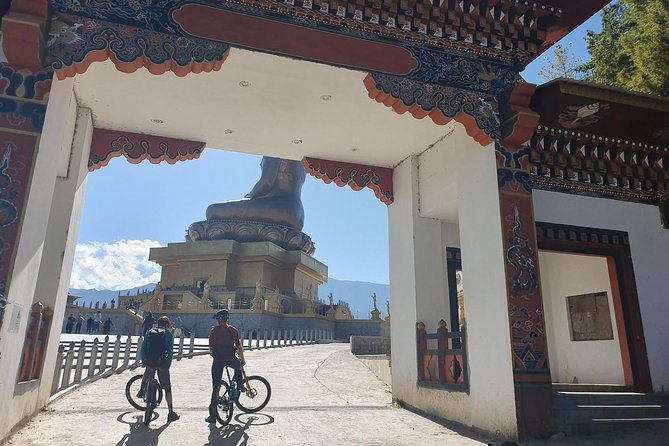
This is one of the strongest riding days near Thimphu. The route begins with a gentle four-kilometer climb to Buddha Point, where the huge Buddha statue looks over the city. The climb provides a steady warm-up and a worthwhile viewpoint before the trail work starts.
The KC Trail runs for about seven kilometers and exits near Motithang. After a picnic lunch, you continue toward the Takin Reserve to see Bhutan’s unusual national animal. From the radio tower, the Wangditse singletrack loop begins.
The Wangditse route climbs about 300 meters through blue pine forest before descending toward Wangditse Temple and continuing to Bebeba village. This is the kind of riding that gives the trip its character. You are not simply circling a purpose-built park. You are moving through forest and settlement, with religious sites and daily life appearing between trail sections.
The technical level can vary with the group. The tour company favors technical enduro riding, but it also says the route can be customized. Ask how much of the singletrack will be ridden, walked, or bypassed if you are more comfortable on cross-country routes.
A few more bike tours around the world worth a look
- Lion City Bike Tour of Singapore
★ 5.0 · 6,211 reviews - Big Bike tour Amsterdam – See all in 3 unforgettable hours
★ 4.7 · 4,929 reviews - 3-Hour Porto Highlights on a Electric Bike Guided Tour
★ 5.0 · 4,392 reviews - Ninh Binh Full-Day Tour from Hanoi to Hoa Lu, Tam Coc & Mua Cave Via Boat & Bike
★ 5.0 · 4,384 reviews
Day 4: Dochula Pass and the long descent to Lobesa
From Thimphu, you ride toward Dochula Pass at about 3,140 meters. The climb is gradual for 16 kilometers from Simtokha, but altitude makes this a serious effort. The reward is a broad Himalayan view and the Druk Wangyal Chortens, a group of 108 stupas built to honor the greatness of Bhutan’s Fourth King.
Here the itinerary offers a useful choice. Stronger riders can try the Madman Trail, described as a beautiful but somewhat technical singletrack descent. If you want an easier day, you can remain on the motor road.
The road option is not a consolation prize. The descent to the lower rice valley of Lobesa covers about 40 kilometers and gives your legs a long change of pace after the pass. In Lobesa, you visit temples connected with one of Bhutan’s most eccentric historic figures, a stop that adds personality to the cultural side of the tour.
This day shows why the private format is useful. A group with mixed abilities can split its ambitions without turning the whole day into a contest. Still, do not underestimate the climb to the pass or the cumulative fatigue of a high-altitude descent.
Day 5: Punakha Dzong and the Sewla ridge
Punakha Dzong is one of Bhutan’s great sights. Built where two rivers meet, the massive fortress served as the country’s capital until 1955 and remains the winter home of the monastic body. It is a serious cultural stop, not something squeezed in while everyone waits for the bikes.
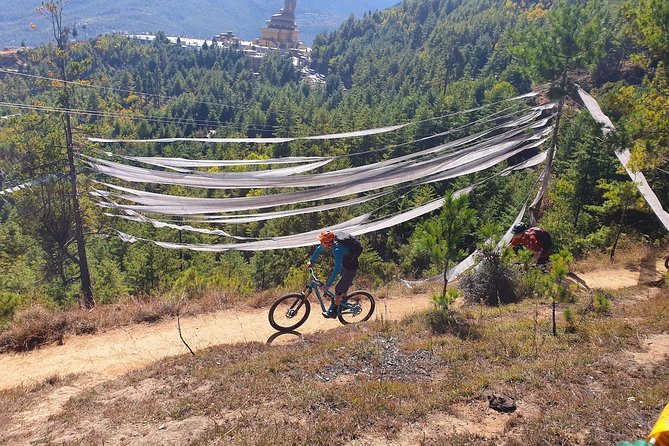
After the dzong, the ride turns back toward trail. The Phophu loop covers about seven kilometers, followed by a 10-kilometer climb on jeep track toward Sewla. Then comes the payoff: a roughly 10-kilometer ridge ride through pine forest.
This ridge section is likely to be a highlight for riders who enjoy natural singletrack and sustained views. It is described as one of Bhutan’s best cross-country routes, but the climb to reach it means you need to budget energy. The stated riding time is six to seven hours, with a total distance of about 45 to 50 kilometers.
The overnight resort stay gives you a proper recovery evening. After several active days, that matters more than an extra sightseeing stop.
Day 6: The long road to Phobjikha Valley
The ride toward Gangtey and Phobjikha Valley covers about 86 kilometers, making it one of the longest days in the program. You pass through Wangdue Phodrang and climb gradually toward Nobding, where lunch provides a natural pause.
Most of this day is on paved roads with wide scenery. At the pass before Phobjikha, you begin the descent toward Gangtey Gonpa monastery. The final approach changes the feel of the day, shifting from steady road work to a cross-country trail section.
This is a good example of the tour’s balance. The road mileage allows the group to cover substantial ground across Bhutan, while the trail finish keeps the day from becoming a simple transfer by bicycle. It is also the day I would watch most carefully on a mixed-ability trip. An 86-kilometer ride can be tiring even without technical terrain, so ask whether vehicle support can shorten the route if needed.
Day 7: Gangtey trails and a flexible rest option
Begin with Gangtey Gonpa, an important temple and monastic school. After the visit, ride toward Longtey village through pine forest on trails that cross the southern side of the valley.
The route includes a picnic lunch by the river and a loop through scenic villages around Phobjikha Valley. At about 50 kilometers, it is substantial but shorter than the previous day.
The optional rest plan is a smart touch. You can replace the full ride with short hikes and a slower day if your legs need a break. I would not view this as missing out. A flexible day can make the final Paro rides more enjoyable, especially after the pass and long road mileage earlier in the week.
Day 8: Returning to Paro, then Bhutanese home life
After breakfast, you drive back to Paro. The afternoon is reserved for cultural sights, including the seventh-century Kyichu Lhakhang, Rinpung Dzong, and Dungtse Lhakhang.
This is a welcome change after several long rides. You have time to look closely at Bhutanese religious architecture without worrying about trail conditions or a rising heart rate.
The evening farmhouse visit is one of the tour’s more personal touches. You soak in an herbal hot-stone bath and eat Bhutanese food before returning to the resort. The bath is especially well timed after a week of climbing and descending, and the farmhouse setting offers a more grounded experience than another hotel dinner.
Day 9: Tiger’s Nest and the final ride
The last full day brings Bhutan’s most famous sight, Taktshang, or Tiger’s Nest monastery. You ride about 10 kilometers to the base, leave the bikes, and hike for roughly two hours to the temple, which clings to a cliff about 1,000 feet above the valley.
This is not a casual sightseeing walk. The climb is a genuine physical effort, and you will already have several riding days in your legs. The itinerary gives strong riders the option of pushing the bike uphill and enjoying a downhill afterward, but you can also leave the bike below and walk.
After returning, you ride to Drugyal Dzong fortress and back to the hotel for a farewell dinner. It is a fitting finish: a famous cultural landmark, a short ride, and time with the team before departure.
What the $4,200 price includes
At $4,200 per person, this is an expensive trip, but the price covers more than a bike route. The package includes the $100-per-day Sustainable Development Fee, a $40 visa fee, permits, accommodation in three-star hotels, all meals, evening tea, mineral water, sightseeing, entrance fees, airport and road transfers, an air-conditioned vehicle, and both cultural and mountain-bike guides.
It also includes breakfast on all 10 days, lunch on nine days, and dinner on nine days. You do not need to build a separate budget for most daily expenses.
Airfare to Bhutan is excluded, as is the mountain bike. You can bring your own or arrange a rental separately. Personal costs, laundry, phone service, tips, shopping, spa treatments, and travel or medical insurance are also outside the package.
The value improves if you want a fully arranged trip with support vehicles and cultural touring built in. It is less attractive if you only want several days of trail riding and prefer to organize hotels and transport yourself. Ask for exact rental-bike costs and specifications before paying, since the bicycle is a major part of the experience but is not included.
Who should book this Bhutan biking tour?
You are a good match if you enjoy long days, changing terrain, cultural stops, and the occasional technical challenge. Strong cross-country, all-mountain, and enduro riders will find the route most rewarding, while less experienced riders can benefit from the private format and route adjustments.
You should have moderate physical fitness at minimum. Be honest about your climbing pace, trail confidence, and comfort with altitude. The tour team has experience with both serious riders and people who are newer to mountain biking, but the published schedule remains active.
The trip also suits riders who care about the wider experience. The guides are not only there to point out the next turn. Pelden, SP, ST, and Binesh are associated with the company’s guiding team, and the strongest praise has focused on their riding ability, bike care, trail judgment, and willingness to solve problems. That support can make a major difference in a remote, high-altitude destination.
The tour has a 100 percent recommendation rate and a five-star rating from 15 published ratings. That is a strong signal, though you should still read the physical demands carefully rather than booking on enthusiasm alone.
Should you book it?
Book this Bhutan mountain biking tour if you want a demanding, private adventure that combines real trail riding with the country’s major cultural sights. The Sewla ridge, Wangditse singletrack, forest routes near Gangtey, and optional Madman Trail give serious riders plenty to look forward to.
Think twice if you want a relaxed holiday, dislike long road sections, or need a guaranteed easy ride each day. Also confirm the bike rental, fitness expectations, seasonal conditions, and your preferred technical level before booking.
For the right rider, the price buys more than mileage. It buys local trail access, vehicle support, cultural guidance, meals, permits, and a team that can deal with mechanical trouble when the mountains do not cooperate.
FAQ
Where does the Bhutan mountain biking tour start?
The tour starts at Paro International Airport on Airport Road in Paro. The stated start time is 8:15 am.
How long is the tour?
The experience lasts approximately 10 days, from arrival at Paro through airport transfer on the final day.
Is this a private tour?
Yes. Only your own group participates in the activity.
Is a mountain bike included?
No. You must bring your own mountain bike or arrange a rental separately with Bhutan Rides.
What fitness level is required?
A moderate physical fitness level is required. The route includes long rides, high-altitude climbs, road sections, singletrack, and a hike to Tiger’s Nest.
Are meals included?
Yes. The package includes all meals and evening tea, with breakfast on all 10 days, lunch on nine days, and dinner on nine days.
Are airfare and insurance included?
No. Airfare to Bhutan, travel insurance, and medical insurance are not included.
What happens if bad weather cancels the tour?
If poor weather causes cancellation, you will be offered a different date or a full refund. The activity also requires a minimum number of participants, and a cancellation for that reason comes with the choice of another date or experience, or a full refund.
Just added around the world
- Perth Landmarks & Scenic Foreshore – Guided Bike Tour★ 5.0 · 46 reviews
- Countryside Cycling Tour. T1.0 by Matahari★ 5.0 · 138 reviews
- Sealink Bike & Ferry Package from Perth to Rottnest★ 5.0 · 44 reviews
- Half day Kayak and Bike Adventure, Bethlehem PA & Lehigh River★ 5.0 · 17 reviews
- Penang Countryside Cycling Tour. PPA2 by Matahari★ 5.0 · 99 reviews
- Party Bike Pub Crawl of Downtown Pensacola★ 4.5 · 91 reviews
- Tasting and Biking Parma★ 5.0 · 218 reviews
- Guided Urban Art and Historical E-Bike Tour in Park City★ 5.0 · 49 reviews
Mountain Bike Tours, compared.
Best Haleakala Downhill Self-Guided Bike Tour with Maui Sunriders
Read our review →
La Paz: Mountain Bike Down the World’s Most Dangerous Road
Read our review →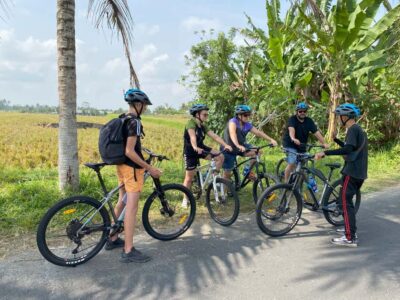
Downhill Bike Tour with Rice Fields, Volcano and Meal
Read our review →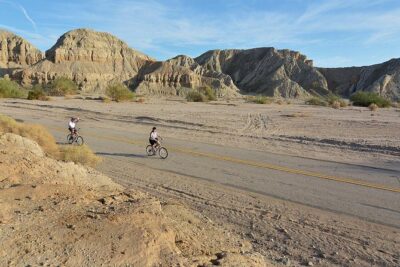
Earthquake Canyon Express Downhill Bicycle Adventure
Read our review →
Maui Haleakala Sunrise Downhill Bike Tour with Mountain Riders Rated #1
Read our review →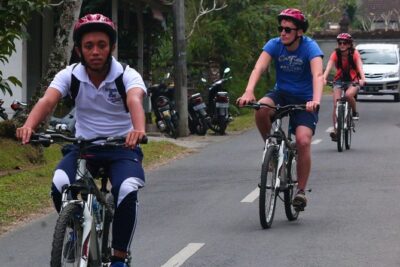
Browse the lists this tour appears in