
REVIEW · MALAYSIA
Penang Countryside Cycling Tour. PPA2 by Matahari
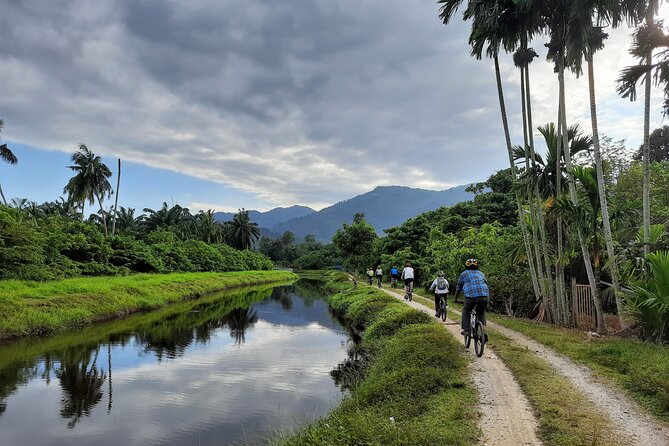
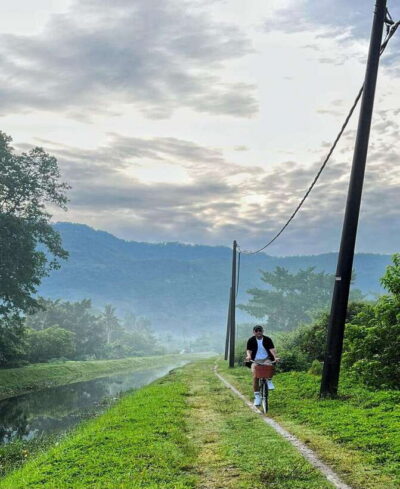
Penang’s quiet western side feels far removed from George Town’s busy streets. This four-hour ride through Balik Pulau follows narrow village lanes, waterways, farmland, and the edge of a fishing settlement, giving you a close look at daily life rather than a string of major sights. I like the easy pace and the chance to stop for local snacks, village work, and simple conversations.
I also like the well-kept bicycles and small group size, capped at 12 people. Guides such as Princillia and SJ add context about local families, Chinese clans, farming, and fishing. The main drawback is the early 7:00 am start and the need for decent weather, though the cool morning usually makes cycling more pleasant.
Key points to know before booking
- Balik Pulau beyond the tourist center: Ride through hamlets, farms, waterways, and a fishing village on Penang’s less visited side.
- An easy, mostly flat route: The ride suits novices and includes plenty of stops, though you still need to be comfortable cycling for part of four hours.
- Local life is the main attraction: See goat farming, fishing trades, a Hakka temple, rice-grain powder making, and everyday village activity.
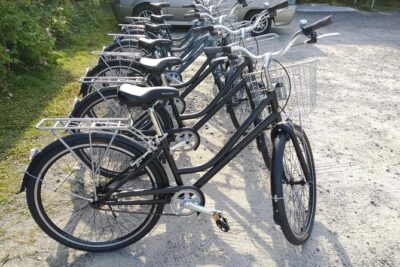
- A proper cycling setup: Matahari provides height-matched bicycles, helmets, a safety briefing, and guide support.
- Morning pickup and return: The tour starts at 7:00 am, includes a roughly 40-minute transfer each way, and returns you to your hotel.
- Good value for a half-day: At $75.49 per person, the price covers transport, equipment, guiding, and several food and cultural stops.
Why Balik Pulau makes a better cycling base than George Town
Most first visits to Penang begin in George Town, where the appeal is food, architecture, temples, and busy streets. Balik Pulau offers a different picture. On the southwest side of the island, the roads and paths pass through small settlements, agricultural plots, waterways, and the coastal area around Kuala Sungai Pinang.
You are not cycling from one famous monument to another. Instead, the interest comes from small details: the way homes sit beside lanes, how fishing work takes place near the water, and how different ethnic communities share the same rural area. That makes this a good choice if you have already spent time in George Town or want your Penang visit to include more than urban sightseeing.
The ride is described as easy and flat, with narrow roads and canal-side paths. You should still be ready to pedal, steer, and stop often. This is not a strenuous mountain-bike outing, but it is also not a van tour with a few photo stops. The balance is useful: you get enough time on the bicycle to feel part of the setting, without spending the whole morning on the saddle.
More Countryside Bike Tours in Malaysia:
- Half-Day Penang Countryside Cycling Tour
★ 4.5 · 454 reviews - George Town, Penang: Malay Countryside Cycling
★ 4.7 · 287 reviews - Countryside Cycling Tour. T1.0 by Matahari
★ 5.0 · 138 reviews
The 7:00 am transfer into Penang’s countryside
The day begins at 7:00 am, followed by a car, MPV, or van transfer from George Town to Balik Pulau. The drive takes about 40 minutes each way. That transfer matters because it lets you start the ride in the countryside instead of wasting cycling time crossing busy parts of the island.
At the Matahari meeting point in Kampung Permatang Pasir, you receive a safety briefing, bicycle fitting, helmet fitting, and an introduction to the lead guide. The company says its bicycles are selected to suit your height and kept in good working order. That is a real advantage on a route with narrow lanes and frequent stops, where a poorly sized bicycle would quickly become irritating.
The group limit is 12 people. That is small enough for a guide to keep the ride together and explain what you are seeing without shouting across a large pack. It also helps at the village stops, where a large tour group would feel out of place.
Hamlets, a goat farm, and the first easy miles
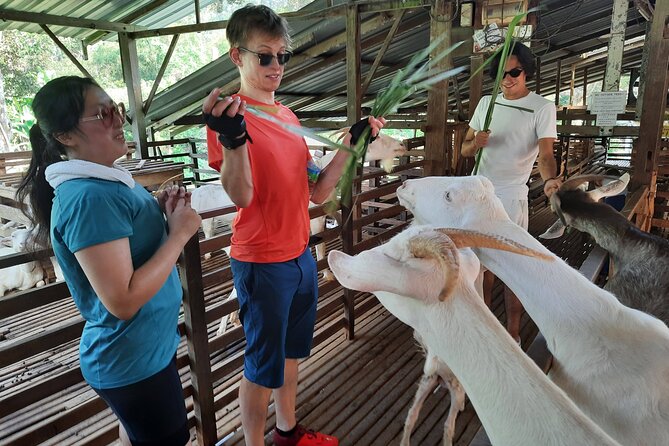
Once the wheels turn, the first section follows paths through several hamlets on the way to a goat farm. This is one of the strongest parts of the experience because the ride gives you time to notice how the countryside is lived in, not simply used as a view.
The guide points out the mix of communities in the different hamlets. The value here is not a formal lecture. You learn through the homes, religious buildings, farms, lanes, and people using the area in ordinary ways. The route is slow enough for questions, photographs, and brief stops.
The goat farm adds a hands-on rural note. The supplied details do not promise a long farm visit or animal-feeding session, so you should think of it as one stop within a broader ride rather than a full farm attraction. Still, it helps connect the scenery to working life. Penang’s countryside is not just green space around the city. It supports small farms and family activities.
This early stretch is also when you will appreciate the flat route. Several people who took the ride described it as suitable for a novice, with just the right amount of cycling. If you rarely ride a bicycle, the steady pace and short stops should help, but you should not book it if you cannot comfortably cycle on narrow paths.
Kuala Sungai Pinang and the story of Chinese settlement
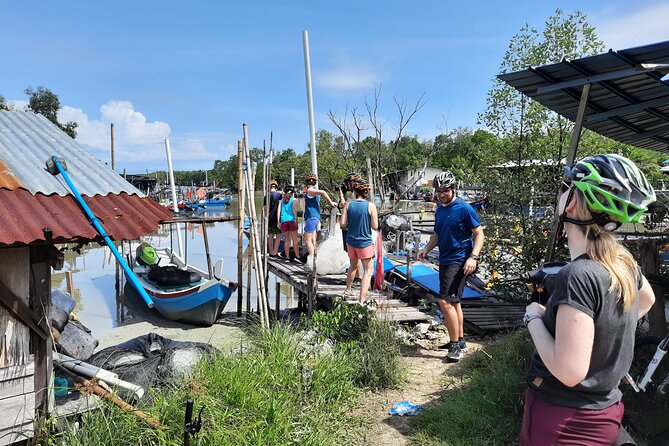
The route then heads toward Kuala Sungai Pinang, a rustic fishing village near the river mouth. Here the focus shifts from farming to coastal work and settlement.
Your guide explains the Chinese clans that migrated to Malaysia and established communities in this area during the early 19th century. That background gives meaning to the village lanes and the Hakka temple later in the route. You are not simply passing old buildings. You are seeing how migration, family networks, worship, and fishing shaped a community.
The stop is brief, around 20 minutes, so do not expect a long historical tour. The benefit is the setting and the personal scale. The story is tied to a specific village and its people, rather than delivered as a broad lesson about Malaysian history.
The fishing area can be active, with trades taking place around the river mouth. The tour uses bicycles to move slowly through it, which gives you a better chance to notice work in progress than you would from a vehicle. You will want to keep your camera ready, but you should also leave room for the guide to explain what you are looking at.
A few more bike tours around Malaysia worth a look
- Penang George Town All-In-One Heritage Tour By Bicycle & Trishaw (Metro Bike)
★ 5.0 · 168 reviews - Half-Day Heritage Bike Tour in Kuching
★ 5.0 · 162 reviews - George Town: Balik Pulau Countryside Morning Cycling Tour
★ 4.9 · 95 reviews - Countryside Biking Tour in Langkawi
★ 4.5 · 39 reviews
Coffee, local delicacies, and a pause with village residents
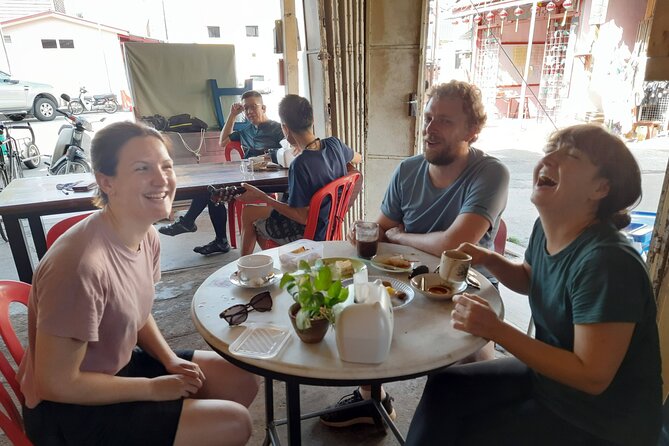
A short break lets you leave the bicycle and enjoy coffee or tea with local delicacies. This is a modest stop, not a restaurant meal, and that is part of its appeal. You get a taste of the everyday social side of the village rather than a staged cooking demonstration.
The exact food is not specified, so do not book this expecting a particular dish. Think of it as a light refreshment stop. The tour reviews describe local delicacies along the way, and this pause helps break up the riding, especially in warm weather.
It is also one of the moments when the tour feels most personal. The point is not only to eat. You have time to sit, look around, and see how people interact in the village. This kind of stop can be more revealing than another viewpoint, especially if you want to understand how rural Penang functions from morning onward.
Fishing planks and life beside the water
One of the more unusual stops takes you onto planks built over the water to support fishing work. You can walk along them and look for fish, birds, and other animals in the habitat.
This is a useful reminder that the river mouth is a workplace as well as a scenic spot. The guide introduces the types of fish and wildlife you might see, though sightings will depend on the conditions. One account described seeing monkeys and other wildlife, but you should treat animals as a possibility rather than a guarantee.
Take care here. Wooden planks near water can feel less steady than a paved path, and the stop is about observing rather than rushing around. If you are uneasy near open water, you can still appreciate the area from the edge.
The route returns toward the river mouth later, so the itinerary includes some repeated movement through the same general area. That may feel slightly inefficient on paper. In practice, the return gives you another view of the working waterfront and helps connect the different village stops.
Making rice-grain powder the traditional way
The tour also introduces a traditional home activity involving rice-grain powder, described as a household remedy used across generations. You can try the process while the guide explains how it is made and used.
This is the sort of small activity that makes the ride more than a scenic bicycle loop. It shows how practical knowledge can live inside ordinary homes and family routines. You are not being taken to a polished museum display. You are being shown a simple practice linked to local life.
The stop lasts about 10 minutes, so keep your expectations realistic. It is an introduction, not a full workshop. Still, the brief activity gives the route a human focus and creates a natural chance to ask questions.
The Hakka temple and the village walk
After cycling, you walk through the village and enter a small Chinese Hakka temple. The guide explains the function of the temple and its importance to local fishermen.
This stop works because it connects the earlier discussion of Chinese migration and clans with a living place of worship. The temple is not presented as a grand monument. Its importance comes from its role in the community.
You should approach this part with respect. The tour is built around local life, and that means you are moving through places people still use. Listen to the guide about appropriate behavior and avoid treating the village as a stage set.
The walking section also gives your legs a short rest. By this point, you have ridden through farms, hamlets, and the fishing area, so a brief walk makes the morning feel varied rather than repetitive.
Palm-oil plots and the ride back
The final cycling section passes palm-oil estates and plantation plots before reaching the finishing point. This is a quieter ending than the fishing village, but it rounds out the picture of Balik Pulau as a working rural area.
You see agriculture in several forms during the tour: the goat farm, small plots, palms, and the coastal fishing economy. That range is important. The experience is not only about pretty roads. It explains how different types of work fit together across the island.
The route then ends with a return transfer to your hotel, taking around 40 minutes. Since the tour starts early, you should be back with much of the day still available. That makes it easy to pair with an afternoon in George Town, assuming you are ready for more sightseeing after the ride.
What the $75.49 price really covers
At $75.49 per person, this is not the cheapest way to spend four hours in Penang. The value comes from what is bundled into the price: hotel pickup and return, the transfer to Balik Pulau, a properly fitted bicycle, helmet, guide service, safety briefing, local food stops, and access to small community activities.
You are also paying for route planning. You could rent a bicycle and try to find village lanes yourself, but you would miss much of the context around the hamlets, Hakka community, fishing trades, and household practices. The guide is what turns a rural ride into a cultural experience.
The price makes the most sense if you want a guided half-day and do not have your own transport. It may feel high if you only want to pedal casually or take countryside photographs. For a first visit, though, the included vehicle transfer and equipment remove several practical problems.
Who will enjoy this ride most
I would recommend it to people who have already seen some of George Town, families seeking an active morning, and anyone who prefers local neighborhoods to major attractions. The route is especially well suited to novice cyclists because it is described as easy and flat, with a relaxed pace and regular stops.
It also suits visitors who like learning through ordinary activities. The best moments are not grand sights. They are the goat farm, the fishing planks, coffee with village residents, the rice-grain powder activity, and the small temple.
You should think twice if you dislike early starts, humid outdoor activity, or riding on narrow paths. Weather can also affect the day. If poor weather cancels the experience, you are offered another date or a full refund, but you should keep some flexibility in your plans.
Matahari’s guides are a major part of the experience. Princillia is named as a guide, while Princillia and SJ run the operation. Their role is not only to lead the bicycle line. They explain local life, keep the pace manageable, and help you understand what you are seeing.
Should you book the Penang Countryside Cycling Tour?
Book it if you want to see Penang through its villages, farms, waterways, and fishing communities rather than only through George Town’s famous streets. The route is gentle, the group is limited to 12, and the guides add enough local detail to make the stops worthwhile.
Skip it if you want a hard workout, a long mountain ride, or a tour focused on major landmarks. This is a slow cultural ride with about four hours of transfers, cycling, walking, food, and conversation.
For most people who can manage an easy morning ride, I think the combination of good bicycles, local access, and a well-planned Balik Pulau route makes the $75.49 worthwhile. Just start early, expect simple rather than polished village experiences, and leave room in your schedule for the weather.
FAQ
Where does the Penang Countryside Cycling Tour take place?
The tour takes place in Balik Pulau on Penang Island, including hamlets, farmland, waterways, Kuala Sungai Pinang, and nearby village areas.
What time does the tour start?
The start time is 7:00 am.
How long does the tour last?
The experience lasts approximately four hours, including the transfers to and from Balik Pulau.
Is hotel pickup offered?
Yes. Pickup is offered, and the tour includes return transportation to your hotel.
How many people can join the tour?
The maximum group size is 12 people.
Are bicycles and helmets provided?
Yes. Matahari provides bicycles fitted to your height, along with helmets and a safety briefing.
Is the cycling route suitable for beginners?
The route is described as easy and flat, and most people can participate. You should still be comfortable cycling on paths and narrow village roads.
What happens if the weather is poor?
The experience requires good weather. If it is canceled because of poor weather, you are offered a different date or a full refund.
Can I cancel for a full refund?
Yes. You can cancel at least 24 hours before the start time for a full refund. Cancellations or changes made less than 24 hours before the start time are not refunded.
Just added around Malaysia
- Countryside Cycling Tour. T1.0 by Matahari★ 5.0 · 138 reviews
- Countryside Biking Tour in Langkawi★ 4.5 · 39 reviews
- Cycling Through the Heart of Kuala Lumpur with Hotel Pickup★ 5.0 · 16 reviews
- Langkawi Cycling Culture half day Tour★ 4.9 · 19 reviews
- Langkawi: Countryside Bike Tour, Waterfall Swim & Dessert★ 4.9 · 28 reviews
- Kuala Lumpur: Evening Food Tour by Bike★ 5.0 · 13 reviews
- Hidden Kuala Lumpur: 4-Hour Bike Tour★ 4.7 · 26 reviews
- George Town: Balik Pulau Countryside Morning Cycling Tour★ 4.9 · 95 reviews
Malaysia Bike Tours, compared.
Penang George Town All-In-One Heritage Tour By Bicycle & Trishaw (Metro Bike)
Read our review →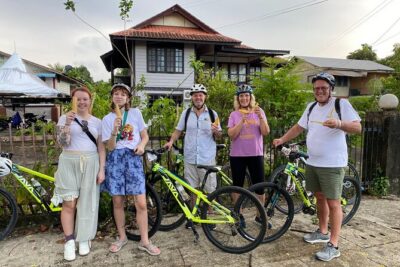

George Town: Balik Pulau Countryside Morning Cycling Tour
Read our review →
Langkawi: Countryside Bike Tour, Waterfall Swim & Dessert
Read our review →Browse the lists this tour appears in