
REVIEW · YOGYAKARTA
Authentic Yogya Bicycle Tour
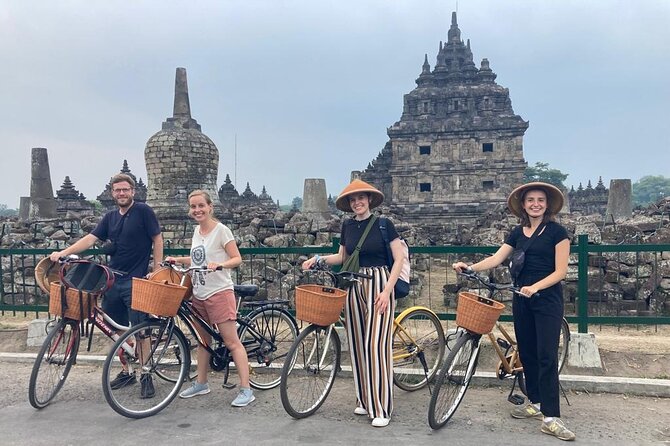
The best part of the Authentic Yogya Bicycle Tour is how quickly it moves you beyond the temple entrance and into ordinary village life. You pedal past rice fields and small homes, then stop to see emping crackers and tofu made by hand, finishing with a taste of fermented honey from stingless bees.
I like the easy pace and the range of stops. I also like that your money helps connect small local businesses with visitors, rather than sending you from one large attraction to another. The main consideration is the heat. Bring sunscreen, light clothes, and enough energy for two hours on a bicycle.
Key points at a glance
- Rice-field cycling near Prambanan: Ride mostly through quiet village scenery rather than spending the whole tour on busy roads.
- Three useful local stops: See emping crackers, tofu, and stingless-bee honey made in small home industries.
- A temple beyond the usual visit: Stop at a smaller temple combining Hindu and Buddhist elements, viewed from outside.
- Patient English-speaking guides: Guides such as Randi and Salwa explain farming, food production, plants, and village customs.
- Good value at $22: Bicycle, sunhat, drinks, guide, raincoat, and entrance fees to the listed stops are included.
- Easy to personalize: Guides are happy to pause for photos, which helps solo visitors and anyone who wants a slower ride.
Why this bike ride is different from a Prambanan temple visit
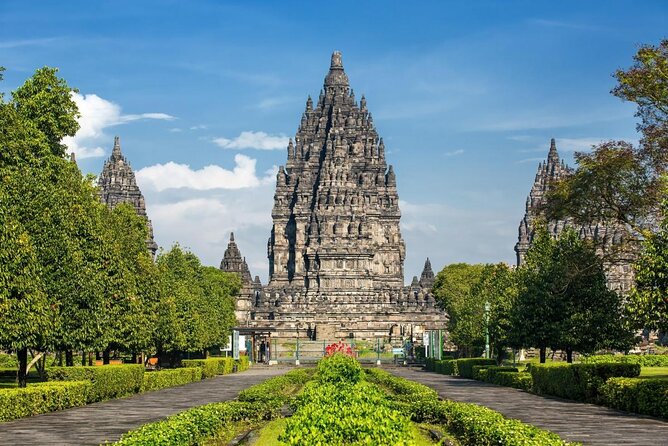
Most people come to Prambanan for the famous temple complex, take their photos, and leave. This tour uses the temple area as a starting point, then takes you north into the countryside. You still get a cultural stop, but the larger subject is how people live and work around Prambanan.
That change of pace matters. From a bicycle, you can notice rice paddies, garden plants, village lanes, and small workshops in a way you cannot from a car. The route gives you a closer look at everyday Java without turning the visit into a staged cultural show.
The ride includes sport, heritage, food, farming, and local enterprise in one compact outing. It is not a serious cycling trip. The route is described as flat and easy, and several people found it relaxing. You should still be comfortable riding a bicycle and able to manage the heat.
The tour has a rating of 4.9 from 230 reviews, and the praise is remarkably consistent: guides are friendly, the scenery is peaceful, the stops are interesting, and the experience feels personal. That does not mean every moment will be thrilling. Some stops are simple home industries, and the temple is viewed from outside. But that simplicity is part of the point.
A few more bike tours around Indonesia worth a look
- Electric Cycling Tour of Ubud with Free Hotel Transfer and Lunch
★ 5.0 · 1,397 reviews - From Ubud: Downhill Bike Tour with Rice Terraces and Meal
★ 4.9 · 664 reviews - Menoreh Village Cycling
★ 5.0 · 611 reviews
Starting north of Prambanan Temple
The meeting point is at Alga Lova Tour, north of the Prambanan Temple complex. You can go directly to the starting point, or arrange pickup in the temple parking area. Put your WhatsApp number on the booking, since the company uses it to make contact easier.
Some people reach the area by commuter train from Yogyakarta and walk to the tour company. If you are planning this, check your own route and timing carefully, since the tour does not begin in central Yogyakarta.
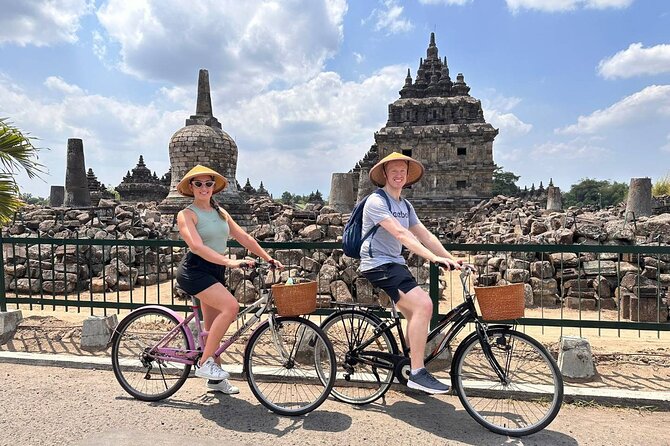
At the start, you receive a bicycle and sunhat. Mineral water, coffee or tea, and cold water are included. A raincoat is also provided, a useful touch in Java’s changeable weather.
The exact guide varies. Randi and Salwa are names that come up often, along with Wulan and Bagus. The strongest part of the guiding is not a formal speech. It is the steady explanation while you ride, with time for questions and photos.
If you are on your own, tell the guide. Solo riders have been given plenty of help with photographs, and guides regularly stop to take pictures. That makes this a practical choice if you want memories of the ride but do not want to rely on strangers.
Through rice fields and village lanes
The ride begins outside the main temple grounds and heads through rice fields and small villages. This is the calmest part of the experience. You are not racing from stop to stop, and the route is generally flat and manageable.
The countryside gives your guide plenty to point out. One guide used plants as a guessing game, asking riders to identify dragon fruit, Jamaican cherries, long beans, eggplant, corn, chili, and rice. That sort of detail helps you connect the food on your plate with the farms around you.
The route is not completely free of traffic. Some roads and intersections can be busy, and one of the guides may help the group cross or keep the way clear. That support is especially useful for families and riders who do not often cycle in Indonesia.
You should not expect a silent nature ride. You will pass homes and working areas, and the sound of village life is part of the experience. Still, the route avoids the worst of the traffic, and the flat roads make it more of a relaxed outing than a physical challenge.
Morning and afternoon departures give the ride a different feel. A morning start offers cooler conditions. The 3 p.m. outing can finish around sunset, with the light over the fields providing a fine ending. If you dislike heat, choose the earliest available time and wear breathable clothing.
The small temple near Prambanan
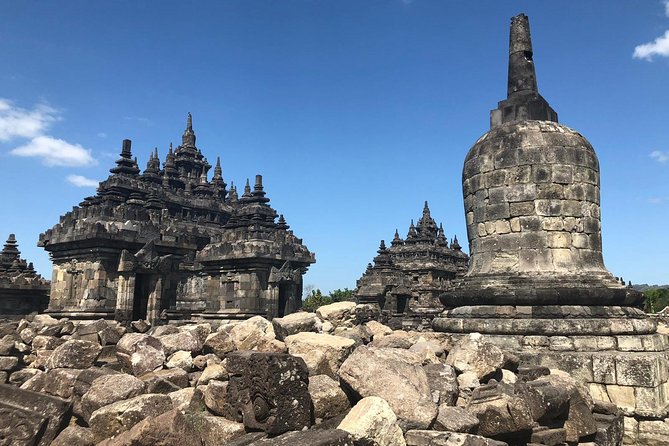
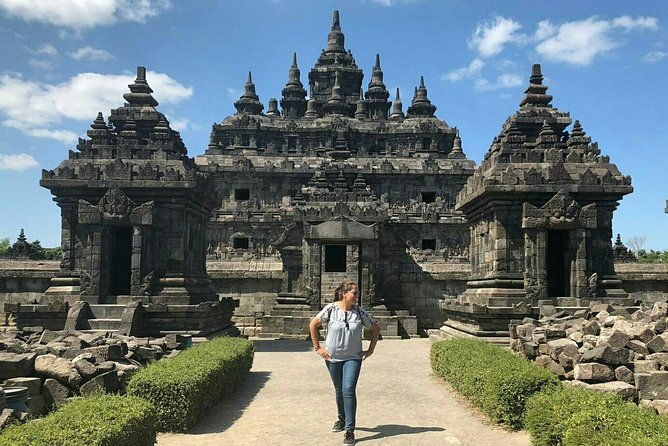
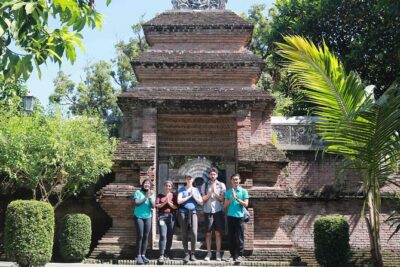
The first cultural stop is a lesser-known temple close to the Prambanan area. It combines Hindu and Buddhist elements in one place and is being rebuilt, according to the information shared during the tour.
You view it from outside, so this is not a substitute for a full temple visit. It is better understood as a short heritage stop woven into the bicycle route. The appeal comes from seeing a quieter religious site and hearing about the area from someone connected to the village.
Your guide can also help with photographs here. The stops are not rushed, but the total tour lasts only two hours, so expect a brief visit rather than a long archaeological explanation.
This is one place where expectations matter. If you want detailed architecture, excavation history, and time inside a major monument, book a dedicated Prambanan temple visit separately. If you want to add a small cultural stop to a countryside ride, it fits well.
Same city, a different ride:
- Ubud: Rice Terraces & Villages Half-Day Fat Tire E-Bike Tour
★ 4.9 · 602 reviews - Ubud: Downhill Cycling with Volcano, Rice Terraces and Meal
★ 5.0 · 536 reviews - Ubud eBikes Tour to Tegallalang Rice Terrace
★ 5.0 · 507 reviews - Half-Day Ubud Electric Cycling Tour to Tirta Empul Water Temple
★ 5.0 · 315 reviews
Watching emping crackers take shape
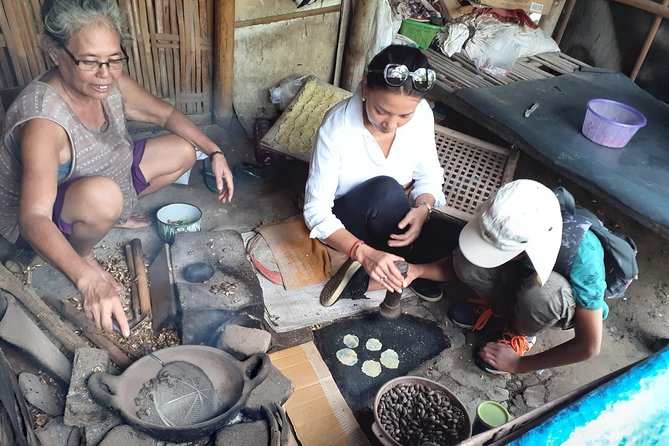
The next stop introduces you to emping, a traditional Indonesian cracker. You see how the product is made in a local home industry rather than simply buying a packet in a shop.
That difference is valuable. You see the labor behind a familiar snack and meet people working on a small scale. The process also gives the guide a chance to explain local food traditions and the role of household businesses.
The stop may appeal most to curious eaters and anyone interested in practical craft. It is not a polished factory tour with machines and signs. You are visiting a working local place, so the setting is straightforward and the activity can vary with the day.
You may have a chance to taste local foods along the way. The experience has included snacks, fruit, vegetables, banana cake, and orange-colored pisang goreng, though the exact tasting selection can change. Buying local products is not included, so carry some spending money if you want to support the makers directly.
Fresh tofu and soya milk
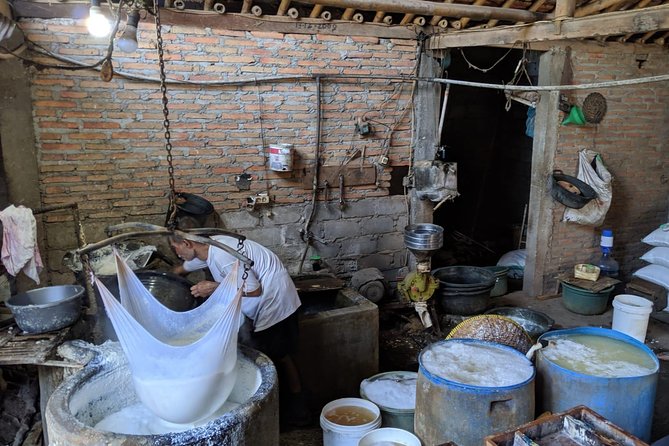
The tofu stop is another strong point. You see the traditional process in a small workshop, and if production is underway, you may taste fresh tofu and soya milk.
This is a good example of why cycling works here. The stop is not just a photo opportunity. You can ask how the food is made, watch the process, and connect it with the meals you will eat elsewhere in Java.
The workshop is a working local business, not a staged museum display. That means conditions may be basic, and the visit depends on what is happening that day. I see that as a fair trade for a more direct look at village enterprise.
The guides are particularly useful at these food stops. Randi, Salwa, and the other guides are praised for explaining clearly in English and answering questions. Indonesian is also available, so you can book with either language in mind.
Stingless bees and unusual honey
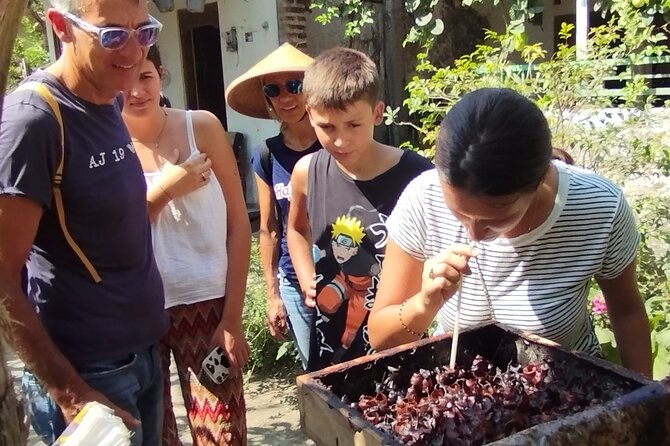
The stingless-bee farm is the most unusual stop. You learn about a local species of bee and taste its honey. This is not the standard honey tasting you might find at a city market.
The honey can have a slightly sour taste because of fermentation. If you prefer very sweet, mild honey, that may surprise you. If you enjoy trying foods with a strong sense of place, it is one of the tour’s most memorable details.
You may be able to buy a bottle, but purchases are not included in the $22 price. One visitor bought a 250-milliliter bottle and noted that leaving the honey outside makes it more sour over time. Treat any storage advice as part of the farm’s explanation and ask the staff directly if you plan to take some home.
The farm also adds an environmental and agricultural angle. You are not just tasting a product. You are learning about a special bee and seeing another small business connected to rural life.
A useful look at local livelihoods
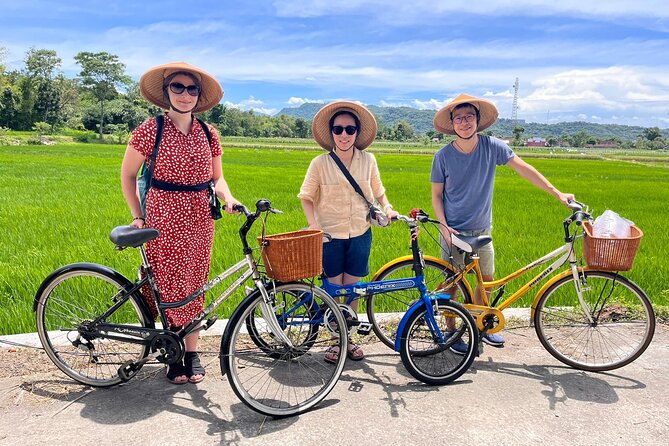
Taken together, the stops show more than food production. They show several ways families and small businesses make a living around Prambanan.
The tour company’s approach also aims to keep value in the village. Some of the money from the bicycle experience goes to the small businesses visited along the route. That does not make every part of the tour automatically ethical, but it gives your visit a clearer local benefit than a quick drive-by photo stop.
The guides add another layer. One guide has worked to teach English in the village, encourage young people to see a future locally, and make farming feel worthwhile to the next generation. You may not hear the same personal story from every guide, but the company clearly presents cycling as a way to support the village rather than simply pass through it.
For me, that is the tour’s strongest idea: the bicycle is not only transport. It lets you slow down, meet people at their place of work, and see how food and farming fit together.
What is included for $22
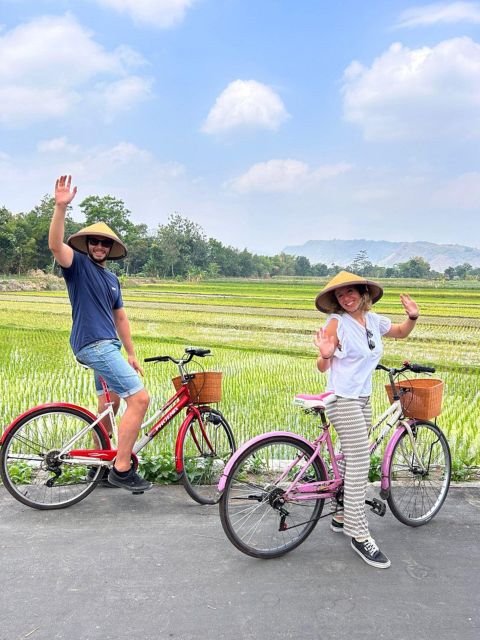
At $22 per person, the price is fair if you want more than a bicycle rental. You receive:
- Bicycle rental
- Sunhat
- Mineral water
- Coffee or tea
- Cold water
- Local guide
- Raincoat
- Fees for the listed destinations
The value comes from the guide and the access to several local stops. A self-guided ride would cost less if all you wanted was a bicycle, but you would miss the explanations, introductions, food-production visits, and help at busy crossings.
Tips and purchases are not included. Bring money if you want emping, honey, snacks, or other local products, but do not feel that shopping is the main purpose of the tour.
The two-hour length is also part of the value. It fits neatly around a visit to Prambanan and does not consume half your day. The trade-off is that each stop is fairly compact. You get a taste of several subjects, not an extended workshop at any one place.
Who should book this experience
I would choose this tour if you want a gentle introduction to rural Yogyakarta. It suits couples, solo visitors, families with children who can ride, and anyone who prefers local encounters to another large monument.
It is also a strong option for photographers. The guides are willing to stop for pictures, and the fields, village lanes, workshops, and people at work give you more variety than a single temple site.
You should be comfortable on a bicycle. The tour is not suitable for people who cannot ride, people over 100 kilograms, or people over 70 years old, according to the stated restrictions. Children can be accommodated when they can ride safely, and one family specifically found the experience safe with children.
I would hesitate to book it if you dislike heat, cannot ride confidently, or want a formal archaeological tour. The route may include some busy crossings, and the outdoor conditions are part of the deal.
Wear light clothing, use sunscreen, and keep your bags small. Large bags and luggage are not allowed, and food is not allowed in the vehicle. A camera or phone, a water bottle, and a little cash for purchases are more useful than a full day bag.
Should you book the Authentic Yogya Bicycle Tour?
Yes, if you have two hours near Prambanan and want to see more than the main temple complex. The combination of flat cycling, rice fields, local food production, village businesses, and stingless-bee honey gives you a lot for $22.
Book it especially if you value patient guiding and direct contact with local people. Randi and Salwa are among the guides who have made a strong impression, but the experience depends on the guide assigned that day.
Skip it if you are looking for a major temple tour, a long-distance cycling challenge, or a cool indoor activity. For everyone else, this is one of the better ways to connect Prambanan with the living countryside around it.
FAQ
Where does the Authentic Yogya Bicycle Tour start?
It starts at Alga Lova Tour, north of the Prambanan Temple complex. You can also arrange pickup in the Prambanan parking area.
How long does the bicycle tour last?
The advertised duration is two hours.
How much does the tour cost?
The price is $22 per person.
What languages does the guide speak?
Guides are available in English and Indonesian.
Is bicycle rental included?
Yes. Bicycle rental and a sunhat are included in the price.
Are drinks included?
Yes. Mineral water, coffee or tea, and cold water are included.
Is a raincoat provided?
Yes. A raincoat is included.
What places do you visit?
The route includes a temple near Prambanan, traditional village areas, an emping-making home industry, a tofu workshop, and a stingless-bee farm.
Can I taste local food?
Yes. Food tastings can include fresh tofu, soya milk, honey, and other local snacks or produce. The exact selection may vary.
Is the tour suitable for people who cannot ride a bicycle?
No. The tour is not suitable for people who cannot ride a bicycle. It also lists restrictions for people over 100 kilograms or over 70 years old.
Can I cancel the booking?
You can cancel up to 24 hours in advance for a full refund. You can also reserve now and pay later.
Just added around Indonesia
- Ubud: Downhill Cycling with Volcano, Rice Terraces, and Meal★ 4.9 · 189 reviews
- Bali: Kintamani Downhill Bike Tour, Jungle and Waterfalls★ 4.9 · 20 reviews
- Bali Downhill Cultural Cycling Tour★ 4.8 · 42 reviews
- Kotagede Royal Route – Cycling Tour★ 5.0 · 207 reviews
- Authentic Yogya Bicycle Tour★ 5.0 · 232 reviews
- Bali Downhill Cultural Cycling Tour★ 5.0 · 224 reviews
- Sanur Village E-bike Tour: Family-Friendly Adventure★ 4.6 · 85 reviews
- Electric Bike Tour in Ubud★ 5.0 · 281 reviews
Yogyakarta Bike Tours, compared.
Browse the lists this tour appears in