
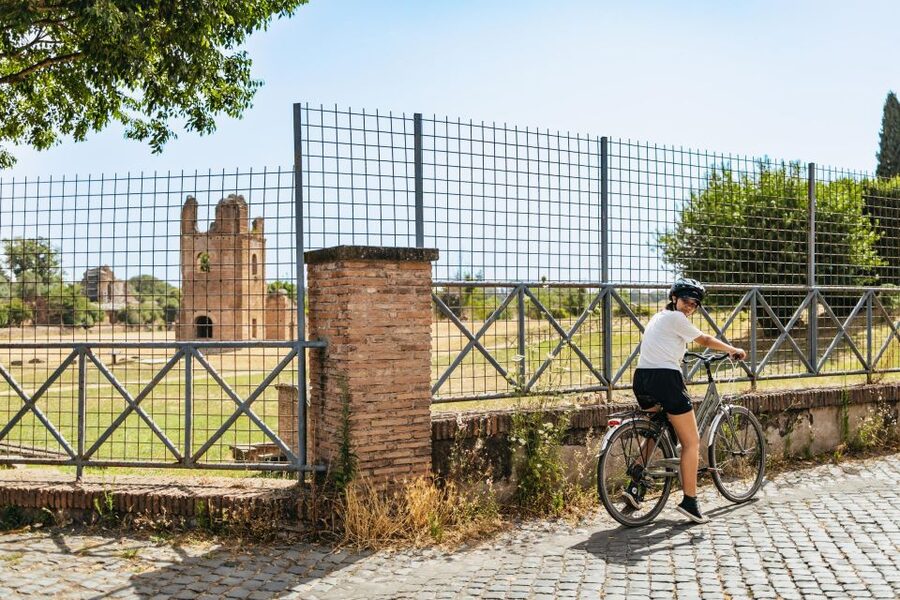
REVIEW · ROME
Appia Antica & Aqueducts e-Bike Tour – Official Provider
The best part of this tour is that Rome quickly gives way to open countryside, ancient ruins, and the worn stones of the Appian Way. You ride from the Domine Quo Vadis Church toward the Aqueducts Park, covering ground that would be tiring on foot and too slow by bus. The 2,000-year-old road still shows grooves made by horse-drawn wagons.
I like the mix of major Roman sights and quiet green space. I also like that the guide handles the route and road crossings while you concentrate on the ruins, the aqueduct arches, and the ride. The main consideration is the pace: less experienced cyclists can slow the group, and part of the route uses streets with traffic.
Key points
- An e-bike route through three Roman settings: the Appian Way, Caffarella Valley, and Aqueducts Park.
- A close look at ancient road technology: wagon grooves remain visible in the basalt paving stones.
- Free entry to the Circus of Maxentius complex: see the circus, villa, and mausoleum together.
- Optional catacombs: visit Saint Sebastian or Saint Callixtus for €10 per person at the site.
- About 70 percent off-road and 30 percent on streets: the electric assistance helps with the distance and rougher sections.
- A 3.5-hour English tour for $59: water, helmet, lock, map, and a high-quality e-bike are included.
Why the Appian Way is Rome’s best change of pace
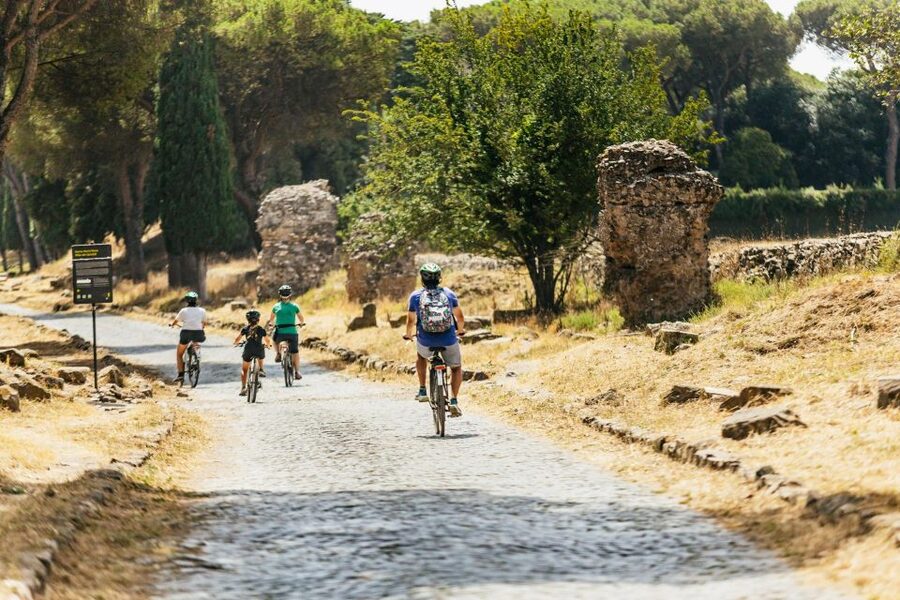
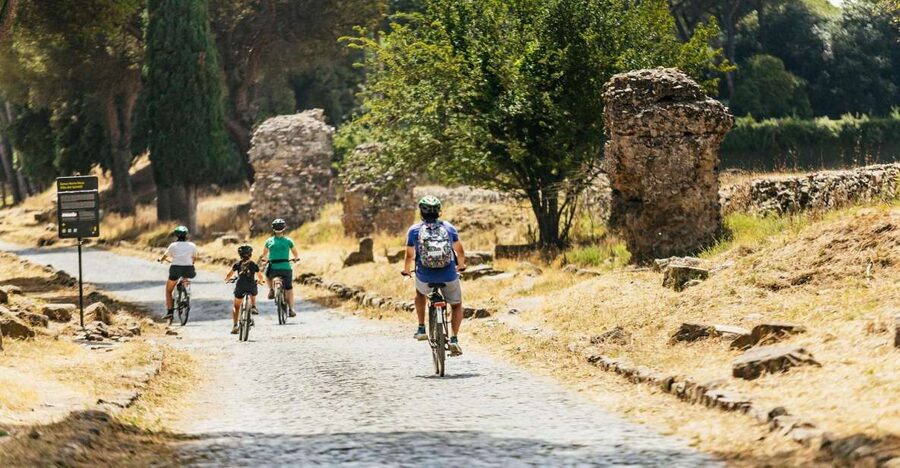
Rome’s famous center can feel like one grand monument after another. The Appian Way offers something different. Just a short distance from Circus Maximus, the Regional Park of the Appian Way opens into a huge protected area of roughly 4,500 hectares, with churches, tombs, villas, fields, and old stone roads.
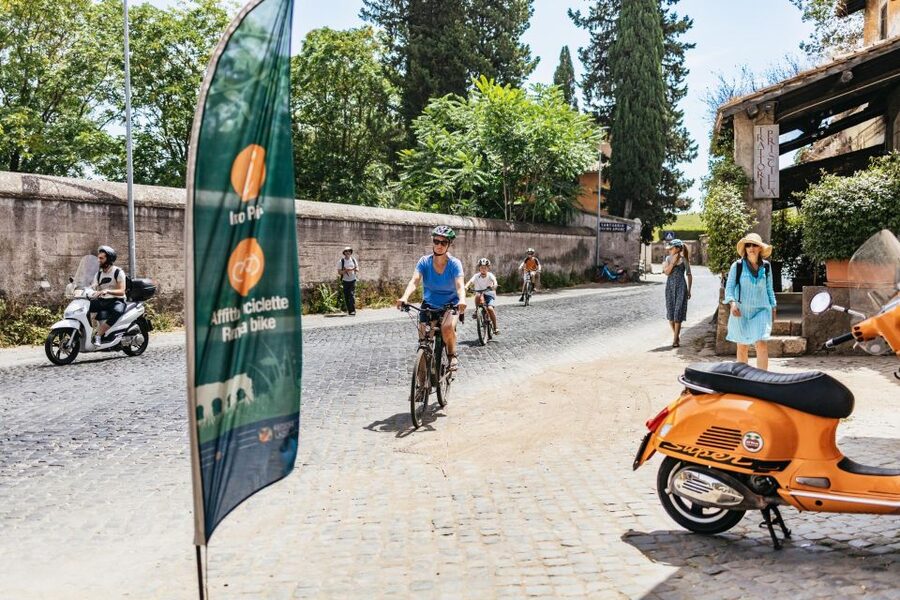
This tour starts at EcoBike on Via Appia Antica 60. Your guide first explains how to use the e-bike, then gives you a quick introduction to the area. That short lesson matters. The ride is not a race, and the electric motor lets you handle the distance without turning the visit into a workout.
The route follows the section of the Appian Way between the Domine Quo Vadis Church and the Aqueducts Park. Ancient Rome built this road for military use, then it carried merchants, pilgrims, officials, and other people moving in and out of the city. You get a better sense of that old travel corridor from a bicycle than from a coach window.
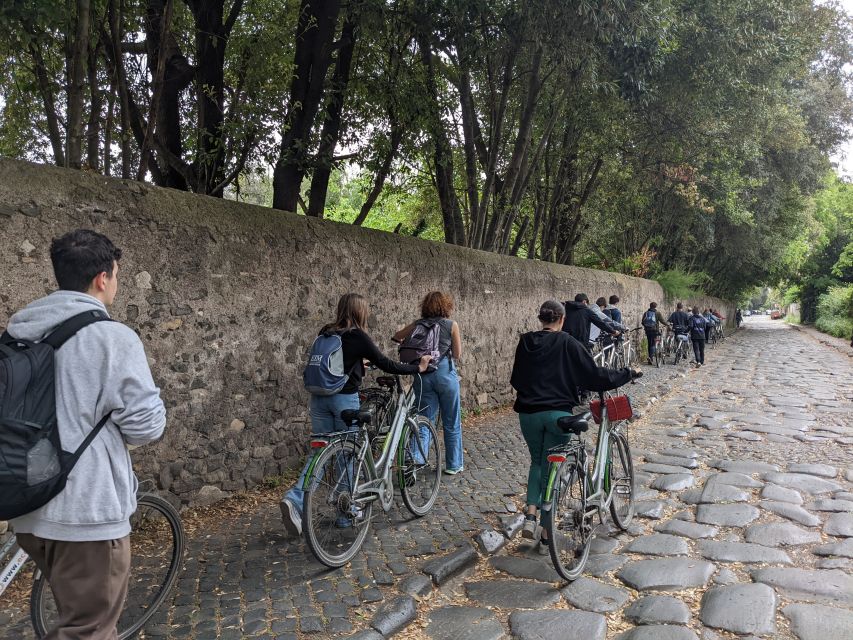
The road surface is part of the attraction. You can stop beside the large paving stones and see the wheel marks made by carts and wagons. They are not polished museum pieces. They remain outdoors, worn by use and weather, with Roman engineering under your tires.
More E-Bike Tours in Italy
- Rome EBike Tour: Appian Way, Catacombs & Roman Aqueducts
★ 5.0 · 1,766 reviews - Rome: Top Highlights & Hidden Gems Tour by Cannondale E-Bike
★ 4.9 · 1,760 reviews - Rome: Appian Way & Aqueducts E-Bike Tour (Catacombs & Food)
★ 4.9 · 1,498 reviews
Domine Quo Vadis Church and the first Roman ruins
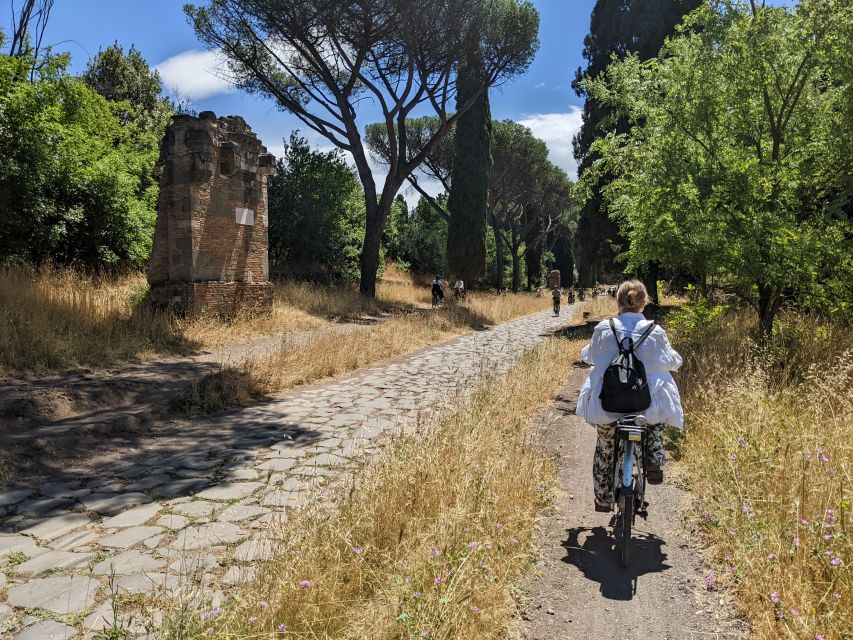
The first important stop is the small church of Domine Quo Vadis. According to Christian tradition, Saint Peter met Jesus here while fleeing Nero’s persecution. The story says that Jesus left footprints in the pavement before disappearing.
You should treat the story as tradition rather than proven fact, but the stop gives the route a strong opening. It shows how Roman roads collected layers of meaning over time: military, commercial, religious, and cultural.
From here, the route settles into the Appian Way. You pass tombs and other remains along the road, with the guide explaining what you are seeing. Because you are moving through a long corridor rather than standing in a single monument, the guide’s explanations help connect the scattered ruins.
The e-bike is especially useful here. The tour covers a substantial area in three and a half hours, and some sections are off-road. The route is described as roughly 70 percent off-road and 30 percent on streets, so you should expect a mix of stone, dirt, park paths, and traffic crossings rather than a smooth city cycleway.
The optional catacombs of Saint Sebastian or Saint Callixtus
You can add a catacomb visit at Saint Sebastian or Saint Callixtus. The entrance is not included in the tour price, and the cost is €10 per person, paid on site. The catacombs are an optional addition, so you can decide during the tour based on your interest and available time.
This is a good choice if you want to understand the early Christian side of the Appian Way. The underground cemeteries lie beneath the road and add a very different setting to the outdoor ruins. You should remember that the bike tour itself is the main experience, so the catacomb visit adds another layer rather than replacing the route.
If you want to include one, ask the guide about timing early in the ride. The tour information allows the stop on the way, with the visit completed independently and the group continuing afterward. Since the total outing lasts 3.5 hours, the optional visit may affect how much time you spend at other stops.
Circus of Maxentius, where Roman spectacle survives
The Circus of Maxentius is one of the strongest stops on the route. This was the private circus of Emperor Maxentius, built as part of a larger complex with a villa and the mausoleum of his son, Valerius Romulus.
You can enter the complex free of charge. That makes the stop especially worthwhile because you see several parts of an imperial site together instead of viewing a single isolated ruin. The circus is also described as the best-preserved Roman circus in the world.
The site is tied to modern film history as well. The chariot-race scene in Ben-Hur was filmed here. That detail helps you picture how the long racing ground once worked, though the real value is seeing the Roman complex in its actual setting.
Your guide explains the site during the stop, so you do not need to arrive with a technical understanding of Roman architecture. Still, this is one place where a little patience pays off. The ruins are spread across the complex, and the meaning of the buildings is easier to grasp when you take time to look beyond the most obvious walls.
More E-Bike Tours in Rome
- Rome: Appian Way, Catacombs, & Roman Aqueducts E-bike Tour
★ 4.9 · 1,421 reviews - Rome City Small Group Bike Tour with quality Cannondale EBike
★ 5.0 · 1,380 reviews - Rome by Night – Ebike Small Group Tour – Food and Wine (Option)
★ 5.0 · 1,275 reviews - Rome by Night: E-bike Small Group Tour -Food & Wine (Option)
★ 4.9 · 1,233 reviews
Cecilia Metella and the medieval power grab
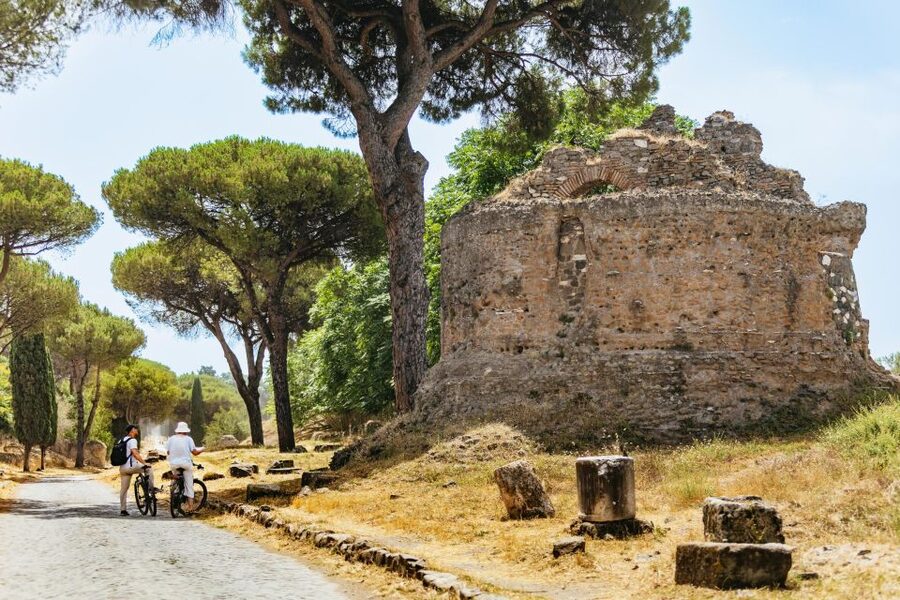
The route passes the Tomb of Cecilia Metella, one of the most recognizable monuments along the Appian Way. Its large round form rises above the road and has been visible to people approaching Rome for centuries.
Cecilia Metella was a noblewoman, but relatively little is known about her beyond her family background. The tomb’s later story is easier to trace. During the Middle Ages, the site became a fortress controlled by several families, including the Caetani. Its position allowed them to watch the road and control movement through the area.
The Caetani family turned the site into a small fortified settlement with its own enclosure. People passing through could be charged a duty. It is a useful reminder that ancient ruins were not simply left behind. Later generations reused them, fortified them, and made money from their location.
You pass by the tomb rather than receiving a full interior visit. That keeps the tour moving toward the aqueducts, but it also means you should not expect a long museum-style stop here. The tomb works best as part of the road journey, where you see its commanding position and hear how its purpose changed.
Villa dei Quintili and the route toward the aqueducts
The ride continues past the Villa dei Quintili, an aristocratic Roman residence along the Appian Way. The itinerary lists this as a pass-by stop, so the focus is on seeing the site from the route rather than spending a long period inside it.
The villa helps fill out the picture of Roman life beyond the city center. The Appian Way was not lined only with military sites and burial monuments. Wealthy Romans also built large country residences along this major road.
You then continue toward the Aqueducts Park. This transition is one of the tour’s pleasures. The route moves from tombs and imperial ruins to the long arches of Roman water engineering, showing how Rome’s infrastructure reached far beyond the crowded center.
Aqueducts Park and the engineering that fed Rome
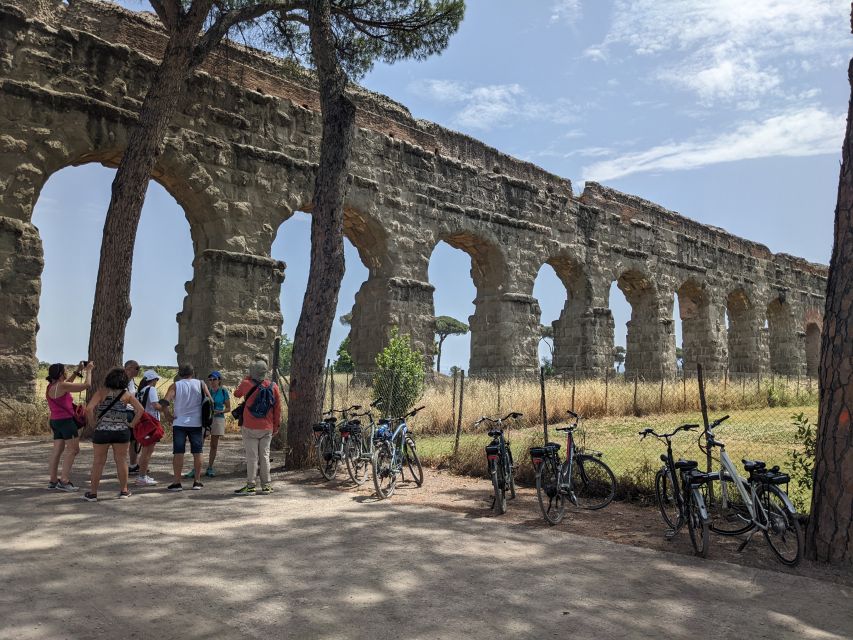
The Aqueducts Park is the visual high point for many people. Huge arches cross the open park, and the scale becomes easier to appreciate when you approach by bicycle rather than simply viewing them from a passing vehicle.
The guide stops here and explains the aqueducts and their role in Roman engineering. These structures carried water over long distances into Rome, using carefully planned channels and a steady gradient. The arches are not just dramatic ruins. They are evidence of the practical systems that supported baths, fountains, homes, and public life.
You have room here to look up, take photographs, and appreciate the contrast between the open park and the dense center of Rome. The setting also gives the tour a satisfying finish: the road that once carried armies and commerce leads into the infrastructure that helped sustain the city.
The route includes the Quintili Nymphaeum before proceeding into the park. That adds another connection between grand private estates, water, and Roman leisure. You should expect more than a quick photo stop, but the exact amount of time depends on the group’s pace and how many people need help with the bikes or crossings.
Caffarella Valley adds quiet and open space
Parco della Caffarella brings a softer change to the ride. The valley is part of the same protected Appian area, and the tour uses it to connect the archaeological sites with Rome’s open countryside.
I like this section because it keeps the experience from becoming a simple chain of ruins. You ride through a broad green setting while the guide points out the relationship between the road, the valley, and the remains scattered across the park.
The contrast matters. Rome’s center is packed with visual information, but here you can slow down and see how the ancient road sat within the wider area. You also get a better sense of why this park has remained valuable as both an archaeological zone and a place for outdoor activity.
After Caffarella and the Aqueducts Park, the route returns to the EcoBike center. The full outing takes about three and a half hours, which is long enough to reach the main sites without using up an entire day.
What the $59 price includes
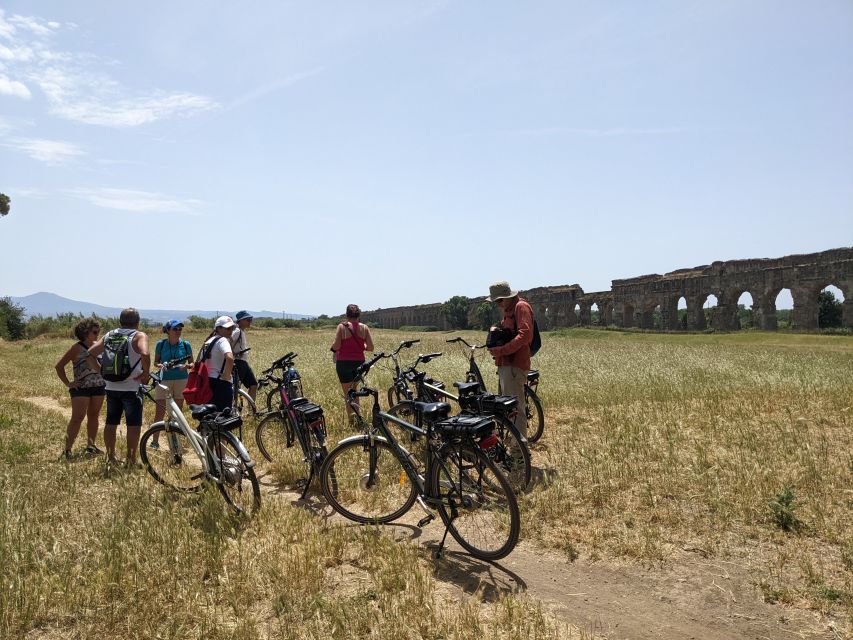
At $59 per person, this is a fair price for a guided half-day outside central Rome. You are paying for the e-bike, guide, helmet, lock, map, and half a liter of mineral water. The bike is the key value. Covering this much ground on foot would be impractical, and an ordinary bicycle would make the rougher sections and distance more demanding.
The free entry to the Circus of Maxentius improves the value. The catacombs cost an additional €10 each, and lunch is not included, so plan for those expenses separately.
The price makes the most sense if you want explanation as well as transportation. A self-guided rental gives you more freedom, and one rider specifically preferred that option after finding the group pace slow. If you are a confident cyclist who wants to stop whenever you like, independent riding may suit you better.
If you want the route organized, the monuments explained, and street crossings managed, the guided option earns its price. The guide also helps you use the e-bike properly, which is useful if you have not ridden an assisted bicycle before.
Who should book this ride
This tour suits you best if you have already seen Rome’s central sights and want a different side of the city. It is especially good for people who enjoy archaeology, Roman engineering, open-air sites, and a moderate amount of cycling.
Families should read the age rules carefully. E-bikes are available from age nine and a minimum height of 135 centimeters, but the experience is listed as unsuitable for children under 13. Child seats can be requested for children up to 20 kilograms, yet the tour also has restrictions for pregnant women and people with back problems.
You need to be comfortable riding an e-bike and handling some traffic. The guide watches road crossings, but this is not a completely car-free park ride. Bare feet are not allowed, and alcoholic drinks cannot be taken in the vehicle. Bring a passport or identity card, or a copy.
The tour runs rain or shine. Wear clothing suited to the forecast, and do not expect lunch to be part of the schedule. The bikes are homologated for adults up to 90 kilograms, so check that limit before booking.
Guide quality and group pace
The guide is central to this experience. The tour is conducted in English, and the guide leads the route, explains the monuments, and helps with crossings and riding technique.
Guides named Federico, Sara, and Alex have led dates of this experience, and each has been singled out for clear explanations, good stories, and attention to safety. Your guide may be someone else, but the quality of the commentary is an important part of what you are buying.
The main weakness is group pace. If someone has little cycling experience, the entire group may need to wait or move slowly. That is not a serious problem if you want a relaxed outing, but it can frustrate strong riders who prefer to set their own speed.
For the smoothest experience, arrive ready to ride, listen closely to the opening instructions, and treat the group as a group. The e-bike reduces effort, but it does not remove the need for balance, braking, and awareness around traffic.
Should you book the Appian Way e-bike tour?
Book it if you want to reach the Appian Way, Caffarella Valley, and Aqueducts Park in one organized outing. The combination of ancient road grooves, Maxentius’ circus, Cecilia Metella’s tomb, open parkland, and giant aqueduct arches gives you a broad view of Rome beyond the usual center.
Skip it if you dislike bicycles, need a completely traffic-free route, or want total control over your stops. Strong cyclists may prefer a self-guided rental, while riders who value context and an easy route plan will get more from the guided tour.
For $59, the e-bike, guide, free Circus of Maxentius entry, equipment, and water make this a solid half-day choice. Add the catacombs only if underground Christian history matters to you, and allow for a slower pace if your group includes beginners.
FAQ
How long does the Appia Antica e-bike tour last?
The tour lasts 3.5 hours, including the ride through the Appian Way, Caffarella Valley, and Aqueducts Park, then the return to EcoBike.
What language is the tour conducted in?
The live guided tour is conducted in English.
Where does the tour start and finish?
It starts and ends at Centro Servizi Appia Antica, EcoBike Bike Rental, at Via Appia Antica 60.
Is the e-bike included in the price?
Yes. A high-quality e-bike, helmet, lock, map, and half a liter of mineral water are included.
Are the catacombs included?
No. You can optionally visit the catacombs of Saint Sebastian or Saint Callixtus by paying €10 per person on site.
Can children join the tour?
E-bikes are available from age nine and 135 centimeters in height, but the activity is listed as unsuitable for children under 13. Child seats for children up to 20 kilograms are available upon request.
Does the tour run in bad weather?
Yes. The tour takes place rain or shine.
What is the cancellation policy?
You can cancel up to 24 hours before the tour for a full refund. You can also reserve now and pay later.
Just added around Rome
- Rome: Guided eBike Evening Tour with italian Aperitif★ 5.0 · 16 reviews
- Rome: Appian Way, Aqueducts, & Catacombs E-Bike Guided Tour★ 4.9 · 54 reviews
- Sunrise in Rome: Small Group E-Bike Tour & Italian breakfast★ 4.9 · 177 reviews
- Rome: Villa Borghese, Villa Ada, and Coppedè E-Bike Tour★ 4.8 · 78 reviews
- Rome: Top 10 Highlights Guided Tour by Bike or E-Bike★ 4.4 · 15 reviews
- Rome: Taste of Rome by quality Cannondale E-Bike★ 5.0 · 12 reviews
- Rome: Full-Day Guided Tour by E-Bike with Lunch Included★ 4.9 · 36 reviews
- Rome: Villa Borghese E-Bike Tour (Small Group or Private)★ 4.9 · 92 reviews
Rome Bike Tours, compared.
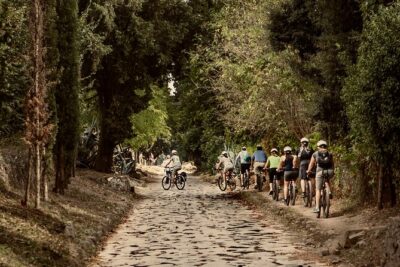
Rome EBike Tour: Appian Way, Catacombs & Roman Aqueducts
Read our review →
Top Highlights & Hidden Gems Tour by Cannondale E-Bike
Read our review →
Appian Way & Aqueducts E-Bike Tour (Catacombs & Food)
Read our review →
Appian Way, Catacombs, & Roman Aqueducts E-bike Tour
Read our review →
Rome City Small Group Bike Tour with quality Cannondale EBike
Read our review →
Rome by Night – Ebike Small Group Tour – Food and Wine (Option)
Read our review →
Rome by Night: E-bike Small Group Tour -Food & Wine (Option)
Read our review →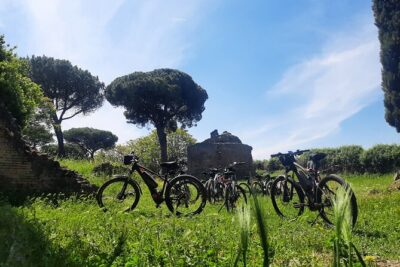
Appian Way Aqueducts Bike Tour (Catacombs & Lunch Option)
Read our review →Browse the lists this tour appears in