
REVIEW · MOUNTAIN
Anuradhapura Heritage Mountain bike / bicycle Tour
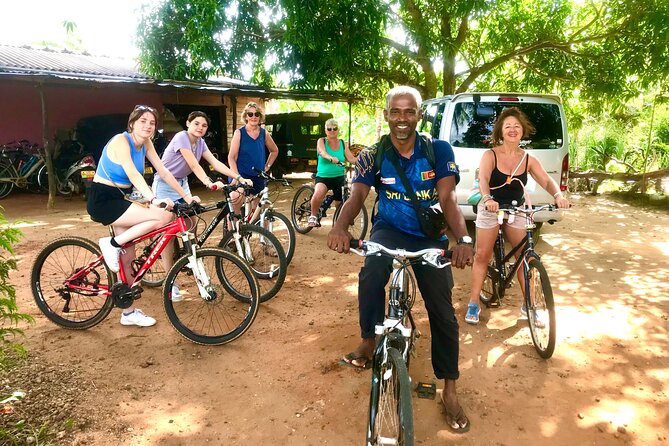
Anuradhapura is far easier to understand from a bicycle than from the back seat of a car. On this 10-kilometre loop, Saranga leads you between giant stupas, old monastery ruins, tanks, rice fields, and quieter paths that let you see the ancient city at a human pace. The route lasts about four and a half hours, but frequent stops keep it from feeling like a race.
I like two things right away: the private format, which lets your group set a comfortable rhythm, and the mix of famous sights with less-used routes. Saranga also brings a personal understanding of Buddhism and local customs, not just dates and royal names. A local vegetarian meal at Hela Bojun adds a pleasant taste of everyday Sri Lankan cooking.
The main consideration is physical effort. You need a moderate level of fitness, and the tour depends on good weather. You will also need to budget an extra $30 per adult for the UNESCO ticket, or $15 for a child under 13, and bring cloth that covers your knees for temple visits.
Key points at a glance
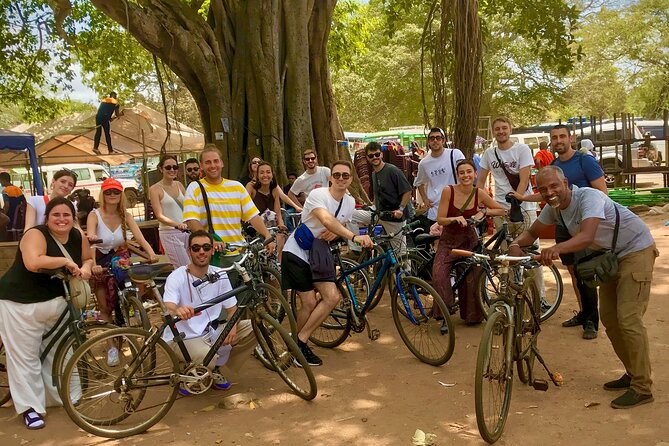
- A 10-kilometre heritage loop: Four and a half hours gives you time to stop, listen, take photos, and ride between the main monuments.
- Saranga as your local guide: Expect explanations about Buddhism, culture, and Anuradhapura, with room for questions along the way.
- Major monuments by bicycle: The route includes Jetavanaramaya, Abhayagiriya, Ruwanweliseya, and the Sri Maha Bodhi.
- Quiet scenery between ruins: Forest tracks, ancient tanks, and rice fields provide a break from the large religious sites.
- Mountain bike and food included: You receive a bicycle, bottled water, parking, a guided tour, and a vegetarian meal cooked at Hela Bojun.
- Private, but not all-inclusive: Only your group takes part, but the $30 UNESCO entrance charge is separate.
Why a bicycle suits Anuradhapura
Anuradhapura covers a broad area. Its sacred places and monastic ruins are scattered among trees, ponds, reservoirs, and open ground. You can visit by car, but a bicycle gives you a better sense of the distances and the way the old city fits together.
The route is described as a hidden-route ride, though the major stops are well-known monuments. The appeal is the connection between them. You are not simply stepping out of a vehicle, looking at a stupa, and getting back in. You pedal through the spaces between the sights, with time to notice irrigation tanks, forest shade, and village life.
The pace is deliberately slow. That matters in Anuradhapura, where the heat, the size of the site, and the religious importance of the monuments all reward patience. The tour is built around sightseeing rather than speed or technical mountain biking. You do not need a thrill-seeking attitude, but you should be comfortable riding for several hours with stops.
Because this is a private activity, Saranga can focus on your group. That is useful if you want more explanation at a favorite site, need a slower pace, or prefer to ask questions about Buddhism and Sri Lankan culture as they come up.
More Mountain Bike Tours in the world:
- From Ubud: Downhill Bike Tour with Rice Terraces and Meal
★ 4.9 · 664 reviews - Waimea Canyon Downhill Bike Ride
★ 5.0 · 650 reviews - Ubud: Downhill Cycling with Volcano, Rice Terraces and Meal
★ 5.0 · 536 reviews
Jetavanaramaya begins the ancient city circuit
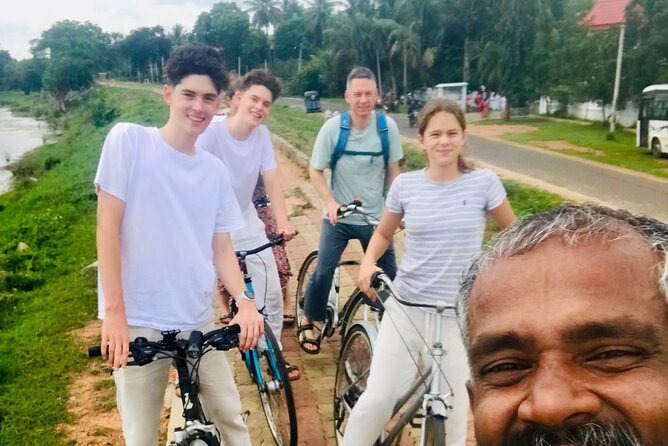
The first major stop is Jetavanaramaya, the enormous red-brick stupa associated with King Mahasena, who ruled from 273 to 301. At 122 metres, or about 400 feet, it was once the tallest stupa in the world and one of the tallest structures anywhere.
The scale is the point. From a bicycle, you approach it gradually, and the huge brick mass becomes more impressive as you get closer. The planned stop is about 15 minutes, enough for an introduction, photographs, and a look at the site before continuing.
You should not expect a long formal lecture at every monument. The tour covers ten stops in four and a half hours, so explanations are balanced with riding time. That makes the route manageable, but anyone wanting a detailed archaeological study of each brick and carving may find the schedule brisk.
Meditation and monastic life at Samadhi and Abhayagiriya
The Samadhi Statue offers a change of mood. This famous Buddha image shows the Buddha seated in the meditation posture known as Dhyana Mudra. The planned visit lasts about 20 minutes.
This is a good place to slow down and notice the calm of the statue rather than treat it as another item on a checklist. Saranga’s knowledge of Buddhist practice is especially useful here, since the meaning of the posture and the place of meditation in Sri Lankan religious life may not be obvious from a quick photograph.
From there, the route continues to Abhayagiriya Stupa and its surrounding monastery remains. Abhayagiri was once a major Buddhist centre connected with Mahayana, Theravada, and Vajrayana traditions. The ruins spread across a large area, so the bicycle is particularly helpful.
The 20-minute stop gives you a taste of the site without trying to cover every ruin. You will see how much more than a single stupa made up an ancient monastery complex. The scale can be difficult to grasp on foot, while cycling between sections gives you a clearer sense of its extent.
Ancient engineering at the Twin Baths and Eth Pokuna
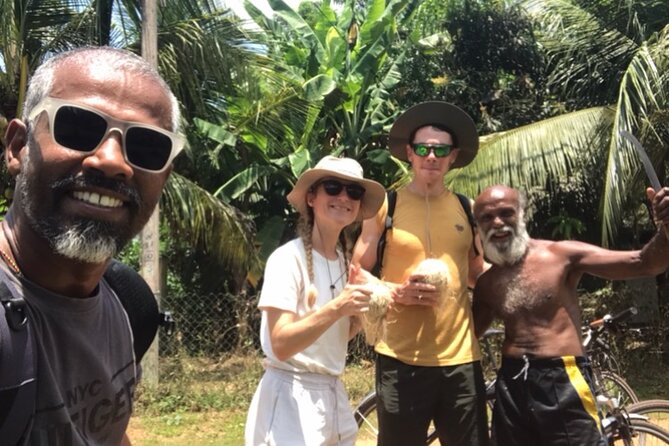
Kuttam Pokuna, or the Twin Baths, is one of the most carefully preserved features in the Abhayagiri area. These paired bathing pools were built during the ancient Anuradhapura Kingdom, and their stone steps and clean proportions show the skill behind the monastery’s water systems.
The stop lasts about 20 minutes. Look closely at the structure rather than rushing through it. The pools are not just attractive ruins. They help explain how a large monastic community managed bathing and water use.
Eth Pokuna, known as the Elephant Pond, makes the same point on a much larger scale. It measures about 159 metres long and 52 metres wide. The name gives you a sense of its size, but the numbers make the engineering clearer.
Anuradhapura depended on tanks, channels, and reservoirs. These waterworks supported both religious communities and ordinary life in a dry part of Sri Lanka. Cycling between these sites helps connect the architecture with the practical systems that allowed the ancient city to function.
More Historic and Landmark Bike Tours in the world:
- Party Bike Private Party Up To 14 People in Old Town Scottsdale
★ 5.0 · 3,541 reviews - Guided Bike Tour of Old Town Key West
★ 5.0 · 2,611 reviews - Historical Singapore Bike Tour on Full-Sized Bicycles
★ 5.0 · 1,421 reviews - Barcelona: 2.5-Hour Bike or E-Bike Historical Tour
★ 4.5 · 1,262 reviews
Carved symbolism at the Moonstone
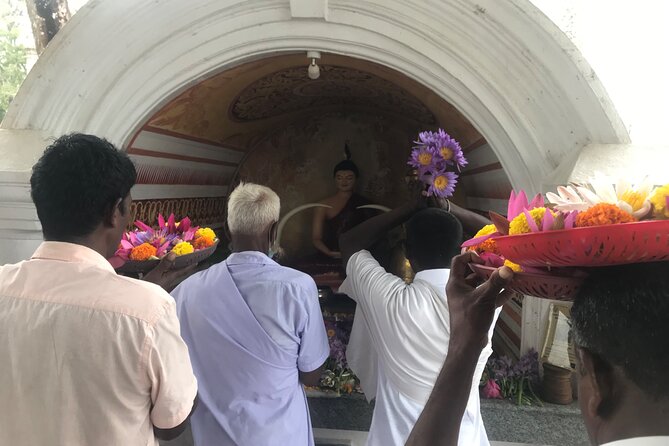
The Sandakada Pahana, or Moonstone, is a carved semicircular stone usually placed at the foot of a staircase or entrance. It is one of the distinctive details of ancient Sri Lankan architecture.
This 25-minute stop is longer than some of the smaller visits, and it deserves the extra attention. The Moonstone is easy to overlook if you focus only on the enormous stupas. Its carvings invite a closer look at the symbolic and decorative side of Anuradhapura.
Bring the right clothing. Several stops are religious sites, and the tour asks you to have a wraparound cloth if your knees are not covered. Dress respectfully from the start, since changing clothes during the circuit would be awkward. The supplied information specifically highlights knee coverage, so treat that as a practical requirement rather than a minor suggestion.
Basawkkulama Tank and the monastery refectory
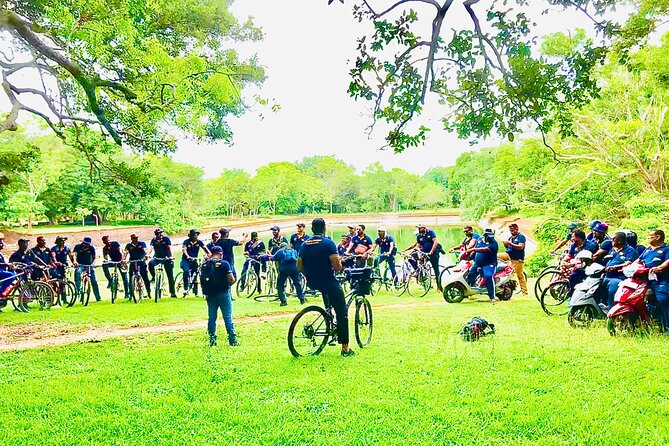
Basawkkulama Tank introduces one of the great practical achievements of ancient Sri Lanka: large-scale irrigation. Early irrigation works in Sri Lanka date to about 430 BCE, and Anuradhapura’s tanks helped support a settled kingdom over many centuries.
This is one of the stops where the riding itself adds value. A tank is not only a scenic pause. It helps you picture how water shaped the city, the fields, and the movement of people. The visit lasts around 20 minutes.
The Main Refectory of Abayagiri Monastery offers a more human view of monastic life. The Chinese monk Fa-Hien recorded that as many as 5,000 monks lived at Abhayagiri in the fifth century. A community of that size needed an organized system for preparing and serving meals.
The scheduled stop is only 10 minutes, so expect a concise visit. Still, the refectory connects the grand religious centre with daily routines. Buildings for food, bathing, and water management show that the monastery was a working institution, not simply a collection of statues and shrines.
Ruwanweliseya and the sacred Sri Maha Bodhi
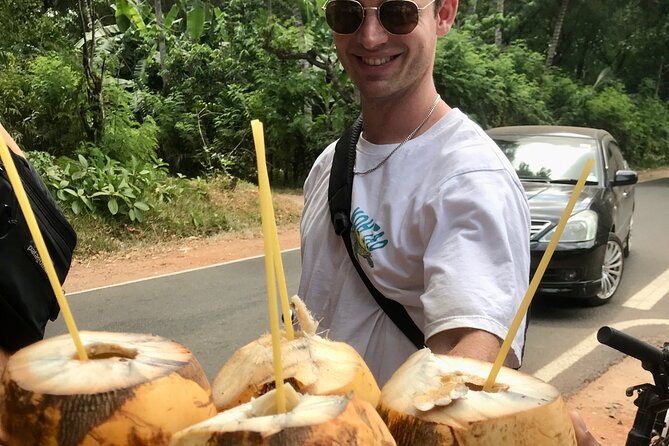
Ruwanweliseya is one of the tour’s major highlights. King Dutugamunu built it in the second century BCE, and the great white stupa remains one of Anuradhapura’s most important religious sites.
The 30-minute stop gives you time to take in the open setting, observe worship, and hear about the stupa’s place in Sri Lankan Buddhism. This is an active sacred site, so behave quietly and follow local customs. The visit is not only about architecture. People come here for prayer and ritual, and you should allow room for that.
The final listed stop is the Sri Maha Bodhi, a sacred fig tree in Mahamevnawa Gardens. It is described as the closest authentic living link to Gautama Buddha, which explains its importance to Buddhist pilgrims.
The visit also lasts about 30 minutes. That longer pause is fitting, since this is a place for observation rather than a quick photograph. Depending on the timing of your ride, you might encounter ceremonies, including activity near sunset. The exact timing is not guaranteed, but the tour’s slower approach leaves more room for the city’s religious life to appear naturally.
Food, bicycles, and what the $25 price covers
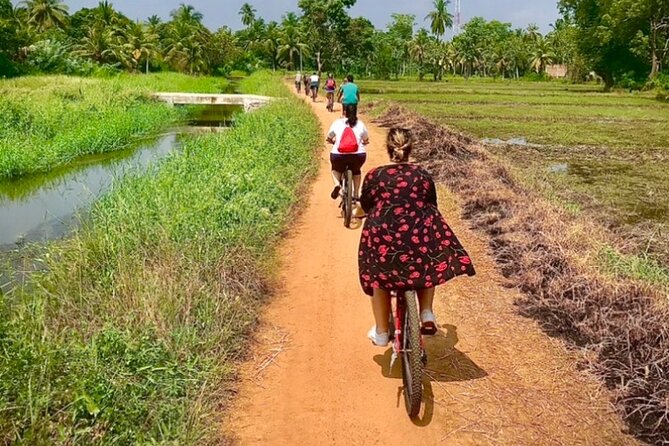
At $25 per person, the tour offers good value if you want a guide, bicycle, and several hours inside the heritage area. The price includes use of a mountain bicycle, bottled water, parking fees, guiding, and a vegetarian meal prepared by local people at Hela Bojun.
The food matters because it gives the day a local pause rather than a generic snack break. Hela Bojun is associated with vegetarian cooking, and the meal is part of the tour rather than an extra purchase. The information provided does not specify the exact dishes or meal time, so you should not book expecting a particular menu.
The low headline price needs one important adjustment. The UNESCO entrance fee is not included. Add $30 per person, or $15 for children under 13, when working out the full cost. That makes the real budget higher, but the price still compares well for a private four-and-a-half-hour route with equipment, water, food, and a guide.
The bikes are described as professional mountain bicycles from brands such as Giant, Trek, and Louis Garneau. That is reassuring for a ride of this length. You should still confirm any personal bike needs when booking, since the available information does not specify frame sizes, helmets, child seats, or electric bicycles.
Meeting point, timing, and practical preparation
You meet at Rides Hubwela Mada Gedara, Garage Waththa, near the old car park at 116/1 Watawandana Road in Anuradhapura. The ride returns to the same place, which simplifies the start and finish of your day.
Confirmation is provided when you book, and the meeting point is near public transportation. The activity is private, so only your group takes part. That makes it a better choice than a large shared cycling group if you value flexibility and direct conversation.
Plan for a moderate level of physical fitness. The total distance is about 10 kilometres, but the four-and-a-half-hour duration means you are out for a substantial part of the day. The riding is broken up by ten stops, yet heat and sun can still affect your comfort.
Wear light clothing that covers the knees, carry sun protection, and use the provided water carefully. A cloth wrap is specifically recommended if your knees are uncovered. Since the tour requires good weather, rain can alter the plan. If poor conditions cancel the activity, you are offered another date or a full refund.
Free cancellation is available when you cancel at least 24 hours before the start. Less than 24 hours leaves no refund, and late changes are not accepted.
Who should book this Anuradhapura bicycle tour?
I would choose this ride if you want the major Anuradhapura monuments but do not want to spend the day moving between them in a vehicle. It suits couples, families with reasonably fit older children, and private groups that enjoy asking questions as they go.
It is also a strong choice if you care about the connection between religion, engineering, and daily life. The route moves from towering stupas to bathing pools, reservoirs, a refectory, and a sacred tree. That range gives you a fuller picture of Anuradhapura than a quick monument tour.
You may prefer another format if you have limited mobility, dislike cycling in warm conditions, or want a highly detailed archaeological tour at each stop. The schedule is broad rather than scholarly, and the tour’s strength is the combination of movement, local explanation, quiet routes, and short visits.
Should you book it?
Book this tour if you want to see Anuradhapura actively and at a thoughtful pace. Saranga’s personal connection to Buddhism, the private format, the rural stretches, and the included vegetarian meal make it more than a simple bicycle rental.
Before booking, check the extra UNESCO fee, prepare suitable temple clothing, and be honest about your fitness. If those details work for you, this is a well-priced way to connect the city’s great stupas with its water systems, monastic remains, and living religious traditions.
FAQ
How long is the Anuradhapura bicycle tour?
The tour lasts approximately four hours and 30 minutes and covers about 10 kilometres in a loop.
What sights are included on the route?
The route includes Jetavanaramaya, the Samadhi Statue, Abhayagiriya Stupa, the Twin Baths, Eth Pokuna, the Sandakada Pahana Moonstone, Basawkkulama Tank, the Main Refectory of Abayagiri Monastery, Ruwanweliseya, and the Sri Maha Bodhi.
Is the UNESCO entrance ticket included?
No. The UNESCO ticket costs $30 per person, with a $15 ticket for children under 13.
What does the tour price include?
The $25 price includes bottled water, parking fees, use of a mountain bicycle, a guide, and a vegetarian meal cooked by local people at Hela Bojun.
Where does the tour start and finish?
The tour starts at Rides Hubwela Mada Gedara, Garage Waththa, near the old car park at 116/1 Watawandana Road in Anuradhapura. It ends back at the same meeting point.
What happens if bad weather cancels the tour?
The activity requires good weather. If it is canceled because of poor conditions, you can choose another date or receive a full refund.
More History Tours in the world
- Asheville Historic Downtown Guided Electric Bike Tour with Scenic Views
★ 5.0 · 1,234 reviews - Historic Athens: Small Group Electric Bike Tour
★ 4.9 · 966 reviews - Bordeaux: Historic Center & Chartrons District Bike Tour
★ 4.8 · 709 reviews - Boston City View Bicycle Tour: History and Landmarks
★ 5.0 · 638 reviews
Just added around the world
- Scenic Charleston Harbor & Wildlife E-Bike Tour + Milkshake Stop★ 5.0 · 86 reviews
- Moshi city bike day trip★ 5.0 · 17 reviews
- Outer Banks Film Location eBike Tour in Charleston★ 5.0 · 26 reviews
- Rau Forest Bike tour★ 5.0 · 12 reviews
- Kilimanjaro bike park safari★ 5.0 · 16 reviews
- 1-Day Moshi Villages bike tour★ 5.0 · 59 reviews
- Top 6 Days Mt. Kilimanjaro Bike trek Tour by Marangu-Kilema Route★ 5.0 · 15 reviews
- Chagga Villages in Mount Kilimanjaro Cycling Day Trip★ 5.0 · 42 reviews
Mountain Bike Tours, compared.
Best Haleakala Downhill Self-Guided Bike Tour with Maui Sunriders
Read our review →
La Paz: Mountain Bike Down the World’s Most Dangerous Road
Read our review →
Downhill Bike Tour with Rice Fields, Volcano and Meal
Read our review →
Maui Haleakala Sunrise Downhill Bike Tour with Mountain Riders Rated #1
Read our review →
Lisbon Bike Tour: Downhill Downtown Lisbon to Belém
Read our review →Browse the lists this tour appears in