
REVIEW · HIKING & TREKKING
Top 6 Days Mt. Kilimanjaro Bike trek Tour by Marangu-Kilema Route
Kilimanjaro by bicycle is not a gentle sightseeing ride. It is a high-altitude mountain expedition where you pedal, push, and sometimes carry your bike toward Africa’s highest point. The Kilema Route gives you the unusual chance to ride through forest, alpine desert, ice fields, and glacier country before making the final summit attempt on foot and bike.
I like two things right away. First, the route offers a genuine bike-accessible summit experience, not simply a ride near the mountain. Second, the package handles the practical burden of transfers, meals, porters, crew wages, and mountain entry fees. That matters when your energy is better spent managing altitude and rough ground.
The main caution is that this is demanding even for a strong cyclist. Several sections are too rocky to ride, the air gets thin quickly, and the summit night is cold and strenuous. A past trip also had a guide bicycle break down, while another rider found that drinking water froze at the summit, so equipment checks and cold-weather planning are essential.
Key Points Before You Book
- The Kilema Route is Kilimanjaro’s only bike-accessible route, but riding does not mean you pedal every meter.
- Horombo Hut sits at 3,705 meters, making the first day a serious altitude gain from Kilema Gate.
- The route changes character fast, moving from rainforest and mountain vegetation to alpine desert, rock, ice, and glacier views.
- The summit attempt starts around 4 a.m., with a steep climb to Gilman’s Point before riding short sections toward Uhuru Peak.
- Porters, meals, transfers, and crew wages are included, but bike hire, personal gear, tips, flights, and visas are extra.
- The price is $3,668 per person, which reflects a private mountain operation with substantial support, but you should confirm exactly what bicycle and accommodation arrangements are included.
What This Kilimanjaro Bike Trek Really Is
Think of this as a mountain climb with a bicycle, not a long-distance cycling holiday. The lower parts of the Kilema route allow meaningful riding, particularly when the trail is firm and the cyclist is comfortable on rough ground. Higher up, the bike becomes both a riding tool and a piece of equipment you may need to push or have carried.
The route begins at Kilema Gate at about 1,950 meters and reaches Horombo Hut at 3,705 meters on the first day. That altitude gain explains why the schedule is not simply about distance. You are climbing into thinner air, and a short rocky section can feel harder than a much longer road ride at sea level.
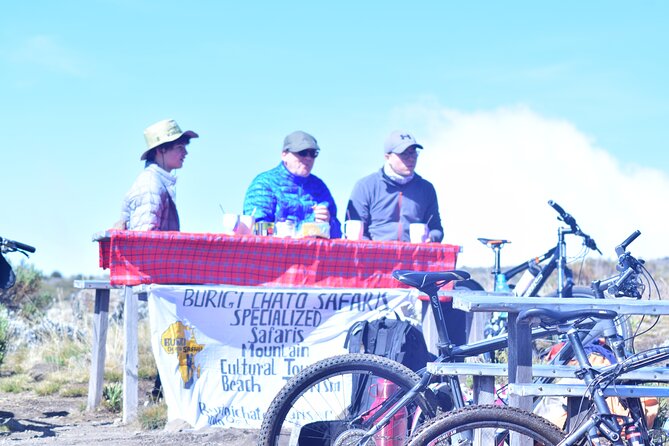
You stay in mountain huts rather than camping in tents. Porters support the operation, and meals are provided. This makes the experience more manageable, but it does not remove the physical challenge. You still need to carry a daypack with water, lunch, and extra clothing during the riding sections.
The package is listed at $3,668 per person. I consider that a serious but understandable price for a six-day Kilimanjaro climb with transport, crew, food, porters, and park-related costs included. The value depends heavily on the bicycle arrangement, since bike hire is not included. Ask for the exact rental price, bike model, repair plan, and replacement policy before paying.
More Hiking Trips in the world:
- Ketchikan Electric Bike and Rain Forest Hike Ecotour
★ 5.0 · 562 reviews - TRIPLE ACTIVITY TOUR, Bike Kayak Hike, ANTIGUA
★ 5.0 · 211 reviews - Chiang mai Hike & Downhill Bike Adventure –Suthep National Park
★ 4.5 · 204 reviews
Day 1: Kilema Gate to Horombo Hut
The morning begins with a transfer from Moshi to Marangu Gate, about 45 minutes away. You register at the park office there, then continue by vehicle to Kilema Gate. This two-gate process is worth understanding, since you do not simply drive straight to the cycling start.
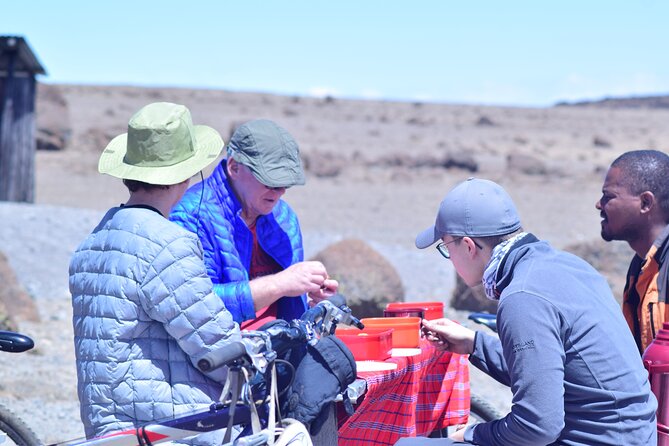
Before setting off, check your daypack and bicycle carefully. You need drinking water, your packed lunch, and extra clothing close at hand. Once on the route, you cycle with your guide for about 16 kilometers toward Horombo Hut.
The stated riding time is around six hours, but your pace will depend on fitness, bike control, weather, and trail conditions. The lower route brings forest-like scenery and the sense of leaving ordinary roads behind. As you climb, the vegetation thins and the mountain begins to feel more exposed.
Horombo Hut at 3,705 meters is a major milestone. Reaching it on the first day gives you an immediate taste of altitude, and the advice to move slowly is not decoration. Drink often, watch for headache or unusual fatigue, and tell your guide if you feel unwell.
One practical lesson comes from a reported bicycle failure on this section. The guide’s bicycle broke, creating understandable concern about how the trip would continue. Ask before departure how spare parts and repairs are handled. A remote mountain route is no place to discover that the support vehicle carries no workable solution.
Day 2: Alpine Desert and the Mawenzi Hut Area
Day two is described as roughly 10 kilometers of cycling through alpine desert, with a ride toward Mawenzi Hut before returning to Horombo Hut. The schedule allows up to 12 hours, which tells you that this is an acclimatization and mountain day, not a quick loop.
The scenery changes noticeably here. Trees give way to open, dry mountain ground, scattered rock, and wide views toward the volcanic peaks. The route can include small stones and rough surfaces, so balance and low-speed control matter more than sprinting ability.
This day has real value because you gain time at altitude without moving your sleeping place higher. That helps you adjust before the push toward Kibo Hut. You may find that the return to Horombo is physically tiring despite the short distance, especially after spending hours in thin air.
I would treat the daypack as carefully as the bike. Carry enough water, keep a warm layer available, and protect your hands. You can feel warm while climbing and then become cold quickly when stopping on an exposed section.
Day 3: Across the Saddle to Kibo Hut
Day three takes you from Horombo toward Kibo Hut through the high alpine desert. The first three kilometers are described as very rocky, eroded, and difficult to cycle. Here, walking beside your bike is not failure. It is the sensible way to protect your energy and avoid a fall.
After that rough opening, the trail improves. The Saddle, the broad area between Mawenzi and Kibo, is relatively flat and easier for cycling. It may be the most enjoyable riding of the upper route because the ground opens up and the grade becomes less punishing.
The final seven kilometers toward Kibo Hut are another matter. Low oxygen, cold temperatures, and the height make the ride strenuous. The last kilometer is especially hard, and the repeated advice to slow down and drink water deserves attention.
Kibo Hut is the launch point for the summit attempt. There is little comfort in reaching it, but there is satisfaction in seeing how far the bicycle has come. Keep your evening quiet and organized. Put your headlamp, batteries, warm clothing, and water where you can reach them without a frantic search in the dark.
Same city, a different ride:
- Lion City Bike Tour of Singapore
★ 5.0 · 6,211 reviews - Big Bike tour Amsterdam – See all in 3 unforgettable hours
★ 4.7 · 4,929 reviews - 3-Hour Porto Highlights on a Electric Bike Guided Tour
★ 5.0 · 4,392 reviews - Ninh Binh Full-Day Tour from Hanoi to Hoa Lu, Tam Coc & Mua Cave Via Boat & Bike
★ 5.0 · 4,384 reviews
Day 4: Rest, Summit Preparation, and a Schedule to Clarify
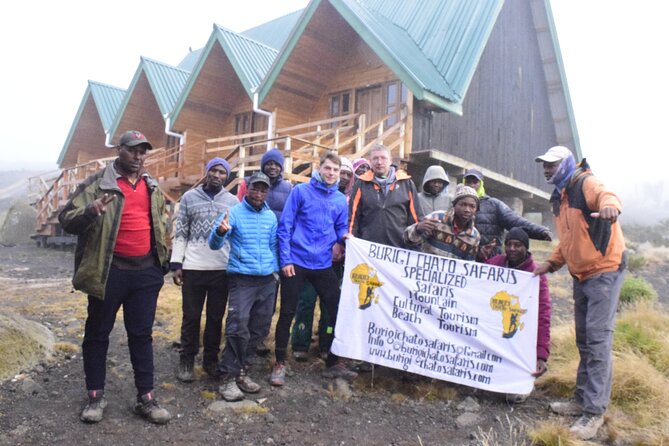
The supplied schedule describes a return toward Kibo Hut, lunch, rest, and an optional partial walk up the summit route around 4 p.m. It then places the final ascent later that night. In practical terms, this is your summit preparation period, although the day-by-day wording appears to overlap with the previous Kibo Hut arrival.
Confirm the exact schedule with the operator before departure. The important point is that you need a proper rest window before the night climb. You should not assume that every listed movement means a full extra day at a separate camp.
This is when your equipment matters most. Thermal clothing, a reliable headlamp, spare batteries, warm gloves, and water protection are essential. One account describes a hydration system freezing during the summit attempt, leaving the climber thirsty. That is a useful warning: keep drinking water insulated and carry a backup plan.
The summit is another 1,195 meters above Kibo Hut. At this point, the bicycle is not a magic shortcut. The climb still requires patience, careful pacing, and a willingness to walk for long stretches.
Day 5: Gilman’s Point, Uhuru Peak, and the Descent
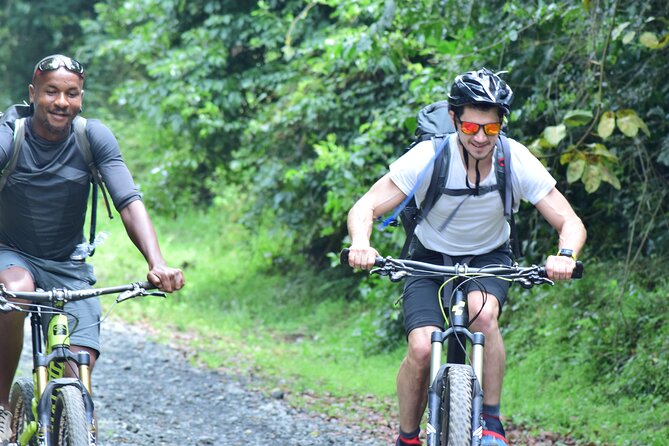
The summit day begins at about 4 a.m. You climb a zigzagging scree slope for roughly two hours to Hans Meyer’s Cave, then continue on steeper ground for about three more hours toward Gilman’s Point.
This is the hardest part of the trip for most people. The surface is loose, the air is thin, and the cold can make every adjustment feel slow. Your guide will set the pace, but you still need to communicate clearly about symptoms and energy.
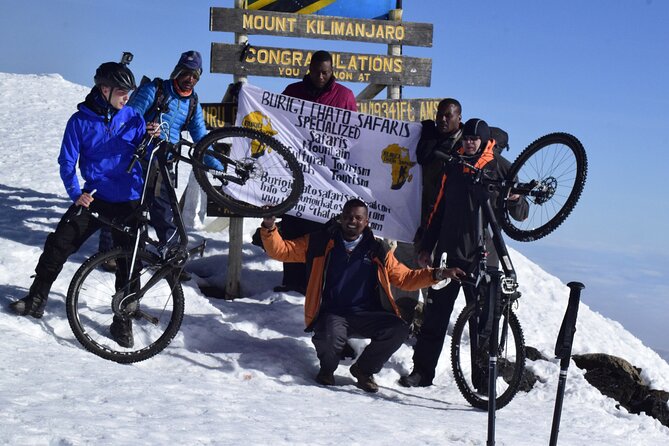
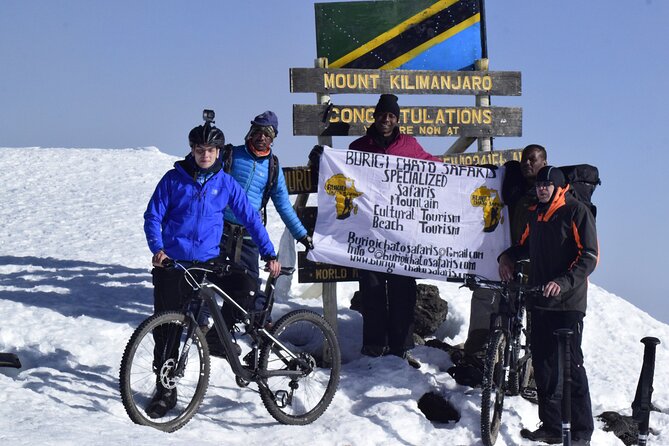
At Gilman’s Point, porters bring your bicycle, and you ride toward Uhuru Peak. The plan then includes reaching Uhuru Peak, taking photos, riding down to Stella Point, eating lunch, and continuing toward Horombo. The available description presents the bicycle sections as limited, with only about 15 to 20 percent of the Kibo to Uhuru stretch described as alpine desert riding and the descent toward Horombo classified as alpine desert and ice-cap terrain.
That detail is important. You are not racing from the crater rim to the summit. The bicycle element is special, but the summit route remains a climb first. Ice, cold, altitude, and loose ground can make walking safer than riding.
The descent is where the bicycle can finally feel like a reward. Still, fatigue changes your handling. Brakes, tires, and steering deserve a check before you descend. A high-speed ride sounds exciting, but on rough volcanic ground, control matters more than speed.
Day 6: Riding Back Through Forest to Moshi
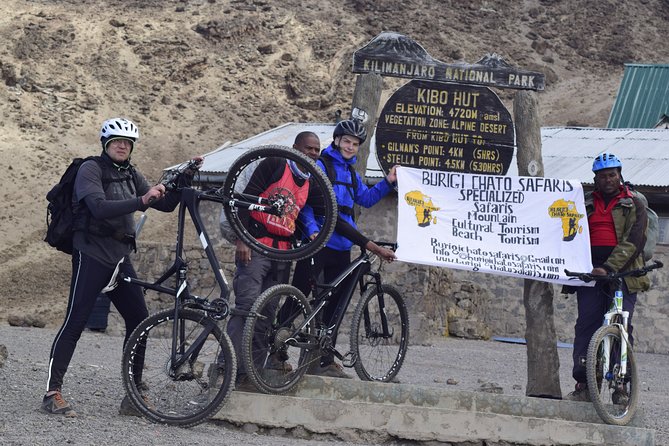
After breakfast, you make the final ride down to Kilema Gate, crossing alpine and rainforest zones before leaving the mountain. The listed riding time is about two hours, though the total day includes transfer arrangements and checkout at Marangu Gate.
This return is a satisfying change from the ascent. You move from cold, open high country back toward thicker vegetation and warmer air. It also gives you a final chance to appreciate how many climate zones Kilimanjaro packs into one mountain.
From Kilema Gate, you transfer to Marangu Gate for checkout and then continue to your Moshi hotel. The package includes private transport and airport pickup and drop-off, which can make the final logistics easier if arranged in advance.
What the $3,668 Price Covers
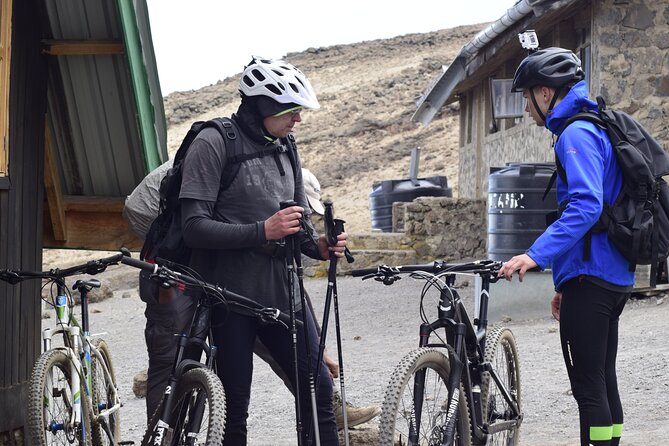
The price includes private transportation, crew wages, gate transfers, airport pickup and drop-off, taxes and fees, porters, and meals. Dinner is listed for six nights, lunch for six days, and breakfast for five days. Hotel accommodation before and after the climb can be booked either directly by you or through the operator.
That is a substantial support package. You are not paying only for access to a trail. You are paying for a coordinated mountain operation, local crew, food, transport, and porter support over several days.
The exclusions matter just as much:
- Mountain bike hire
- Personal mountain clothing and trekking equipment
- International and local flights
- Visas
- Tips for the crew
Before booking, request a written cost breakdown. Confirm the hotel nights, the number of porters, the rental bicycle, and what happens if a bike fails. Also ask how the operator handles a route change caused by poor weather.
Fitness, Safety, and Equipment
The tour calls for moderate physical fitness, but I would interpret that as a minimum rather than a target. You need endurance for long uphill days, confidence on rocky trails, and enough reserve for a summit night after several days of exertion.
You do not need to ride every section. Strong mountain-bike handling helps, but altitude affects everyone. A cyclist who can manage rough ground at home may still need to walk at 4,000 meters and above.
Pack for changing conditions. Your daypack needs water, lunch, and extra clothing. Your summit kit should include thermal layers, a headlamp, spare batteries, gloves, and a way to keep water from freezing. Personal mountain gear is not included, so do not assume the operator supplies these items.
The crew can provide first aid support. One account describes treatment and help when altitude sickness symptoms appeared. That is reassuring, but it is not a substitute for honest communication. Tell your guide about headaches, nausea, dizziness, breathing problems, or unusual weakness.
The Guide and Crew Experience
The trip includes a guide riding with you, porters, and a wider mountain crew. One account names a guide called Gabriel and describes the riding as a mix of rocky roads and rugged mountain travel.
The strongest praise attached to this operation centers on motivation, porter support, professional guiding, and good organization. There are also practical warnings: a broken guide bicycle and frozen drinking water. I would take both sides seriously. Human support can be excellent, but remote mountain trips still depend on equipment checks and clear procedures.
The advertised maximum is 200 people, although the actual size of your group is not stated. Ask how many cyclists will be in your departure group. A small cycling group can move more easily on rough ground, while a very large group may mean more waiting and less individual attention.
Who Should Book This Experience?
Book it if you want a rare mountain challenge and you are comfortable with the idea that the bicycle will sometimes be pushed, carried, or parked while you climb. It suits experienced cyclists, fit hikers who enjoy rough trails, and people who value the unusual story of reaching Kilimanjaro’s summit with a bike.
It is not a good choice if you want a relaxed cycling holiday, smooth trails, predictable weather, or a simple summit walk. A non-summit itinerary is available, so that may be a better fit if you want the mountain experience without committing to the final ascent.
The package receives a five-star rating from 15 submitted ratings, with 100 percent recommending it. I would treat that as encouraging rather than conclusive, especially because some of the available comments concern shorter Moshi and Arusha bike outings rather than this exact six-day summit schedule.
Free cancellation is available up to 24 hours before the start time. Changes made within 24 hours are not accepted, and poor weather can lead to a new date or a full refund.
Should You Book the Kilimanjaro Bike Trek?
I would book this if the unusual combination of cycling and mountaineering is the main reason you are coming to Tanzania. The Kilema Route gives you something a standard hike does not: a chance to ride through several mountain zones, sleep in huts, and bring a bicycle into the summit story.
I would not book it without first confirming the exact day-four schedule, bicycle rental details, repair support, group size, and cold-weather procedures. At $3,668, the package offers considerable support, but the missing bicycle hire and personal gear can add to the final bill.
For a fit cyclist who accepts slow progress, rough ground, and a demanding summit night, this is a memorable and unusual way to approach Kilimanjaro. Just arrive prepared to walk when the mountain demands it.
FAQ
How long is the Kilimanjaro bike trek?
The experience lasts approximately six days, starting and ending with transfers connected to Moshi.
Which route does the bike trek use?
It uses the Marangu and Kilema route, beginning at Kilema Gate and finishing back at Kilema Gate before transfer to Marangu Gate.
Is the entire route ridden by bicycle?
No. Some sections are too rocky, steep, eroded, or affected by altitude to ride comfortably. The summit climb includes walking, and porters bring the bicycle to Gilman’s Point.
Is bicycle hire included in the price?
No. Trekking mountain bike hire is listed as an additional cost.
What is included in the $3,668 price?
Private transportation, crew wages, gate transfers, airport pickup and drop-off, taxes and fees, porters, and the listed meals are included. Hotel accommodation before and after the climb may be booked directly or through the operator.
What time does the activity start?
The stated start time is 9:00 a.m. The summit attempt itself begins at about 4 a.m. on summit day.
What fitness level is required?
The activity states that you should have a moderate physical fitness level. In practice, you also need to handle rocky mountain riding, long uphill days, high altitude, cold, and a strenuous summit climb.
Can I cancel for a full refund?
Yes, if you cancel at least 24 hours before the experience start time. Cancellations or changes made less than 24 hours before the start are not accepted, and poor weather may result in a different date or a full refund.
Just added around the world
- Scenic Charleston Harbor & Wildlife E-Bike Tour + Milkshake Stop★ 5.0 · 86 reviews
- Moshi city bike day trip★ 5.0 · 17 reviews
- Outer Banks Film Location eBike Tour in Charleston★ 5.0 · 26 reviews
- Rau Forest Bike tour★ 5.0 · 12 reviews
- Kilimanjaro bike park safari★ 5.0 · 16 reviews
- 1-Day Moshi Villages bike tour★ 5.0 · 59 reviews
- Chagga Villages in Mount Kilimanjaro Cycling Day Trip★ 5.0 · 42 reviews
- Private Discovery of Montpellier by Bike-Taxi★ 5.0 · 83 reviews
Hiking & Trekking, compared.
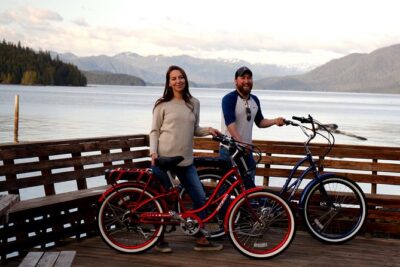
Ketchikan Electric Bike and Rain Forest Hike Ecotour
Read our review →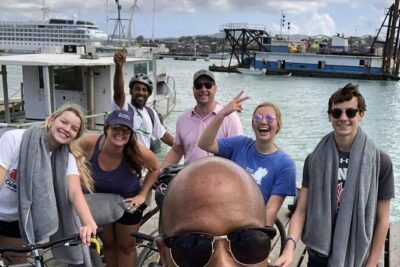
TRIPLE ACTIVITY TOUR, Bike Kayak Hike, ANTIGUA
Read our review →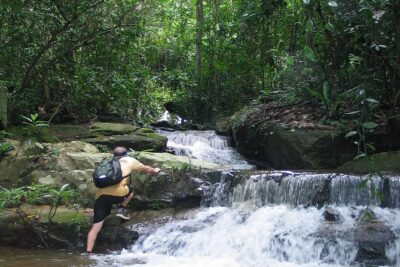
Chiang mai Hike & Downhill Bike Adventure –Suthep National Park
Read our review →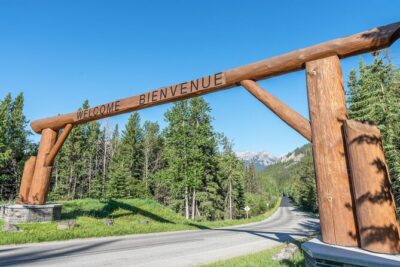
eBike and Hike Banff to Johnston Canyon small group guided program
Read our review →
Hike and Bike Tour to Columbia River Gorge Waterfalls
Read our review →
Suthep National Park Hiking & DH Mountain Biking
Read our review →
Browse the lists this tour appears in