REVIEW · SEOUL
Seoul E-bike Tour
Seoul’s historic core is spread across busy streets, steep lanes, palace grounds, and old neighborhoods. This three-hour e-bike tour gives you a practical way to connect the main sights without spending the morning on foot or inside a bus. Guides such as TJ, Harry, Vincent, Jun, and Taejin lead the rides, and routes are adjusted for seasonal highlights and traffic.
I like two things right away: the early start and smart routing, which can help you reach Gyeongbokgung before the streets fill, and the stop at Tongin Market, where you sample Korean snacks rather than simply taking photographs. The guides also take photos during the ride, so you can stay present instead of constantly reaching for your phone.
The main consideration is pace. You see many places, but most stops last only 10 to 15 minutes. The tour is best for getting your bearings and choosing where to return later, not for a slow visit inside every attraction. You’ll also need moderate fitness, basic comfort on a bicycle, and a reusable water bottle.
Key points at a glance
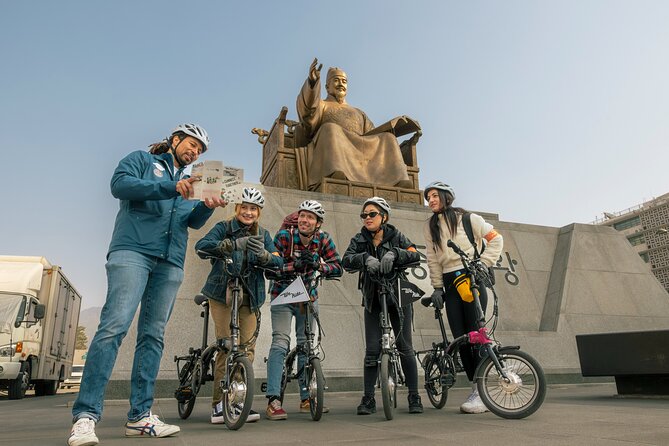
- Ride Seoul’s old center efficiently: Cover Cheonggyecheon Stream, Gyeongbokgung Palace, Seochon, Bukchon, and Jogyesa Temple in one morning.
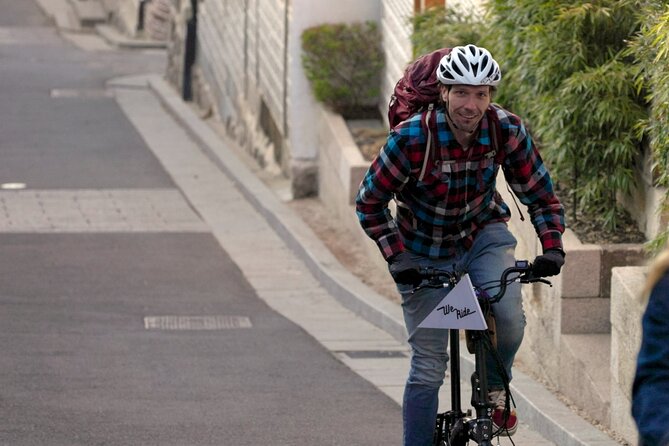
- Use electric assistance on the hills: The e-bikes make the climb toward Bukchon and the older neighborhoods far easier.
- Eat at Tongin Market: Try local Korean snacks, including tteokbokki and rice cakes, with recommendations from the guide.
- Travel in a small group: The maximum is 15 people, with many departures operating in smaller groups.
- Time the palace visit well: The route may allow you to catch the changing of the guard at Gyeongbokgung.
- Plan for preparation time: Arrive 20 to 30 minutes early for fitting, safety instruction, and bike practice.
Why an e-bike works so well in central Seoul
Walking is rewarding in Seoul, but the city can be tiring. The historic sights are not arranged in one tidy pedestrian circuit, and Bukchon includes noticeable hills. An e-bike gives you the reach of a vehicle while keeping you close to the streets, alleys, markets, and neighborhood details that a coach cannot reach.
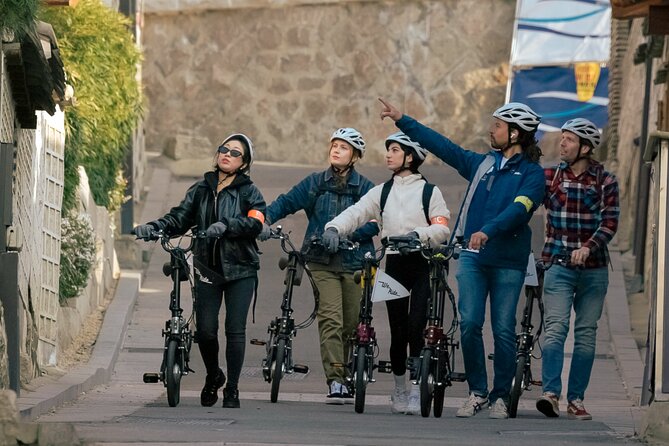
The electric assistance does not remove the physical side of the ride. You still steer, brake, and watch the road, but the motor helps when the route rises. That makes a real difference around the hanok neighborhoods. Several guides ride at the front and back of the group when needed, helping keep everyone together and moving safely.
You should still have a moderate level of fitness. The tour includes riding, short walks, stops, and some uphill sections. It is not designed as a fast cycling workout, though. The e-bikes are intended to make the route manageable, and the experience suits a mix of ages and abilities when everyone follows the guide’s instructions.
The route mainly uses bike lanes or quieter back streets when possible. That does not mean Seoul traffic disappears. You remain in a large city, so attention matters at crossings and intersections. The guide’s job is especially valuable here, since you can focus on following the group rather than working out every turn yourself.
More E-Bike Tours in the world:
- 3-Hour Porto Highlights on a Electric Bike Guided Tour
★ 5.0 · 4,392 reviews - Lisbon: Hills, Alfama, and Mouraria Tour by Electric Bike
★ 4.8 · 3,438 reviews - Athens Scenic Electric Bike Tour with optional Acropolis visit
★ 5.0 · 3,350 reviews
Starting at Le Meilleur Jongno Town
The meeting point is at Le Meilleur Jongno Town, 19 Jong-ro, in Seoul’s Jongno District. Plan to arrive 20 to 30 minutes before the advertised start. This extra time is not part of the riding itself. It is used for bike fitting, safety equipment, instructions, and preparation.
You receive an electric bike, helmet, safety vest, and insurance. The early arrival requirement is worth taking seriously. Arriving at the last minute can make the whole group wait and leaves you with less time to become comfortable with the controls.
Bring a reusable water bottle. It is required, or you can purchase one from the operator before departure. A refill station is available along the route, and the tour also includes a bathroom break. Lunch is not included, but the market snacks provide a useful taste of Seoul during the morning.
The group can include up to 15 people, though some departures are much smaller. A small group matters on a bicycle tour because it is easier to stay together, hear the guide, and receive help at crossings or photo stops. It also gives you a better chance to ask about food, neighborhoods, and what to do after the ride.
Cheonggyecheon Stream and Seoul’s changing center
The first sightseeing stop is Cheonggyecheon Stream, once a major waterway in the city. The stop is brief, around 10 minutes, but it gives the guide a useful place to explain how Seoul’s center has changed over time.
You are not coming here for a long walk along the water. Think of it as an opening lesson and a chance to settle into the ride. The stream also helps you see the contrast between Seoul’s modern commercial center and the older districts ahead.
Because the stop is short, you may want to return later if you want to follow more of the waterway. The e-bike tour gives you the context, not a full stream-side outing.
Gyeongbokgung Palace and the changing of the guard
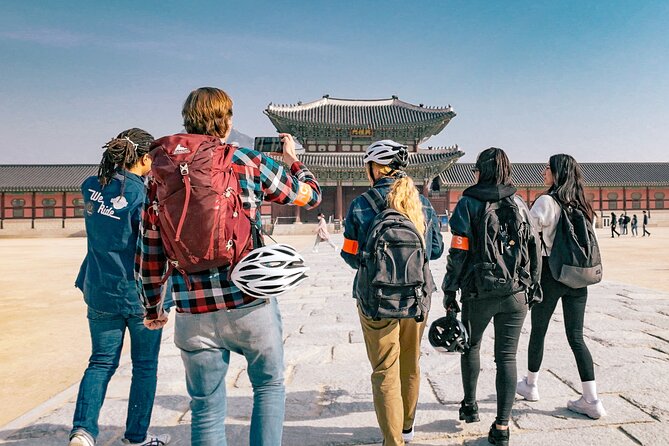
Gyeongbokgung is one of Seoul’s major landmarks and the most important palace stop on this route. The tour pauses at the grand gate, giving you time for photographs and an explanation of the palace’s place in Korean history.
The timing can be a real advantage. Several departures have reached the palace in time for the changing of the guard, sometimes allowing the group to watch the ceremony from start to finish. That depends on the day and the route schedule, so it should be treated as a welcome possibility rather than a guarantee.
The stop is listed at about 10 minutes. That is enough to see the gate and absorb the setting, but not enough for a full palace visit. Admission to the palace is not included, and the tour does not replace a dedicated visit to the courtyards, halls, and museum areas.
I would use the tour as an introduction, then return to Gyeongbokgung later if the palace is high on your list. You will already have learned where the main entrance is and how it fits into the older part of Seoul.
A few more bike tours around the world worth a look
- Lion City Bike Tour of Singapore
★ 5.0 · 6,211 reviews - Big Bike tour Amsterdam – See all in 3 unforgettable hours
★ 4.7 · 4,929 reviews - Ninh Binh Full-Day Tour from Hanoi to Hoa Lu, Tam Coc & Mua Cave Via Boat & Bike
★ 5.0 · 4,384 reviews - Small Group Guided Bike Tour of Amsterdam’s Hidden Gems
★ 5.0 · 3,936 reviews
Tongin Market and the best food break
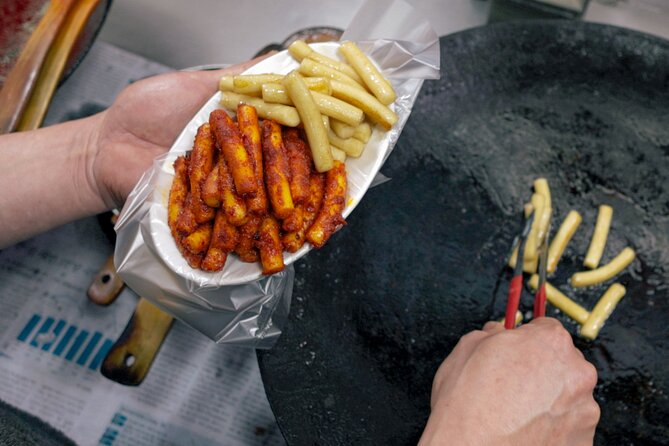
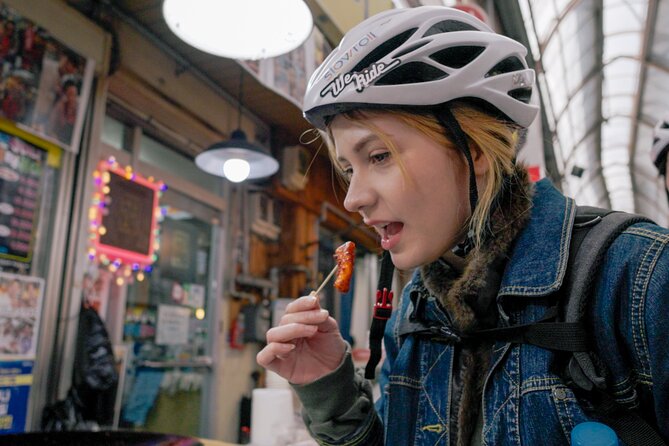
Tongin Market is where the ride turns from sightseeing into tasting. The guide recommends local street food, and included snacks give you a small but useful introduction to Korean market eating.
The food may include tteokbokki and different types of rice cakes. One ride included three varieties of rice cake, while another featured especially memorable tteokbokki. Vegetarian or vegan snack options have also been provided on some departures, but you should confirm food needs before booking if you have allergies or strict dietary requirements.
This is not a full lunch. The market stop lasts around 10 minutes, so think of it as a snack break rather than a meal. That short pause works well during a three-hour ride, but you should plan lunch afterward if you expect to be hungry.
I like this stop because it connects the city’s history to ordinary daily life. You are not only looking at old buildings. You are tasting something bought and eaten in a working market, with the guide explaining what to try and how it fits into local food culture.
Seochon, old walls, and a useful coffee pause
Seochon brings you into one of the older neighborhoods near the palace. The route includes an ancient city defense feature and passes the oldest surviving gate in the city wall. There may also be an optional hot drink and a short walk.
The stop is brief, around 10 minutes, but it offers a different feel from the palace gate. Here, the interest comes from the smaller scale: older streets, neighborhood buildings, and traces of the city’s defenses. You get a better sense of how Seoul’s historic center was organized beyond the royal compound.
One ride included a stop at an air-conditioned bakery, which made sense during hot weather. That kind of pause may depend on the day’s route and conditions, so do not assume it is a standard part of every departure. Still, the tour clearly leaves room for practical breaks when weather or group needs call for them.
The Blue House and Seoul’s political story
The route continues to the Blue House, the former presidential residence. The stop lasts about 10 minutes, enough for an outside view and a short explanation from the guide.
This is one of the tour’s useful contrasts. In a single morning, you move from royal Seoul at Gyeongbokgung to a later chapter of the country’s political life. The stop helps place the city’s modern government district beside its older palace neighborhoods.
The Blue House visit is primarily a sightseeing and photo stop. The tour does not describe an interior visit, so you should not expect a long indoor tour. Its value is in the setting and the guide’s explanation, especially if you want a quick overview of how Seoul developed across different periods.
Bukchon Hanok Village without the punishing climb
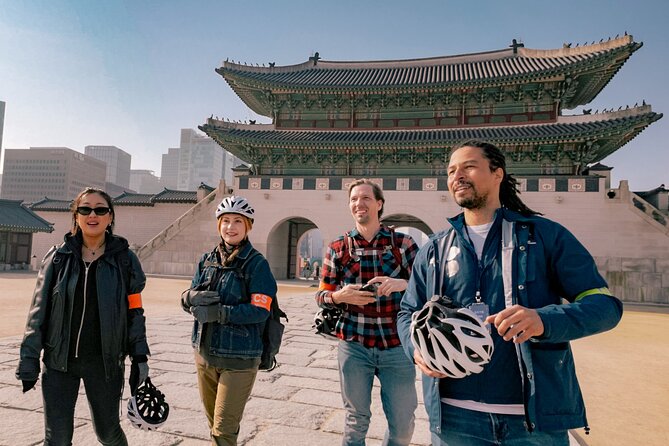
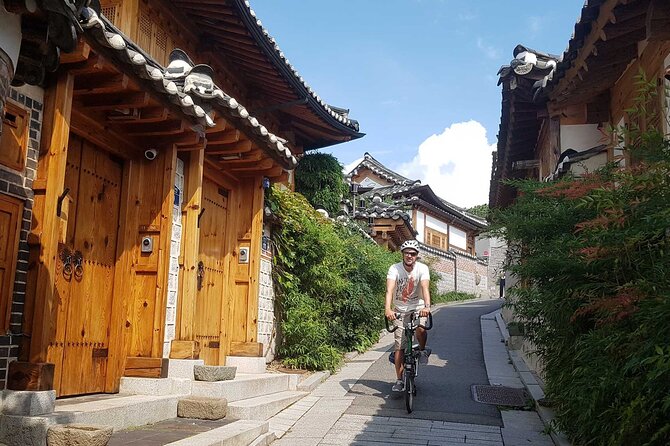
Bukchon Hanok Village is one of the most photogenic parts of the ride. Traditional hanok homes line narrow, hilly streets, creating a sharp change from the broad roads and modern buildings elsewhere in central Seoul.
This is where the electric assistance earns its keep. The hills can be tiring on a standard bicycle, especially in warm weather, but the motor helps you reach the village without arriving exhausted. You stop for photographs and may also see a traditional hanok home up close, including an explanation of the underfloor heating system used in Korean homes.
The stop lasts around 15 minutes. That is enough for a good look and a few photos, but Bukchon is a residential area, not simply an open-air attraction. Keep your voice down, follow local signs, and avoid treating private doorways as photo props.
You may wish you had more time here. That is the trade-off for covering so much ground. The ride gives you an efficient introduction to Bukchon, then you can return on foot if you want to explore its lanes at a slower pace.
Jogyesa Temple provides a calm finish
Jogyesa Temple is the final sightseeing stop. After the traffic, palace grounds, market food, and uphill lanes, its quieter setting gives the morning a welcome change of rhythm.
The visit lasts about 15 minutes. You can look around, take in the temple buildings, and listen to the guide explain the site’s place in Korean Buddhist life. It is a calm ending rather than a dramatic finale, and that works well after an active morning.
From Jogyesa, the group returns to the starting point. The activity ends where it began, which makes it easier to collect anything you left behind and continue to lunch or another Seoul sight.
What the guides add to the ride
The guides are a major part of the experience. Names associated with departures include TJ, Harry, Vincent, Jun, Taejin, Hagar, and Limmi. Their backgrounds and personalities vary, but the strongest pattern is clear: you can expect help with safety, local history, photographs, and practical advice for the rest of your Seoul stay.
Vincent has been noted for clear English and cultural explanations. TJ, Harry, Jun, and Taejin have led routes that included palace ceremonies, neighborhood stops, and frequent photographs. Hagar and Limmi have also guided groups through the city and helped keep the ride comfortable and organized.
Photography is a particularly nice touch. Guides take pictures at stops and along the route, then send them to participants afterward. That means you can pay attention to the ride and your surroundings instead of asking another person to take every group photo.
The guides also offer recommendations for food and places to visit after the tour. That is useful because the route gives you a quick look at several districts, but you will probably want to return to one or two of them later.
Is $120 a fair price?
At $120 per person, this is not the cheapest way to see Seoul. You are paying for the e-bike, helmet, vest, insurance, local guide, included market snacks, route planning, and the convenience of covering several districts in one morning.
The value depends on how you travel. If you have only a short stay, the tour can save time and help you understand how the palace district, markets, hanok neighborhoods, and temple area fit together. It also avoids the fatigue of walking between every stop and the limited views you get from a large bus.
The price is harder to justify if you want long visits at Gyeongbokgung or Bukchon, or if you already know Seoul well and prefer to explore independently. You should also budget for lunch afterward, since the market food is a snack rather than a full meal.
For a first morning in Seoul, I see the price as reasonable if you value efficient sightseeing, a small group, and local guidance. It is less compelling as a stand-alone food tour or palace tour.
Who should book this ride?
I would recommend it most to first-time visitors, short-stay visitors, active couples, families with older children, and anyone who wants a broad introduction before exploring Seoul alone.
It also works well for people who enjoy city cycling but do not want a strenuous ride. The electric assistance handles much of the effort, while you still get the street-level experience of moving through the city under your own control.
You should think twice if you dislike bicycles, have difficulty with moderate physical activity, or want a slow cultural tour with long indoor visits. The route is busy with sights, and the stops are short. Hot, rainy, or otherwise poor weather can also affect the experience. The operator may cancel in bad weather and offer another date or a full refund.
Should you book the Seoul E-bike Tour?
Book it if you want to see a large slice of historic Seoul in three hours, sample market food, and learn how the city’s palace district connects to Bukchon, Seochon, the Blue House, and Jogyesa Temple. The early timing, electric bikes, small groups, and guide-taken photos make the format especially practical.
Skip it if your main goal is a detailed palace visit, a long market meal, or a quiet walk through Bukchon. For everyone else, this is a strong first-day overview. Bring water, arrive early, wear comfortable clothes, and leave room in your schedule to revisit the places that catch your interest.
FAQ
How long does the Seoul E-bike Tour last?
The riding experience lasts approximately three hours, with additional preparation time before departure. You must arrive 20 to 30 minutes early for bike fitting, safety instructions, and equipment.
Where does the tour start and finish?
The tour starts at Le Meilleur Jongno Town, 19 Jong-ro, Jongno District, Seoul. It ends back at the same meeting point.
What is included in the price?
The price includes use of an electric bike, helmet, safety vest, insurance, a local guide, and Korean snacks from the traditional market visited during the tour.
Is lunch included?
No. Lunch is not included. The tour includes market snacks, but you should plan a separate meal after the ride.
Do I need to bring water?
Yes. You must bring a reusable water bottle or purchase one from the operator before the tour. A refill station is available along the route.
How many people can join the tour?
The maximum group size is 15 people. Some departures may be smaller.
What level of fitness is required?
Participants should have a moderate level of physical fitness. You will ride an electric bicycle, stop for short walks, and encounter some hills, especially near the historic neighborhoods.
What happens if the weather is poor?
The experience requires good weather. If the operator cancels because of poor weather, you can choose another date or receive a full refund. You can cancel for a full refund if you do so at least 24 hours before the start time.
Just added around the world
- Barcelona: Bike Rental for 2 – 24 Hours★ 4.7 · 33 reviews
- Barcelona: 3-Hour Bike Tour with Spanish Tapas★ 4.9 · 14 reviews
- Barcelona: 4-Hour Off-the-Beaten-Track Small Group Bike Tour★ 4.8 · 63 reviews
- Barcelona: Private 5 Neighborhoods Tour by Electric Bike★ 4.9 · 17 reviews
- Barcelona: 4-Hour E-Bike Photography Tour★ 4.8 · 36 reviews
- Barcelona: 3.5-Hour Street Art Tour by Bamboo Bike★ 5.0 · 56 reviews
- Thai culture and Bangkok local life guided bike tour★ 4.9 · 32 reviews
- Barcelona Beach 3-Hour Bike Tour★ 4.8 · 65 reviews
Seoul Bike Tours, compared.
Nami Island, K-drama Garden & Rail Bike Day Tour
Read our review →
Day Trip to Nami Island with Rail bike and The Garden of Morning Calm
Read our review →