
REVIEW · NEW ORLEANS
New Orleans Creole Odyssey Small-Group Bike Tour
New Orleans reveals itself best when you leave the French Quarter behind. This three-hour bike ride carries you from old streets and music halls to cemeteries, oak-lined avenues, City Park, and Bayou St. John, giving you a useful sense of how the city fits together.
I like the flat route, which makes it practical for most reasonably fit riders, and the small group, capped at 10 people. I also like the guides’ personal style. Eric is praised for his warm delivery and love of the city, while Gomez can lead the tour in both English and Spanish. The main drawback is that the ride requires strong physical fitness, and the one-speed bikes with old-fashioned seats may feel basic to experienced cyclists.
- City Park and Bayou St. John: See two of New Orleans’ most peaceful outdoor places in one ride.
- Creole history on two wheels: Learn how French, African, Caribbean, Native American, and American influences shaped the city.
- Small group of no more than 10: It is easier to hear the guide and ask questions.
- St. Louis Cemetery No. 3: Get a close look at New Orleans burial customs and above-ground cemetery design.
- Congo Square and Louis Armstrong Park: Connect the city’s musical story to a sacred gathering place.
- Practical setup: Your bike, helmet, and bottled water are included, with free cancellation up to 24 hours before departure.
Why this route shows you more than the French Quarter
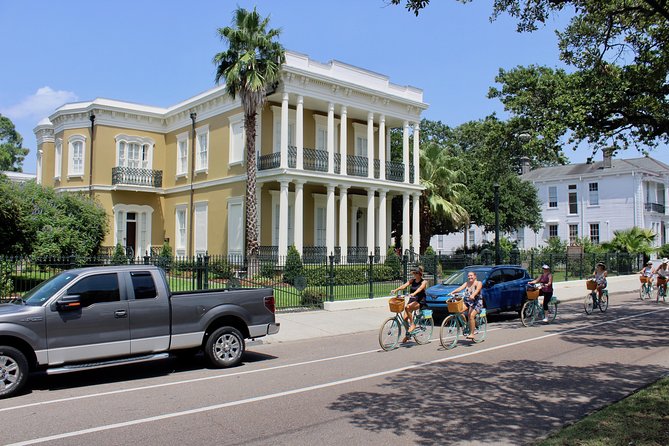
The French Quarter is New Orleans’ famous front door, but it is only one room in the house. This tour begins at 626 N Rampart Street and quickly points you toward neighborhoods that many first-time visitors miss.
That change of scenery is the main reason to book. You still get the old buildings, music, and Creole stories, but you also see how the city shifts from dense historic streets to leafy parks and waterways. The route links places that would be awkward to visit on foot in a single morning or afternoon.
At $55 per person, the price is reasonable for a three-hour guided outing. The fee includes the bicycle, helmet, bottled water, and a professional guide. You are paying not only for transport between sights, but also for the local context that connects them.
The group limit of 10 matters. New Orleans streets can be noisy, and a large cycling group would make it harder to hear explanations or stay together. With a smaller group, you should have a better chance to ask about architecture, burial customs, music, or the city’s changing neighborhoods.
Starting near Rampart Street and the oldest city
The meeting point is the Flambeaux Bicycle Tours shop at 626 N Rampart Street, close to public transportation. The tour starts with bike and helmet setup, followed by a short introduction before heading into the city.
You will pause in the French Quarter to see the oldest building in New Orleans. The stop is brief, but it gives the ride a useful starting point: this is where the city’s early European story is easiest to read in its streets and buildings.
You do not spend the whole tour inside the Quarter, and that is a strength. The famous district can consume an entire visit, yet it tells only part of New Orleans’ story. From here, the ride heads toward Faubourg Marigny and Mid-City.
A few more bike tours around the USA worth a look
- Party Bike Private Party Up To 14 People in Old Town Scottsdale
★ 5.0 · 3,541 reviews - Guided Bike Tour of Old Town Key West
★ 5.0 · 2,611 reviews - NYC: Central Park Bike Rentals
★ 4.2 · 2,528 reviews
Faubourg Marigny brings music into the story
Faubourg Marigny is associated with Frenchmen Street, live music, and the cultural life that gives New Orleans its particular sound. The tour uses this neighborhood as a bridge between the historic center and the less visited parts of the route.
I like this stop because it adds social and musical context rather than treating the city as a row of old buildings. You get a sense of how streets, clubs, neighborhoods, and local traditions fit together.
The stop lasts about 15 minutes, so it is more of an orientation than a full neighborhood visit. If Frenchmen Street is high on your personal list, save extra time to return on your own. During the tour, the focus is on seeing the area and hearing its place in the city’s story.
Two hours through Mid-City
Mid-City receives the largest share of the tour, about two hours. That tells you what this experience is really about. It is not a quick loop around the Quarter with a few distant views. It is a neighborhood ride designed to show you the broader city.
You will pedal along a mostly flat route with leafy streets, parks, and older residential areas. The pace is described as leisurely, but you still need to be comfortable riding for several hours. The route is suitable for most fitness levels, yet the operator advises a strong physical fitness level, so this is not the right pick if you want a passive sightseeing trip.
The long Mid-City section also gives the guide room to explain how New Orleans developed beyond its original French Quarter core. You may find this part less instantly dramatic than the cemetery or bayou, but it is valuable because it gives you a better feel for the city’s scale.
Guides make a real difference here. Eric is known for a personable style, an engaging delivery, and a clear affection for New Orleans. Gomez is bilingual, which is helpful if you prefer to ask questions or hear explanations in Spanish. The quality of your experience will depend partly on the guide leading your departure, but the tour is built for conversation rather than a rushed audio-script approach.
St. Louis Cemetery No. 3 and the city’s burial customs
The stop at St. Louis Cemetery No. 3 lasts about 20 minutes. This is one of the most distinctive parts of the ride because New Orleans cemeteries look and function differently from many burial grounds elsewhere in the United States.
The guide explains local district burial practices and the use of above-ground tombs. This is more than a spooky photo stop. It helps explain how water, soil, climate, religion, and family traditions shaped the city’s cemeteries.
You should expect a focused visit rather than a long cemetery tour. The time is enough to understand the basic customs and see the site, but not enough for a detailed study of every tomb. Listen closely here, since the background makes the later references to Creole culture and city history easier to follow.
Same city, a different ride:
- Red Rock Canyon eBike Half-Day Tour
★ 5.0 · 1,870 reviews - NYC: Central Park Bike Rental
★ 4.1 · 1,651 reviews - Central Park Bike Rental
★ 4.7 · 1,509 reviews - Austin Biker Gang E-Bike Tour
★ 5.0 · 1,399 reviews
City Park gives the ride breathing room
City Park is the largest urban park in New Orleans, and the route takes you through its greener surroundings. After riding through streets and neighborhoods, the open park provides a welcome change of pace.
The tour stops at the City Park location of Café du Monde for a 10-minute break. Food and drinks are not included, so budget separately if you want a snack or coffee. This is a useful pause, especially in warm weather, though the short time means you should not plan a full meal.
I especially like this part for first-time visitors. It shows a quieter side of New Orleans that is easy to miss if you spend your entire visit around Bourbon Street and the central Quarter. The park also breaks up the ride physically, giving you a chance to pause before continuing toward the water.
You may want to dress for the forecast rather than the calendar. New Orleans weather can make a bike ride feel very different from a walk, and the operator recommends weather-appropriate clothing. Closed-toed shoes are preferred, while flip-flops and loose slippers are not allowed because they are hazardous for cycling. Sandals with heel straps are a suitable alternative.
Bayou St. John reveals the city’s watery edge
Bayou St. John is one of the most atmospheric stops on the route. You ride beside a natural and historic waterway used by Native Americans and early French settlers.
This is where the tour’s geography comes into focus. New Orleans is shaped by water, and Bayou St. John helps you see the relationship between settlement, travel, and the surrounding wetlands. The stop lasts about 15 minutes, so expect a short explanation and a chance to take in the setting rather than an extended waterfront visit.
The bayou also gives the ride a calmer mood. After the architecture and music of the city center, the waterway and open space feel like a reset. It is one of the clearest examples of how this tour moves beyond standard downtown sightseeing.
Congo Square connects place, culture, and jazz
The final major stop is Congo Square, part of the Louis Armstrong Park area. The guide discusses the origins of jazz and the importance of this sacred location.
This stop adds cultural weight to the route. Music in New Orleans is not presented as a backdrop for nightlife. It is tied to community, memory, African traditions, and the city’s long social history. Congo Square gives you a place to think about those connections.
The stop is listed at about 15 minutes, so expect a compact but important explanation. If you have heard plenty of jazz in clubs but want more context for how New Orleans’ musical identity developed, this is one of the tour’s most useful moments.
After Congo Square, you return to the Flambeaux shop. The final ride is short, about five minutes, giving you a clear end point rather than leaving you somewhere unfamiliar.
What the bikes and pace are really like
The tour includes a bicycle and helmet, which keeps the $55 price simple. You do not need to arrange a separate rental or figure out how to collect a bike elsewhere.
One practical point comes from the equipment itself: at least one rider described the bike as a one-speed model with an old-fashioned seat. That setup is basic. It may be perfectly fine for a flat, leisurely route, but riders used to modern multi-gear bikes should not expect high-end equipment.
The route’s flat profile is the bigger advantage. You are not dealing with steep climbs, and the tour is designed to cover a lot of ground without turning into a race. Still, three hours on a bike is a real physical activity. You should be comfortable sitting on a bicycle and pedaling for an extended period.
The minimum age is 13, and every participant must be taller than 4 feet 11 inches. Teenagers can fit the experience well, especially if they are happy to combine exercise with history. The tour has worked well for families with teenagers aged 13, 16, and 18, but younger children cannot join under the stated age rule.
Guide style and the value of a small group
The strongest part of this experience is the guide-led storytelling. Eric is frequently singled out for being friendly, personable, and well informed about the city. His enthusiasm comes through without making the ride feel like a formal lecture.
Gomez brings a different advantage. He is fully bilingual, so Spanish-speaking participants can engage more easily with the history and ask questions in the language they prefer.
The small-group format supports both styles. A maximum of 10 people is small enough for direct conversation, but large enough to retain the social feel of a shared outing. It is also easier for the guide to manage stops and keep the group together.
The tour is booked, on average, about 23 days ahead, so I would not leave it until the final day of your trip if your schedule is tight. You receive a mobile ticket, which keeps the check-in process simple.
Who should book this New Orleans bike tour?
I would choose this tour if you are visiting New Orleans for the first time and want a wider introduction than the French Quarter can provide. It is also a good fit if you enjoy history, neighborhoods, public parks, waterways, and music, rather than only restaurants and nightlife.
Families with teenagers should consider it, provided everyone meets the age and height rules. The route is flat, the pace is not described as strenuous, and the stops break up the riding.
You should think twice if you dislike bicycles, have difficulty riding for three hours, or want a highly polished rental bike. The basic one-speed equipment may not suit serious cyclists, and the operator requires proper footwear.
Weather matters. The experience requires good conditions, so poor weather can lead to a different date or a full refund. You can cancel for a full refund up to 24 hours before the start time, but late cancellations and changes are not accepted.
Should you book the Creole Odyssey?
Book it if you want to connect New Orleans’ major themes in one outing: Creole culture, music, burial customs, parks, neighborhoods, and water. The route gives you a useful map of the city while getting you away from the most crowded tourist streets.
At $55, the combination of equipment, guide, water, and three hours of sightseeing is solid value. The main tradeoff is comfort: the bikes are practical rather than fancy, and you need enough stamina for a sustained ride.
If you can handle that, this is an efficient and enjoyable way to see the real New Orleans beyond the Quarter. Choose a departure with Eric or Gomez if available, wear secure shoes, bring weather-appropriate clothing, and leave room for a Café du Monde purchase during the City Park break.
FAQ
Where does the bike tour start?
It starts at Flambeaux Bicycle Tours, 626 N Rampart Street, New Orleans, Louisiana 70116.
How long does the tour last?
The tour takes approximately three hours.
What is included in the price?
The price includes a professional guide, bicycle use, helmet use, and bottled water. Food, drinks, and gratuities are not included.
Is the route difficult?
The route is flat and described as leisurely, making it suitable for most fitness levels. However, participants should have a strong physical fitness level because the ride lasts about three hours.
What is the minimum age and height?
Participants must be at least 13 years old and taller than 4 feet 11 inches.
What happens if the weather is poor?
The tour requires good weather. If it is canceled because of poor weather, you can choose another date or receive a full refund. You can also cancel up to 24 hours before the start time for a full refund.
Just added around the USA
- Austin: 2-Hour Sightseeing Bike Tour★ 4.8 · 146 reviews
- Austin: 1.5-Hour Lady Bird Lake Bike Tour★ 4.9 · 19 reviews
- Austin: Electric Bike City Sightseeing Tour★ 4.8 · 141 reviews
- Asheville: Downtown E-Bike Tour★ 4.8 · 16 reviews
- NYC: Radical and Weird History Bike Tour of Manhattan★ 4.6 · 20 reviews
- Anchorage: Coastal Trail 3-Hour City Bike Tour★ 5.0 · 11 reviews
- Miami: South Beach Bike Rental★ 5.0 · 72 reviews
- Bar Harbor: Acadia National Park Carriage Roads Ebike Tour★ 4.9 · 75 reviews
New Orleans Bike Tours, compared.
New Orleans French Quarter and Garden District Bike Tour
Read our review →
Creole New Orleans Electric Bike Tour (ages 16 & up)
Read our review →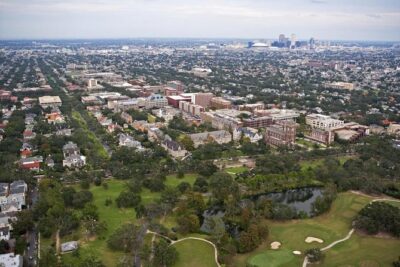
New Orleans History and Sightseeing Small-Group Bike Tour
Read our review →Browse the lists this tour appears in