
REVIEW · NEW ORLEANS
New Orleans History and Sightseeing Small-Group Bike Tour
New Orleans is easier to understand when you pedal beyond the French Quarter. This three-hour ride links Jackson Square, the Mississippi River, Faubourg Marigny, Treme, City Park, St. Louis Cemetery No. 3, and Louis Armstrong Park, giving you a quick but useful introduction to the city’s streets and stories. The small group, limited to 10 people, is a real advantage.
I like the mix of easy cycling and local history. I also like that guides such as Chip, Guy, Jeffrey, and Betsy adjust their stories to the group’s questions rather than delivering a rigid speech. The main consideration is that the bikes can feel heavy, and some riders need a little time to get used to the braking system.
Key points before you book
- Seven major stops in three hours: You cover far more ground than you could comfortably walk.
- A flat, mostly leisurely route: This suits many riders, including people in their 60s and families with teens.
- A maximum of 10 people: The guide can answer questions and keep an eye on the group.
- History beyond the postcard New Orleans: Treme, Faubourg Marigny, City Park, and St. Louis Cemetery No. 3 add useful context.
- Comfortable bikes with baskets: Bottled water is included, and a Cafe du Monde stop has been part of some rides.
- Plan for the weather: The tour requires good weather, and cancellations caused by poor conditions qualify for a new date or full refund.
Why a bike is a smart way to see New Orleans
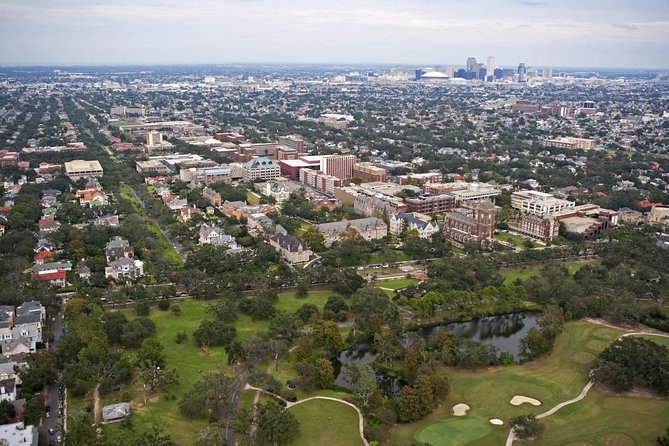
New Orleans is not a compact city in the way a first-time visitor might expect. The French Quarter is easy to explore on foot, but City Park, Bayou St. John, Treme, Faubourg Marigny, and the riverfront spread beyond it. A bike lets you connect these places without spending the day in a vehicle or wearing out your feet on uneven streets.
I especially like this format for your first full day in town. You get a broad sense of the city, then you can return to the places that caught your attention. A guide can point out restaurants, neighborhoods, architecture, music traditions, and local details that are easy to miss when you are simply following a map.
The route is described as flat and relatively easy. Several rides have included quiet neighborhood streets, the riverfront boardwalk, City Park, and roads with bike lanes. Still, this is a city ride, not a closed course. You need to pay attention, follow the guide, and feel comfortable operating a bicycle around ordinary traffic.
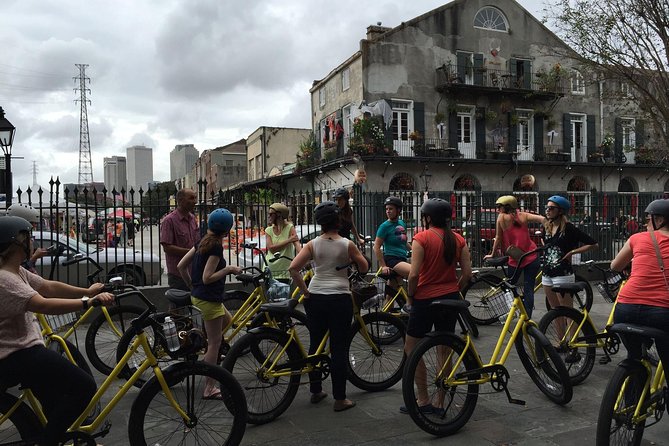
The bikes are described as comfortable and include baskets. One practical warning is worth taking seriously: the bikes are fairly heavy, and the braking mechanism may take a few minutes to feel natural. Ask for an explanation before setting off, then test the brakes in a safe area.
More City Bike Tours in the USA
- Asheville Historic Downtown Guided Electric Bike Tour with Scenic Views
★ 5.0 · 1,234 reviews - New York City: Highlights of Central Park Bike or eBike Tour
★ 4.6 · 800 reviews - The Ultimate LA Tour: Full Day Sightseeing Tour On Electric Bike
★ 5.0 · 478 reviews
Starting at 223 Dauphine Street
The tour begins at 223 Dauphine Street, in the French Quarter, and returns to the same meeting point. That makes the tour easy to fit into a day of sightseeing, especially if you are staying near the Quarter or using nearby public transportation.
Arrive ready to ride rather than dressed for a formal city tour. Comfortable, weather-appropriate footwear is recommended, and you should bring a willingness to spend three hours outdoors. Bottled water is provided, which is useful in New Orleans heat, though the weather can still affect the experience.
The group size is capped at 10. That is small enough for the guide to hear questions and make brief adjustments based on the group’s interests. It also means the tour is more personal than a large procession of cyclists, while still giving you the energy of a shared outing.
The minimum age is 12. The ride is not aimed only at athletic cyclists. Families with teenagers, couples, friends, and older riders have all found the pace manageable. Your own comfort with city riding matters more than speed or fitness.
Jackson Square and the Mississippi River
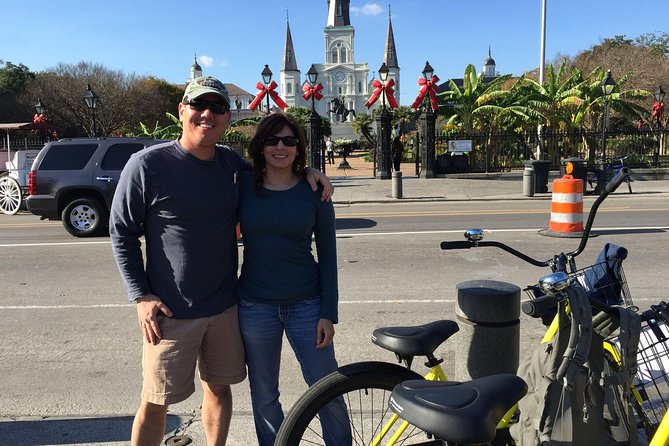
The opening French Quarter stop brings you to Jackson Square and the Mississippi Riverfront. This is where the tour introduces the Creole beginnings of New Orleans, rather than treating the Quarter as a collection of pretty balconies and party streets.
Jackson Square gives you an immediate sense of the city’s visual character and public life. The riverfront adds the geographic piece: New Orleans grew around the Mississippi, and its position shaped trade, migration, culture, and daily life.
You spend about 15 minutes here, enough for the guide to establish the setting without turning the first stop into a long lecture. Since the stop is free, there is no separate admission charge to worry about. The real value is the explanation, particularly if this is your first look at New Orleans.
The French Quarter also appears at the end of the route. That repeat is useful. At the start, you are learning how the city fits together. Near the end, you are riding through the old streets with more context for the sights and sounds around you.
Faubourg Marigny and New Orleans music
From the Quarter, the ride continues into Faubourg Marigny, described as the oldest neighborhood outside the French Quarter. The stop lasts about 10 minutes, but the neighborhood deserves attention because it connects the city’s older residential fabric with its music culture.
Faubourg Marigny is home to New Orleans’ largest music scene. Your guide can help place that music in the city’s broader story, rather than leaving you with only a list of clubs to visit later. This is a good point to ask about evening music options if you want to return on your own.
The short stop also shows why cycling works here. You see the change from one neighborhood to the next without a long transfer, and you get a sense of how close these districts are despite their different moods and identities.
More Historic Bike Tours in the USA
- Party Bike Private Party Up To 14 People in Old Town Scottsdale
★ 5.0 · 3,541 reviews - Guided Bike Tour of Old Town Key West
★ 5.0 · 2,611 reviews - Boston City View Bicycle Tour: History and Landmarks
★ 5.0 · 638 reviews - Historic Bike Tour in Tucson
★ 5.0 · 553 reviews
St. Louis Cemetery No. 3 and above-ground burial
St. Louis Cemetery No. 3 sits in the Bayou St. John neighborhood. It is a large above-ground cemetery, and the 15-minute stop adds a different side of New Orleans to the music and architecture.
The above-ground tombs are not just a visual curiosity. They reflect local burial customs and the city’s relationship with water and soil. A guide can give you the basic context while pointing out details you might otherwise pass without understanding.
This stop is also a good break from continuous riding. The route uses the bicycle to cover distance, then pauses at places where a short explanation adds meaning. You are not spending the whole three hours in the saddle.
As with the other stops, admission is free. The cemetery visit is brief, so you should not expect a long cemetery tour or an extended look at every section. It works best as one part of a wider introduction to New Orleans.
City Park and centuries-old live oaks
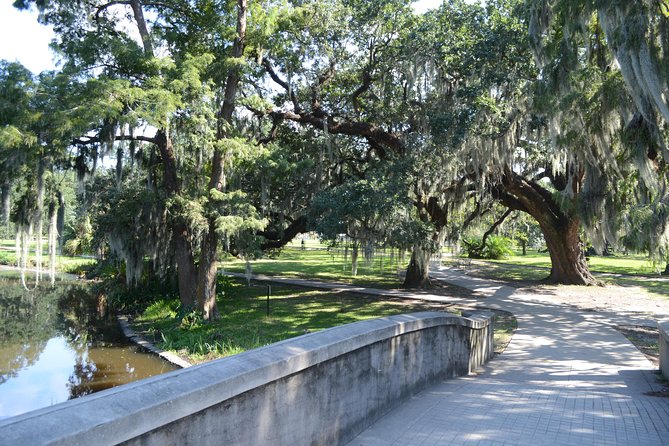
City Park brings a welcome change in scenery. The tour visits the park’s large collection of mature live oaks, including trees estimated at 400 to 850 years old. Even a 10-minute stop gives you a chance to appreciate the scale and age of the trees.
For me, this is one of the route’s strongest contrasts. You begin among the dense streets of the French Quarter, then reach an open park setting with enormous oaks. The shift helps you see New Orleans as more than historic buildings, bars, and music venues.
The park is also one of the reasons the tour covers more ground than a walking route. You get a taste of a major green space without spending half a day traveling there separately. If City Park interests you, the guide’s short visit can help you decide if it deserves a longer return visit.
The stop itself is about 10 minutes, so keep your expectations in check. This is an introduction, not a full park exploration. The bike route gives you a survey of the area and lets you save extra time for another visit.
Treme and the story of free people of color
Treme is one of the most important stops for understanding New Orleans culture. The neighborhood was home to free people of color, and its story adds social and cultural depth to the route.
This part of the tour helps correct a common first-visit mistake: seeing New Orleans only through its French Quarter buildings. Treme connects the city’s history with its music, community life, and changing neighborhoods. The guide’s explanation matters here because the meaning is not always obvious from the street itself.
You spend about 10 minutes at the stop, with additional information shared while riding. Guides have been praised for answering questions and shifting the discussion toward subjects the group wants to understand. That flexibility is useful in Treme, where a short stop can open up many questions.
If you are particularly interested in New Orleans culture and local history, pay close attention here. It is one of the places where the tour offers more than sightseeing. You are getting a framework for understanding why the city’s music and traditions developed as they did.
Louis Armstrong Park and the beginnings of jazz
Louis Armstrong Park is presented as a place tied to the beginnings of jazz, with a strong connection to New Orleans music and culture. The park provides another chance to connect the city’s physical spaces with its musical identity.
The stop lasts about 10 minutes. That is enough for orientation and a few stories, but not enough for an exhaustive account of jazz or the park’s entire history. Think of it as a primer that can guide what you listen for and where you might go later.
The park also gives the route a fitting cultural center. You have already seen the river, historic neighborhoods, a cemetery, and City Park. Here, the threads come together around the music that has made New Orleans famous around the world.
Some rides have included a stop at Cafe du Monde for a beignet. That detail is not listed as a formal scheduled stop, so do not book solely on the assumption that it will happen. If it is part of your departure, it is a pleasant addition, but the core tour is the seven-stop bike route.
Returning through the French Quarter
The final section takes you back through the French Quarter to the starting point. After seeing the nearby neighborhoods and wider city, the Quarter should feel less like an isolated tourist district and more like one piece of a larger urban story.
This return ride is not just a transfer. You have time to notice the streets differently, with the guide pointing out sights and sounds along the way. Since the ride ends where it began, you can continue sightseeing, stop for lunch, or head back to your accommodation without arranging another pickup.
The full experience lasts about three hours. The listed stops account for roughly 85 minutes, leaving the rest for cycling between neighborhoods, brief roadside explanations, and pauses along the way. That balance is sensible: you see a lot, but the tour does not try to turn every stop into a long formal talk.
Guides, group size, and the feel of the ride
Guide quality is central to this experience. Chip is repeatedly singled out for clear stories, local insight, humor, restaurant suggestions, and the ability to answer oddball questions. Guy is described as friendly, safety-minded, and strong on Creole history. Jeffrey is noted for professionalism and for adapting the ride to the group’s interests. Betsy has been praised for making the route fun and suggesting places to eat.
Those names are useful, but your guide may be someone else. The important pattern is the style of guiding: history mixed with practical advice, questions welcomed, and a willingness to adjust the conversation. That makes a big difference on a three-hour tour.
The group limit of 10 supports that style. You are not likely to disappear at the back of a large pack, and the guide can keep the pace together. Small groups also make it easier to ask about restaurants, music, neighborhoods, and what to do next.
Safety is another recurring strength. The route is considered safe and relatively easy, though normal city-riding care still applies. Most roads have bike lanes according to the experience details provided, and portions use the riverfront boardwalk, quiet neighborhoods, and City Park.
The $55 price and overall value
At $55 per person, this is a reasonable price for a three-hour guided outing that includes a local guide, bicycle, basket, and bottled water. You are paying not just for the equipment, but for the route design and the explanations that connect seven parts of the city.
The value is strongest if you have limited time. A walking tour might give you more detail in one neighborhood, but it will not take you efficiently to City Park, Bayou St. John, Treme, Faubourg Marigny, and the riverfront in the same morning or afternoon.
It is also good value for anyone who wants to stay active without committing to a strenuous ride. The terrain is flat, the pace is described as leisurely, and the route includes frequent stops. You get exercise, but the focus remains on seeing and understanding the city.
The main value limit is depth. Three hours cannot provide a full tour of every neighborhood or a complete account of New Orleans history. If you want detailed architectural study, extensive cemetery research, or a focused jazz tour, choose a more specialized experience. If you want a useful first survey, this format makes sense.
Free cancellation is available up to 24 hours before the start time for a full refund. Changes or cancellations within 24 hours are not accepted for a refund. Since good weather is required, a weather cancellation offers a different date or a full refund. The same applies if the minimum number of participants is not met.
Who should book this New Orleans bike tour?
I would choose this tour for a first or second day in New Orleans, especially if you want a quick sense of how the neighborhoods connect. It suits families with children aged 12 or older, couples, friends, and older riders who prefer cycling to a long walking route.
It is also a strong choice if you want history with a relaxed social feel. Chip, Guy, Jeffrey, and Betsy have each been noted for making the information easy to follow and adding humor or practical suggestions. That balance keeps the ride from feeling like a classroom.
You should think twice if you dislike city cycling, have trouble handling a heavier bike, or want to spend most of your time inside one landmark. The brakes may take some adjustment, and the weather can cancel the outing. Wear proper shoes, listen carefully to the safety briefing, and choose a morning or afternoon departure that fits your energy and the forecast.
Should you book it?
Book this tour if you want to see more than the French Quarter, learn how Creole culture, jazz, cemeteries, parks, and neighborhoods fit together, and cover the city without spending three hours on foot. The flat route, 10-person limit, comfortable bikes, and strong guides make it a practical first look at New Orleans.
Skip it if you want a slow, highly detailed visit to one site or do not feel comfortable riding in city streets. For most visitors who have only a few days, though, $55 buys a useful orientation, some gentle exercise, and a long list of places to revisit.
FAQ
How long does the New Orleans bike tour last?
The tour lasts approximately three hours.
Where does the tour begin?
The tour begins at 223 Dauphine Street, New Orleans, Louisiana 70112.
Where does the tour end?
The activity ends back at the same meeting point.
What neighborhoods and sights does the route visit?
The route includes the French Quarter, Jackson Square, the Mississippi Riverfront, Faubourg Marigny, St. Louis Cemetery No. 3, City Park, Treme, and Louis Armstrong Park.
What is included in the price?
The price includes a local guide, bottled water, and a comfortable bicycle with a basket.
How many people can join the tour?
The maximum group size is 10 people.
What is the minimum age?
The minimum age is 12 years.
Are morning and afternoon departures available?
Yes. You can choose a morning or afternoon departure.
What happens if the weather is poor?
The experience requires good weather. If it is canceled because of poor weather, you can choose a different date or receive a full refund.
More City Highlights Bike Tours in the USA
- Central Park NYC Highlights Small-Group Bike Tour
★ 4.5 · 425 reviews - Downtown Nashville’s Hidden Gems E-bike Tour
★ 5.0 · 372 reviews - The Original Music City Electric Bicycle Guided City Tour 16miles
★ 5.0 · 354 reviews - Classic Philadelphia City Bike Tour
★ 5.0 · 323 reviews
More Historic and Landmark Bike Tours in the USA
- Palm Springs Modernism Architecture & History Bike Tour
★ 5.0 · 359 reviews - Historical Bike Tour of Savannah and Keep Bikes After Tour
★ 5.0 · 345 reviews - Miami Beach Art Deco & History Bike Tour with Design Enthusiast
★ 5.0 · 135 reviews - Electric Bike Wildlife & History Tour along Fort De Soto’s Beaches
★ 5.0 · 50 reviews
Just added around the USA
- Austin: 2-Hour Sightseeing Bike Tour★ 4.8 · 146 reviews
- Austin: 1.5-Hour Lady Bird Lake Bike Tour★ 4.9 · 19 reviews
- Austin: Electric Bike City Sightseeing Tour★ 4.8 · 141 reviews
- Asheville: Downtown E-Bike Tour★ 4.8 · 16 reviews
- NYC: Radical and Weird History Bike Tour of Manhattan★ 4.6 · 20 reviews
- Anchorage: Coastal Trail 3-Hour City Bike Tour★ 5.0 · 11 reviews
- Miami: South Beach Bike Rental★ 5.0 · 72 reviews
- Bar Harbor: Acadia National Park Carriage Roads Ebike Tour★ 4.9 · 75 reviews
New Orleans Bike Tours, compared.
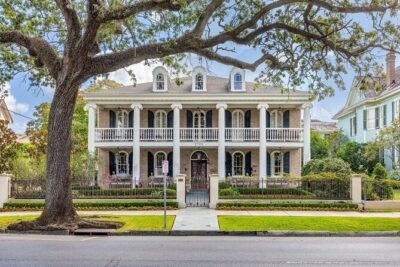
New Orleans French Quarter and Garden District Bike Tour
Read our review →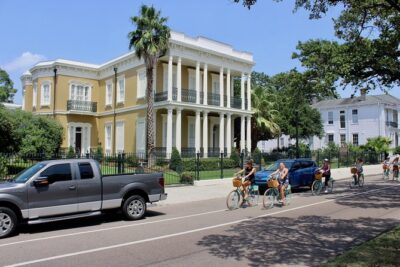
New Orleans Creole Odyssey Small-Group Bike Tour
Read our review →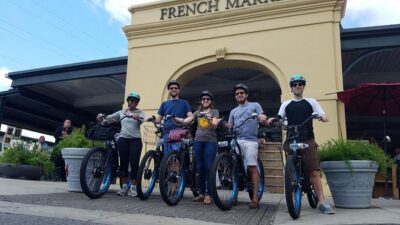
Creole New Orleans Electric Bike Tour (ages 16 & up)
Read our review →Browse the lists this tour appears in