
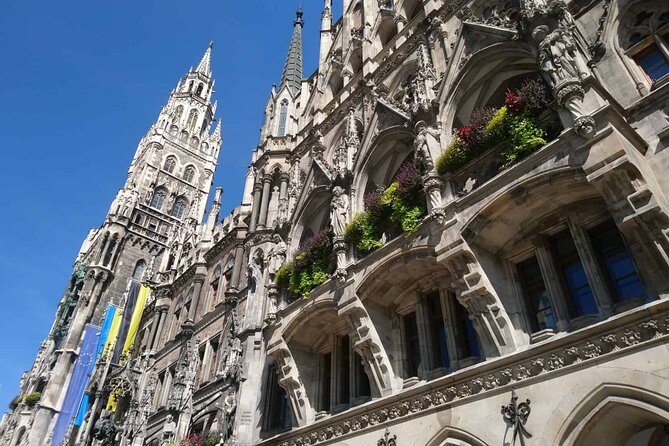
REVIEW · MUNICH
Best of Munich Electric Bike Tour
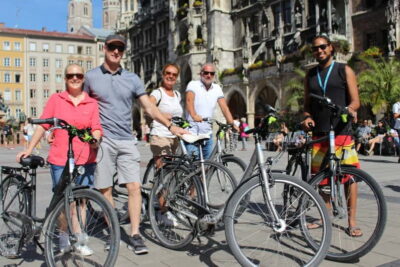
Munich reveals itself quickly from a bike: grand royal squares give way to quiet gardens, river views, modern city life, and a beer garden beneath the Chinese Tower. The electric bike keeps the ride easy, while guides such as Canaan, Rob, Susanna, Karl, Mark, and Dan bring the city’s tangled past into focus.
I like the broad sweep of this route and the way it mixes famous sights with useful local stops. I also like the 40-minute beer garden break, where you can buy Bavarian beer and food rather than simply stare at another monument. The main drawback is group size: up to 20 riders can be a lot for one guide to watch on city streets.
Key points at a glance
- Covers Munich’s major eras: Royal Bavaria, the Nazi period, postwar remembrance, Jewish life, and modern city culture all appear during the ride.
- Uses an electric bike: Helpful in cold or wet weather, though many riders find the mostly flat route easy without much motor assistance.
- Includes the English Garden: You ride through one of the world’s largest urban parks and stop at the famous Eisbach river wave.
- Allows time for a real beer stop: The beer garden at the Chinese Tower has about 7,000 seats, with food and Hofbräu beer sold separately.
- Keeps a practical pace: The route lasts about four hours and returns to the starting point at Karlsplatz.
- Works best early in your stay: The guide’s restaurant, museum, and activity tips can help shape the rest of your Munich visit.
Why this four-hour ride works so well in Munich
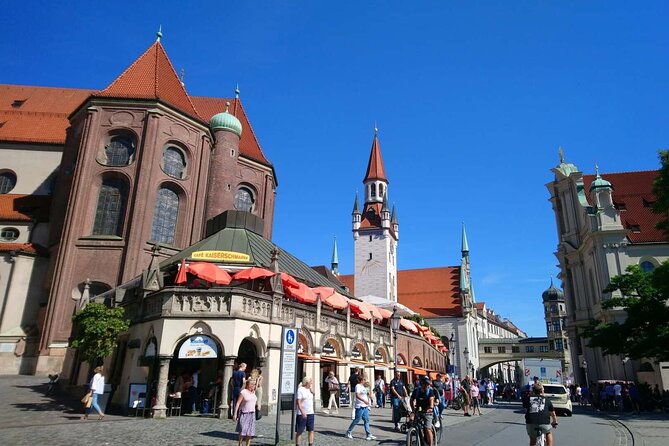
At $71.90 per person, this is not the cheapest way to see Munich, but it covers a lot of ground with a live guide, bike, and helmet included. You are paying for a planned route through several parts of the city, not just a short spin around the old center.
The value improves if you want orientation on your first day. Instead of spending hours working out which royal square connects to which museum, you follow a clear route and get a quick explanation at each stop. You also avoid the fatigue that can come from walking between the city center, Maxvorstadt, the English Garden, and the Isar.
The electric motor is useful, but do not assume Munich requires serious cycling strength. The central route is largely flat, and the tour stops often. Several riders found the e-bike more of a comfort than a necessity. Still, it can make a real difference in cold weather, rain, or if your legs are already tired from sightseeing.
The tour is offered in English and can include both standard bicycles and e-bikes. That mixed setup matters if you are booking with friends or family members who choose different bike types. The group can reach 20 people, so you should expect a shared experience rather than a private ride.
More E-Bike Tours in Germany
- Best of Berlin E-Bike Tour
★ 5.0 · 77 reviews - Berlin: E-Bike Tour of the Berlin Wall and Mitte Highlights
★ 4.7 · 60 reviews - Best of Berlin E-Bike Tour
★ 5.0 · 37 reviews
Karlsplatz to Maxvorstadt’s grand squares
The meeting point is at Karlsplatz 4, a central location near public transportation. From there, the route reaches the Wittelsbacherbrunnen, a monumental fountain at the edge of the city center between Lenbachplatz and Maximiliansplatz.
The fountain dates from 1893 to 1895 and was designed by Adolf von Hildebrand in a Neo-Classical style. Its subject is the primal force of water, a fitting first pause before the ride moves into Munich’s political and artistic center.
At Karolinenplatz, you get a quick look at a square designed around a radiating street pattern. It was named for Queen Caroline of Bavaria and reflects Bavaria’s close connection with France in the early 19th century. Five minutes is enough for an introduction, but not for a slow examination of the surrounding buildings.
Königsplatz brings the grandest version of Neo-Classical Munich. The Propyläen Gate faces the Glyptothek and the Staatliche Antikensammlungen, while the surrounding Kunstareal forms the city’s major museum quarter.
This is one of the route’s most useful stops for planning later visits. The tour does not include museum admission or a full interior visit, but you can note which collections interest you and return on your own. Five minutes gives you context, not a museum experience.
Maxvorstadt’s art and difficult political past
The former Führerbau offers a sharp change in tone. Built from 1933 to 1937, the building was used extensively by Adolf Hitler and other Nazi leaders. It still exists today and houses the University of Music and Performing Arts Munich.
This stop is valuable because Munich’s Nazi-era story is woven into ordinary city streets rather than isolated in one distant memorial site. The short pause lets your guide explain the setting and its later use without turning the bike ride into a full political-history tour.
The nearby Alte Pinakothek and Pinakothek der Moderne show another side of Maxvorstadt. The Alte Pinakothek is one of the world’s oldest galleries and holds major Old Master paintings. The Pinakothek der Moderne brings modern and contemporary art, graphic works, design, and architecture together under one roof.
Again, the bikes give you a preview rather than entry. If art is a main reason for your Munich visit, mark these museums for another day. If not, the outside stops still help you understand why this district feels different from the royal center.
At the Siegestor, a three-arched memorial once honored the Bavarian army. After restoration following World War II, its meaning shifted toward peace. That change gives the guide a natural opening to discuss how Munich has reexamined its monuments and public memory.
Odeonsplatz, the Residenz, and the Hofgarten
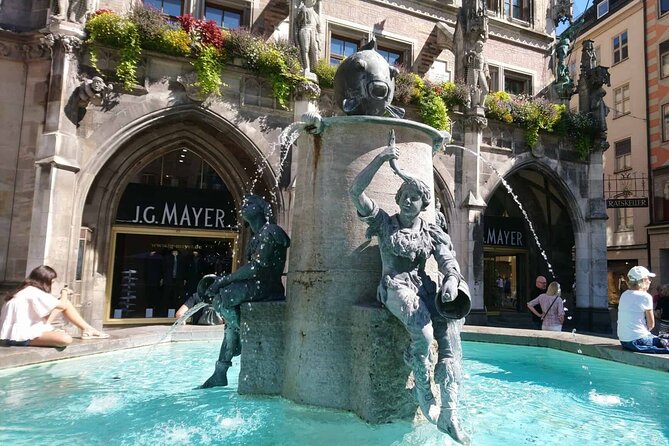
Odeonsplatz is one of Munich’s most important civic spaces. Developed in the early 19th century by Leo von Klenze, it forms the southern end of Ludwigstraße and leads toward the Feldherrnhalle and the Theatine Church.
The square also carries a darker political memory. A fatal gun battle took place here during the 1923 Beer Hall Putsch, Adolf Hitler’s failed attempt to seize power. You have about 10 minutes at this stop, making it one of the longer pauses for history and photographs.
The Residenz was the city palace of Bavaria’s Wittelsbach rulers. It is the largest city palace in Germany and now displays royal rooms, decorations, architecture, and former collections. The tour pauses outside for about five minutes, so plan a separate visit if you want to see the interiors.
Next comes the Hofgarten, built between 1613 and 1617 in the style of an Italian Renaissance garden. Its central pavilion is dedicated to Diana. This is a pleasant point in the route, giving you a quieter space after the formal squares and politically heavy stops.
The nearby Bavarian State Chancellery was built around the surviving dome of the former Bavarian Army Museum. The present building dates from 1989 to 1993, while the older museum structure was badly damaged during World War II. It is another compact lesson in how Munich’s architecture has been altered, reused, and rebuilt.
Same city, a different ride:
- Berlin: Sights and Highlights Bike Tour with a Local Guide
★ 4.8 · 2,698 reviews - Munich 3-Hour Guided Bike Tour
★ 4.5 · 1,731 reviews - Hamburg 3-Hour Bike Tour
★ 4.8 · 1,583 reviews - Classic Mike’s Bike Tour daily @ 11.30 incl Beer Garden & Surfers
★ 5.0 · 1,246 reviews
The English Garden and the Chinese Tower beer garden
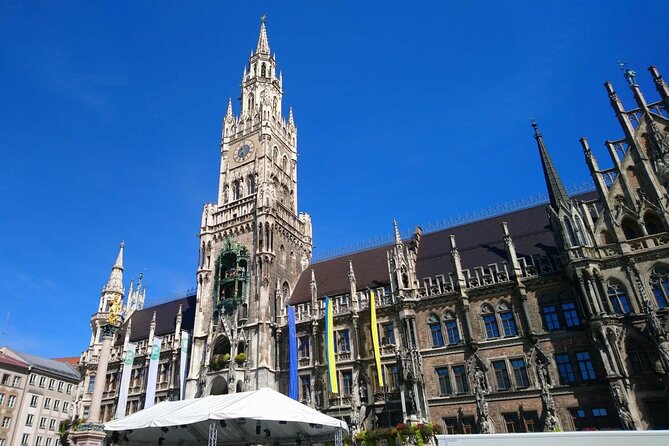
The ride then reaches the Englischer Garten, a huge urban park covering about 3.7 square kilometers. Its informal design follows the English garden style that became popular from the mid-18th century into the early 19th century.
This is where the bike format earns its keep. The park is too large to understand from one short walk, and the route gives you a broad look without requiring a long march. You have time to ride, pause, and take in the change from formal city streets to open park paths.
The beer garden at the Chinese Tower is the social center of the tour. You get about 40 minutes here, and that is enough time to buy food or a traditional Bavarian beer if you want one. Food and drinks are not included, so bring a payment method and budget for the extra cost.
The beer garden has operated under its current management since 1974 and offers about 7,000 seats, making it Munich’s second-largest beer garden after Hirschgarten. Hofbräu beer is served here. Shared tables and tree shade are part of the classic Bavarian setup, though the large size means this is a popular public stop, not a quiet private lunch.
I like this pause because it breaks up the sightseeing. You can ask the guide for restaurant ideas, museum suggestions, or evening plans, then return to the bikes refreshed. If you do not drink alcohol, the stop still works as a food and rest break, but the price does not include anything you order.
Eisbachwelle, the Isar, and Munich’s modern character
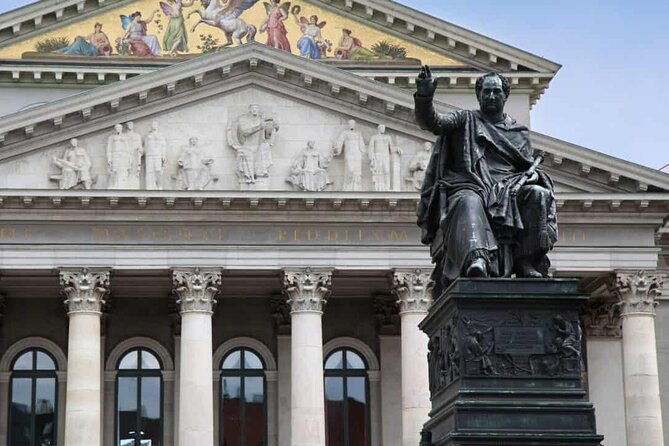
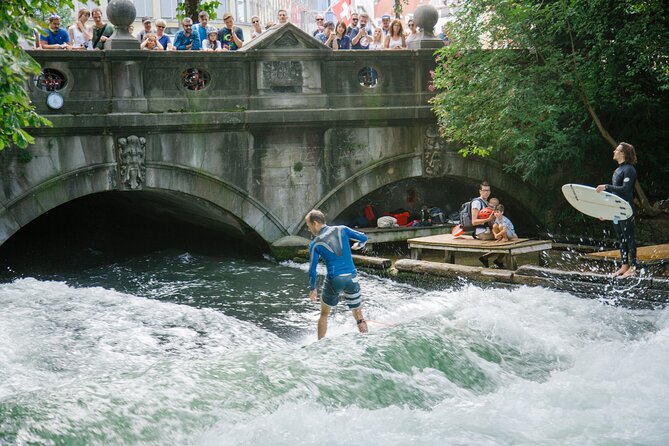
After the beer garden, the route reaches Eisbachwelle near the Haus der Kunst. Here, the river forms a standing wave about one meter high, drawing experienced river surfers.
The water is cold and shallow, sometimes only about 40 centimeters deep. Watch from the bank rather than treating it as a casual swimming spot. The stop is brief, but it adds a striking modern image to a route otherwise filled with palaces, museums, and memorials.
The Angel of Peace, or Friedensengel, rises above Maximilian Park at the eastern end of Prinzregentenstrasse. A 38-meter Corinthian column supports a six-meter statue modeled on the Nike of Paeonius. Below it is a fountain and an observation area reached by two staircases.
This is one of the route’s better photo stops. The monument was created as a symbol of peace, and the open setting gives you a break from dense central Munich. You have about five minutes, so expect a quick look rather than time to sit and study every detail.
The Maximilianeum follows. This palatial building was originally planned as a home for a foundation supporting gifted students. Since 1949, it has housed the Bavarian State Parliament. The stop helps connect Munich’s 19th-century royal ambitions with the city’s current political life.
The Deutsches Museum is another major landmark on the route. It is the world’s largest museum of science and technology, with roughly 125,000 objects covering 50 fields. Five minutes outside the museum cannot do justice to the collection, so science fans should reserve several hours for a separate visit.
Viktualienmarkt and Jewish Munich
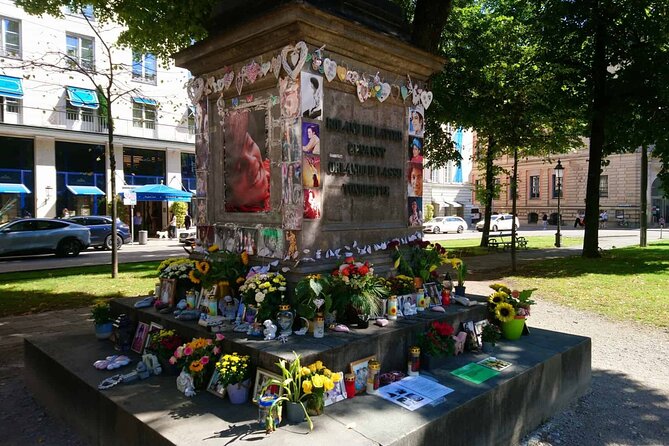
The tour finishes its city-center loop at Viktualienmarkt, Munich’s food market. It grew from a farmers’ market into a large food destination with about 140 stalls and shops selling flowers, fruit, game, poultry, spices, cheese, fish, and juices.
This stop is useful even if you have already eaten. You can get ideas for later meals, inspect local ingredients, or simply enjoy a more everyday side of Munich after all the monumental sights.
At Ohel Jakob Synagogue on Sankt-Jakobs-Platz, the route acknowledges Munich’s Jewish community and its postwar renewal. The synagogue was built from 2004 to 2006 as the city’s main synagogue and opened on November 9, 2006, the 68th anniversary of Kristallnacht.
This is a brief exterior stop, not a synagogue tour. Treat it with the respect you would give any active place of worship. Its inclusion gives the itinerary needed balance, placing Jewish life and remembrance alongside royal and Nazi-era history.
The ride then returns to the Karlsplatz meeting point. Since the tour lasts about four hours, it is best to leave the rest of your day flexible. The route has many short stops, but you will still spend a substantial amount of time cycling, standing, and listening.
Guides, group size, and riding comfort
The guide can make or break a city bike tour. Names connected with this experience include Canaan, Rob, Susanna, Karl, Mark, and Dan. Their approach varies, but the strongest pattern is clear: you need a guide who can explain history in plain language, keep the group together, and offer practical suggestions beyond the formal stops.
Canaan is especially associated with detailed historical explanations, personal warmth, and careful attention to rider safety. Rob is praised for clear explanations and useful recommendations. Susanna is noted for a well-timed route and an accommodating manner, while Karl and Dan are described as friendly guides who handle questions and local suggestions well.
You should not book based on a promised individual guide, since assignments can change. Instead, expect an English-speaking guide who leads the route and gives commentary at the main sights.
A maximum of 20 riders is manageable, but it is not intimate. One rider found the group too large for a single guide on busy roads. That is a fair concern. Pay attention at crossings, keep the rider ahead in sight, and tell the guide promptly if you are uncomfortable with the pace.
Most people can take part, but this is not a purely passive sightseeing ride. One rider noted that the day includes a fair amount of walking and requires decent fitness or mobility. Rain and cold do not automatically ruin the experience, but poor weather makes the bike portion less pleasant.
Who should book this Munich e-bike tour
I would choose this tour if you want a fast orientation to Munich, enjoy history, and prefer moving through a city instead of sitting on a bus. It suits first-time visitors, families with teenagers, and anyone who wants to connect the old center with the English Garden and Isar area in one outing.
It is also a good match for beer fans, though the beer garden is optional and drinks cost extra. Art lovers will appreciate the museum district, but they should not expect time inside the museums.
You may want a different experience if you prefer a tiny group, long museum visits, or a slow walking tour focused only on Munich’s old town. The electric bike is helpful, but not essential for most riders because the route is fairly flat and includes frequent stops.
Cancellation is free up to 24 hours before the start time. Changes or cancellations inside that window are not refunded, and the tour requires a minimum number of participants. It begins and ends at Karlsplatz 4, near public transportation.
Should you book it?
Book this tour if you want to see Munich’s main sights in one organized morning or afternoon, with enough history to give each place meaning. The best reasons are the wide-ranging route, the English-speaking guides, the English Garden ride, and the relaxed beer garden pause.
Skip it if your main goal is detailed museum time or a private, highly tailored experience. For most visitors, though, $71.90 is a reasonable price for four hours of transport, orientation, commentary, a bike, and a helmet. I would schedule it early in your stay, listen closely to the guide’s local tips, and save the places that deserve a longer return visit.
FAQ
How long does the Best of Munich Electric Bike Tour last?
The tour lasts approximately four hours and returns to the meeting point at the end.
Where does the tour begin?
It begins at Karlsplatz 4, 80335 München, Germany.
Where does the tour end?
The activity ends back at the meeting point at Karlsplatz.
Is the tour offered in English?
Yes. The tour is offered in English with a live guide.
Are the electric bike and helmet included?
Yes. An electric bike and helmet are included.
Are food and drinks included?
No. You pay separately for any food or drinks, including purchases at the Chinese Tower beer garden.
How many people can join the tour?
The group can include a maximum of 20 participants.
Can people using standard bicycles join?
Yes. The group may include riders using standard bicycles as well as e-bikes.
Is the tour suitable for most people?
Most people can participate, but the experience includes cycling, standing, and some walking. The route is generally flat, though decent fitness or mobility is helpful.
Can I cancel for a full refund?
Yes, if you cancel at least 24 hours before the experience starts. Cancellations or changes made less than 24 hours before the start time are not refunded.
Just added around Germany
- The Beauty of Berlin by Bike: Private Tour★ 5.0 · 59 reviews
- Private Berlin Street Food Bike Tour★ 4.9 · 42 reviews
- Party and Beer Bike Private Sightseeing Tour Berlin with Pick-up★ 4.5 · 32 reviews
- Private Berlin Street Food Tour by Bike★ 5.0 · 87 reviews
- Munich: Neuschwanstein Castle by Bus with Alpine Bike Ride★ 4.9 · 217 reviews
- Berlin Wall History Small Group Cycling Tour★ 4.9 · 152 reviews
- Berlin: E-Bike Tour of the Berlin Wall and Mitte Highlights★ 4.7 · 60 reviews
- Best of Berlin E-Bike Tour★ 5.0 · 37 reviews
Munich Bike Tours, compared.
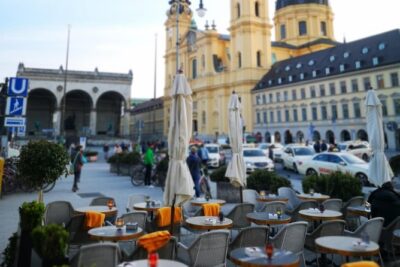
Classic Mike’s Bike Tour daily @ 11.30 incl Beer Garden & Surfers
Read our review →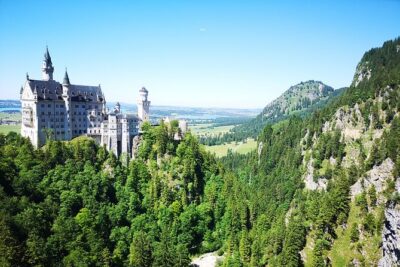
Neuschwanstein Castle by Bus Incl. Bike Ride or Hohenschwangau
Read our review →
Browse the lists this tour appears in