REVIEW · TOURS
Montevideo Electric Bicycle Tour
Montevideo is spread out, and this private e-bike tour gives you a smart way to see its main districts in one morning. You ride from Batlle Park through the Old City and along the Río de la Plata, covering about 18 to 19 kilometers without turning the outing into a hard workout.
I like the comfortable, nearly new bikes and the route’s mix of history, neighborhoods, parks, and waterfront. I also like the personal touch from guides such as Santiago and Felipe, who run the small operation with clear pride in their city. The main consideration is the length: you need moderate fitness, confidence around city streets, and suitable weather.
Key points to know
- About 18 to 19 kilometers covered: The e-bike assistance lets you see far more than you could on foot in three hours.
- A strong Rambla section: The coastal ride is one of the best parts, with bike paths and broad views over the Río de la Plata.
- Local guides Santiago and Felipe: Expect useful context about government, neighborhoods, architecture, and daily life.
- Historic and modern Montevideo together: The route links Centenario Stadium, the Old City, 18 de Julio Avenue, Pocitos, and Punta Carretas.
- English and Spanish support: A live guide and audio guide are offered in both languages.
- Private format: Only your group participates, though the route still requires attention to traffic and other cyclists.
Why an e-bike works so well in Montevideo
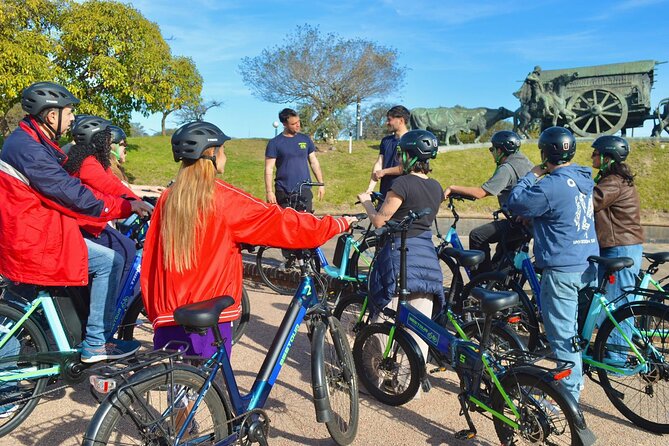
Montevideo is an easy city to appreciate, but its sights are spread across a long coastal stretch. A walking tour can handle the Old City well, yet it will not take you comfortably to Pocitos, Parque Rodó, Punta Carretas, and the western edge of the Rambla in the same morning.
That is where the electric bicycle earns its $59 price. You still pedal, but the motor takes the sting out of longer stretches and gentle effort. You can choose a relaxed ride or add more exercise, which makes the tour workable for different ages and fitness levels. One rider over 65 covered about 19 kilometers and finished without feeling worn out.
The route uses designated cycle paths for much of the ride. In parts of Montevideo, bike lanes run down the center of major streets, separated from traffic by cones. That gives you a close-up view of city life without the detached feeling of a bus window.
You should still be comfortable starting, stopping, steering, and following a guide through intersections. The tour is not a gentle sightseeing vehicle with no physical demands. It is an active city tour, just made easier by the motor.
A few more bike tours around the world worth a look
- Lion City Bike Tour of Singapore
★ 5.0 · 6,211 reviews - Big Bike tour Amsterdam – See all in 3 unforgettable hours
★ 4.7 · 4,929 reviews - 3-Hour Porto Highlights on a Electric Bike Guided Tour
★ 5.0 · 4,392 reviews
Starting at La Gaceta 1282
The tour begins at 10:00 a.m. at La Gaceta 1282 in Montevideo and returns to the same point after about 3 hours and 15 minutes. The starting address is in a residential area rather than an obvious storefront, so allow a little extra time to find it.
If you are staying in Ciudad Vieja or arriving from the cruise port, an Uber or taxi may be the simplest way to reach the start. The meeting point is near public transportation, but the address may not look like a conventional bike shop when you arrive.
Helmets and reflective vests are offered, and the bicycles are described as being in very good condition. The operation is small, with guides including Santiago, Felipe, and Fabiola. That helps keep the outing personal and makes it easier for the guide to adjust the pace to the group.
Batlle Park, La Carreta, and football history
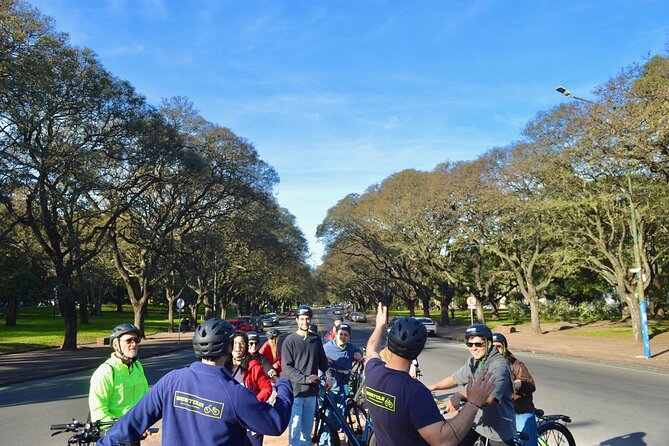
The opening section introduces you to Montevideo’s public spaces and sporting identity. At Hospital Universitario, part of the University of the Republic, you pause beside an important building tied to Uruguay’s public health system. The stop is brief, but it gives your guide a chance to place education and healthcare within the city’s civic life.
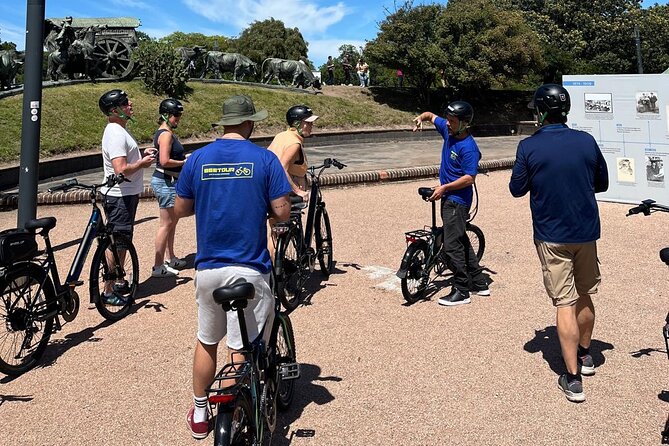
You then pass one of Montevideo’s three major green lungs before reaching La Carreta in Batlle Park. This large monument depicts an old form of transport and reflects Uruguay’s artistic and rural traditions. It is a quick photo stop, not a long museum visit.
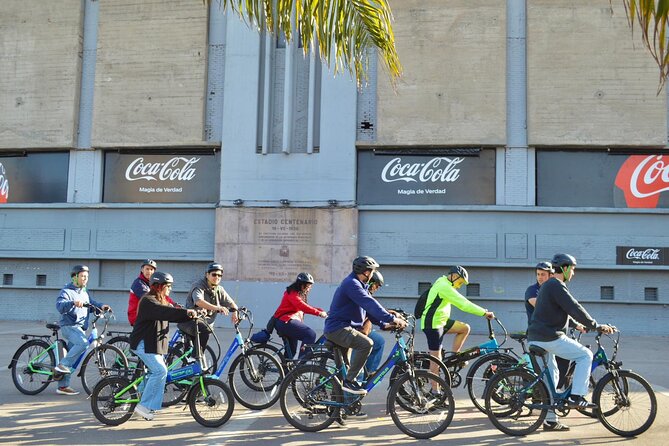
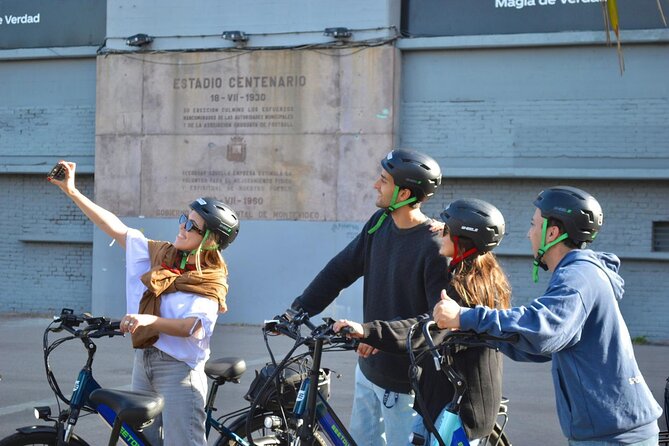
The Estadio Centenario is the big sporting landmark here. Built for the first Football World Cup in 1930, it carries a special weight in a country where football is part of national identity. You have about ten minutes to look around and hear the story, rather than entering for a full stadium tour.
The nearby Municipal Velodrome adds another cycling connection. You stop for about five minutes at this sports facility, a fitting detail on a bicycle tour. These early stops are short, so you get a broad introduction rather than lengthy time at each site.
18 de Julio Avenue and the city center
The route continues to the Obelisco a los Constituyentes, commemorating the assembly connected with Uruguay’s 1830 constitution. It is a useful reminder that Montevideo’s story is not only about beaches and cafés. Political institutions and civic debates are part of the city’s identity too.
The longest central-city pause comes on Avenida 18 de Julio. This is Montevideo’s main artery, lined with shops, cafés, public buildings, and daily city traffic. You have around 30 minutes here, enough to notice the architecture and watch the city operate at street level.
I like this part because riding along the avenue gives you a better feel for Montevideo than simply stopping at isolated monuments. You see how the downtown area connects, where people shop, and how the grand avenues fit into ordinary life.
Traffic lights and city intersections require attention, but the guides keep the group together. That matters if you are new to urban cycling. The route is designed to be safe, yet no city ride removes the need to watch the road.
Same city, a different ride:
- Ninh Binh Full-Day Tour from Hanoi to Hoa Lu, Tam Coc & Mua Cave Via Boat & Bike
★ 5.0 · 4,384 reviews - Small Group Guided Bike Tour of Amsterdam’s Hidden Gems
★ 5.0 · 3,936 reviews - 3-hour Complete Prague Bike Tour
★ 5.0 · 3,674 reviews - Party Bike Private Party Up To 14 People in Old Town Scottsdale
★ 5.0 · 3,541 reviews
Plaza Independencia and Montevideo’s Old City
Plaza Independencia forms the hinge between the newer central city and the Old City. Its monument to José Gervasio Artigas is one of the city’s most recognizable sights, and the square also marks the beginning of the historic district.
From here, you see Salvo Palace, the famous early skyscraper that was once the tallest building in South America. Its unusual silhouette and ornate details make it one of Montevideo’s best-known architectural sights. The stop is short, so pay attention when the guide points out details.
The Puerta de la Ciudadela follows. This old gateway once formed part of the fortified entrance to Montevideo and now marks the transition into the pedestrian center. It is a compact but useful piece of the city’s colonial past.
On Peatonal Sarandí, you ride or walk through a pedestrian street lined with shops, galleries, and cafés. The pace slows here, with about ten minutes to take in the atmosphere. Plaza Matriz, the country’s oldest square, receives another ten-minute stop. It has hosted major events across several centuries and gives the Old City a strong historical center.
The route also includes a major theater known for its architecture and cultural program. The itinerary does not specify a long interior visit, so think of this as an exterior and city-context stop rather than a full performance or backstage experience.
The Rambla gives the tour its best rhythm
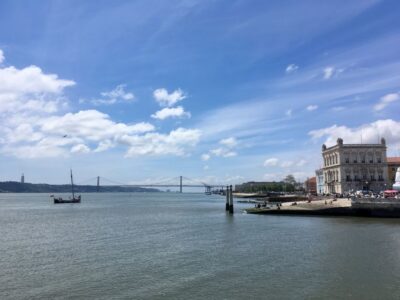
The Rambla is the tour’s longest and most scenic section. You spend about 30 minutes riding along Montevideo’s waterfront, with views across the Río de la Plata and plenty of room for outdoor activity.
This is where the e-bike feels most useful. The coastal route lets you cover distance without exhausting yourself, while the open setting gives the group space to ride at a comfortable pace. You stop at points of interest along the way rather than rushing from one landmark to another.
The Rambla also changes the mood of the tour. After the monuments and city streets, you get wind, water, broad skies, and a look at how Montevideo residents use the coast. A sunny, warm day will make this section especially pleasant, while a cool or windy day calls for an extra layer.
The route passes the headquarters of the regional bloc, a building linked with cooperation among South American countries. This is a quick visual stop, but it adds a modern political note to the older sights in the center.
Parque Rodó and Montevideo’s green spaces
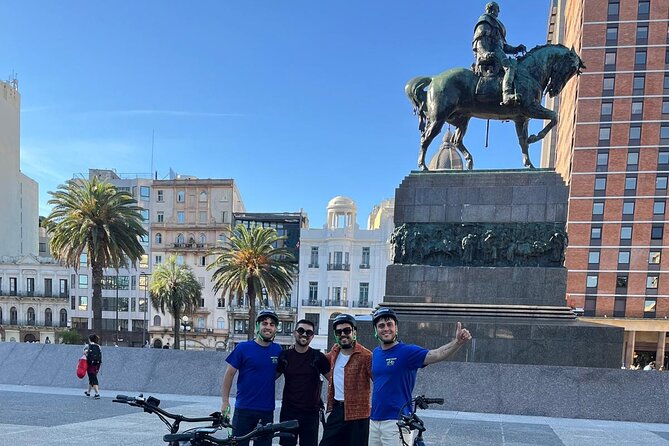
Parque Rodó is one of the capital’s three main green lungs, alongside Parque Rivera and the park in Prado. With gardens, lakes, and open areas, it provides a natural break from the road.
You have about 15 minutes here. That is enough for a pause and a few photographs, though not enough to explore every path or attraction in the park. The stop works well as a reset before the final coastal neighborhoods.
Along this part of the route, you also pass an important educational building noted for its modern architecture and academic life. Another stop is an outdoor cultural space used for concerts and events, with an arrangement that gives good views. Since these locations are only briefly described, your guide’s explanation will be especially useful.
The Memorial al Holocausto del Pueblo Judio is a quieter five-minute stop. It honors Jewish victims of the Holocaust and offers a place for remembrance. The memorial adds emotional weight to a route otherwise filled with public spaces, sports, and architecture. Be prepared for a reflective pause rather than a conventional sightseeing photo stop.
Punta Carretas, Pittamiglio, and Pocitos
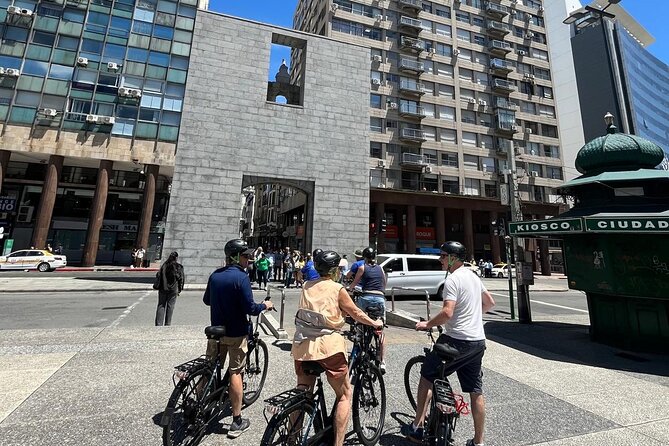
Punta Carretas brings a more polished residential and shopping side of Montevideo. You see cafés, shops, and the waterfront, along with the former prison that has been converted into a shopping center. The building’s past gives the area an unusual contrast between institutional history and modern retail.
Next comes Universo Pittamiglio, also called the Alchemist’s Castle. This eccentric building is tied to stories, legends, and unusual architectural details. The stop lasts about ten minutes, which gives you time to appreciate its character from outside and hear the basic story. It is one of the route’s more curious stops, especially if you enjoy strange buildings over formal monuments.
Pocitos is the final neighborhood section before the panoramic viewpoint. Known for its beach, restaurants, and relaxed coastal setting, it shows you another face of Montevideo. The five-minute pause is brief, but riding through the district lets you see more than a single photo stop would.
The Montevideo sign and the final view
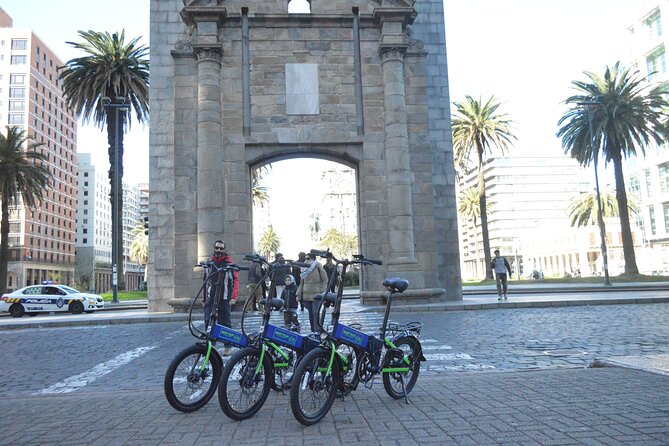
The tour ends its sightseeing route at the Mirador Panorámico de Montevideo, home to the large city sign and views toward the Río de la Plata. You have about 15 minutes for photographs and a final look back at the city you have crossed.
This viewpoint works well at the end because you can connect the separate districts in your mind. You have gone from university buildings and sports grounds to the Old City, parks, waterfront neighborhoods, and beach districts.
The ride then returns to La Gaceta 1282. Since the experience lasts more than three hours, do not schedule a tight appointment immediately afterward. Delays from traffic, photo stops, or group pacing are possible, even on a well-organized route.
What $59 buys you
At $59 per person, the tour is priced above a basic walking tour but includes a bicycle, helmet, reflective vest, a live English or Spanish guide, and an audio guide in both languages. The important value is the distance covered. You see parts of Montevideo that would require several separate walks or taxi rides.
The private format adds value for couples, families, or small groups who want a guide focused on their pace. It may be less appealing if you only want the Old City, since a shorter walking tour would cover that district more fully and with less equipment.
The route gives you orientation rather than long visits inside museums or buildings. Think of it as a well-planned first look. You can return later to Plaza Matriz, the Rambla, a neighborhood café, or a museum that catches your interest.
You can cancel for a full refund up to 24 hours before the start time. Poor weather can also lead to a new date or a full refund, and the activity may be rescheduled or refunded if the minimum group size is not reached.
Who should book this ride?
I would choose this tour early in a Montevideo stay. It gives you a useful map of the city and helps you decide where to spend more time later. It also suits cruise passengers with a morning available, provided the ride to the meeting point fits your schedule.
The tour is a good match if you:
- Want to see historic, coastal, and residential districts in one outing
- Like active sightseeing but do not want a strenuous cycling workout
- Prefer a small private group to a large bus
- Want local explanations about politics, architecture, neighborhoods, and football
- Have at least moderate physical fitness
- Feel comfortable following a guide through streets and cycle paths
You may want another option if you dislike bicycles, need a fully accessible vehicle, want extended indoor visits, or have only a short window before another appointment. The tour also depends on good weather, and Montevideo’s coastal conditions can change how pleasant the ride feels.
Should you book the Montevideo Electric Bicycle Tour?
Yes, if your goal is to understand the shape and character of Montevideo in a single morning. The combination of strong e-bikes, safe cycling routes, local guides, and a long Rambla section makes the $59 fee reasonable.
Book it early in your stay so you can use the route as a guide for later exploring. Wear comfortable clothing, bring a jacket in cooler months, and leave room in your schedule after the 10:00 a.m. start. If you want a slow, detailed visit to each monument, this is not the right format. If you want broad coverage with real street-level contact, it is one of the most practical ways to see the city.
FAQ
How long is the Montevideo Electric Bicycle Tour?
The tour lasts approximately 3 hours and 15 minutes.
What time does the tour start?
The scheduled start time is 10:00 a.m.
Where does the tour begin?
It begins at La Gaceta 1282, 11300 Montevideo, Departamento de Montevideo, Uruguay.
Where does the tour finish?
The ride returns to the same meeting point at La Gaceta 1282.
How far do you ride?
The route covers about 18 to 19 kilometers, based on the ride distance described for the experience.
Are bicycles and safety equipment included?
Yes. Bicycle use is included, and a helmet and reflective vest are offered.
Is the tour available in English?
Yes. English and Spanish guides are offered, and the audio guide is also available in English and Spanish.
Is this a private tour?
Yes. Only your group participates in the activity.
What happens if the weather is bad?
The experience requires good weather. If it is canceled because of poor weather, you will be offered a different date or a full refund.
Just added around the world
- Scenic Charleston Harbor & Wildlife E-Bike Tour + Milkshake Stop★ 5.0 · 86 reviews
- Outer Banks Film Location eBike Tour in Charleston★ 5.0 · 26 reviews
- Moshi city bike day trip★ 5.0 · 17 reviews
- Rau Forest Bike tour★ 5.0 · 12 reviews
- Kilimanjaro bike park safari★ 5.0 · 16 reviews
- 1-Day Moshi Villages bike tour★ 5.0 · 59 reviews
- Top 6 Days Mt. Kilimanjaro Bike trek Tour by Marangu-Kilema Route★ 5.0 · 15 reviews
- Chagga Villages in Mount Kilimanjaro Cycling Day Trip★ 5.0 · 42 reviews
Tours, compared.
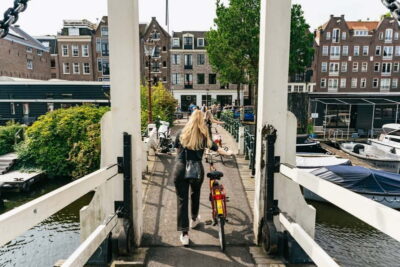
Big Bike tour Amsterdam – See all in 3 unforgettable hours
Read our review →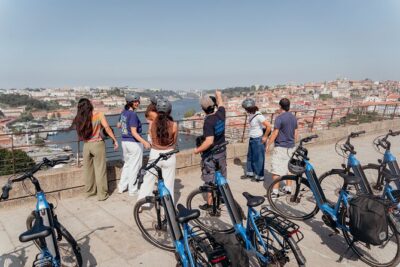
3-Hour Porto Highlights on a Electric Bike Guided Tour
Read our review →
Ninh Binh Full-Day Tour from Hanoi to Hoa Lu, Tam Coc & Mua Cave Via Boat & Bike
Read our review →
Small Group Guided Bike Tour of Amsterdam’s Hidden Gems
Read our review →