
REVIEW · KRAKOW
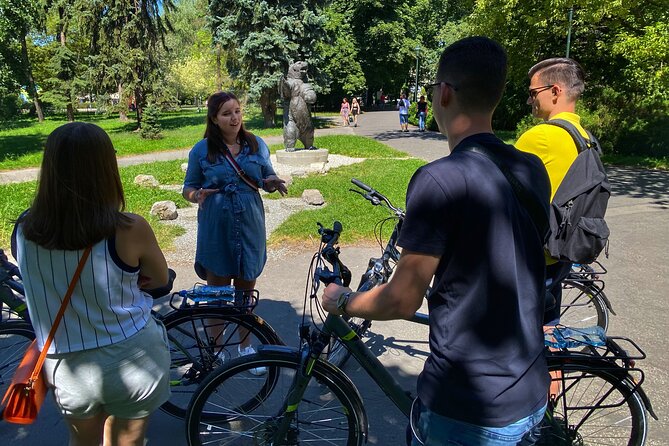
Hidden Krakow Bike Tour
Krakow’s hardest stories are spread across two districts, and this three-hour bike tour connects them in a way that is easier to follow than a walk. You begin in Kazimierz, pause at Skałka Basilica, then cross into Podgórze, the wartime Jewish ghetto, where the focus shifts to memorials, surviving walls, and resistance history.
I like the small maximum of 15 people, which should keep the ride personal and make it easier to hear the guide. I also like the route’s clear focus on World War II and the city’s Jewish heritage, rather than trying to cram every Krakow sight into one afternoon. The main drawback is that nearly all of the three hours is spent in Podgórze, so this is not a broad overview of Krakow.
Key points to know before you book

- Kazimierz begins the story: You visit Skałka Basilica and hear a short introduction to Schindler’s List.
- Podgórze gets most of the time: About two hours and 45 minutes are reserved for the former Jewish ghetto and its wartime sites.
- The route is history-led: Expect Ghetto Heroes Square, part of the old ghetto wall, and a former resistance headquarters.
- The group is limited to 15: That is a useful size for a guided bike ride through city streets.
- The tour starts at 2 p.m.: It begins and ends at Józefa Dietla 59 in Krakow.
- The price is $39.32 per person: For roughly three hours with an English-speaking guide, that is fair value if you want context as well as transport between sites.
Why this route works better by bicycle
Krakow’s Jewish quarter and Podgórze are close enough to connect by bike, yet they feel like separate chapters of the city. On foot, you can certainly cover them, but the distances between important places can make the afternoon feel like a series of disconnected stops.
A bicycle gives the route a useful rhythm. You ride, pause for an explanation, look around, and continue. The bike is not the main event. It is the practical tool that lets you cover more ground without turning the tour into a long march.
The format also suits visitors who want more than a list of buildings. The route is built around places that help explain what happened in Krakow during World War II and how the city remembers it today. You are not simply passing through Kazimierz and Podgórze. You are following a change in the city’s Jewish life, wartime persecution, resistance, and postwar memory.
The group limit matters here. With no more than 15 people, you are less likely to lose the guide at a crossing or gather in a huge knot around a memorial. You should still expect normal city traffic and stops, but the scale is manageable.
A few more bike tours around Krakow worth a look
- Complete Cracow Bike Tour (small group of maximum 15 people!)
★ 5.0 · 1,322 reviews - Krakow: Bike Tour of Old Town, Jewish Quarter and the Ghetto
★ 4.9 · 1,155 reviews - Highlights of Krakow Bike Tour – Small group
★ 5.0 · 662 reviews
Starting in Kazimierz at 2 p.m.

The meeting point is Józefa Dietla 59, and the tour begins at 2 p.m. This puts you on the edge of Kazimierz, the former Jewish district, before the route moves toward Podgórze.
Kazimierz is one of the most important areas in the tour because it gives the story a human setting. The district is not introduced only as a wartime site. It is part of the older Jewish life of Krakow, and the short visit helps establish what existed before the war changed everything.
Your first named stop is Skałka Basilica. The stop lasts about 15 minutes, and admission is included at no extra charge. That is enough time for a focused explanation and a look at the site, not a lengthy interior visit.
You also receive a brief introduction to Schindler’s List. That reference matters because the film brought many Krakow locations to a worldwide audience, but the tour places the film in the larger setting of Kazimierz and Podgórze. You get a starting point for understanding which parts of the story belong to the movie and which belong to the city’s wider wartime past.
Do not expect Kazimierz to take up most of the afternoon. The itinerary gives it a short opening section, then shifts the emphasis across the river. If your main goal is cafés, synagogues, galleries, or a broad tour of the district, you will need separate time in Kazimierz.
The move from Kazimierz to Podgórze
The route then heads to Podgórze, the district where the Jewish ghetto was established during World War II. This change of area is one of the strongest reasons to choose a bike tour.
You are not being asked to absorb the whole subject in one indoor museum visit. Instead, the guide connects several outdoor locations. The movement between them helps you understand that the ghetto was part of an actual neighborhood, with streets, boundaries, public spaces, and places used by people under extreme pressure.
The ride itself is also a useful pause between explanations. The subject is serious, and the cycling format prevents the afternoon from becoming a long sequence of static lectures. Still, this is not a carefree sightseeing ride. The tone should be respectful and reflective, especially once you reach the memorial sites.
Ghetto Heroes Square and the former ghetto
The main portion of the experience takes place in Podgórze, with about two hours and 45 minutes devoted to the district. That is a substantial block of time, and it signals what this tour is really about.
Ghetto Heroes Square is one of the central stops. The square is tied directly to the wartime Jewish ghetto and its victims. Here, the guide can place the area’s memorial meaning within the wider story of Krakow’s Jewish population during the war.
This is the kind of stop where a guide adds real value. A quick photograph gives you a place name, but it does not explain how the square fits into the ghetto or why it remains important. The tour is designed to supply that missing connection.
The remaining traces of the ghetto wall are another powerful part of the route. A surviving section may look modest beside Krakow’s larger monuments, yet its importance comes from what it represents. You can see a physical boundary connected to the forced confinement of Jewish residents, rather than treating the ghetto as an abstract point in a history book.
The stop at the former headquarters of the resistance adds another layer. The route is not limited to persecution and loss. It also addresses the people and networks that opposed the Nazi occupation. The information provided here can help you understand the different forms resistance took, although the supplied details do not specify how long the group stops at this particular site.
Same city, a different ride:
- Full Bike Tour – the Old Town, Jewish Qtr & the Ghetto NEW BIKES
★ 5.0 · 437 reviews - Krakow: Highlights of Krakow Bike Tour – Small Group
★ 4.9 · 421 reviews - Private Bike Tour in Krakow
★ 5.0 · 152 reviews - Krakow: 3-Hour Small Group Tour on E-Bike
★ 4.8 · 135 reviews
A serious tour with a clear purpose

This experience is best understood as a guided history ride, not a general city tour. You will see parts of Krakow, but the purpose is to connect places with the Jewish experience of World War II, the ghetto, resistance, and the way those events are remembered.
That focus is a strength. Many short city tours try to cover the castle, the old town, Kazimierz, the river, and several museums in one sweep. This route makes a different choice. It spends nearly the entire afternoon on one subject, giving you time to absorb it.
I also appreciate the balance between famous references and less obvious sites. Schindler’s List provides a familiar entry point, while the wall remnant and former resistance headquarters take you beyond the film. You get the popular connection without allowing the movie to become the whole story.
The subject can be emotionally heavy. The tour may not suit you if you want a light introduction to Krakow or a relaxed ride with only occasional commentary. It should suit you if you prefer to understand a city through difficult events as well as attractive streets.
What the guides add to the experience
The tour is offered in English, and the quality of the guide will shape how well the route works. Guide names connected with the tours include Nikki and Bram Hoffman, though the assigned guide may vary.
The strongest guide style for this route is clear, measured, and able to explain sensitive subjects without turning the afternoon into a lecture. You want someone who can connect Kazimierz, Podgórze, the ghetto, and the film reference in a way that remains easy to follow from a bicycle.
A past tour account describes Bram Hoffman as informative and fun, with comfortable bikes that felt safe to ride. That description comes from a related Krakow bike experience rather than a detailed account of every stop on this route, so I would not treat it as a guarantee for your exact departure. Still, it gives you a useful sense of the guide-led cycling style associated with the operator.
Nikki is also named in connection with the hidden Krakow route, including explanations of World War II and communism. Again, guide assignments can change, but the mention is helpful if you are comparing the tone of this experience with a standard sightseeing ride.
Bikes, safety, and the group size

The available information describes the bikes as comfortable and easy to ride, with a maximum group size of 15. That is encouraging for a three-hour outing, especially because you will spend much of the time moving between districts rather than riding long rural stretches.
You should still be comfortable cycling in a city. The information confirms that most people can participate, but it does not provide a detailed fitness requirement, bike model, helmet policy, or route surface breakdown. If you have specific equipment or mobility concerns, ask the operator before booking.
The small group helps in practical ways. You can hear the guide more easily, stops should be simpler to organize, and the group is less likely to block a narrow space. Group discounts are available, which may make the cost more attractive for families or friends booking together.
The tour is near public transportation, but the stated meeting point remains Józefa Dietla 59. Plan around that address rather than assuming the tour begins at a major monument.
Is $39.32 good value?
At $39.32 per person, the tour is priced in the reasonable middle ground for a guided three-hour city activity. You are paying for the bikes, the route planning, and an English-speaking guide who helps explain sites that are easy to miss or misunderstand on your own.
The value is strongest if you want a focused history experience. A self-guided walk through Kazimierz and Podgórze would cost less, but you would need to research the sites, plan the route, and connect the places yourself. The bike saves time, while the guide supplies the context.
The price is less compelling if you only want to tick off major Krakow sights. The tour does not promise a broad look at the Royal Route, Wawel, or the main market square. You are paying for depth in one part of the city, not maximum sightseeing coverage.
The free admission at Skałka Basilica is useful, though the tour’s main value lies in the guiding rather than entrance tickets. The activity has a full refund cancellation option if you cancel at least 24 hours before the 2 p.m. start. Changes or cancellations inside that window are not accepted for a refund, and a minimum number of participants is required for the tour to run.
Who should book this bike tour?
I would choose this tour if you want to understand Krakow’s Jewish districts through real locations, not just a museum display. It is especially suitable for first-time visitors who want a structured introduction to Kazimierz and Podgórze before exploring either area on their own.
It also works well for people who like active sightseeing but do not want a demanding full-day ride. The three-hour length is substantial enough to cover the key districts, yet short enough to fit around other Krakow plans.
Families and small groups may appreciate the group discount and 15-person limit. The route could also suit visitors with an interest in World War II, resistance history, or the background behind Schindler’s List.
I would look elsewhere if you want a comprehensive Krakow orientation, a museum-heavy experience, or a leisurely cycling route through parks and countryside. The tour is focused, serious, and urban. Its purpose is not to entertain you with a long list of attractions.
Should you book the Hidden Krakow Bike Tour?
Book it if you want a compact, guided route through Kazimierz and Podgórze, with most of your time devoted to the former Jewish ghetto and its wartime sites. The combination of Ghetto Heroes Square, the remaining wall, resistance history, and a short film introduction gives the afternoon a clear shape.
Skip it if your priority is Krakow’s best-known landmarks outside these districts. For the right reader, $39.32 is a fair price for a small-group ride that adds meaning to places you could easily pass without understanding.
FAQ
Where does the Hidden Krakow Bike Tour start?
The tour starts at Józefa Dietla 59, 31-054 Kraków, Poland.
What time does the tour begin?
The stated start time is 2 p.m.
How long does the tour last?
The experience lasts approximately three hours.
Where does the tour finish?
The tour ends back at the meeting point on Józefa Dietla 59.
Which districts does the tour visit?
The route visits Kazimierz, the former Jewish district, and Podgórze, the area associated with the Jewish ghetto during World War II.
What is included in the Kazimierz portion?
The tour includes a visit to Skałka Basilica and a short introduction to Schindler’s List. Admission to this stop is free.
What places are visited in Podgórze?
The route includes Ghetto Heroes Square, a remaining section of the wall around the former ghetto, and the former headquarters of the resistance.
How many people can join the tour?
The tour has a maximum of 15 participants.
Is cancellation free?
Yes. You can cancel at least 24 hours before the start time for a full refund. Cancellations or changes made less than 24 hours before the start are not accepted for a refund.
Just added around Krakow
- Private Bike Tour in Krakow★ 5.0 · 152 reviews
- 2 Hours Old Town Guided Bike Tour in Krakow★ 4.5 · 15 reviews
- Discover Kraków by Bike with a Dutch guide★ 5.0 · 16 reviews
- 3-Hour E-Bike Tour In Krakow★ 5.0 · 79 reviews
- Polish Countryside and Tyniec Abbey Bike Tour from Krakow★ 5.0 · 37 reviews
- Krakow: Old Town Bike Tour with a Guide★ 4.5 · 54 reviews
- Krakow: Complete Bike tour with all the highlights★ 4.9 · 90 reviews
- Krakow: 3-Hour Small Group Tour on E-Bike★ 4.8 · 135 reviews
Krakow Bike Tours, compared.
Complete Cracow Bike Tour (small group of maximum 15 people!)
Read our review →
Bike Tour of Old Town, Jewish Quarter and the Ghetto
Read our review →
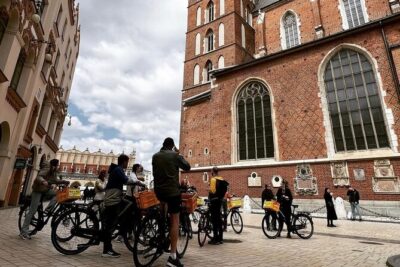
Full Bike Tour – the Old Town, Jewish Qtr & the Ghetto NEW BIKES
Read our review →


Browse the lists this tour appears in