
REVIEW · ROME
Rome E-Bike Tour with a local! Top Attractions & Hidden Gems
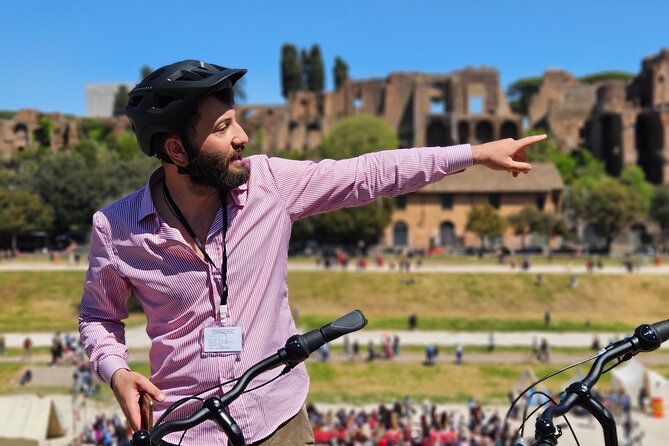
Rome comes into focus quickly on this three-hour e-bike tour with Luigi, a local guide who knows how to connect Rome’s famous monuments with quieter streets and fine city views. You cover a lot of ground without exhausting yourself on the hills, cobbles, and long walks between sights.
I like the small groups of no more than eight and the high-quality Trek bikes with Bosch motors. I also like the thoughtful mix of big sights and lesser-known corners, plus the Roman snack and water. The main caution is traffic: Rome is busy, and even a careful guide cannot remove every rough road or crowded street from the ride.
Key points
- Luigi leads the ride: He explains Roman history and local life, answers questions, and adjusts the route when possible.
- Trek e-bikes do the hard work: Bosch mid-drive motors, comfortable seats, front suspension, and puncture-resistant tires help on hills and cobbles.
- A strong first-day activity: The route gives you a fast sense of where Rome’s major sights sit in relation to one another.
- Small-group format: With up to eight people, the ride feels more personal than a large city cycle tour.
- Landmarks plus quiet corners: You see the Trevi Fountain, Colosseum, Pantheon, and more, while also using less crowded lanes.
- Useful extras included: Helmet, water, rain poncho, and a traditional Roman snack are part of the price.
Why an e-bike works so well in Rome

Rome is not a flat, easy city for cycling. The historic center has hills, uneven paving, cobblestones, traffic, and streets where pedestrians appear from every direction. A standard bicycle can turn sightseeing into hard exercise. The electric assistance changes the balance.
The Trek bikes use Bosch mid-drive motors, which help most when you need extra power on an incline. You still pedal, but the ride feels far less demanding. The bikes also have comfortable seats and puncture-resistant tires. One bike detail matters especially here: reviews describe front suspension that helps smooth out Rome’s rough paving.
This is not a gentle ride through a park. You are cycling in a real city, so you need to pay attention and follow Luigi’s instructions. Still, the electric assistance lets you concentrate on the streets, buildings, and views instead of saving energy for the next hill.
The tour covers about 6 miles according to one account, while another route reached roughly 12 kilometers. The exact distance can change with the group and route, but the point is the same: you see far more than you could comfortably cover on foot in three hours.
More E-Bike Tours in Italy
- Rome EBike Tour: Appian Way, Catacombs & Roman Aqueducts
★ 5.0 · 1,766 reviews - Rome: Top Highlights & Hidden Gems Tour by Cannondale E-Bike
★ 4.9 · 1,760 reviews - Rome: Appian Way & Aqueducts E-Bike Tour (Catacombs & Food)
★ 4.9 · 1,498 reviews
Starting near Trevi Fountain

The meeting point is at Via delle Quattro Fontane, 113, inside the inner courtyard of the Jo&Joe Hotel. This is a central location, close to the Trevi Fountain and served by a Metro station. That makes it a practical starting point, especially if you are staying in central Rome.
Give yourself extra time to find the courtyard. One useful warning from the experience itself is that Rome traffic can make taxis late, and a delayed taxi may get delayed again in traffic. Walking directions can also be confusing in the center. Arriving early removes needless stress.
Before setting off, Luigi fits the bike and helmet and explains the brakes and gears. This short introduction matters if you have not used an e-bike before. You do not need to be a serious cyclist, but you should be comfortable riding a bicycle and able to manage city traffic.
The group limit is eight people. If fewer people book, the ride may feel almost private. That gives Luigi more room to match the pace to the group and answer questions along the way.
Trevi Fountain and Rome’s grand center
The Trevi Fountain is an early stop, with about 10 minutes for sightseeing. That is enough for photographs and a quick look at the fountain’s theatrical Baroque design, but not enough for a long visit or a quiet pause if the area is crowded.
Starting here gives the tour an immediate sense of Rome’s scale. You are among one of the city’s best-known sights, then soon back on the bike and moving through the center. This format works well if you want an overview rather than a single, long monument visit.
The ride continues toward the Vittorio Emanuele II Monument, the enormous white structure overlooking Piazza Venezia. You can stop for pictures and hear how the monument fits into modern Italian national history. Its bright stone and broad stairways make it easy to spot, and its central position helps you understand Rome’s main routes.
Do not expect museum-style detail at each stop. The sightseeing pauses are short, usually around 10 minutes. Luigi’s strength is giving useful context without turning the whole ride into a lecture.
Roman Forum and the Colosseum

The Roman Forum is viewed during another short stop. From the outside, you can see the ruins that once formed the political and civic center of ancient Rome. The Forum is a place where a guide adds real value, since broken columns and scattered stones can be hard to read without a sense of what stood there.
The Colosseum follows, with about 10 minutes for sightseeing. This is a photo and orientation stop, not an entrance visit. The tour does not include tickets or time inside the Colosseum, so plan a separate visit if you want to explore the amphitheater’s interior.
That distinction is important when comparing this ride with a Colosseum tour. Here, you trade depth at one monument for a wider look at Rome. You see the Colosseum, Forum, Trevi Fountain, Pantheon, Piazza Navona, and several other places in one outing.
The cycling route also lets you experience the spaces between those monuments. From a bus, Rome can feel like a string of distant stops. On a bike, you see the transitions: narrow streets, broad avenues, old walls, churches, and sudden openings toward ancient ruins.
More E-Bike Tours in Rome
- Rome: Appian Way, Catacombs, & Roman Aqueducts E-bike Tour
★ 4.9 · 1,421 reviews - Rome City Small Group Bike Tour with quality Cannondale EBike
★ 5.0 · 1,380 reviews - Rome by Night – Ebike Small Group Tour – Food and Wine (Option)
★ 5.0 · 1,275 reviews - Rome by Night: E-bike Small Group Tour -Food & Wine (Option)
★ 4.9 · 1,233 reviews
Circus Maximus and the Mouth of Truth

The route reaches the Circus Maximus, the vast former chariot-racing arena between the Palatine and Aventine hills. The stop is described mainly as a scenic viewpoint, so this is a chance to take in the open space and understand the site’s size.
Cycling past or near the Circus Maximus gives you a useful sense of Rome’s ancient public spaces. The area is much more open than the dense lanes around the Trevi Fountain, and the change of pace is welcome after several central monuments.
The Mouth of Truth is a shorter sightseeing stop of about five minutes. This famous carved face is tied to a popular medieval legend about telling the truth. The brief stop suits the site well: take your picture, hear the story, and keep moving.
These stops show the tour’s rhythm. You are not parked at one attraction for half an hour. Instead, you get a series of compact visits, with the ride itself connecting them.
The Jewish Ghetto and quieter streets

The ride continues through the Jewish Ghetto, an area where Rome’s layers of history are especially close together. The route description lists this mainly as a scenic section rather than a long formal stop, so you should expect to see the district while moving through it.
This is one of the parts I value most. Rome’s famous sights are essential, but the city’s character often appears in its side streets and smaller districts. Luigi uses routes that avoid some of the busiest roads and can lead you to places you would be unlikely to find by simply following a standard sightseeing map.
Several riders describe the route as a good way to find quiet lanes and viewpoints they would have missed alone. That does not mean every street will be empty. Rome remains Rome. It means a local guide can make better choices about when to use a main road, when to take a shortcut, and how to connect one sight to the next.
Pantheon, Piazza Navona, and central Rome

The Pantheon receives another 10-minute sightseeing stop. From outside, you can admire the building’s massive portico and unusual round form. The tour does not include an interior visit, so treat this as an introduction and return later if you want more time inside.
Piazza Navona follows, also with about 10 minutes. Its long oval shape reflects its ancient use as a stadium, while the fountains and surrounding buildings give it one of central Rome’s most recognizable settings. A short stop lets you take in the square and photograph its details before the group moves on.
The itinerary also includes an unnamed sightseeing stop of about 10 minutes, followed by the Marcus Aurelius Column, where the pause is around five minutes. Since the exact unnamed location is not specified, you should see it as an additional stop rather than a guaranteed attraction to plan around.
The Marcus Aurelius Column is a useful final history lesson. Its carved spiral tells a military story in stone, and its location near Piazza Colonna places you back in the busy heart of modern Rome.
Views, snacks, and the small-group feel

The best part of the tour may be the combination of movement and pauses. You are not simply following a guide from one plaque to another. You ride to viewpoints, stop for pictures, listen to a bit of history, then continue.
The route is designed to reach Rome’s hills without making them painful. That is why the e-bike matters most on the scenic sections. The effort remains manageable, and you have enough energy to enjoy the view rather than just recover from the climb.
Water is included, along with a traditional Roman snack. Several experiences describe the snack as pizza or a Roman sweet treat. It is a small addition, but a useful one during a three-hour ride. A poncho is also provided in case of rain, though you should still check the forecast and dress for the season.
Luigi is central to the character of the outing. He explains how to use the bikes, gives historical background, shares local stories, and takes questions. He also appears comfortable changing the route when the group has already seen a particular site or wants to linger somewhere.
Safety, traffic, and who should book

Safety is taken seriously, with helmets provided and routes chosen for easier cycling. That said, this remains an urban bike tour. You will encounter traffic, uneven surfaces, pedestrians, and crowded areas. You should be able to ride confidently enough to brake, steer, and stay with the group.
The tour is not suitable for children under 14, pregnant women, people over 80, or people with pre-existing medical conditions. The age rule matters even if a younger person has cycling experience. One past account describes a 12-year-old joining, but the stated current restriction is 14 and older, so follow the published rule when booking.
I would choose this tour early in a Rome visit. It helps you get your bearings and shows how the major sights connect. One person used it after only a couple of hours in Rome and found it useful for understanding the city. You can then return to the monuments that deserve a longer visit.
It suits couples, friends, solo visitors, and families with teenagers who meet the age requirement. It is especially useful if you have only a short time in Rome, although even a longer stay benefits from seeing the center in a different way.
Is $58 good value for three hours?

At $58 per person, this is not the cheapest way to move around Rome. You are paying for a quality Trek e-bike, a live English-speaking guide, a small group, helmet, water, rain protection, and a snack.
The value comes from the route and the amount of ground covered. Hiring a basic city bike or walking alone may cost less, but you would need to plan the route, manage the hills, find suitable streets, and work out the historical context yourself. A taxi can move you between major sights, but it will not give you the same view of Rome’s smaller streets or allow easy photo stops.
The tour is less suitable if you want long visits inside monuments. It is also not ideal if you dislike cycling near traffic or want a slow, quiet activity. For most active visitors who want a broad first look at central Rome, the price is fair.
Free cancellation up to 24 hours before departure and the reserve-now, pay-later option also make the booking flexible. Check the available start times when you book, since the tour lasts three hours and times can vary.
Should you book Luigi’s Rome e-bike tour?
Book it if you want to see the Colosseum, Roman Forum, Pantheon, Trevi Fountain, Piazza Navona, and other central sights in one energetic outing, while still reaching side streets and viewpoints that are easy to miss.
I would book this for the first or second day of a Rome stay, arrive early at the Jo&Joe Hotel courtyard, and allow extra time for traffic. Choose it only if you are comfortable on a bicycle and accept that Rome’s roads can be rough and busy.
If you want a broad, personal introduction to Rome with a guide who can answer questions and adjust the pace, this is a strong choice. If you want detailed interior visits, book those separately and use this ride as your city orientation.
FAQ
How long is the Rome e-bike tour?
The tour lasts three hours.
What language is the tour offered in?
The live tour guide speaks English.
How many people can join the tour?
The group is limited to eight participants.
Where does the tour start?
It starts at Via delle Quattro Fontane, 113, inside the inner courtyard of the Jo&Joe Hotel.
Which major sights are included?
The route includes the Trevi Fountain, Vittorio Emanuele II Monument, Roman Forum, Colosseum, Circus Maximus, Mouth of Truth, Jewish Ghetto, Pantheon, Piazza Navona, and Marcus Aurelius Column.
Does the tour go inside the Colosseum or Pantheon?
The supplied details describe sightseeing stops at these places, but do not include interior admission.
What is included in the tour price?
A local guide, Trek e-bike, helmet, water, and rain poncho are included. A traditional Roman snack is also provided during the experience.
Is the tour suitable for children?
The tour is not suitable for children under 14. Participants must also meet the other stated restrictions, including not being pregnant, over 80, or affected by pre-existing medical conditions.
Can I cancel the booking?
You can cancel up to 24 hours in advance for a full refund. The reserve-now, pay-later option is also available.
Just added around Rome
- Rome: Guided eBike Evening Tour with italian Aperitif★ 5.0 · 16 reviews
- Rome: Appian Way, Aqueducts, & Catacombs E-Bike Guided Tour★ 4.9 · 54 reviews
- Sunrise in Rome: Small Group E-Bike Tour & Italian breakfast★ 4.9 · 177 reviews
- Rome: Villa Borghese, Villa Ada, and Coppedè E-Bike Tour★ 4.8 · 78 reviews
- Rome: Top 10 Highlights Guided Tour by Bike or E-Bike★ 4.4 · 15 reviews
- Rome: Taste of Rome by quality Cannondale E-Bike★ 5.0 · 12 reviews
- Rome: Full-Day Guided Tour by E-Bike with Lunch Included★ 4.9 · 36 reviews
- Rome: Villa Borghese E-Bike Tour (Small Group or Private)★ 4.9 · 92 reviews
Rome Bike Tours, compared.
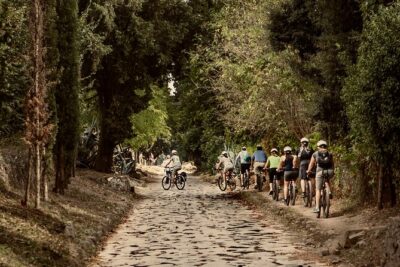
Rome EBike Tour: Appian Way, Catacombs & Roman Aqueducts
Read our review →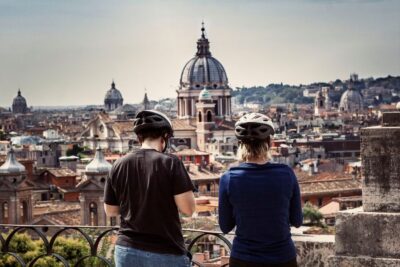
Top Highlights & Hidden Gems Tour by Cannondale E-Bike
Read our review →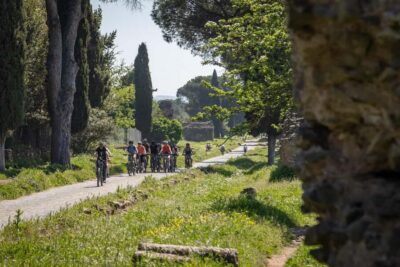
Appian Way & Aqueducts E-Bike Tour (Catacombs & Food)
Read our review →
Appian Way, Catacombs, & Roman Aqueducts E-bike Tour
Read our review →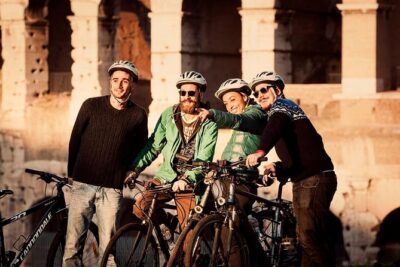
Rome City Small Group Bike Tour with quality Cannondale EBike
Read our review →
Rome by Night – Ebike Small Group Tour – Food and Wine (Option)
Read our review →
Rome by Night: E-bike Small Group Tour -Food & Wine (Option)
Read our review →
Appian Way Aqueducts Bike Tour (Catacombs & Lunch Option)
Read our review →Browse the lists this tour appears in