
REVIEW · ROME
Rome: Appian Way Guided Tour on E-Bike with italian Aperitif
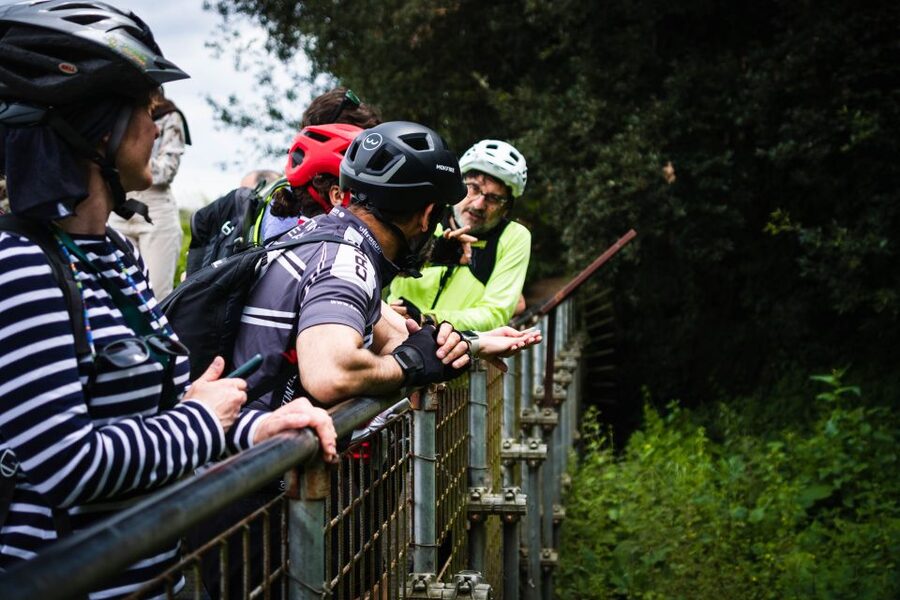
The best part of this outing is the sudden change of pace. You leave central Rome by e-bike and soon trade traffic and stone streets for the ancient Appian Way, open parks, Roman tombs, aqueducts, and quiet country views. I like the mix of history and fresh air, plus the relaxed wine and local-food stop at the end.
I also like the small group, limited to 10 people, and the practical electric assistance on a route that covers a lot of ground. Guides including Costanza, Georgia, and Masse have been praised for clear historical explanations and careful riding. The main drawback is that four hours is a tight window for so many stops, and the old paving can feel uneven on a bicycle.
Key points to know before you book
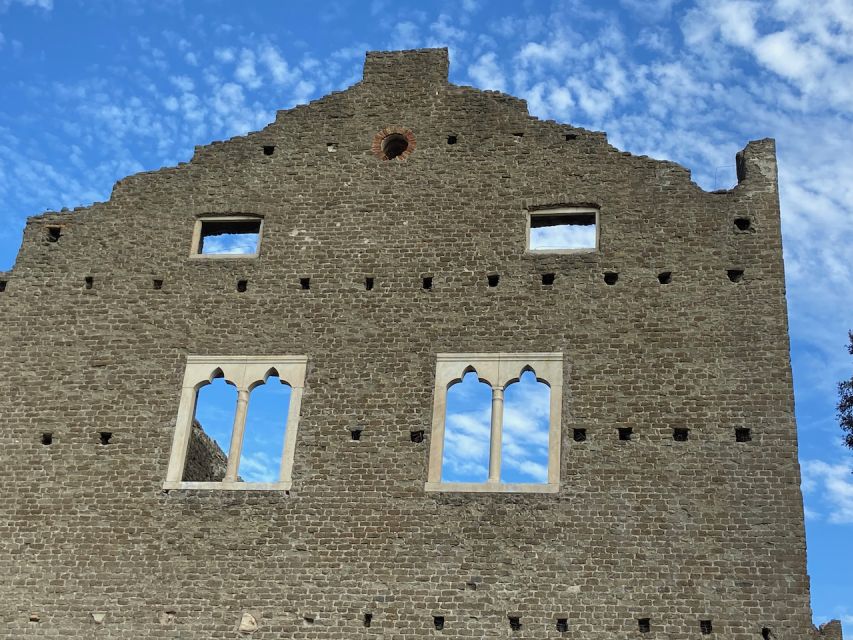
- The Appian Way is the star: You ride along one of ancient Rome’s great roads, with sections of old paving stones still visible.
- Three major park areas are included: Caffarella, the Park of the Aqueducts, and Torre Fiscale give the tour breathing room beyond the city center.
- You see more than ruins: The route includes catacombs, tombs, villas, churches, Aurelian Walls, and the Pyramid of Cestius.
- The e-bike makes the distance manageable: You cover a broad stretch of Rome without the effort of a standard bicycle.
- The final stop is a local aperitif: Wine and local products are served at a selected farmhouse or local restaurant in the park.
- Plan light: Comfortable clothing, sunglasses, and shoes are useful. Large bags and luggage are not allowed.
Why the Appian Way makes a fine break from central Rome
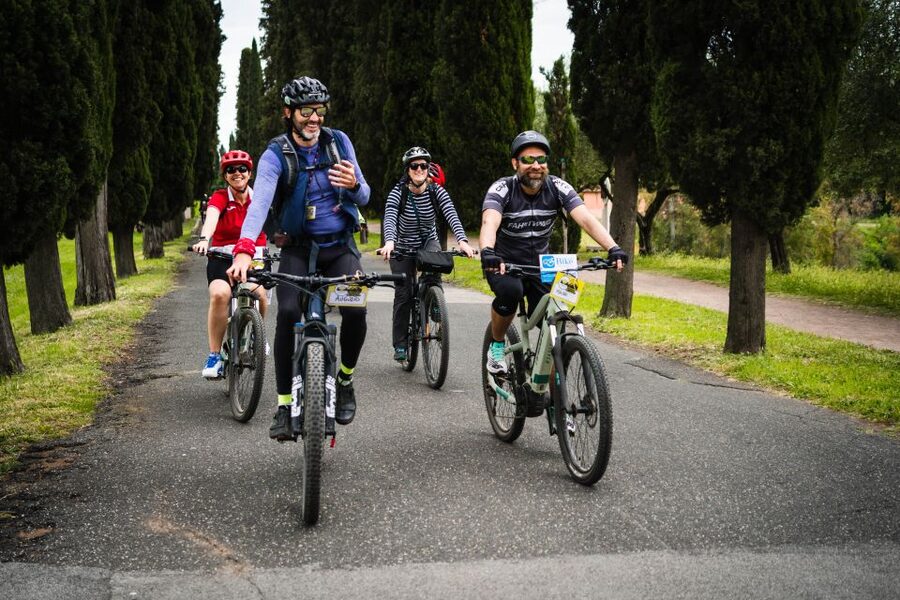
Rome can fill your day with churches, museums, and crowded piazzas. This ride offers a different kind of sightseeing. You still get Roman monuments, but you experience them from a bike saddle, with stretches of grass, trees, old stone, and open sky between the stops.
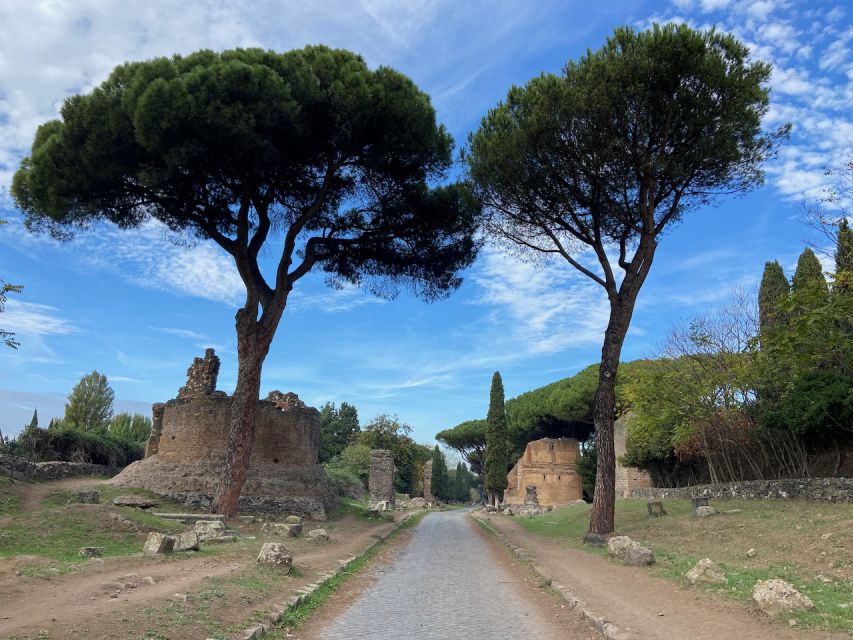
The Appian Way, or Regina Viarum, was one of ancient Rome’s major roads. Here, the road itself becomes part of the attraction. Walking and cycling over old paving stones gives you a more direct sense of how Roman movement worked than viewing a monument behind a museum barrier.
I like that the tour does not focus on one famous building and rush back. It connects several archaeological areas, including the Caffarella Park and the Park of the Aqueducts. That broader route helps you see how Roman engineering, villas, burial places, and roads fit together.
The four-hour length is useful for a half-day plan. It is long enough to reach the aqueducts and return to Rome, but short enough to leave room for dinner or another activity. Still, you should expect a steady schedule. With more than a dozen stops, some visits are brief photo and explanation breaks rather than full guided tours.
More E-Bike Tours in Italy
- Rome EBike Tour: Appian Way, Catacombs & Roman Aqueducts
★ 5.0 · 1,766 reviews - Rome: Top Highlights & Hidden Gems Tour by Cannondale E-Bike
★ 4.9 · 1,760 reviews - Rome: Appian Way & Aqueducts E-Bike Tour (Catacombs & Food)
★ 4.9 · 1,498 reviews
Starting at the Pyramid of Cestius
You meet at Bikesquare Roma bike Rental on Viale della Piramide Cestia, 33. The nearby Pyramid of Cestius appears at the beginning and end of the route, giving the ride a clear landmark and a memorable starting point.
Arrive on time. One practical warning from a past departure is that the group had to wait for the rental shop to open when someone was late. The tour depends on the bikes and guide being ready together, so do not treat the meeting time casually.
The included bicycle is a mountain e-bike. That matters here because the tour includes old road surfaces and a fairly wide route. Electric assistance does not remove every bump or require no effort, but it should make the distance less tiring than a regular bike.
A child’s seat is available on request. If you need one, arrange it in advance rather than assuming it will be fitted automatically. Large bags and luggage are not allowed, so bring only what you can carry comfortably on a cycling outing.
Baths of Caracalla and Porta San Sebastiano
The first scheduled stop is the Baths of Caracalla, with about 10 minutes to look around. These enormous ruins once formed one of Rome’s great public bathing complexes. On this tour, the stop works mainly as an introduction to the scale of ancient Roman public life.
You will not have time for a full archaeological visit inside the baths. Think of it as a brief orientation, a chance to see the remains and hear the guide connect this part of Rome with the road ahead.
The route then reaches Porta San Sebastiano, another short stop of roughly 10 minutes. This gate belongs to the Aurelian Walls, the defensive ring that enclosed much of imperial Rome. It is a useful point of transition: the dense historic center begins to give way to the old road and its parks.
The guide’s role matters here. A good explanation can turn a quick look at a gate and wall into a clear picture of how people entered and left ancient Rome. Guides such as Costanza have been singled out for being attentive as well as well informed, which is especially useful when a group is riding near traffic or negotiating changes in the road.
Villas and tombs along the ancient road
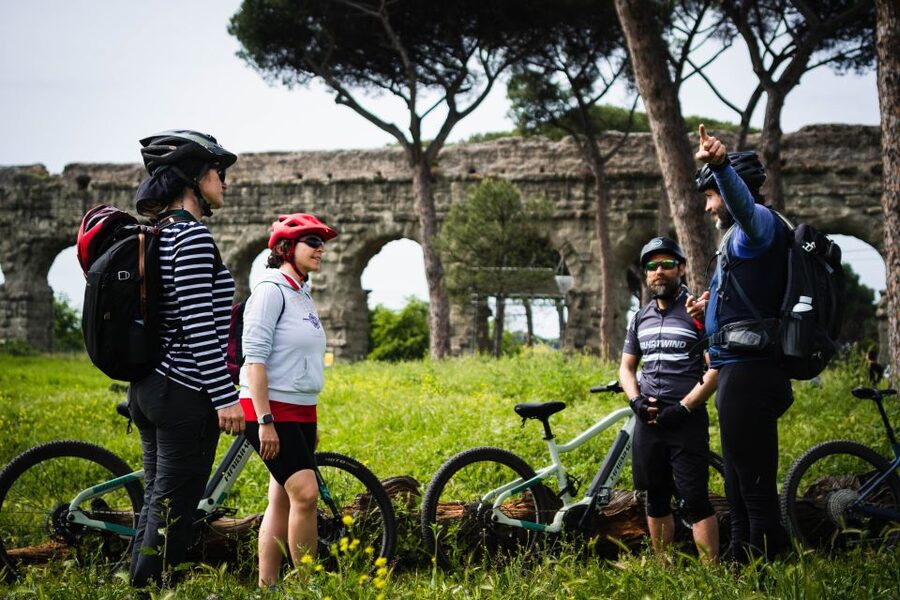
At the Villa di Massenzio, the tour allows about 15 minutes. The complex is associated with Emperor Maxentius and adds the remains of a large imperial villa to the route. You get another glimpse of Rome beyond the standard center-city circuit, where major ruins sit among parkland rather than busy streets.
The Tomb of Cecilia Metella receives around 20 minutes. Its round form is one of the most recognizable monuments along the Appian Way. This is one of the stops where the road’s role as a burial route becomes especially clear, since tombs and memorials lined important approaches to ancient Rome.
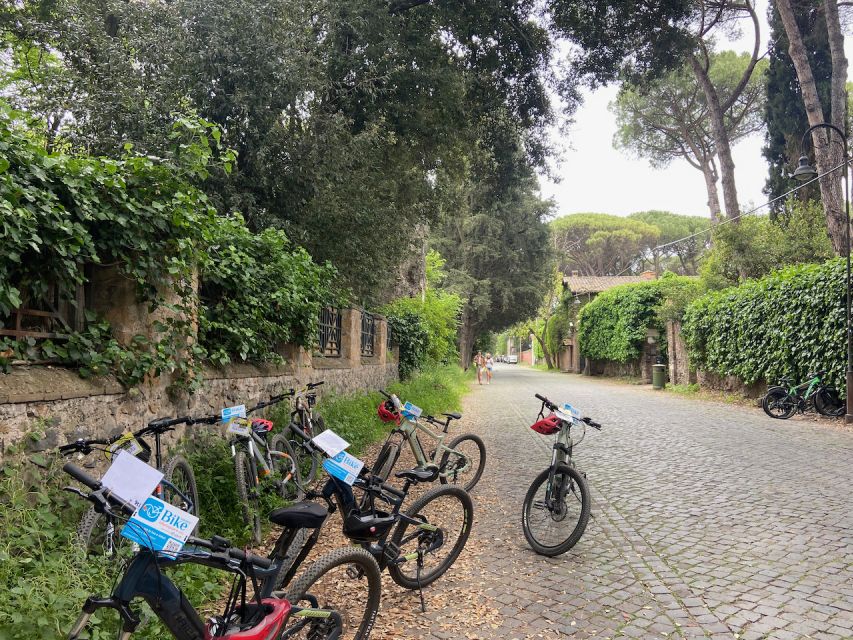
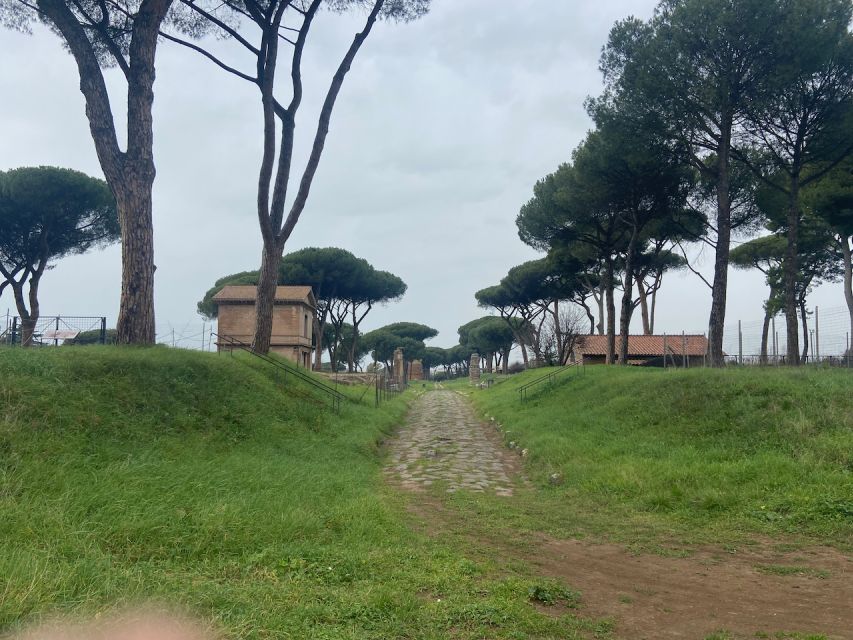
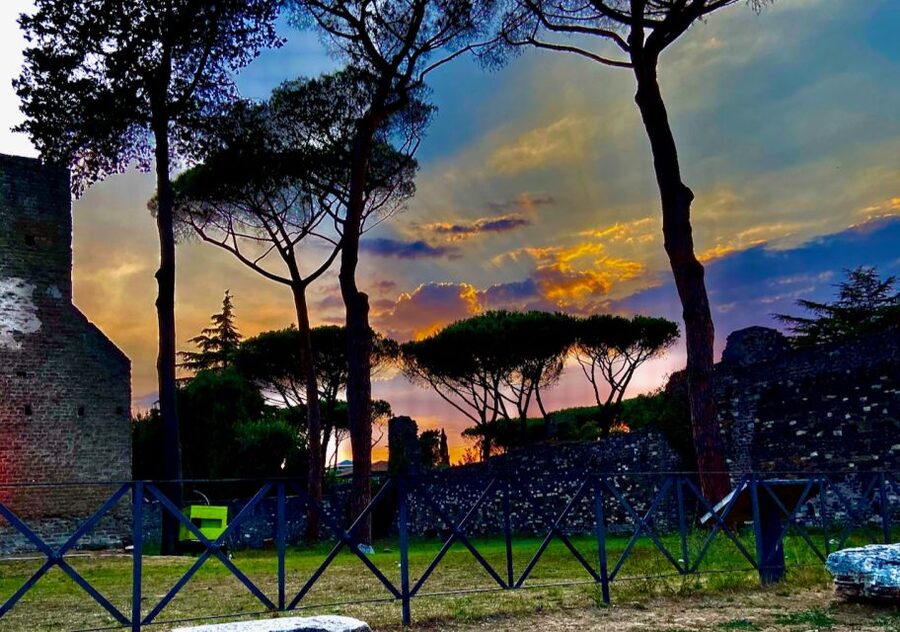
The Appia Antica Archaeological Park follows, with about 30 minutes. This is the heart of the ride for many people. You have time to look at the old paving, take photographs, and listen as the guide explains the road, monuments, and nearby archaeological remains.
The surface deserves honest attention. Ancient paving stones are part of the appeal, but they are not as smooth as a modern cycle path. Keep both hands ready, follow your guide’s pace, and expect a ride that feels more like an archaeological outing than a fast bicycle trip.
More E-Bike Tours in Rome
- Rome: Appian Way, Catacombs, & Roman Aqueducts E-bike Tour
★ 4.9 · 1,421 reviews - Rome City Small Group Bike Tour with quality Cannondale EBike
★ 5.0 · 1,380 reviews - Rome by Night – Ebike Small Group Tour – Food and Wine (Option)
★ 5.0 · 1,275 reviews - Rome by Night: E-bike Small Group Tour -Food & Wine (Option)
★ 4.9 · 1,233 reviews
Villa dei Quintili and the Park of the Aqueducts
The Villa dei Quintili is a short 10-minute stop. The villa was an expansive Roman country residence, and even a brief visit helps show how powerful Romans lived outside the city center. The limited time means you will mainly see and discuss the site rather than explore every section.
The route then opens out at the Park of the Aqueducts. About 30 minutes are scheduled here, making it one of the more substantial stops. The aqueducts are the visual showpiece of the second half of the ride, with tall arches crossing broad open ground.
This is also where the e-bike route feels most worthwhile. You can move between archaeological points without arranging separate transport, and the open setting gives you a welcome pause from central Rome. The park is a good place for photographs, but it is also a chance to understand the scale of Roman water engineering.
The exact feel of the ride can depend on the day, the group, and the guide’s timing. You may get more explanation at one site and more riding time at another. That is normal for a small guided outing with many stops, but it is worth knowing if you prefer a slow, detailed visit to each monument.
Torre Fiscale, Caffarella, and Domine Quo Vadis
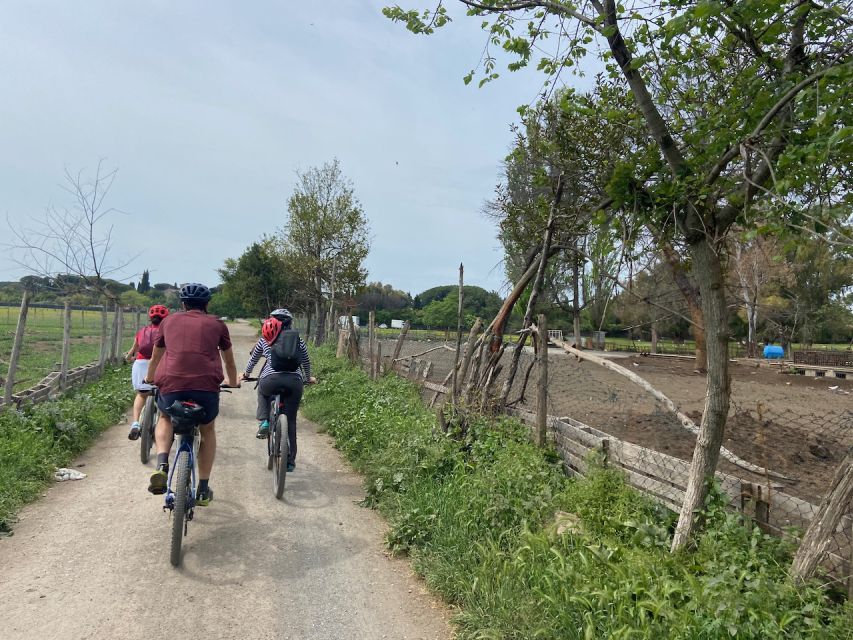
Torre Fiscale Park comes next, with about 20 minutes. The park brings together countryside views, old towers, and traces of the aqueduct system. It is one of the places where the route feels far removed from the city, even though you remain within Rome’s wider urban area.
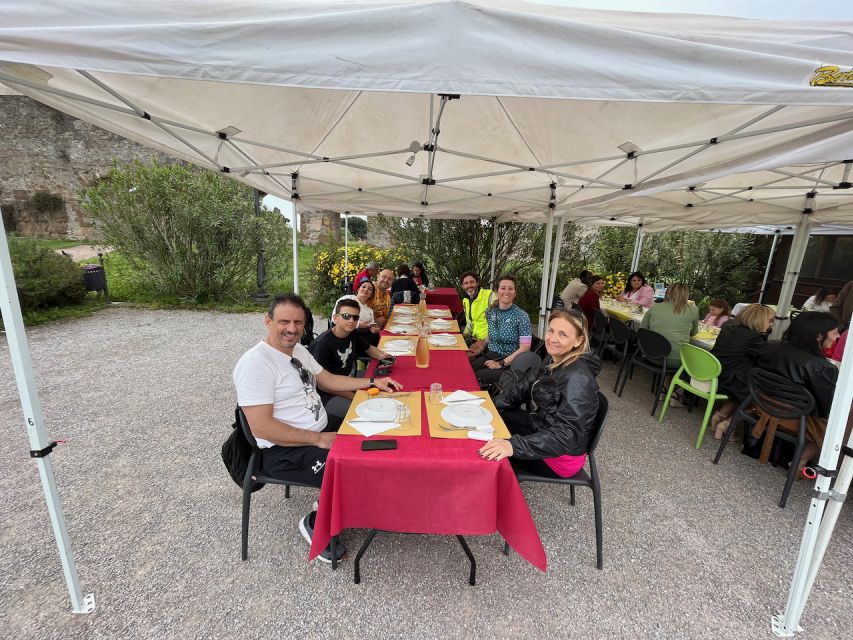
The aperitif stop is listed for about 30 minutes at a local restaurant or selected farmhouse in the park. You can expect wine and local products, not a full meal. Lunch or dinner is not included, so treat this as a tasting break rather than a substitute for a restaurant reservation later in the day.
This food stop gives the ride a more local rhythm. Instead of ending at the rental shop with a quick goodbye, you have time to sit, taste, and talk. For many people, that will be the most social part of the tour. If you do not drink wine, the supplied details do not specify alternative drinks, so ask the operator when booking if that matters to you.
Caffarella Park receives about 25 minutes. The park is known here for its open Roman countryside, ancient traces, and connection to the Appian Way. It is an especially pleasant contrast with central Rome’s hard stone and heavy foot traffic.
You then stop at the Church of Domine Quo Vadis for roughly 15 minutes. The small church is tied to the Christian tradition of Saint Peter meeting Christ on the road. The stop adds a religious layer to a route already filled with imperial roads, villas, tombs, and engineering works.
Aurelian Walls and the ride back to the Pyramid
The final scheduled sightseeing stop is the Aurelian Walls, with around 20 minutes. By this point, the wall helps bring the route back toward the city and ties together several themes from the day: defense, movement, burial, and the changing edge of Rome.
The Pyramid of Cestius gets a short five-minute stop before you return to Viale della Piramide Cestia, 33. Since the pyramid is also near the start, it gives the tour a tidy loop rather than an arrival at a different part of Rome.
Do not read the stop times too literally. A 10-minute visit may include dismounting, parking the bikes, gathering the group, and hearing a short explanation. The 30-minute park visits give more room, but the tour is still designed to show you many places rather than provide detailed entry visits to every site.
What the guide adds to the ride
The guide is the difference between a pleasant bike outing and a useful historical tour. You are not simply following a route on your own. The guide explains what you are seeing, manages the group, and helps you handle the varied road conditions.
English and Italian tours are available. The group is capped at 10 participants, which is small enough for questions and easier movement than a large coach excursion. It also means the pace may be affected by the least confident cyclist in the group.
Costanza has been praised for being attentive, kind, and highly capable. Georgia has led an outing described as an exciting way to see Rome’s outer areas, while Masse has guided riders along the Appian Way and through the parks. Guides have also been credited with taking care over safety, which matters when you are riding over mixed surfaces.
You do not need to be an expert cyclist, but you should feel comfortable riding a bicycle. Comfortable clothes and shoes are essential. Sunglasses are a smart addition, especially in the open parks, and a small personal bag is better than a suitcase.
Is $81 good value for four hours?
At $81 per person, the price is not bargain-basement, but it covers a useful combination: a mountain e-bike, a guide, a four-hour route, a small group, and the wine and local-product stop. You are also covering a large area that would be awkward to connect by walking alone.
The value is strongest if you want variety. In one half-day, you see ancient roads, imperial villas, tombs, catacombs and archaeological areas, aqueducts, parks, a church, city walls, and the Pyramid of Cestius. A self-guided version might cost less, but it would require more planning and would not provide the same continuous explanation or bike support.
The price is less compelling if your main goal is a long, careful visit inside one archaeological site. Several stops are short, and the tour does not include lunch or dinner. You are paying for access to a broad route and a guided experience, not for admission to a series of indoor monuments.
Free cancellation up to 24 hours before departure and the option to reserve now and pay later make the booking less rigid. Starting times vary, so check availability for the date you want.
Who should choose this Appian Way tour?
I would recommend it to you if you want to see a quieter side of Rome and enjoy switching between riding, short walks, history, and food. It suits people who have already spent time around the major center-city sights and want parks and ancient roads rather than another crowded indoor attraction.
It is also a good choice for active families if the child’s seat is arranged in advance. Couples and small groups will appreciate the combination of sightseeing and aperitif, while solo visitors may find the small group easy to join.
I would hesitate to recommend it if you dislike bicycles, uneven surfaces, or a schedule with frequent stops. It is not the right outing for anyone who wants a slow archaeological study of every villa and tomb. The route covers plenty, but the tradeoff is brief visits.
FAQ
Where does the Appian Way e-bike tour start and finish?
It starts and ends at Bikesquare Roma bike Rental, Viale della Piramide Cestia, 33.
How long does the tour last?
The tour lasts four hours.
What languages are available?
The live guide is available in English and Italian.
How many people are in the group?
The group is limited to 10 participants.
Is the e-bike included?
Yes. A mountain e-bike and guide are included.
Is food or wine included?
The tour includes an aperitif with wine and local products at a selected farmhouse or local restaurant. Lunch and dinner are not included.
Can a child’s seat be provided?
Yes. A child’s seat is available upon request.
Should you book this Rome e-bike tour?
Book it if you want Rome’s ancient past with more open space, more riding, and fewer central-city crowds. The strongest reasons are the broad route, capable guides such as Costanza, Georgia, and Masse, the small group, and the satisfying finish with wine and local products.
Skip it if you need a slow, in-depth visit at each ruin or if cycling on old stone surfaces sounds uncomfortable. For the right rider, though, $81 buys a well-filled half-day and a side of Rome that many visitors never see.
Just added around Rome
- Rome: Guided eBike Evening Tour with italian Aperitif★ 5.0 · 16 reviews
- Rome: Appian Way, Aqueducts, & Catacombs E-Bike Guided Tour★ 4.9 · 54 reviews
- Sunrise in Rome: Small Group E-Bike Tour & Italian breakfast★ 4.9 · 177 reviews
- Rome: Villa Borghese, Villa Ada, and Coppedè E-Bike Tour★ 4.8 · 78 reviews
- Rome: Top 10 Highlights Guided Tour by Bike or E-Bike★ 4.4 · 15 reviews
- Rome: Taste of Rome by quality Cannondale E-Bike★ 5.0 · 12 reviews
- Rome: Full-Day Guided Tour by E-Bike with Lunch Included★ 4.9 · 36 reviews
- Rome: Villa Borghese E-Bike Tour (Small Group or Private)★ 4.9 · 92 reviews
Rome Bike Tours, compared.
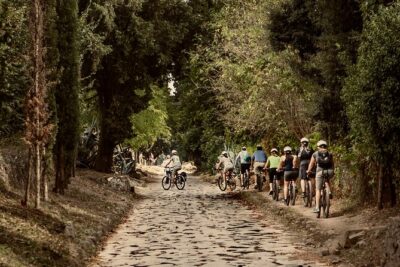
Rome EBike Tour: Appian Way, Catacombs & Roman Aqueducts
Read our review →
Top Highlights & Hidden Gems Tour by Cannondale E-Bike
Read our review →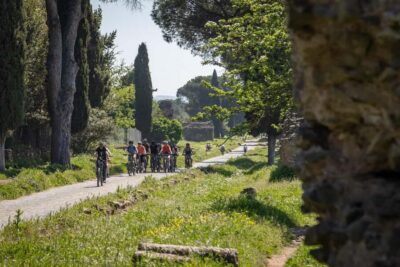
Appian Way & Aqueducts E-Bike Tour (Catacombs & Food)
Read our review →
Appian Way, Catacombs, & Roman Aqueducts E-bike Tour
Read our review →
Rome City Small Group Bike Tour with quality Cannondale EBike
Read our review →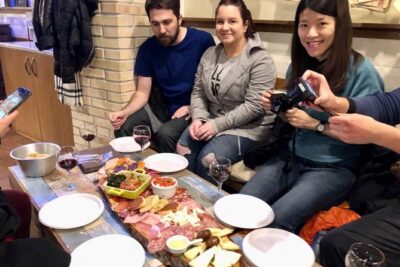
Rome by Night – Ebike Small Group Tour – Food and Wine (Option)
Read our review →
Rome by Night: E-bike Small Group Tour -Food & Wine (Option)
Read our review →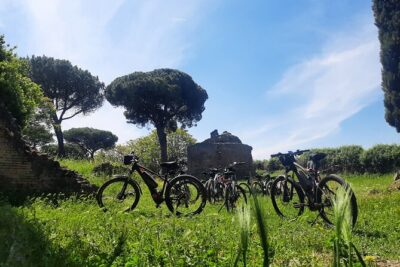
Appian Way Aqueducts Bike Tour (Catacombs & Lunch Option)
Read our review →Browse the lists this tour appears in