REVIEW · MARRAKECH
Marrakech: Cultural Bicycle Tour with Pastry and Tea
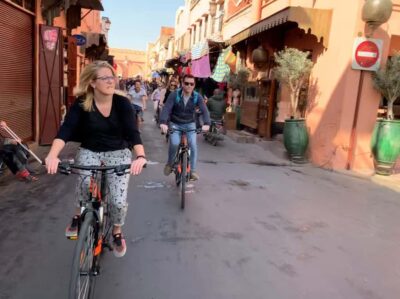
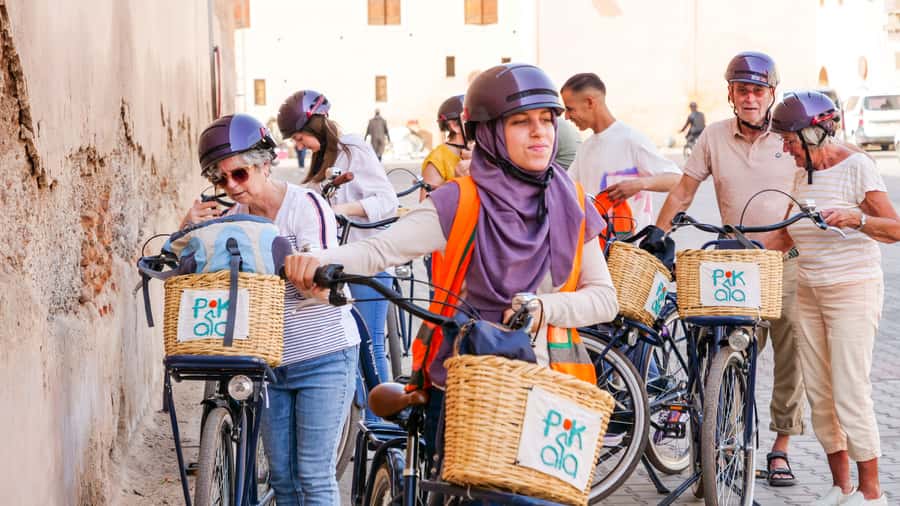
Marrakech’s best stories are often found away from the big square. This three-hour bicycle tour takes you through tight medina lanes, local businesses, palace gardens, and modern boulevards, with young Moroccan guides explaining how the city works day to day. You may see a bakery oven, tile artisans, a public hammam, and streets you would likely miss on foot.
I like the focus on ordinary life rather than a parade of monuments. I also like that Pikala Bikes trains Moroccan youth as guides, giving you personal insight while supporting a social project. The catch is traffic: you need to be a confident cyclist, especially during the first hour among mopeds, donkeys, carts, pedestrians, and other bikes.
Key points to know before you ride
- Bread is a cultural lesson: Visit a neighborhood bakery, watch loaves bake in a clay oven, and taste fresh Moroccan bread.
- The medina ride is exciting but demanding: Narrow alleys and crowded souks require alert cycling and patience.
- Zellige becomes real craft, not just decoration: See Moroccan mosaic tilework being made by hand.
- The Royal Palace is viewed from outside: You see the surrounding public gardens and learn about the monarchy without entering the palace.
- The route contrasts old and new Marrakech: After the medina, you cycle through Gueliz and Hivernage, with broad roads, cafés, and hotels.
- The $34 price covers useful extras: Water, fruit, suncream, local stops, Moroccan pastries, juice, tea, and snacks at Pikala Cafe are included.
What this Marrakech bicycle tour actually gives you
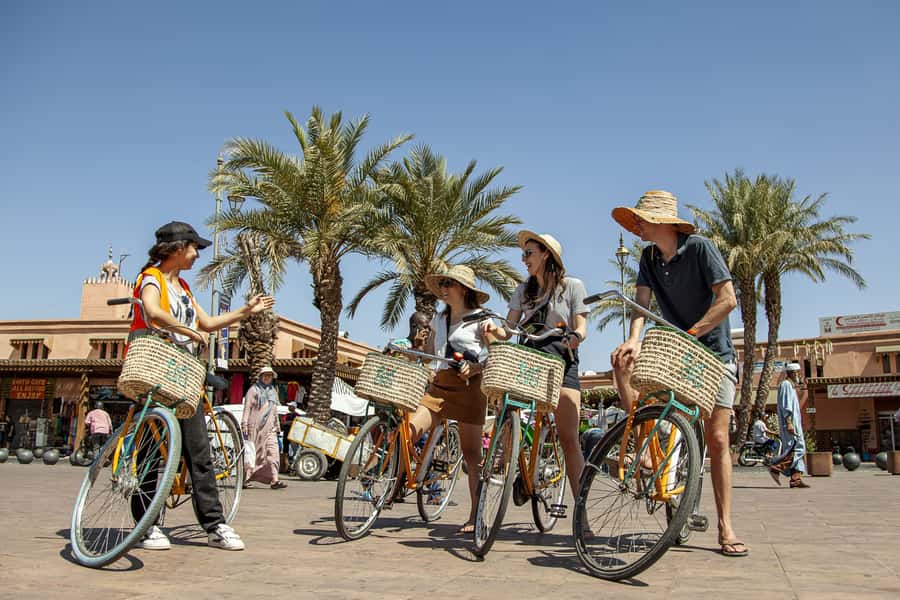
Pikala Bikes offers a different sort of city tour. You are not simply pedaling past famous sights while a guide recites dates. The route uses food, craft, religion, public spaces, and traffic to show you how Marrakech functions.
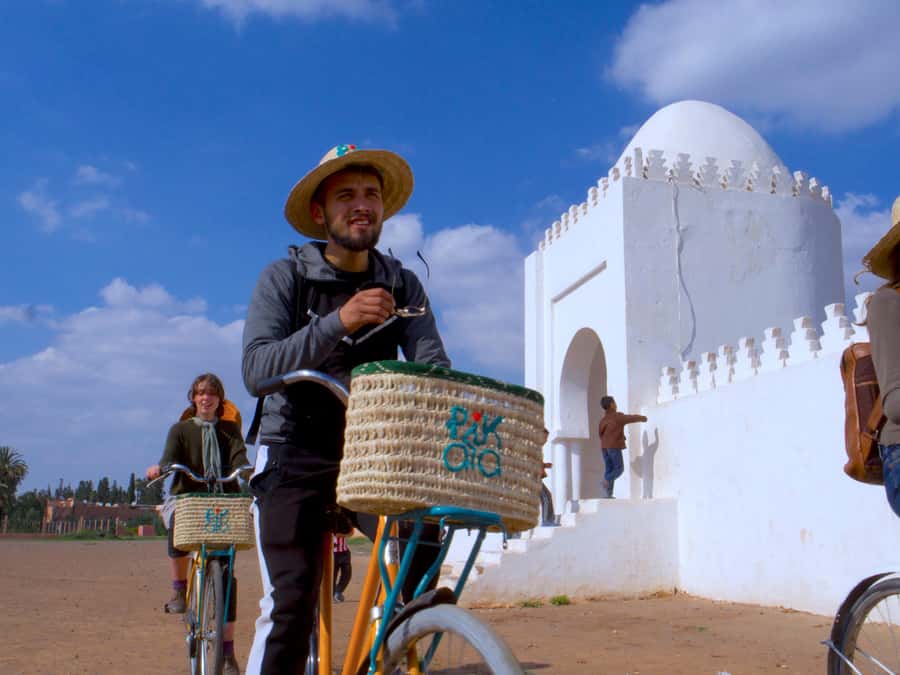
The guides are Moroccan young people trained by Pikala. Names vary by departure, but the team has included Rabab, Hamid, Ayoub, Yassir, Yasmin, Kenza, Sayid, Khalil, and others. Their strengths differ, yet the best guides combine clear English or French with a personal interest in the city. Some focus on history and politics. Others spend more time on family customs, religious practice, or daily life in the medina.
The tour is priced at $34 per person, which is fair for three hours of guiding, bicycle use, refreshments, suncream, and entry to the local stops. You are also paying for a social enterprise that trains local youth, so the value is not only measured in sights covered.
This is not a polished sightseeing bus ride. It is a moving introduction to Marrakech, and the city’s traffic is part of the lesson. You will need to pay attention, keep your bike under control, and follow your guide closely.
A few more bike tours around the world worth a look
- Lion City Bike Tour of Singapore
★ 5.0 · 6,211 reviews - Big Bike tour Amsterdam – See all in 3 unforgettable hours
★ 4.7 · 4,929 reviews - 3-Hour Porto Highlights on a Electric Bike Guided Tour
★ 5.0 · 4,392 reviews
Starting at Pikala Bikes and entering the medina
The tour begins at Pikala Bikes headquarters. After setting off, you reach the Zawiya of Sidi Bel Abbas, one of the early cultural stops. The visit lasts about 15 minutes and gives your guide a chance to explain the religious and social role of a zawiya, a place associated with a saint and local spiritual life.
From there, the route enters the less polished side of Marrakech. The lanes can be narrow, and you may need to slow down or stop for people, mopeds, carts, donkeys, and pedestrians. The ride is generally gentle and flat, but the challenge comes from steering and awareness, not hills.
Several riders found the first hour nerve-racking. That is fair warning, not a reason to avoid the tour if you are comfortable on a bike. The traffic has its own flexible rhythm, and most people report settling into it after some time. Still, do not book this as your first ever cycling experience.
The local bakery and the meaning of bread
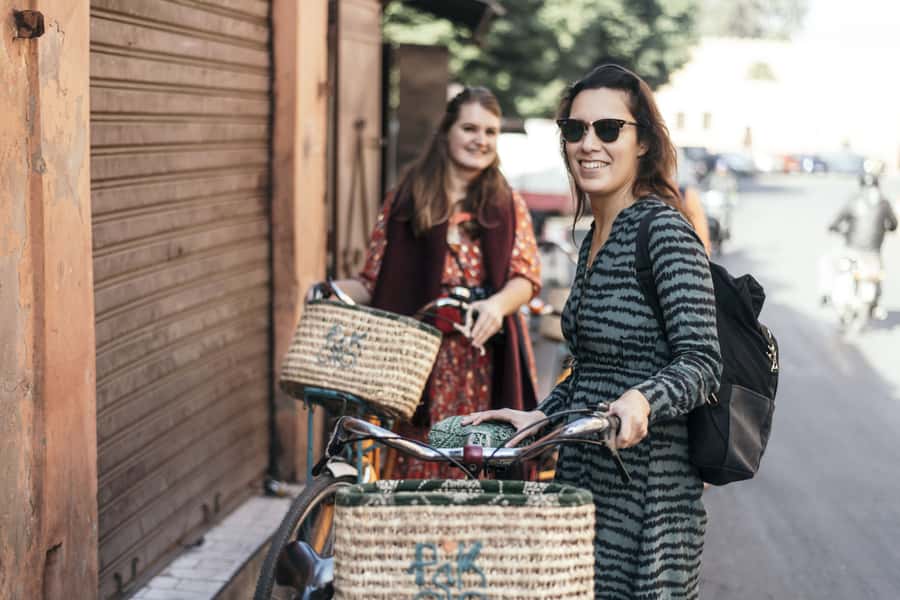
The bakery visit is one of the strongest parts of the morning. You step into a local bakery, see bread being baked in a clay oven, and taste it while learning why bread matters in Moroccan homes.
This stop helps explain a detail you might otherwise miss. Neighborhood ovens are part of community life, and many families bring dough to be baked rather than preparing every loaf in a private kitchen. The point is not simply to sample warm bread. It is to understand how food, work, and neighborhood ties meet in Marrakech.
The stop is short, around 10 minutes, but it is practical and memorable. You are close to the heat and the work, not looking at a staged display made only for visitors. Keep in mind that the route can move quickly between stops, so this is not a long food tour.
Back lanes, local businesses, and small surprises
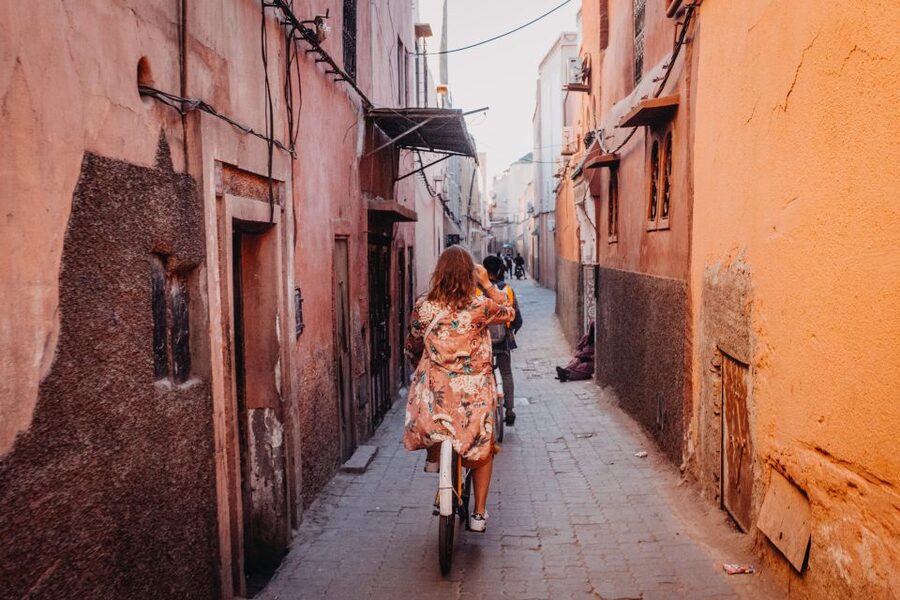
After the bakery, the route passes several lesser-known corners of the medina. Some are described simply as local spots rather than named monuments. That is part of the appeal. You follow the guide through lanes that are useful to residents, not just arranged for sightseeing.
A bicycle gives you a wider reach than walking, but it also changes the pace. You can cover more ground, then stop when your guide points out a workshop, doorway, religious site, or detail in the street. The tradeoff is that you have less time to linger at every place.
Your guide may also point out how people share the narrow streets. Mopeds appear suddenly. Donkeys pull carts. Pedestrians step across your path. The group usually rides together and stops regularly, but you must still manage your own bike.
Same city, a different ride:
- Ninh Binh Full-Day Tour from Hanoi to Hoa Lu, Tam Coc & Mua Cave Via Boat & Bike
★ 5.0 · 4,384 reviews - Small Group Guided Bike Tour of Amsterdam’s Hidden Gems
★ 5.0 · 3,936 reviews - 3-hour Complete Prague Bike Tour
★ 5.0 · 3,674 reviews - Party Bike Private Party Up To 14 People in Old Town Scottsdale
★ 5.0 · 3,541 reviews
Place des Ferblantiers and the Royal Palace area
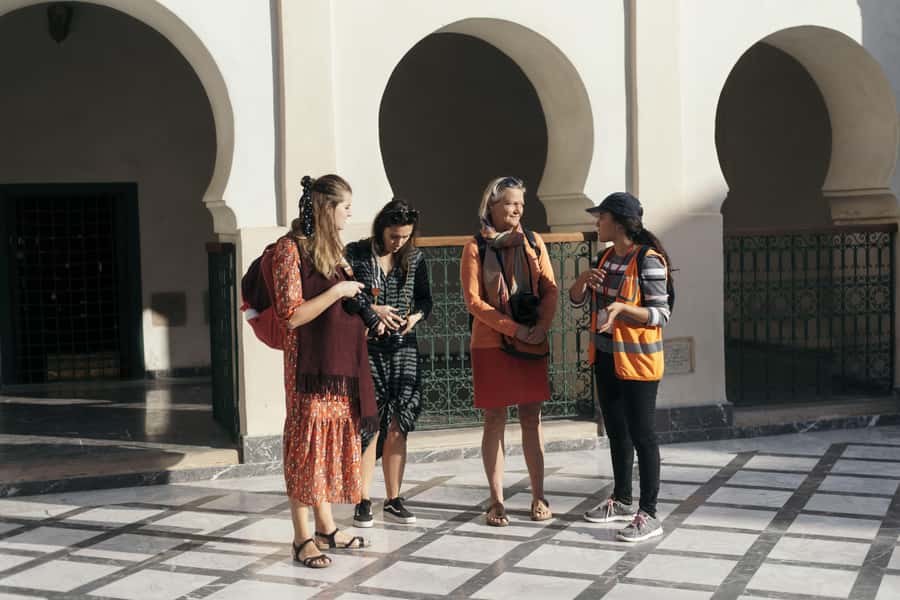
The route reaches Place des Ferblantiers, where you have about 20 minutes for a break, photographs, and a look around. The square is linked to metalwork and sits in a part of the city where craft traditions remain visible.
This is a useful pause after the tighter lanes. You can take photos, catch your breath, and watch the street activity without trying to steer at the same time. It also gives the guide room to explain how the medina’s trades have traditionally gathered in particular areas.
The ride then continues toward the Mechouar area, written in the tour information as مشور البراني. This section includes another break and photo stop of roughly 15 minutes. You pass the public gardens around the Royal Palace, Dar El-Makhzen, and view the palace architecture from outside.
Do not expect palace entry. The value here is context: your guide explains the place of the monarchy and the way royal space fits within the old city. The gardens give you a calmer setting and a chance to appreciate the scale of the palace district without pretending you have access to the private interior.
Zellige tiles, the craft behind Moroccan decoration
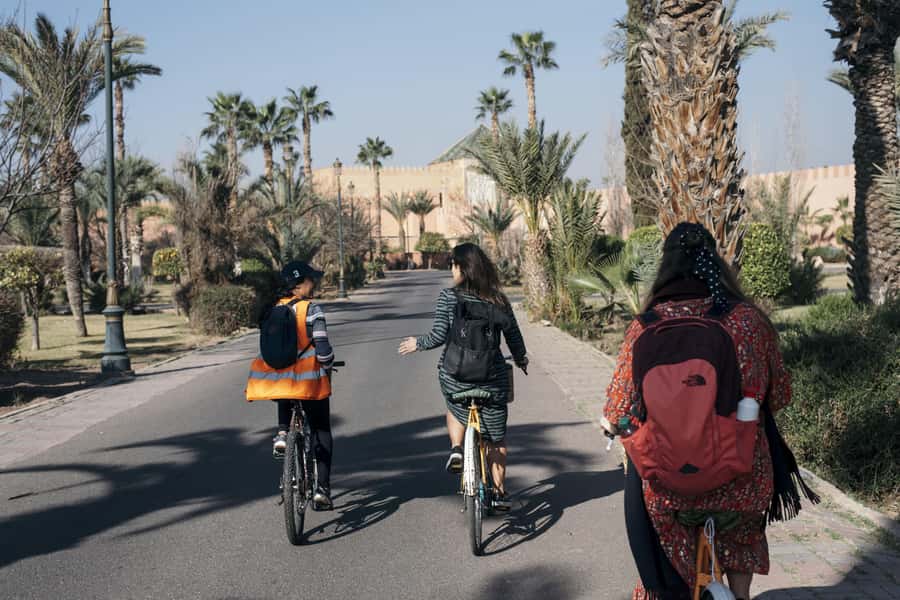
A visit to a Moroccan tile workshop brings the country’s famous geometric decoration down to the level of tools, hands, and repeated work. You see how zellige tiles are shaped and assembled, and learn why this craft has appeared in Moroccan palaces and mosques for centuries.
Zellige can look effortless when it covers a wall or fountain. In a workshop, you begin to understand the patience required to make those patterns. Small pieces must be cut and arranged with care, and the final design depends on many precise decisions.
This is one of the stops that makes the bike route worth choosing over a basic city loop. You are not only photographing finished decoration. You are seeing the work behind it and meeting an artistic tradition that still belongs to local businesses.
The stop is especially good for anyone interested in architecture, design, or handcraft. If you prefer long visits at major monuments, it may feel brief. The tour moves through several subjects in three hours, so each stop is designed to give you a clear introduction rather than a full workshop lesson.
The hammam as a place for daily life
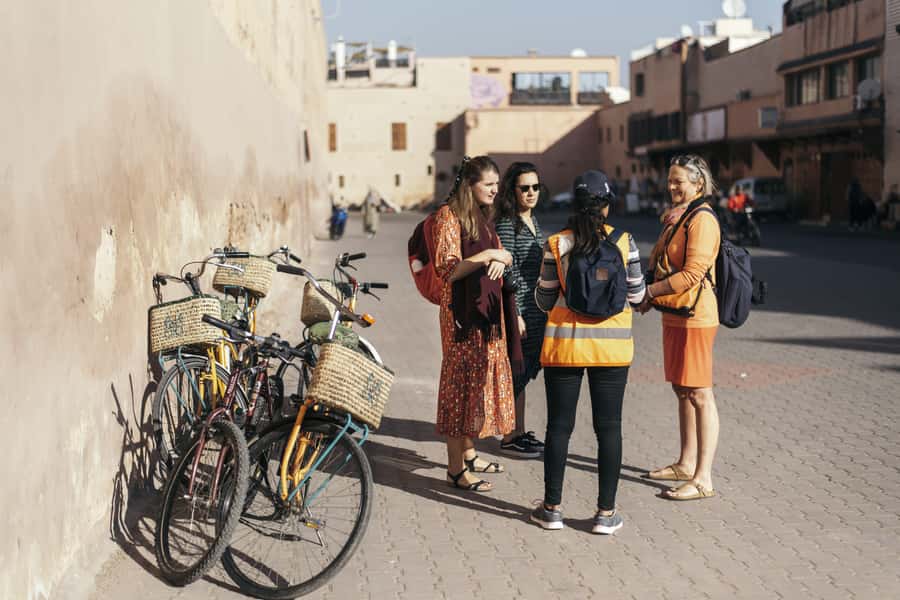
The traditional hammam stop explains the Moroccan public bathhouse and its place in society. You learn about bathing rituals, customs, and the hammam’s role as a social space.
This is a cultural visit, not a bathing session. The attraction is the explanation of how the hammam fits into ordinary routines and community life. For many visitors, this is more useful than simply seeing a decorative bathhouse without context.
The guide can also explain why hammams matter beyond washing. They have traditionally been places where people meet, prepare for important occasions, and maintain a shared local routine. The tour presents that tradition as part of living Marrakech, not as an old custom sealed behind glass.
Koutoubia Mosque and the edge of modern Marrakech
The route passes the Koutoubia Mosque, one of Marrakech’s best-known landmarks. You see it from the outside as the bicycle group moves through the city. The stop is relatively short, around 10 minutes, so treat it as a helpful orientation point rather than a full mosque visit.
Your guide may use the mosque to explain Muslim beliefs and local religious practice. That added context matters. A famous tower is easy to photograph, but understanding how religious buildings relate to city life gives the sight more meaning.
The route then reaches the Church of the Holy Martyrs, with time for photographs and views along the way. This stop adds another layer to Marrakech’s story and helps show that the city’s religious and architectural life is not limited to one tradition.
The exact flow can vary with traffic and group pace. You may spend a little more time discussing one stop and less at another. That flexibility is useful, though it means you should not expect a rigid minute-by-minute schedule.
Gueliz and Hivernage: Marrakech after the old walls
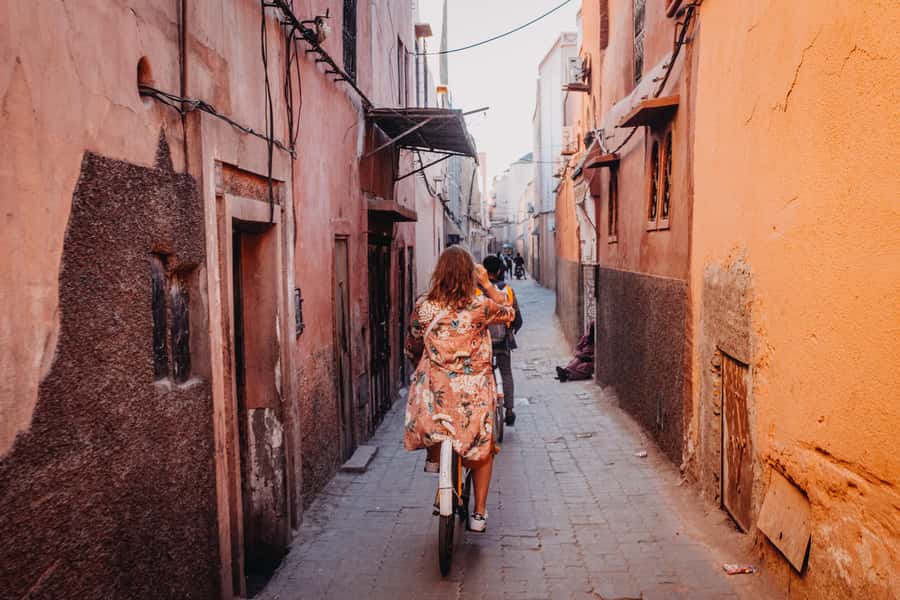
One of the tour’s smartest choices is the shift from the medina into Gueliz and Hivernage. Here, the roads are wider, and you see cafés, modern buildings, luxury hotels, and a more contemporary side of the city.
This contrast helps you understand Marrakech better than a tour confined to the old walls. The medina is dense, traditional, and shaped by narrow routes. Gueliz and Hivernage feel more open and modern, with a different pattern of movement and development.
The broad roads can feel intimidating at first because traffic moves faster and the surroundings are less enclosed. Several riders found this section uneasy at the beginning but felt more at ease after adjusting. Your guide normally keeps the group together, checks behind, and helps the crossing happen as a unit.
A morning departure can be a sensible choice if you want somewhat calmer roads. One rider specifically found a 9:30 start helpful. Traffic conditions still vary, so do not expect an empty city.
Pikala Cafe, mint tea, and Moroccan pastries
The tour finishes with a stop at Pikala Cafe, where you receive tea, juice, Moroccan pastries, and local snacks. Water and fruit are also included during the experience, along with suncream.
The cafe stop lasts about 20 minutes and gives you a comfortable place to talk with the guide after the ride. Spiced cookies and mint lemonade have been particular favorites, while the Moroccan pastries provide a pleasant finish to the cultural stops.
Some people may be more interested in conversation than food and spend the time asking questions about the city. That is a good use of the stop. The cafe is also a practical chance to rest before walking back into the medina or continuing your day.
Hotel pickup and drop-off are not included. You make your own way to Pikala Bikes headquarters and return there at the end.
How difficult is the cycling?
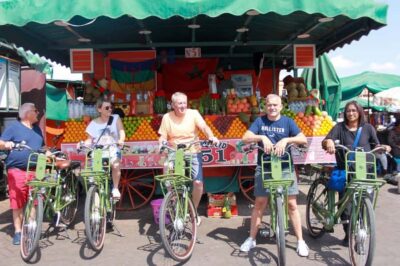
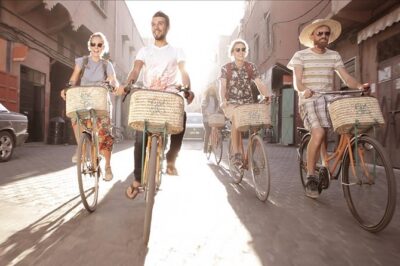
The tour is flat and not fast, with regular stops. The bikes are described as solid Dutch-style bicycles with comfortable saddles, though some riders found them a little heavy to manage.
The main issue is not fitness. It is confidence. You need to control your bike at low speed, react to people crossing, and stay alert around mopeds and carts. Long dresses and skirts can be awkward, so wear casual clothing that lets you move freely.
The traffic may look like chaos, but it follows a flexible pattern. Your guide leads the way, watches the group, and often checks behind. Even so, you are responsible for riding safely and keeping your attention on the road.
A tandem may be available for someone who is nervous or less confident. One family used one successfully for a 72-year-old participant, but the supplied details do not confirm availability for every departure. Ask Pikala in advance if this matters to you.
Who will get the most from this tour?
I would choose this ride early in a Marrakech visit. It gives you a broad sense of the city, introduces local customs, and helps you recognize the difference between the old medina and the newer districts.
It suits you if you:
- Ride a bicycle confidently in crowded urban areas.
- Want daily life and local craft alongside major sights.
- Enjoy meeting young local guides.
- Prefer a small-group experience with conversation.
- Like food and tea stops but do not need a full meal.
- Want to support a youth training program.
I would think twice if you dislike traffic, feel unsafe on a bicycle, or want a slow walking tour with long stops. The route is fun, but it is not passive. You need to take part.
The tour is offered in English and French. Guide quality can vary by person, but the strongest guides, including Rabab, Hamid, Ayoub, Sayid, Yassir, and Kenza, have been praised for warmth, clear explanations, patience, and careful group handling. The overall score of 4.8 from 583 ratings suggests a consistently strong experience, while the repeated traffic warnings provide the useful balance you need before booking.
Is $34 good value in Marrakech?
At $34, this is good value if you want more than bicycle rental. You receive a three-hour guided route, bicycles, water, fruit, suncream, local entry fees, a bakery taste, and refreshments at Pikala Cafe.
The bigger value is the range of subjects covered. In one short outing, you connect bread, tilework, hammams, royal space, religious buildings, old-city trades, and modern neighborhoods. You could visit some of these places independently, but you would likely miss the explanations and spend time finding your way through the medina.
The price is less attractive if you only want a scenic ride. This is a culture tour conducted on bicycles, not a leisurely cycle with long stretches of open road.
Free cancellation up to 24 hours before the tour and reserve-now, pay-later booking make it easier to fit into a changing schedule. Starting times vary, so check availability when choosing your date.
Should you book the Pikala Bikes cultural ride?
Book it if you want to see Marrakech through ordinary places and you are comfortable handling a bicycle in crowded streets. The bakery, zellige workshop, hammam explanation, Royal Palace gardens, and shift into Gueliz give the tour real variety.
I would especially recommend it for a first visit, because the route gives you a useful map of the city and a sense of how the old and new parts relate. Choose an earlier departure if possible, wear practical clothes, and keep your first hour free of overconfidence.
Skip it if you want a quiet outing or are not a capable cyclist. For the right person, though, this is a lively, useful introduction to Marrakech, with local guides who can explain not only what you are seeing, but why it matters.
FAQ
Where does the bicycle tour start?
The tour starts at the Pikala Bikes headquarters.
How long does the tour last?
The scheduled duration is three hours, although one participant reported a tour lasting about three and a half hours.
What languages are available?
Live guiding is available in English and French.
Does the tour include hotel pickup?
No. Hotel pickup and drop-off are not included, so you need to reach Pikala Bikes yourself.
Is bicycle rental included in the price?
Yes. The experience is a guided bicycle tour, and bicycles are provided.
What food and drinks are included?
The tour includes water and fruit, plus juice, Moroccan pastries, and local snacks at Pikala Cafe. Tea is also included at the cafe stop.
Do you enter the Royal Palace?
No. You view Dar El-Makhzen and its surrounding public gardens from outside.
Do you bathe at the hammam?
The hammam stop explains Moroccan bathhouse traditions and social customs. The supplied information does not describe it as a bathing session.
Do I need to be an experienced cyclist?
You should be a confident cyclist because the route includes narrow medina lanes and traffic involving mopeds, donkeys, carts, pedestrians, and other cyclists.
What should I wear?
Wear casual, comfortable clothing. Long dresses and skirts may make cycling difficult.
Just added around the world
- Barcelona: Bike Rental for 2 – 24 Hours★ 4.7 · 33 reviews
- Barcelona: 3-Hour Bike Tour with Spanish Tapas★ 4.9 · 14 reviews
- Barcelona: 4-Hour Off-the-Beaten-Track Small Group Bike Tour★ 4.8 · 63 reviews
- Barcelona: Private 5 Neighborhoods Tour by Electric Bike★ 4.9 · 17 reviews
- Barcelona: 4-Hour E-Bike Photography Tour★ 4.8 · 36 reviews
- Barcelona: 3.5-Hour Street Art Tour by Bamboo Bike★ 5.0 · 56 reviews
- Thai culture and Bangkok local life guided bike tour★ 4.9 · 32 reviews
- Barcelona Beach 3-Hour Bike Tour★ 4.8 · 65 reviews
Marrakech Bike Tours, compared.