

REVIEW · COPENHAGEN
Urban Design and Livability E-bike Tour
Copenhagen makes the most sense from a bicycle, and this tour uses that advantage well. In three hours, you ride from the Opera House and Nyhavn to Christiania, CopenHill, the Meatpacking District, and several waterfront spaces. It is less a monument checklist than a moving lesson in how a city can mix old quarters, new architecture, public swimming, green space, and daily life.
I especially like the small group, capped at 10 people, and the way the route crosses very different parts of town. I also like that the electric bike keeps the pace pleasant without turning the outing into a workout. The main thing to consider is that you spend about 10 minutes at each stop, so this is an overview, not a tour with long visits inside museums or buildings.
Key points at a glance
- A citywide route in three hours: You see ten areas and landmarks, from CopenHill to Nyhavn.
- Electric bikes included: The motor makes the considerable amount of cycling easier.
- Design with a practical angle: The route looks at architecture, public space, recycling, swimming, food, and city life.
- Guides add personality: Basha, Mood, Luke, Pasha, Alex, and Rafael have led tours praised for clear explanations and an easy sense of humor.
- No food or drinks are included: You can buy refreshments before or during the outing.
- Good first-day choice: It gives you a useful map of Copenhagen’s neighborhoods before you explore them on foot.
Why an e-bike is the right way to see Copenhagen

Copenhagen is compact, but the stops on this route are spread across several parts of the city. Walking between all of them would take far too long, while a standard bicycle could make the outing tiring for some people. The e-bike solves that problem without removing the pleasure of moving through the city at street level.
You still see the spaces between the main sights. That matters here. Copenhagen’s appeal is not limited to one grand square or a single famous canal. The city’s character comes from the way old buildings, harbor paths, new cultural sites, food halls, housing areas, and public recreation fit together.
The bike is provided, and a helmet is available if you want one. The tour is offered in English, begins at 11:00 a.m., and returns to the same meeting point at Holbergsgade 12. Since the ride covers a lot of ground, wear clothes that are comfortable on a bicycle and leave room in your schedule for the full three hours.
More E-Bike Tours in Copenhagen:
- 2 Hours Copenhagen E-Bike Guided Tours
★ 5.0 · 276 reviews - Copenhagen: Guided E-Bike Tour
★ 4.8 · 141 reviews - E-biking Central Forgotten Giants’ s Adventure
★ 4.5 · 75 reviews
Starting at the Opera House and CopenHill

The Copenhagen Opera House is a fitting first stop. Set on the waterfront, it represents the city’s modern cultural side and gives your guide a chance to explain how the harbor has become a major part of Copenhagen’s public life. You get about 10 minutes here, enough to take in the building and its setting before moving on.
CopenHill offers one of the tour’s most unusual sights. This waste-to-energy plant is designed with a ski slope, running track, climbing wall, and café. It is a useful example of Copenhagen design because the building is not treated as something to hide on the edge of town. Instead, an industrial facility becomes a place for recreation.
You will not have time for the ski slope or climbing wall during this short stop. The value is in understanding the idea behind the building and seeing how Danish urban planning tries to combine environmental work with public use. If you enjoy architecture that has a practical purpose, this will likely be one of the strongest parts of the ride.
Christiania and the city’s independent streak
The stop at Christiania introduces a very different side of Copenhagen. This independent community is associated with personal freedom, free expression, artistic life, and its own approach to community rules. It does not feel like a polished architectural showcase, and that is precisely why it belongs on a tour about livability.
Your guide can help place Christiania within the wider story of Copenhagen. The stop is brief, so you should expect an orientation rather than a long walk through the area. The point is to see how an alternative community fits into a city otherwise known for careful planning and orderly public spaces.
This part of the tour may appeal most if you want more than official landmarks. It also shows the limits of a quick route. Christiania has enough character to reward extra time on another day, especially if you want to explore beyond the main introduction.
Islands Brygge and the harbor as public space
Islands Brygge shows how an old industrial area can be reshaped for modern city life. What was once a less inviting stretch now includes green spaces, swimming areas, and new architecture. The waterfront is no longer only for warehouses, roads, and working facilities. It is also a place for people to sit, swim, meet, and spend time outdoors.
This stop helps explain why Copenhagen is often praised for livability. You are not only looking at attractive buildings. You are seeing public access to the water and the deliberate use of open space in a dense city.
The tour does not include swimming, and the 10-minute stop is too short for a proper harbor break. Still, it gives you a good idea of the area and may help you decide to return later if the weather is pleasant.
A few more bike tours around Copenhagen worth a look
- Copenhagen: Highlights 3 Hour Bike Tour with a Local Guide
★ 4.8 · 2,312 reviews - Copenhagen: 3-Hour City Highlights Bike Tour with Guide
★ 4.7 · 1,239 reviews - Copenhagen Highlights 3 Hour Bike Tour with local Guide
★ 5.0 · 1,125 reviews - 3-hour Copenhagen City Highlights Bike Tour
★ 5.0 · 757 reviews
The Meatpacking District, from butchers to nightlife

The Meatpacking District adds another example of urban change. Its original role was practical and industrial, but the area now mixes art, restaurants, and creative activity. The old function has not been erased from the story. Instead, the district has been given a new social life.
I like this stop because it keeps the tour from becoming too focused on formal architecture. Copenhagen’s design story also includes how old working areas are reused. The district’s restaurants and food culture make it a useful place to ask your guide for ideas for later meals.
You will not be stopping for lunch as part of the tour. Food and drinks are not included, though you can buy them before or during the outing. If eating is a priority, plan a separate meal rather than expecting the route to provide one.
City Hall Square and the center of town

City Hall Square brings you back to one of Copenhagen’s main civic spaces. It sits beside the City Hall and close to Tivoli Gardens, making it an easy point of reference for the central city.
The stop provides a useful contrast with the more experimental places earlier in the route. Here, the focus is a traditional urban center, a major public square, and some of the city’s best-known attractions. Your guide can connect the square to the broader route, showing how Copenhagen’s historic center relates to its newer waterfront districts.
Ten minutes is enough for orientation and photographs. It is not enough to visit City Hall or Tivoli Gardens, and neither admission is part of this tour. Think of the stop as a way to understand where these attractions sit before you return to them independently.
Torvehallerne and Copenhagen’s food culture

Torvehallerne is one of Copenhagen’s best-known food destinations, with Danish and international specialties under one roof. Even if you do not buy anything, it offers a quick look at the city’s taste for well-made food and attractive market spaces.
This is also one of the most practical stops. You can buy food or drinks here, though the schedule may allow only a short purchase. If you want to browse slowly, compare products, or sit down for a meal, return later without the group.
The food hall makes a good midpoint or later-day suggestion because it connects the tour’s design theme with everyday life. Good city planning is not only about striking buildings. It is also about creating places where people shop, eat, and meet.
Nyhavn and Copenhagen’s familiar postcard view

Nyhavn is the most instantly recognizable stop on the route. Its colorful buildings line a 400-year-old canal that reflects Copenhagen’s maritime past. The area is popular for good reason, but a short guided visit helps you see it as more than a photo backdrop.
Your guide can explain the canal’s role in the city and point out how this historic waterfront fits into modern Copenhagen. The stop is brief, so you will have time to take photographs and hear the main story, but not to sit at length in one of the canal-side cafés.
If you have only one day in Copenhagen, Nyhavn is a must-see. This tour gives you a quick introduction, then lets you return later when you have more time for a slower walk.
Ofelia Plads and The Playhouse

Ofelia Plads is a man-made beach in the center of Copenhagen. It is used for swimming, sunbathing, meeting friends, and cultural events. Like Islands Brygge, it shows how the waterfront can serve ordinary leisure rather than only transport or commerce.
The word beach may set the wrong expectation if you imagine a long sandy shore. The important feature here is the public space beside the water and the range of activities it supports. Weather will affect how appealing the area feels, but the design idea is visible in any season.
Nearby, The Royal Playhouse provides another example of Danish design. The building is linked with sustainable design and reflects Copenhagen’s image as an open city. Together, these final stops bring the tour back to culture, public access, and the relationship between architecture and daily life.
What the guides add to the ride
A good guide matters on this tour because the route covers many subjects quickly. You are not simply being pointed toward buildings. You are being asked to connect recycling, architecture, food, independent communities, public swimming, and city planning.
Several guides have led this experience. Basha has been praised for explaining architectural design, Danish life, and urban development in a friendly way. Mood brings an entertaining style and helps make the different neighborhoods memorable. Luke focuses on the reasons Copenhagen works well as a place to live, while Pasha has been especially useful with practical suggestions for the rest of a city stay.
Alex is known for making time for questions and keeping the mood light. Rafael, also called Ninja Turtle, has a particular interest in the city’s culinary side. The guide you receive will shape the feel of the outing, but the common strength is an informative, personal approach rather than a rigid speech.
One fair criticism is that some visitors may want more detail at certain stops. With ten locations in three hours, the guide must keep moving. If you prefer long architectural lectures or detailed historical dates, this may feel light. If you want a clear introduction with room for questions, the pace should work well.
Price, group size, and what you receive
At $78.10 per person, the tour is not the cheapest way to rent a bicycle for a few hours. The value comes from the e-bike, the guide, the route planning, and the number of districts covered. A self-guided ride might cost less, but you would need to map the route, manage navigation, and work out the meaning of each stop yourself.
The advertised group limit is 10 people. That is a useful size for city cycling because the group can stay together without feeling like a large procession. It also gives you a better chance to ask questions than on a big coach tour.
The price includes the bicycle, an optional helmet, and a licensed or certified in-person guide. It does not include lunch, drinks, admissions, or activities at the stops. Most participants can take part, and the meeting point is near public transportation.
Free cancellation is available if you cancel at least 24 hours before the 11:00 a.m. start. Poor weather or failure to reach the minimum number of participants can lead to a new date or a full refund. Since the ride depends on outdoor conditions, check the forecast before committing to other fixed plans later that day.
Who should book this Copenhagen ride?
I would choose this tour for a first or second day in Copenhagen. It gives you a quick mental map of the city and shows places you may not reach on a standard walking route. The range is the main attraction: historic canal, modern theater, industrial reuse, alternative community, public harbor, food hall, and civic center.
It suits adults and older children who are comfortable cycling for a few hours. The electric assistance helps, but this is still a bicycle tour, not a seated sightseeing trip. You need to be ready to ride between stops and follow the group through the city.
It is less suitable if you want long visits, museum interiors, a full meal, or a slow neighborhood stroll. It is also not the best choice for someone who strongly dislikes cycling. For everyone else, the e-bike makes a wide route manageable and gives you a much better sense of how Copenhagen fits together.
Should you book the Urban Design and Livability E-bike Tour?
Book it if you want to understand Copenhagen as a working city, not just photograph its famous canal. The tour’s best feature is the combination of places: CopenHill beside Christiania, Islands Brygge beside the Meatpacking District, and Nyhavn beside newer public waterfront spaces.
At $78.10, the price makes sense if you value a small group, a supplied e-bike, and a guide who can explain the city’s choices. Skip it if you want detailed time at each attraction or plan to spend most of the day inside museums.
For a first-day orientation, this is a smart pick. You finish with a better sense of where to return, where to eat, and which parts of Copenhagen match your interests.
FAQ
Where does the tour start?
The tour starts at Holbergsgade 12, 1057 København, Denmark.
What time does the tour begin?
The start time is 11:00 a.m.
How long does the tour last?
The tour lasts approximately three hours.
Where does the tour end?
The activity ends back at the meeting point.
Is the e-bike included?
Yes. Use of the bicycle is included in the price.
Is a helmet provided?
Yes. A helmet is available, but wearing it is optional.
Is food included?
No. Lunch, food, and beverages are not included. You can buy food and drinks before or during the tour.
How far in advance can I cancel?
You can cancel for a full refund up to 24 hours before the experience start time. Cancellations or changes made less than 24 hours in advance are not accepted for a refund.
Just added around Copenhagen
- 3 Hours Private Bike Tour in Copenhagen★ 5.0 · 12 reviews
- Copenhagen 3-hour Private Bike Tour★ 5.0 · 67 reviews
- E-biking Central Forgotten Giants’ s Adventure★ 4.5 · 75 reviews
- Biking tour -Copenhagen Small Group, max 10 people★ 5.0 · 36 reviews
- E-Scooter “Stand Up Kick Bike” 2 Hour Guided Copenhagen Tour★ 5.0 · 24 reviews
- Private Copenhagen Family Cargo Bike Tour – Winter Adventure★ 5.0 · 39 reviews
- The Beauty of Copenhagen by Bike: Private Tour★ 5.0 · 27 reviews
- Copenhagen 3 Hour Private Bike Tour with local Guide★ 5.0 · 128 reviews
Copenhagen Bike Tours, compared.
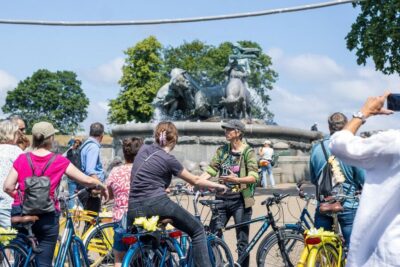
Highlights 3 Hour Bike Tour with a Local Guide
Read our review →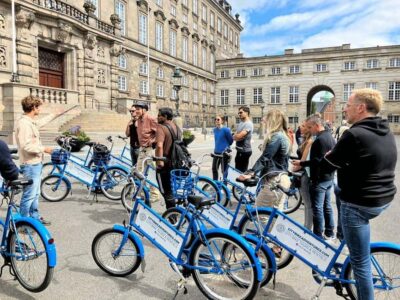
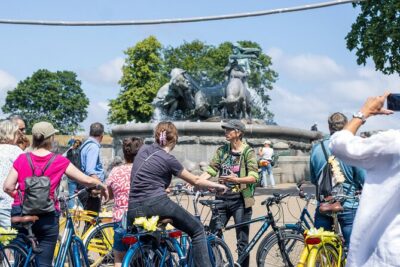
Copenhagen Highlights 3 Hour Bike Tour with local Guide
Read our review →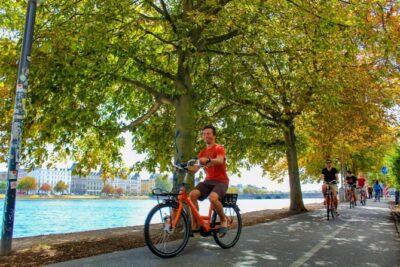
Bike Tour Copenhagen. Private Guide, Concierge Service, Small Grp
Read our review →

Browse the lists this tour appears in