
REVIEW · CAMBODIA
Local Livelihood Full Day Bike Tour in Battambang
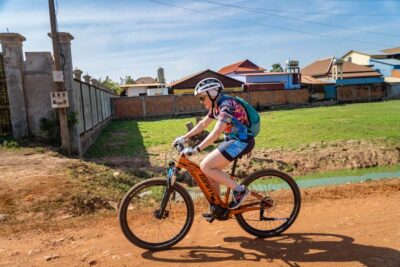
Battambang’s best stories are found beyond its French-era streets, where narrow paths pass rice fields, village homes, temples, and small family workshops. This full-day bike tour puts you in that setting, with stops for rice paper, dried bananas, rice wine, fish paste, and bamboo sticky rice, followed by lunch in a traditional Khmer house and a ride on the bamboo train.
I like the direct contact with local families, and I like that your fee helps support the people you meet and the university-student guides who lead the tour. The main catch is the length: up to nine hours in Cambodia’s heat, with a flexible afternoon schedule and no hotel drop-off included.
Key points at a glance
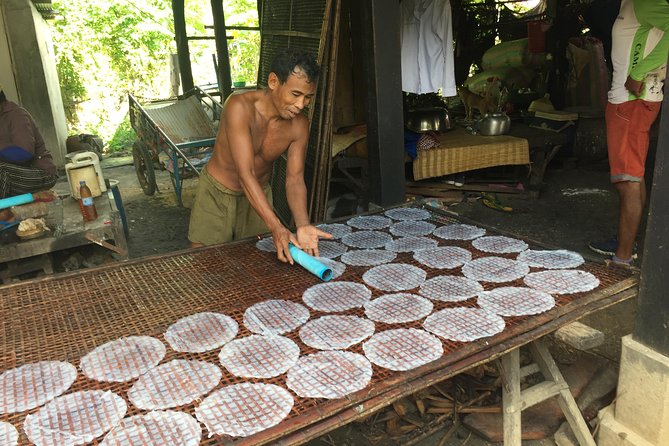
- Meet local producers: See how families make rice paper, dried bananas, rice wine, fish paste, and bamboo sticky rice.
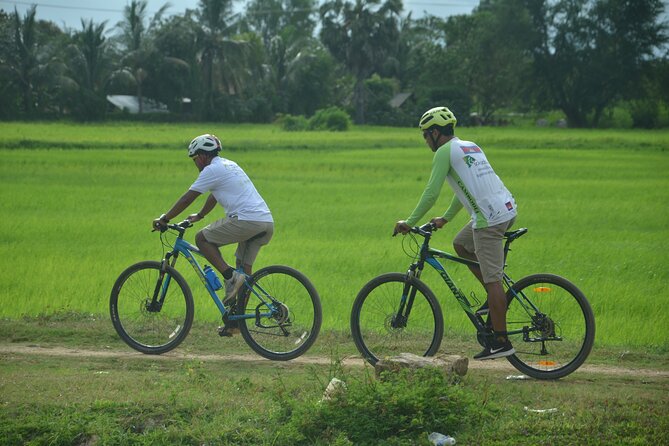
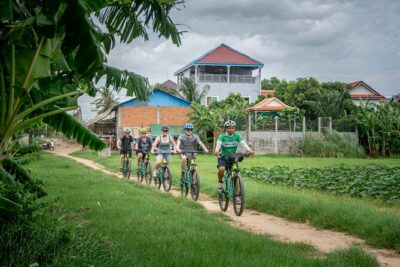
- Ride through rural Battambang: Much of the route follows small roads and paths through rice fields and villages.
- Eat lunch at a family home: A Cambodian meal in a traditional Khmer house is central to the day.
- Learn from local guides: Guides such as Pich, Savith, Pek, and Phalla explain daily life, religion, language, and Cambodian culture.
- Support community tourism: Part of the tour revenue goes back to each family visited.
- Small-group format: The maximum group size is 10, with hotel pickup, bikes, helmets, snacks, and water included.
Why this bike tour gets beyond Battambang’s postcard view
Battambang is often treated as a quick stop between Siem Reap and Phnom Penh. That is a shame. The city has old French buildings and a pleasant riverside setting, but its strongest travel moments often come in the countryside, where family businesses and village routines still shape the day.
This tour gives you a practical way to reach that countryside without arranging several separate rides. You cycle with a local guide, stop at working homes, share food with a family, visit a memorial and temple, and return by way of the bamboo train. It is not a sightseeing checklist built around grand monuments. It is a day about how people work, eat, worship, and live.
The guides are a major part of the experience. Pich, also written as Pitch or Pictou in some accounts, has been praised for clear English and detailed explanations. Savith is described as friendly, funny, careful, and good at adjusting the cycling pace. Pek and Phalla have also led highly appreciated days, with Pek particularly noted for his explanations of customs and village life.
Because the guides are local university students receiving vocational support, you get more than a memorized script. You can ask questions about language, family life, religion, food production, or modern Cambodia and receive a local perspective. The quality of English can vary slightly by guide, but the repeated strength is the willingness to explain and help.
More Full-Day Rides in Cambodia:
- Siem Reap: Bike the Angkor Temples – Full-Day 30km Tour
★ 5.0 · 463 reviews - Siem Reap: Bike the Angkor Temples – Full-Day 30km Tour
★ 4.9 · 159 reviews - Full day tour by bicycle & tuk tuk,bamboo train,bat cave,villages
★ 5.0 · 27 reviews
A 7:20 pickup and an easy start at Kinyei Cafe
The day begins with hotel pickup at about 7:20 a.m., followed by a start time listed as 8 a.m. You may go straight onto the road or take a free welcome drink at Kinyei Cafe first. That small choice is useful. If you need coffee, a calm start, or a few minutes to meet the guide, take the drink. If you are ready to cycle, you can get moving.
Before leaving, you receive a mountain bike and safety helmet, a short bike safety lesson, and a few basic Khmer words. The language lesson is not just decoration. It gives you a simple way to greet the families you meet and makes the contact feel more mutual.
The route is designed for ordinary active visitors rather than serious cyclists. The cycling is described as gentle, with frequent stops. Still, this is a full day outdoors, not a short city spin. Tell the operator your height when booking so a suitable bike can be prepared, and mention dietary restrictions at the same time.
The group limit of 10 matters here. A small group can enter a family home without turning the visit into a crowd, and the guide has more time to answer questions. It also makes it easier to adjust the pace if someone needs a break.
Rice paper, dried bananas, and the work behind familiar foods
The most memorable stops are not famous buildings. They are family-run workshops where ordinary Cambodian foods are made by hand.
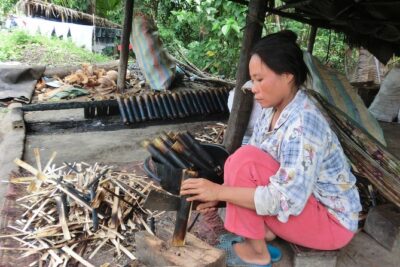
You might watch rice paper being prepared, learn how bananas are dried, taste rice wine, see fish paste production, or examine bamboo sticky rice. The tour is strongest when you treat these stops as working homes, not staged attractions. The point is not simply to taste something new. It is to see the labor, tools, ingredients, and family knowledge behind food that appears on Cambodian tables.
Hands-on participation may be possible, especially with rice paper and dried banana production, but the exact activity depends on the family and the day. You should expect explanation and tasting, with the chance to help when appropriate rather than a guaranteed workshop at every stop.
These visits also give the guide useful openings to explain rural income. A family may combine farming with food production or small-scale selling, and a seemingly simple product can involve considerable time and skill. You can ask questions directly, with the guide helping translate when needed.
A snack stop in a traditional house provides fresh fruit and coconuts. It is a welcome pause after riding, especially in warm weather. Water and additional snacks are included, but you should still bring sun protection and wear clothing suited to several hours outside.
Rice fields and a closer look at rural daily life
Between the stops, the route runs through villages and rice fields on smaller roads and paths. This is where the bike makes sense. A vehicle can take you past the countryside quickly, but cycling lets you notice the pace of village life and stop without much fuss.
The scenery is open and agricultural rather than dramatic. Expect fields, homes, local roads, and the changing details of rural work. The appeal is the rhythm of the ride, not a single grand viewpoint.
Your guide supplies the context. You may learn about household routines, Cambodian customs, local food, religion, and the pressures facing rural families. Several guides also teach basic Khmer during the day, which adds a friendly, useful layer to the ride.
The ride is not nonstop. Stops break up the distance, and the guides can take account of different fitness levels. One important point is that the afternoon stops are flexible and time dependent. That means the exact order and number of visits may change. If you want a tightly timed program, this may feel loose. If you prefer time for real conversations, the flexibility is a strength.
A few more bike tours around Cambodia worth a look
- Siem Reap Countryside Bike Tour / E-Bike or Tuk Tuk
★ 5.0 · 935 reviews - Angkor Sunrise Bike Tour / E-Bike or Tuk Tuk
★ 5.0 · 615 reviews - Phnom Penh Silk Island Bike Tour/ E-Bike or Tuk Tuk
★ 5.0 · 495 reviews - Siem Reap: Angkor Wat Sunrise Bike Tour & Jungle Breakfast
★ 5.0 · 415 reviews
A Khmer Rouge memorial that adds needed context
The memorial stop provides a sober change of tone. You visit a site dedicated to victims of the Khmer Rouge, part of Cambodia’s painful recent past.
This is not presented as a long museum visit, and the supplied information does not specify the exact memorial or the length of the stop. You should expect a place for reflection and an explanation from the guide rather than a large formal exhibit.
That context matters because the countryside can look peaceful and prosperous on the surface, while many Cambodian families still live with the effects of the 1970s and the years that followed. A local guide can explain the subject with personal and national context. Be respectful, listen carefully, and expect this part of the day to be quiet rather than entertaining.
Lunch in a traditional Khmer house
Lunch is served by a local family in a traditional Khmer home. For many people, this becomes the emotional center of the day.
The meal is included and described as home-cooked Cambodian food. Exact dishes are not promised, so you should not book expecting a particular menu. The important value is the setting: you eat in a family home rather than at a restaurant designed for passing tour groups.
A home meal also connects the earlier stops. After seeing ingredients and food production, you get to share a prepared meal in a domestic setting. The guides can help explain what you are eating and answer questions about local habits.
Tell the operator about dietary restrictions when booking. The tour also asks you to dress with your knees and shoulders covered out of respect for local culture. That advice is useful throughout the day, especially for the family home and temple visit.
Buddhism, monk-hood, and a local temple
The temple stop shifts the focus from work and food to religion. You learn about Buddhism and monk-hood at a local temple, with the guide explaining how these ideas fit into Cambodian life.
This is more valuable than simply walking through a temple compound and taking photographs. You can ask about the role of monks, religious practice, and the place of Buddhism in village communities. The depth will depend on the guide and the amount of time available, since the afternoon schedule can change.
Dress modestly and behave quietly. Covered knees and shoulders are specifically requested, and respectful clothing also makes the family and memorial visits more comfortable.
French colonial sites and Battambang’s layered past
The tour includes French colonial sites, adding an urban and architectural note to a day mostly spent outside the city. Battambang’s colonial-era buildings help explain its past as a regional center shaped by French rule, Cambodian commerce, and later upheaval.
The stop is useful because it prevents the countryside portion from being treated as a separate world. The guide can connect the city’s buildings with broader Cambodian history and the modern life you have seen in the villages.
Do not expect a long architectural walking tour. The day has many components, and the French colonial visits are part of a wider route. Their value comes from the explanation and contrast with the rural homes, workshops, and rice fields.
The bamboo train is a fitting final ride
The famous bamboo train provides the day’s most playful finish. You ride on a simple bamboo platform along the railway, a local experience closely associated with Battambang.
The attraction is basic rather than polished. That is part of its character. After a day of cycling and village visits, the ride gives you a different way to see the countryside and a memorable final activity before returning toward the Soksabike office.
The exact timing is flexible and depends on the afternoon schedule. If the day runs long at the family visits, temple, memorial, or colonial sites, the order may shift. The tour promises the bamboo train, but the timing is not presented as fixed to the minute.
What $50 includes, and where the value lies
At $50 per person, this is not the cheapest way to spend a day in Battambang. You could hire basic transport for less. But that comparison misses what you are paying for.
The price includes hotel pickup, a local guide, mountain bike, helmet, snacks, tastings, water, a drink at Kinyei Cafe, lunch, and the bamboo train portion of the day. It also covers the organization needed to arrange respectful access to several family businesses and coordinate a long route with a small group.
The community model adds another layer. A portion of the revenue goes back to each family visited, while the local university-student guides receive vocational support. If responsible spending matters to you, this gives the price a clear purpose beyond transport and food.
You should also factor in the value of interpretation. Without a guide, you might see a rice paper sheet or a bottle of rice wine without understanding how it was made or why it matters. The guide turns ordinary details into useful cultural information.
Who will enjoy this, and who should think twice
I would choose this tour if you want rural contact, local food, and cultural explanation more than landmark collecting. It suits couples, families with active older children, and adults who can comfortably cycle for much of a day with regular breaks.
It also suits visitors who want a socially responsible activity without giving up comfort. Hotel pickup, supplied bikes, water, snacks, and lunch remove much of the planning work.
Think twice if you dislike heat, cycling, flexible timing, or visits to working homes. The day lasts about 7 hours 30 minutes to 9 hours, and the route is outdoors for most of that time. It is gentle, but gentle does not mean effortless.
The tour is listed as suitable for most participants, with a maximum of 10 people. Insurance is not included, so arrange your own coverage. Hotel drop-off is also not included, and you return to the Soksabike office through the countryside rather than being taken back to your hotel.
Should you book the Local Livelihood Full Day Bike Tour?
Book it if you want to understand Battambang through its people, food, farms, beliefs, and recent past. The strongest parts are the local guide, the family-run production stops, the home-cooked lunch, and the chance to contribute directly to the communities you visit.
Skip it if you want a short, tightly timed excursion or a tour centered only on major monuments. For everyone else, $50 buys a full day with plenty of included food, equipment, transport, and interpretation. Bring water-friendly patience, modest clothing, sun protection, and curiosity. The countryside is the main attraction, and the bike is the right tool for seeing it.
FAQ
What time does the tour begin?
Hotel pickup is scheduled for about 7:20 a.m., with the tour start listed as 8 a.m. You may have a free welcome drink at Kinyei Cafe before cycling or leave directly.
How long does the tour last?
The experience lasts approximately 7 hours 30 minutes to 9 hours. Afternoon stops are flexible and depend on the timing of the day.
What is included in the price?
The $50 price includes a local guide, hotel pickup, mountain bike, safety helmet, snacks, tastings, water, bottled water, lunch, one drink at Kinyei Cafe, and the bamboo train ride.
Is hotel drop-off included?
No. Hotel pickup is included, but hotel drop-off is not. The tour returns to the Soksabike office through the countryside.
What should I wear?
Wear clothing that covers your knees and shoulders out of respect for local culture. You should also dress for several hours of outdoor cycling and tell the operator your height when booking.
How many people can join the tour?
The maximum group size is 10 people. Most participants can take part, and the cycling pace includes regular stops. Insurance is not included.
Just added around Cambodia
- Phnom Penh: Cycling Adventure on Islands of the Mekong★ 5.0 · 225 reviews
- Cultural Cycling Tour – half day (8:00-11:30)★ 5.0 · 26 reviews
- Full day tour by bicycle & tuk tuk,bamboo train,bat cave,villages★ 5.0 · 27 reviews
- Explore local livelihood & countryside (Half-Day Cycling Tour)★ 5.0 · 19 reviews
- Customs and Culture Half Day Walk and Bike Tour in Battambang★ 5.0 · 23 reviews
- Siem Reap: Countryside Sunset Bike Tour / E-Bike or Tuk Tuk★ 4.7 · 13 reviews
- Siem Reap: Countryside Cycle and Local Village Life Tour★ 4.7 · 32 reviews
- Siem Reap: Angkor Sunset Bike & Boat Tour /E-Bike Available★ 4.9 · 23 reviews
Cambodia Bike Tours, compared.
Siem Reap Countryside Bike Tour / E-Bike or Tuk Tuk
Read our review →
Phnom Penh Silk Island Bike Tour/ E-Bike or Tuk Tuk
Read our review →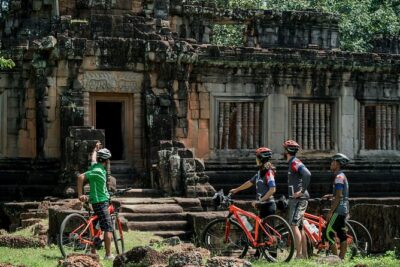
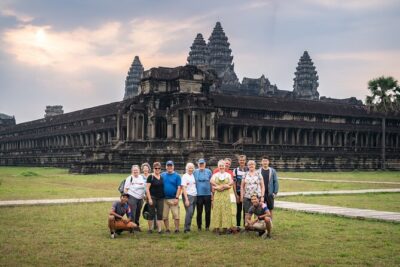
Angkor Wat Sunrise Bike Tour & Jungle Breakfast
Read our review →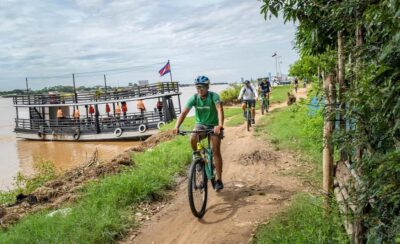
Local Livelihood Half Day Bike Tour in Battambang
Read our review →Browse the lists this tour appears in