
REVIEW · SOUTH AFRICA
Johannesburg: Inner City Guided Cycling Tour
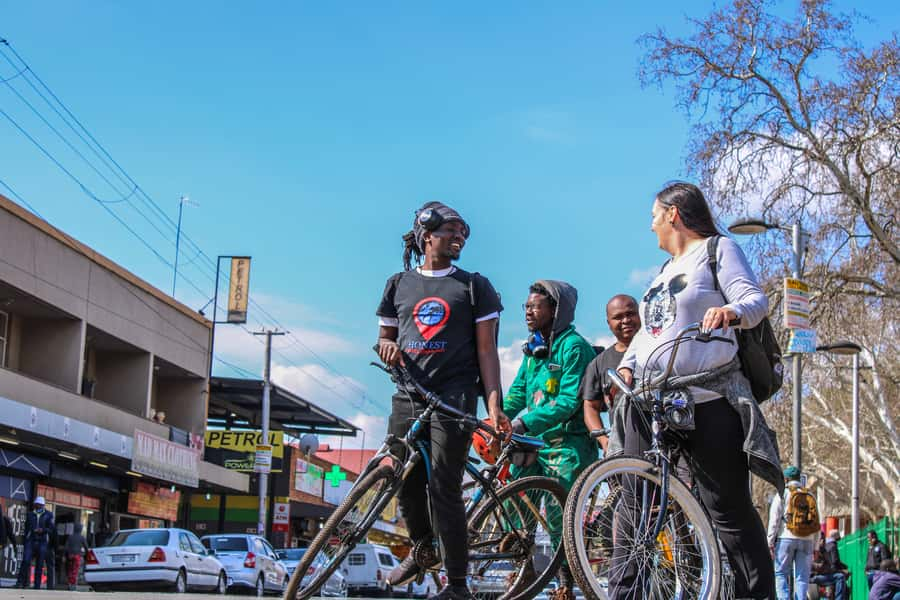
Johannesburg makes more sense when you see its neighborhoods connect, and this 10-kilometer cycling route gives you a quick, ground-level look at the inner city. You move from Braamfontein street art to Newtown’s jazz links, Marshalltown’s mining story, and Maboneng’s artist spaces. I like the broad sweep of the route and the chance to hear local context from guides such as Lebo, Franck, and Rambo.
I also like that the route is mostly flat, includes a bike, helmet, and water, and covers far more ground than a short walking tour. The main caution is traffic. Johannesburg cycling is not for everyone, and the single-speed bikes, busy roads, and limited number of other cyclists mean you should feel comfortable riding in city traffic.
Key points to know before you ride
- About 10 kilometers on mostly flat roads: The route has few hills and calls for moderate fitness rather than athletic training.
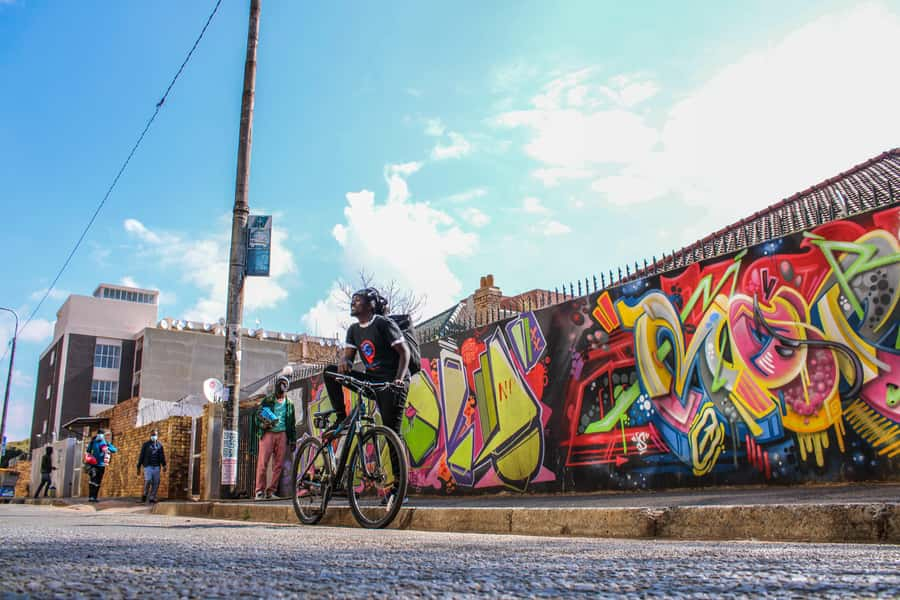
- Seven inner-city areas in one outing: You may pass through Braamfontein, Newtown, Marshalltown, Jewel City, Jeppes Town, Maboneng, and Victoria Yards.
- Local guides lead the way: Guides including Lebo, Franck, and Rambo have been praised for their care, local knowledge, and traffic management.
- Art and urban change are central themes: Expect street art, artist contacts, jazz connections, mining history, and discussion of Johannesburg’s changes since the 1990s.
- The bike setup is basic: Bikes may have one heavy gear, so ask about the equipment and make sure you are happy riding it before setting off.
- Best for confident cyclists: Children can join, but people who cannot ride, have mobility impairments, or have heart problems should choose another city tour.
Why a bicycle helps you read Johannesburg
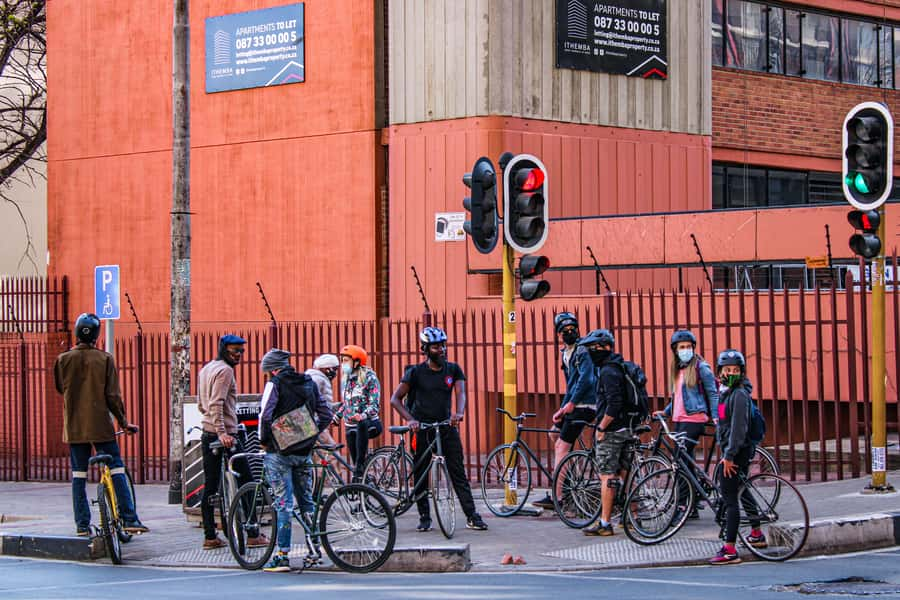
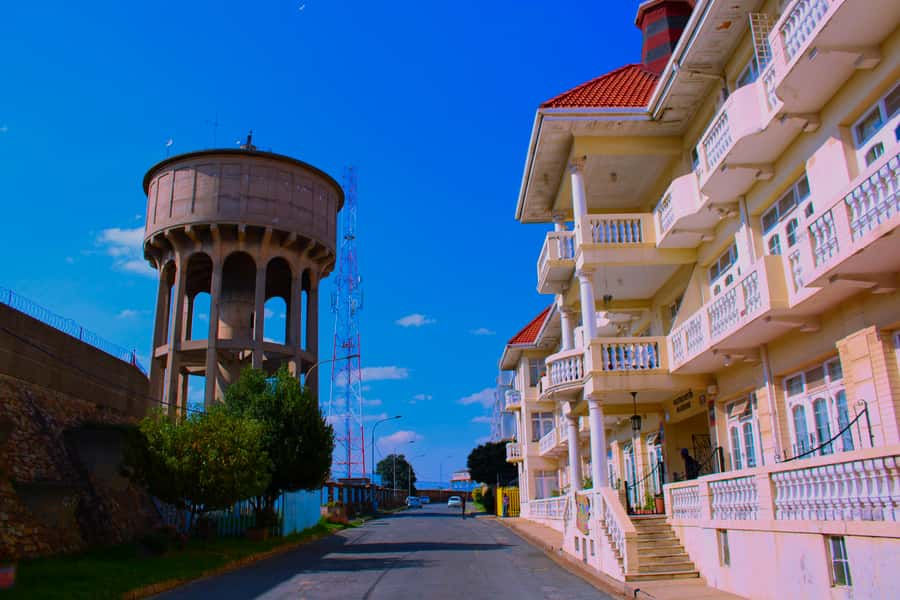
Johannesburg is too spread out for a single short walk to show how its inner-city districts fit together. On a bicycle, you can cover the distance between them while still moving slowly enough to notice murals, old commercial streets, sports grounds, and new creative spaces.
That middle speed is the real appeal. A bus gives you a wider view but can make neighborhoods feel like names on a route map. Walking gives you close detail but limits how much of the city you can cover. This ride gives you a useful compromise, though you pay for it with more exposure to traffic.
The route is roughly 10 kilometers and has few hills. That makes it manageable for someone with moderate fitness. You are not signing up for a race, but you should be able to pedal for several hours and stay alert around vehicles. Comfortable clothes and shoes are the right choice.
The tour usually takes between two and four hours, with the exact timing depending on the selected option and start time. That range matters. A two-hour ride will feel brisk, while a longer version gives the guide more room to explain places and stop for points of interest.
More Guided Tours in South Africa:
- Soweto: Guided Bicycle Tour with Lunch
★ 4.9 · 292 reviews - Cape Town: Guided Bike Tour
★ 4.9 · 193 reviews - Guided Bicycle Tour of Soweto with Lunch
★ 5.0 · 180 reviews
Braamfontein street art sets the tone
Braamfontein is one of the strongest opening themes because it shows the city’s creative side right away. Street art gives your guide an easy way to discuss public space, local artists, and how Johannesburg’s neighborhoods have changed.
You will not simply pass painted walls as decoration. The point is to look at how art changes the feel of a street and how it helps shape the identity of an area. If street art is your main interest, tell the guide at the start. One guide adjusted the route to give that preference more attention, which suggests that the experience can respond to what you most want to see.
Braamfontein also gives you a sense of city life beyond the better-known visitor stops. The route is not built around one grand monument. It is about seeing ordinary streets alongside creative work and hearing how those pieces fit into the city’s wider story.
Newtown connects the ride to jazz
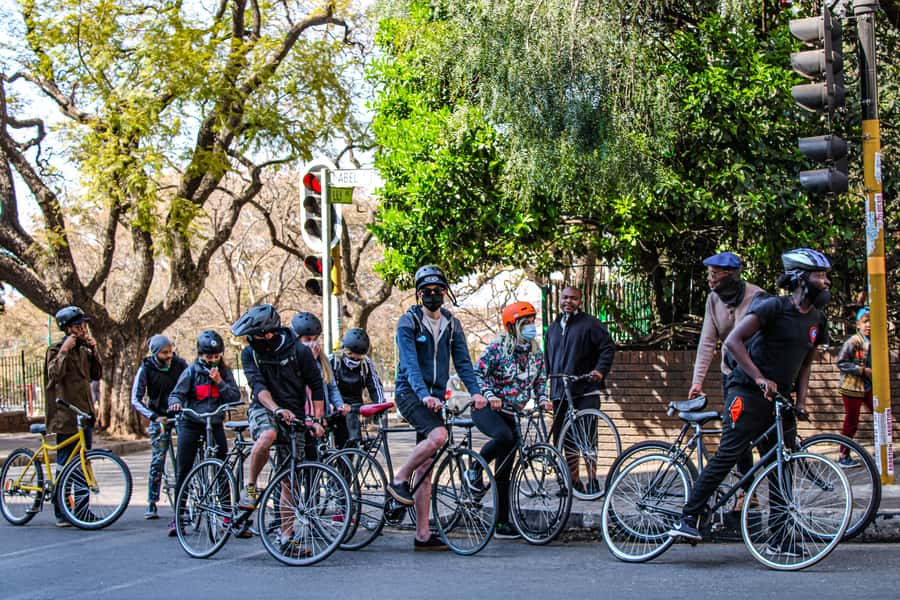
Newtown is presented as the home of jazz, giving this part of the route a strong music and culture focus. Your guide can use the district to explain how music fits into Johannesburg’s social life and how the area has contributed to the city’s cultural identity.
This is one reason a guide matters. A rider passing through Newtown alone might see buildings and traffic but miss the connection between the streets and the music tradition. The tour adds meaning through spoken explanation in English or French. An English audio guide is also included.
The quality of this section depends on your guide’s energy. Franck, for example, has been described as passionate and generous with information, while other guides have earned praise for looking after the group. Ask questions as you ride. The tour works best as a conversation rather than a silent circuit behind the leader.
Marshalltown explains the mining city
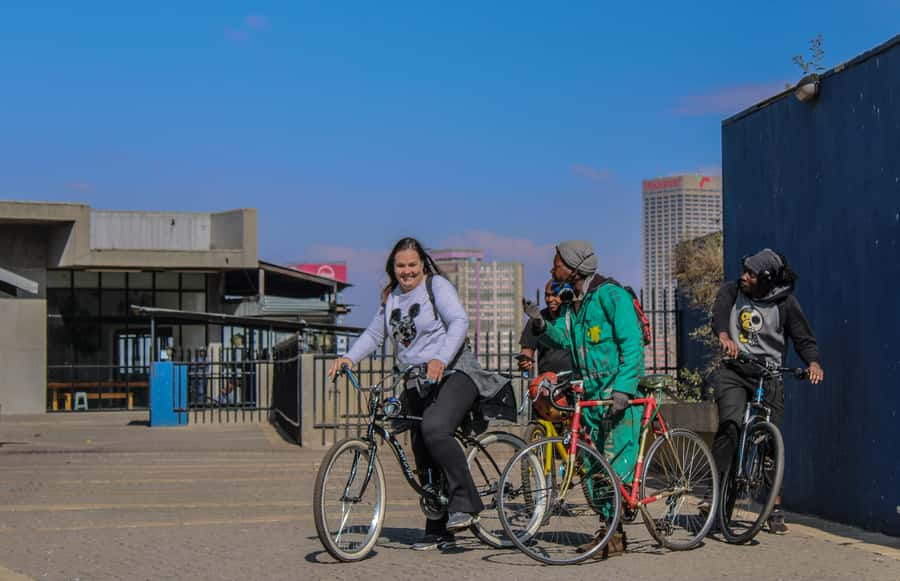
Marshalltown brings the focus back to Johannesburg’s origins. This is where the route explores the city’s mining story, a key part of why Johannesburg developed where it did and why its inner city took the shape it has today.
You should expect an overview rather than a museum-style presentation. The value comes from hearing the story while moving through the city itself. Streets, buildings, and districts become part of the lesson. That makes this stop useful if you want more than photographs of present-day Johannesburg.
The mining theme also helps connect the older city to its newer changes. The tour looks at Johannesburg’s transformation from the 1990s to the present, so the history is not treated as something finished and separate from modern urban life.
More City Tours in South Africa:
- Cape Town City Cycling Tour
★ 5.0 · 199 reviews - Cape Town: E-Bike City Tour
★ 4.8 · 76 reviews - Cape Town’s Finest City Bike Tour
★ 5.0 · 43 reviews - Cape Town: Half-Day e-Bike City Tour
★ 4.4 · 35 reviews
Jewel City and Jeppes Town show the route’s range
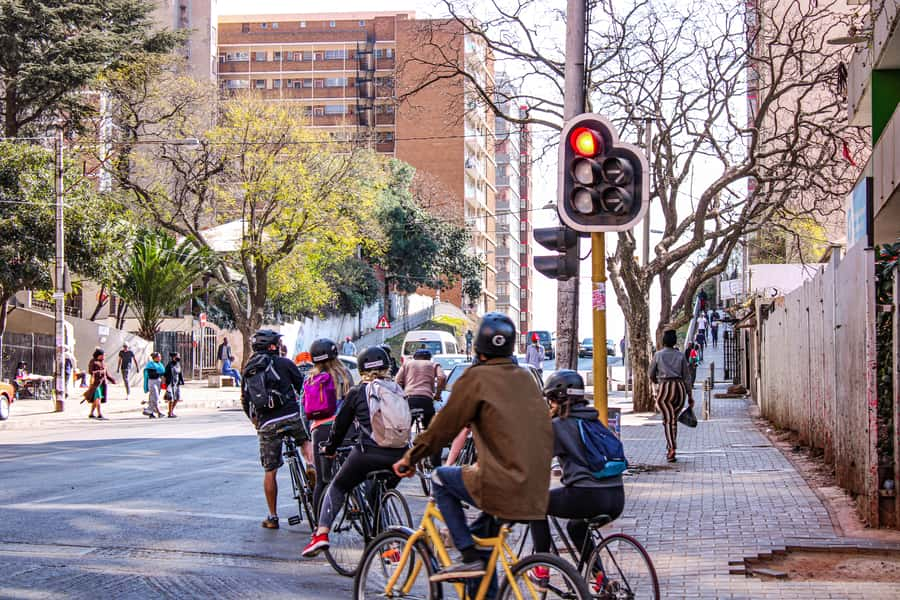
Jewel City and Jeppes Town add two more pieces to the inner-city picture. They are part of the route’s effort to show several districts rather than keep you in one polished visitor zone.
The information provided does not promise a long stop or a specific activity in each place, so keep your expectations practical. You will pass through them as part of a guided city ride, with explanations about what happened in these parts of Johannesburg and how they fit into the city’s change.
This wider route is one of the tour’s best features. You see how quickly the mood and appearance of the city can shift from one area to the next. It is also why the bicycle is useful. Covering these districts on foot would take much longer and might leave you too tired to pay attention to the guide.
Maboneng brings art into the foreground
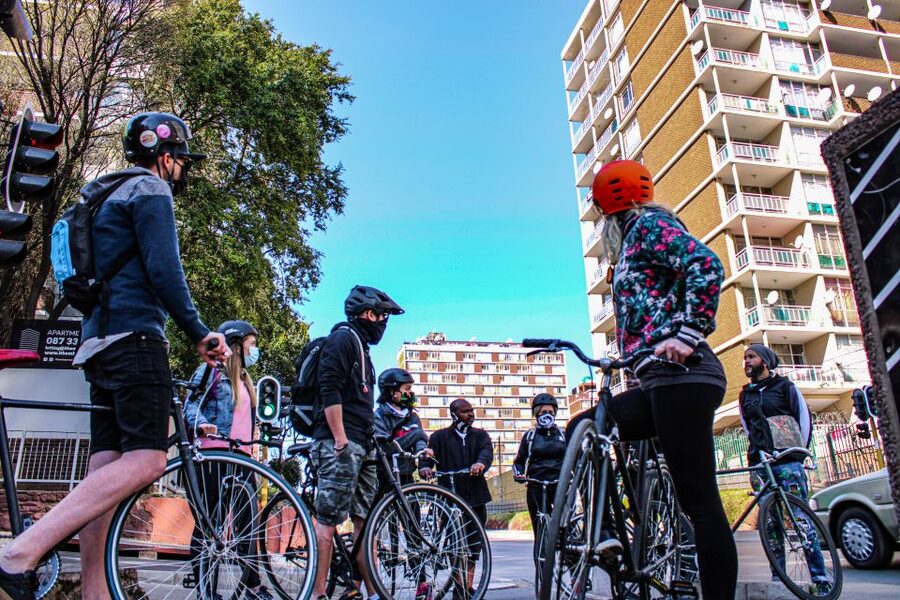
Maboneng is the route’s clearest meeting point between urban renewal and creative work. Here, you are scheduled to meet a local artist, adding a personal element that a standard sightseeing loop often lacks.
That meeting is important because it puts a face to the city’s art scene. You are not only looking at finished murals or renovated spaces. You get a chance to connect the creative work with the people making it.
Maboneng can also raise useful questions about change in Johannesburg. The tour discusses the city’s transformation, and this district helps make that subject concrete. You can consider how art, new businesses, and redevelopment affect the character of an inner-city neighborhood.
Do not expect every stop to feel polished or predictable. The route is through the inner city, not a controlled attraction. That is part of the point, but it means you should stay close to the guide and follow safety instructions.
Victoria Yards adds a working creative space
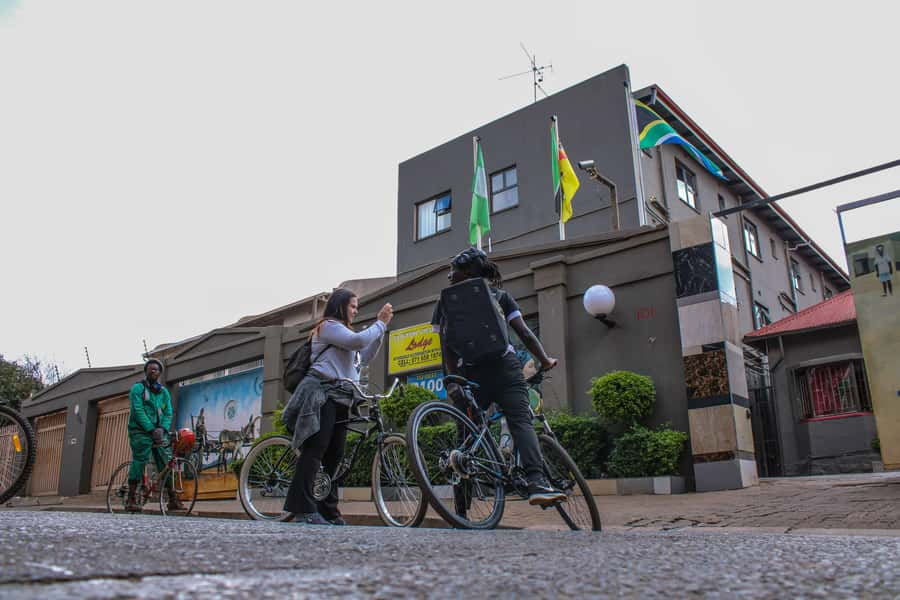
Victoria Yards is another important creative stop. It expands the art theme beyond street walls and connects it with local makers and community activity.
The information available does not specify a particular workshop or demonstration, so I would treat this as a place to see and discuss rather than a guaranteed hands-on session. Your guide will provide the local setting and explain what makes the area worth including.
For many people, this part of the ride will balance the more historical stops. You move from mining and urban change to present-day creative work, then continue through the city by bicycle. That contrast gives the outing a clearer shape than a simple list of neighborhoods.
Ellis Park Stadium and Bertrams widen the view

Ellis Park Stadium is an impressive landmark on the route and gives you a different way to read Johannesburg. Sports grounds can reveal how a city gathers people, marks neighborhoods, and builds a shared identity.
The ride also includes Bertrams, helping you see more of the area around the stadium. The itinerary names both places, but it does not promise a stadium entry or an organized sporting event. Think of this as an exterior city sight and a talking point, not a stadium tour.
This is a good example of the experience’s overall style. You are seeing major landmarks, but you are also moving through the surrounding streets. The result is less about collecting famous sights and more about understanding how the inner city is arranged.
What the bikes and traffic are really like
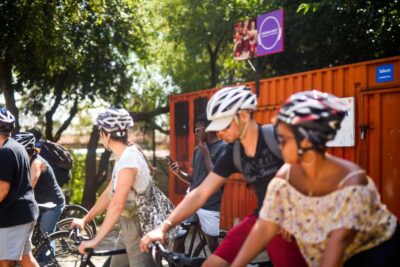
The cycling itself deserves an honest warning. One rider found the traffic chaotic and noted that the bikes had only one gear. Another said the guide got the group through traffic safely and that drivers were tolerant. These details point to the same conclusion: the guide helps, but you still need confidence.
A one-speed bike is simple, but it may feel heavy, especially if you are used to gears. The route is flat, which helps, yet the gear setup can still make starting, stopping, and handling busy streets less comfortable.
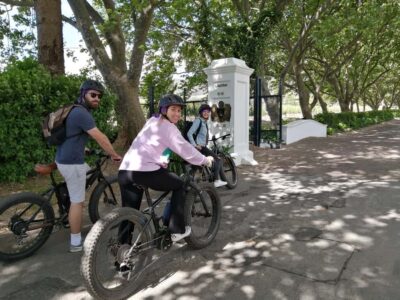
At the meeting point, you receive the bicycle and helmet, then get a briefing about the day. Use that moment well. Check the seat, brakes, and general fit before leaving. If the bike feels awkward, say so at once. It is much easier to fix a problem before the group is on the road.
This is not the right tour for someone who has not ridden a bicycle in years. It is also not suitable for anyone who cannot ride, has mobility impairments, or has heart problems. Children can join, but the traffic issue still matters, so parents should judge their child’s road confidence rather than rely only on the family-friendly label.
How the guides shape the experience
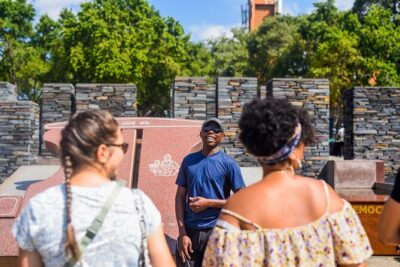
The guide is the key difference between a useful city ride and a tiring pedal through unfamiliar streets. Guides named in the experience include Lebo, Franck, and Rambo. Their roles are not limited to leading the route. They explain local history and culture, help the group handle traffic, and point out details you might otherwise miss.
Franck has been described as especially passionate and generous with explanations. Rambo has been praised for making sure the group was protected and cared for. Lebo was credited with getting riders through traffic in a safe way. These are the qualities you want here: clear direction, local understanding, and attention to the group.
There has also been an instance when a scheduled bicycle tour was canceled at short notice and replaced with a private electric scooter outing. That alternative was well received, but it is a reminder to confirm the departure before you set aside your whole day. The provider is Honest Travel Experience, and the meeting point can change according to the option you book.
What the $84 price includes
At $84 per person, the tour is not the cheapest way to see Johannesburg, but the price covers the practical basics: the guided ride, bicycle, helmet, and water. You are also paying for a local guide who connects several neighborhoods and gives the ride its historical and cultural meaning.
The value is strongest if you want a broad introduction in a short time. You can see Braamfontein, Newtown, Marshalltown, Jewel City, Jeppes Town, Maboneng, Victoria Yards, Bertrams, and Ellis Park Stadium without arranging separate transport between them.
The value is weaker if you dislike cycling in traffic or want long, quiet visits inside museums and attractions. Lunch is not included, and hotel pickup and drop-off are not included either. Plan those parts yourself and remember that the meeting point may vary by booking option.
The tour offers free cancellation up to 24 hours before departure and a reserve-now, pay-later option. Those terms are useful if your Johannesburg schedule is still shifting, but check the exact option you choose because start times and meeting points can vary.
Who should book this Johannesburg cycling tour?
I would choose this ride if you want a fast introduction to Johannesburg’s inner city, enjoy learning while moving, and feel comfortable on a bicycle around traffic. It suits repeat visitors who want a fresh look at familiar districts, as well as first-time visitors who want more context than a simple drive-by tour can offer.
You will get the most from it if street art, music, mining history, local culture, and urban change all interest you. The guide’s explanations are a major part of the experience, so stay engaged and ask questions.
I would skip it if you want a relaxed sightseeing outing with no road stress. A walking tour combined with a bus tour may suit you better if cycling in traffic sounds unpleasant. The flat route helps, but it does not remove the need for awareness and confidence.
My call: book it if you want the city in motion
Book this tour if you want to connect several Johannesburg districts in one outing and are happy to trade a little comfort for a closer look at city life. The strongest features are the wide route, the local guides, the mix of art and history, and the chance to meet an artist in Maboneng.
Before paying, make sure you are comfortable with a possible single-speed bike, city traffic, and a two-to-four-hour ride. If that sounds manageable, the $84 price buys a useful introduction to inner Johannesburg that is more personal and active than a standard vehicle tour.
FAQ
How long is the Johannesburg cycling tour?
The tour lasts between two and four hours, depending on the option and available starting time.
How far do you cycle?
The route is about 10 kilometers long.
Is the cycling route hilly?
The route is described as mostly flat, with very few hills.
Which areas does the tour visit?
The route includes Braamfontein, Newtown, Marshalltown, Jewel City, Jeppes Town, Maboneng, Victoria Yards, Bertrams, and the area around Ellis Park Stadium.
Is a bicycle and helmet included?
Yes. The cycling tour, bicycle, helmet, and water are included.
What languages are available?
The live tour guide may speak English or French. An English audio guide is also included.
Is the tour suitable for children?
The tour is described as child-friendly, but participants still need to be able to ride a bicycle and handle a city route with traffic.
What should I bring?
Bring comfortable shoes and comfortable clothing. You should also have moderate physical fitness and be comfortable riding a bicycle.
Just added around South Africa
- Cycling The Cradle of Humankind in Game Reserve★ 5.0 · 18 reviews
- bicycle tour soweto★ 4.5 · 20 reviews
- Guided Bicycle Tour of Soweto with Lunch★ 5.0 · 180 reviews
- Franschhoek Winelands Luxury EBike Tour★ 5.0 · 18 reviews
- Franschhoek E-Bike Wine Tour (Half Day)★ 5.0 · 33 reviews
- Franschhoek Cycle Experience Half Day – Private Tour★ 5.0 · 12 reviews
- Franschhoek Sip & Cycle Experience Full Day – Private Tour★ 5.0 · 14 reviews
- Cape Town City and Woodstock Bicycle Tour★ 4.5 · 15 reviews
South Africa Bike Tours, compared.



Browse the lists this tour appears in