REVIEW · TOURS
From La Paz: The World’s Most Dangerous Road Biking Tour
Bolivia’s Death Road is not just a scenic bicycle ride. It is a 64-kilometer descent from icy high-altitude peaks to the hot, leafy gateway of the Amazon. The day starts at 4,700 meters, then drops through mist, waterfalls, rough dirt, and narrow mountain country before ending near Yolosita at 1,200 meters.
I like the well-run safety system, with trained bilingual guides, mechanics, a support vehicle, full-face helmets, pads, gloves, and bikes with hydraulic disc brakes. I also like the finish: a buffet lunch, hot shower, swimming pool, and time to cool off instead of being sent straight back into a van covered in road dust.
The main drawback is the long transport day. You spend several hours in the vehicle, and some riders have found the bus less comfortable than the actual ride. The trail also demands confidence on a bike, so this is not a casual sightseeing outing.
Key points at a glance

- A 3,500-meter descent: Start among snow-covered peaks at 4,700 meters and finish in hot Yungas country.
- Two very different rides: The paved opening lets you get used to the bike before the rough Death Road section begins at Chuspipata.
- Strong safety setup: Full-face helmets, protective clothing, pads, gloves, downhill bikes, trained guides, and a support vehicle are included.
- A proper end to a dirty day: Buffet lunch, showers, a swimming pool, and relaxing time are built into the schedule.
- Good guide support: Guides such as Victor, Freddy, Chris, Maury, Javier, and Eddy have been noted for calm instruction, bike checks, and encouragement.
- Bring a change of clothes: Waterfalls, mist, small rivers, mud, heat, and sweat make dry clothes one of the day’s best luxuries.
Why the Death Road ride is so memorable

The appeal is the sharp change in scenery. You leave La Paz’s high, cold world and begin among enormous peaks. By the end, you are hot, dirty, and surrounded by much greener country. Few day trips give you such a clear sense of Bolivia’s altitude changes.
The name creates a certain expectation, but the ride is not simply a stunt. You are not asked to race from top to bottom. Guides stop often to explain the next section, check the bikes, take photos, and make sure the group is ready. Several riders have especially appreciated being allowed to go at their own pace, with guides offering extra reassurance on harder parts.
That said, you still need to take the road seriously. It is a downhill mountain-bike route, not a smooth cycle path. Loose surfaces, water, bends, rocks, and changing weather all call for attention. You will have help, but the bike remains your responsibility.
A few more bike tours around the world worth a look
- Lion City Bike Tour of Singapore
★ 5.0 · 6,211 reviews - Big Bike tour Amsterdam – See all in 3 unforgettable hours
★ 4.7 · 4,929 reviews - 3-Hour Porto Highlights on a Electric Bike Guided Tour
★ 5.0 · 4,392 reviews
La Cumbre at 4,700 meters
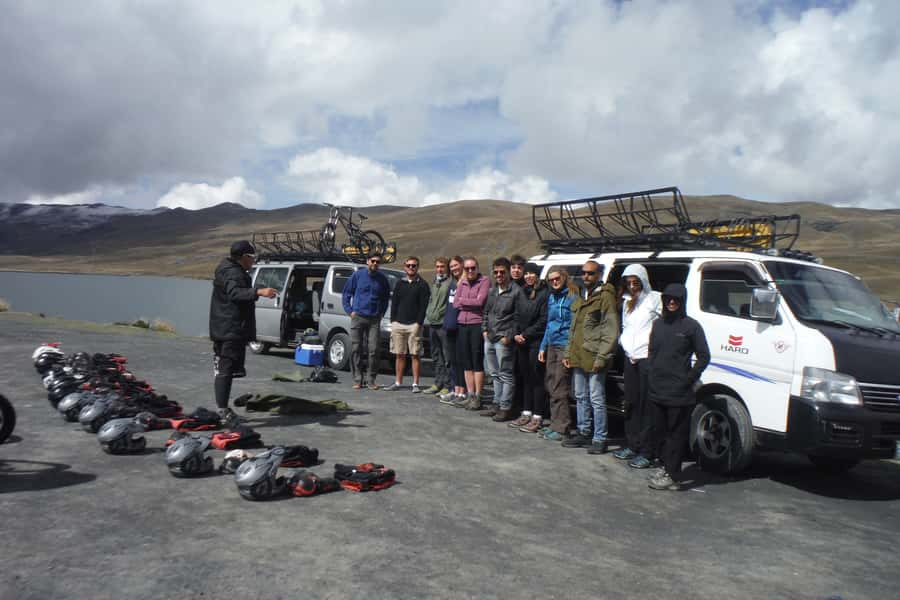
The day begins at Vertigo Biking’s office, where the tour vehicle collects you. The first major stop is Cristo de la Cumbre, at roughly 4,700 meters. This is the cold, high beginning of the trip, with views toward snow-covered peaks and a strong reminder that La Paz sits in an extraordinary mountain setting.
Before riding, the guides give a safety briefing lasting about 30 minutes. They explain how to use the bike, how to handle the road, and what to expect during the descent. This is also when the equipment matters most. You receive a full-face helmet, jacket and pants, elbow and knee pads, gloves, and a full-suspension downhill bike with hydraulic disc brakes.
Give yourself time to listen carefully here. The high altitude can make simple movements feel harder, especially if you have only recently arrived in Bolivia. The guide team checks the bikes and gives general riding advice before you set off.
The cold at the top also makes the warm clothing on the packing list worthwhile. Sunglasses protect your eyes from glare and dust, while sunscreen remains important even when the air feels chilly.
The paved opening lets you find your rhythm

The first riding section follows a paved road and lasts about an hour. This part is useful rather than dramatic. It gives you time to get familiar with the bike, test the brakes, and settle into the group before the rougher road begins.
You pass small traditional villages and high mountain scenery. The road surface is smoother, but you still need to follow instructions and control your speed. A downhill bike can move quickly, and the temptation to treat the opening as a race is best resisted.
There are several pauses during the day. These stops may feel frequent if you want constant riding, but they serve a purpose. The guides use them to take photographs, check equipment, explain what comes next, and keep the group together.
The ride is generally downhill, but that does not mean effortless. You still steer, brake, absorb bumps, and stay alert. One rider described the route as about 95 percent downhill, with the brakes and suspension doing the most important work. That is a useful way to think about it: the physical demand is different from a normal bicycle tour, but concentration is constant.
Chuspipata marks the real start of Death Road

After the opening ride, the vehicle takes you for about 15 minutes to Chuspipata. This is where the actual Death Road section begins.
The change is immediate. The paved surface gives way to dirt, trees, mist, low cloud, and a much more enclosed mountain setting. The route lasts around four hours, including pauses, safety talks, photographs, and short sightseeing stops.
You should expect to get wet. The route passes beneath small waterfalls and across tiny rivers, and the mist can cling to the road. Add mud and sweat, and you will understand why a spare set of clothes and swimwear belong in your daypack.
This is the section where the guides earn their keep. They point out how to approach turns, where to slow down, and how to manage the rougher ground. Experienced mountain-bike guides such as Victor have been praised for watching each rider closely and offering encouragement when the route feels intimidating. Freddy has also driven the support vehicle, giving riders a safety backup during the descent.
The most useful feature is the chance to ride at a pace that suits you. Fast riders may have brief chances to move ahead, while cautious riders can stay with the guides. You should not feel pressured to copy the quickest person in the group.
Same city, a different ride:
- Ninh Binh Full-Day Tour from Hanoi to Hoa Lu, Tam Coc & Mua Cave Via Boat & Bike
★ 5.0 · 4,384 reviews - Small Group Guided Bike Tour of Amsterdam’s Hidden Gems
★ 5.0 · 3,936 reviews - 3-hour Complete Prague Bike Tour
★ 5.0 · 3,674 reviews - Party Bike Private Party Up To 14 People in Old Town Scottsdale
★ 5.0 · 3,541 reviews
The scenery changes every hour

At the top, the air is thin and cold. Lower down, the road enters a warmer, wetter zone with thicker vegetation. The route gives you a moving lesson in Bolivia’s altitude, from bare high-country slopes to the greener Yungas.
At one viewpoint, you stop for about 15 minutes for photographs and sightseeing. This is a good point to pause, catch your breath, and take in the scale of the descent. The route is memorable not only because it has a dramatic reputation, but because the surroundings change so quickly.
Another stop near a traditional village lasts around 30 minutes. It gives the group a slower look at the area and a chance for more photographs. The exact feel of the stop depends on the day, weather, and road conditions, but it breaks up the long downhill stretch.
The tour can also be affected by recent rain or landslides. One rider completed the route despite landslides from the day before and still felt secure with the guide. That does not mean conditions are always easy. It means the staff are accustomed to managing a road that can change.
What the equipment means in practice

The supplied equipment is one of the strongest parts of the package. You receive:
- A full-face helmet
- Protective jacket and pants
- Elbow and knee pads
- Mountain-bike gloves
- A full-suspension downhill bike
- Hydraulic disc brakes
- Snacks and unlimited water
The bikes may not look brand-new or high-tech, and you should not judge them by appearance alone. For this route, working brakes and suspension matter more than shiny paint. The equipment is designed for a long downhill ride over uneven ground, not for display.
The guides and mechanics check the bikes before and during the ride. That support is important because a small problem feels much bigger on a remote mountain road. The private support transport also gives the group a place to stop if needed.
The safety gear can feel warm once you reach the lower sections. That is another reason to pack light clothing for the finish. At the top, the layers are welcome. Near Yolosita, you will be glad to remove them.
Yolosita brings heat, lunch, and a swim

The ride finishes at Yolosita, near 1,200 meters and close to the entrance to the Bolivian Amazon. The temperature change is striking. After the cold start and wet mountain road, the final area feels hot and humid.
You will probably be dusty, damp, and ready for a break. The tour then takes you to a hotel or resort area for about 105 minutes. This is not a rushed snack stop. You have time for a buffet lunch, a shower, the swimming pool, and a proper rest.
That ending adds real value to the day. A cheaper ride that finishes beside the road would leave you with the hard part but none of the comfort. Here, lunch and facilities turn the trip into a full day experience rather than a single adrenaline activity.
The pool is especially welcome after several hours in protective clothing. Bring swimwear, even if you are not sure you will use it. A towel is not listed among the supplied items, so it is sensible to ask the operator about that before departure or bring a small one if your bag allows.
The long ride back to La Paz

After lunch and pool time, the vehicle returns to Vertigo Biking’s office. The listed return drive takes about three hours, so plan for a full day from morning until evening.
This is the least exciting part of the experience. You may be tired, wet, and ready for a quiet ride, but the van or bus can feel cramped after a demanding day. The transport is private, which is useful, though comfort appears to vary.
The long return matters when planning your evening. Do not schedule a tight connection, formal dinner, or another major activity soon after the tour. You will get more from the day if you treat it as your main event.
Is $129 good value?

At $129 per person, this is not the cheapest way to see the Yungas, but the price covers more than a bike rental. It includes transport, the guide team, safety equipment, downhill bike, snacks, unlimited water, buffet lunch, photos and short videos, and access to showers and a pool.
The photographs and videos are uploaded to Dropbox, which saves you from trying to take pictures while riding. That is a useful extra, especially on a route where stopping to use your own phone can be awkward.
You should budget separately for the Death Road tax of 50 bolivianos. A zipline is also available for an extra charge on the day, but it is optional. Bring cash for these costs and for any other personal purchases.
The package makes the most sense if you value support and a comfortable finish. If you already own mountain-bike gear and only want the cheapest possible ride, you may find the price high. If you want trained guides, transport, equipment, food, and a place to wash off the road, the package is easier to justify.
Who should book this ride?
You should be able to ride a bicycle confidently and manage a long downhill route. You do not need to be an expert racer, but you should be comfortable steering and braking on uneven ground.
This trip suits you if you enjoy adventure, changing scenery, and a little discomfort in exchange for a memorable day. It is also a good fit if you want an active break from La Paz and prefer a guided outing with gear supplied.
It is not suitable for people who cannot ride a bike, people with mobility impairments, wheelchair users, or pregnant women. The minimum height is 155 centimeters, or 5 feet 1 inch, because of the bike and protective equipment.
The group requires at least two people to operate. If you are booking alone, check that a departure is confirmed for your chosen date. English and Spanish guiding is available.
Practical packing advice
Wear warm layers for La Cumbre, but pack for heat at the bottom. Your clothing will pass through cold, mist, rain, mud, and warm air in a single day.
Bring:
- Warm clothing
- Sunglasses
- Sunscreen
- Insect repellent
- Swimwear
- A full change of clothes
- A small daypack
- Cash
- Your passport or identification card, with a copy accepted
Keep the daypack small enough to manage in the support vehicle. Water and snacks are supplied, so you do not need to carry a large food supply.
The best small tip is simple: do not wear your favorite clothes. Even with a jacket and pants supplied, the road can leave you muddy and wet.
Final call: book it or skip it?
Book this tour if Death Road is high on your Bolivia list and you want a guided, gear-included experience with a comfortable ending. The standout strengths are the careful guide support, solid safety equipment, scenery that changes from snow peaks to hot Yungas, and the pool and shower stop after the ride.
Skip it if you dislike long vehicle transfers, feel uneasy on a bicycle, or want a relaxed sightseeing day. The name is dramatic, but the route still demands focus and confidence.
For most active visitors in La Paz, this is a strong one-day choice. Guides including Victor, Freddy, Chris, Maury, Javier, and Eddy have been singled out for patience, humor, safety, and encouragement. Just bring dry clothes, allow the whole day, and respect the road.
FAQ
How long is the Death Road biking tour?
The activity lasts one day. The riding covers about 64 kilometers, with the main Death Road section taking around four hours. Transport and stops make the full day considerably longer.
Where does the tour start?
The meeting point is the Vertigo Biking office. The tour vehicle should be parked directly outside the office.
What height is required?
You must be at least 155 centimeters tall, or 5 feet 1 inch.
Is lunch included?
Yes. A buffet lunch is included, along with snacks during the ride and unlimited water.
What safety equipment is provided?
You receive a full-face helmet, jacket, pants, elbow and knee pads, gloves, and a full-suspension downhill mountain bike with hydraulic disc brakes.
Can I use the swimming pool after the ride?
Yes. The finish includes hotel or resort time with a swimming pool and showers. Bring swimwear and a change of clothes.
Is the Death Road tax included?
No. The Death Road tax costs 50 bolivianos and is paid separately. The optional zipline also costs extra if you choose to add it.
Just added around the world
- Napier: Cycle to Wineries – Half Day, self-guided★ 4.0 · 12 reviews
- Napier Bike Hire★ 5.0 · 40 reviews
- Guided Bike Tour – Downtown Naples Florida★ 4.5 · 22 reviews
- Independent Hassle-free Bike Rental in Sonoma★ 5.0 · 62 reviews
- Healdsburg Cycling Wine Tour★ 4.5 · 14 reviews
- Full-Day Electric Bike Rental★ 5.0 · 38 reviews
- Sonoma Valley Pedal Assist Bike Tour★ 5.0 · 32 reviews
- Bike Tour at Hell’s Gate National Park, Boat Ride at L. Naivasha★ 5.0 · 27 reviews
Tours, compared.
Big Bike tour Amsterdam – See all in 3 unforgettable hours
Read our review →
3-Hour Porto Highlights on a Electric Bike Guided Tour
Read our review →
Ninh Binh Full-Day Tour from Hanoi to Hoa Lu, Tam Coc & Mua Cave Via Boat & Bike
Read our review →
Small Group Guided Bike Tour of Amsterdam’s Hidden Gems
Read our review →