
REVIEW · BUDAPEST
Budapest: Historic Downtown Bicycle Ride with Scenic Views
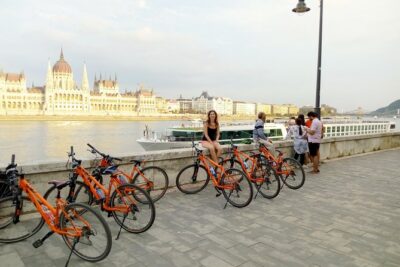
Budapest reveals itself best when you connect its two halves, Pest and Buda, in one sweeping ride. This 3.5-hour route starts in the Jewish Quarter, rolls past Andrássy Avenue and Heroes’ Square, follows the Danube to Parliament, crosses Chain Bridge, and returns through Buda and the market district. You cover a remarkable amount of ground without spending your day underground on public transport.
I like the relaxed pace, which leaves time for photos and questions instead of turning the ride into a race. I also like the small group limit of 10, since the guide can usually keep the ride together and explain the city without shouting across a crowd. The main drawback is that this is a long sightseeing ride with no meal stop, so eat beforehand and carry water or a snack.
Key points at a glance
- A wide Budapest overview: See major sights on both the Pest and Buda sides in one morning or afternoon.
- A thoughtful route: The ride links the Jewish Quarter, Heroes’ Square, City Park, Parliament, the Danube, Buda Castle, Gellért Hill area, and the Central Market Hall.
- Easygoing cycling: The route is designed for sightseeing, not hard exercise, though you still need basic cycling confidence.
- Useful first-day activity: You get your bearings quickly and can mark places to revisit on foot later.
- Guide-led local context: Guides such as Oliver, Karol, Bálint, Esther, and Naomi have led past tours, with history and city orientation forming a major part of the experience.
Why a bicycle is a smart way to see Budapest
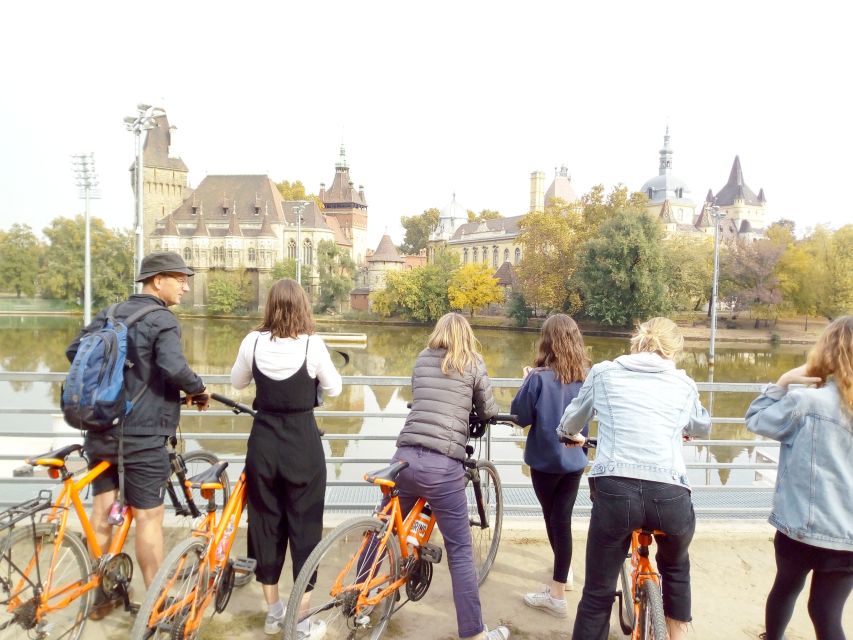
Budapest is spread out, and its famous sights do not sit in one compact old town. Heroes’ Square is far from Parliament. The Central Market Hall is a good distance from the Jewish Quarter. Buda’s castle district sits across the river and above the city. On foot, seeing all of this in one day would mean a lot of walking and several transport changes.
A bicycle gives you a useful middle ground. You move faster than a walking group, but you still see the streets, buildings, bridges, and riverfront as you go. The route also gives you an immediate sense of how Budapest fits together. You see Pest’s broad avenues, the Danube dividing the city, and Buda rising on the opposite bank.
The ride is not meant to replace visits inside the museums, churches, baths, or Parliament. Think of it as a well-organized introduction. You stop, listen, take pictures, and make notes about where you want to return.
Past guides named in the feedback include Oliver, Karol, Bálint, Esther, Joel, and Naomi. The strongest praise centers on guides who combine city history with a friendly manner and who answer questions clearly. Your guide may be different, but the format depends heavily on that person’s ability to manage city traffic and keep the history engaging.
More Historic and Landmark Bike Tours in Budapest:
- Budapest Historic Downtown Bicycle Tour in small groups
★ 5.0 · 288 reviews - Budapest: E-Bike Guided Tour and Castle Hill
★ 4.9 · 241 reviews - Party Bike Private Party Up To 14 People in Old Town Scottsdale
★ 5.0 · 3,541 reviews
Starting in the Jewish Quarter near Madách Square
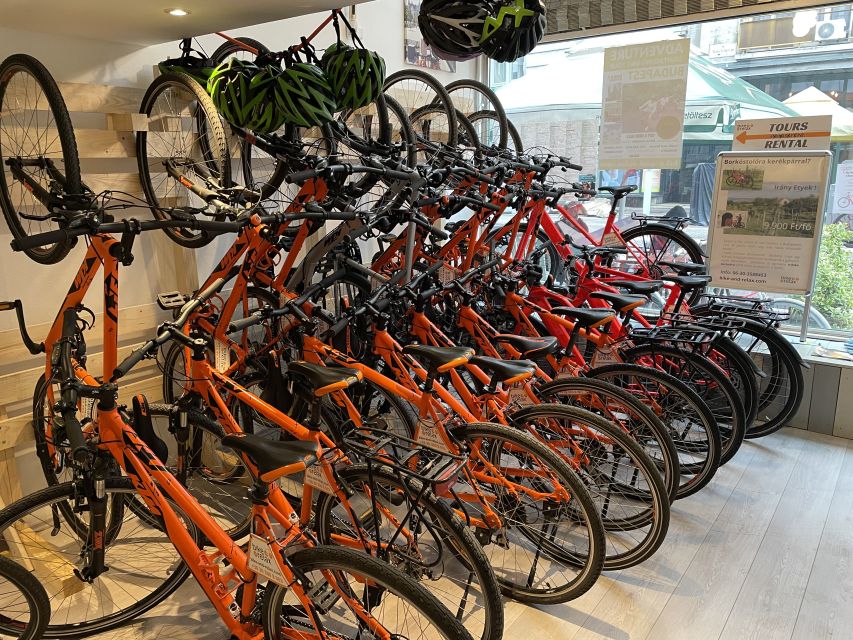
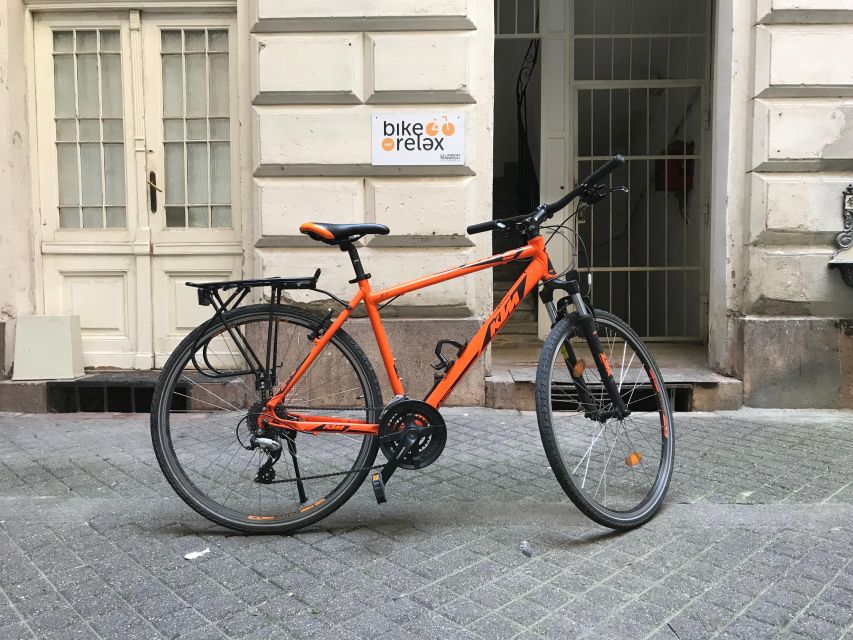
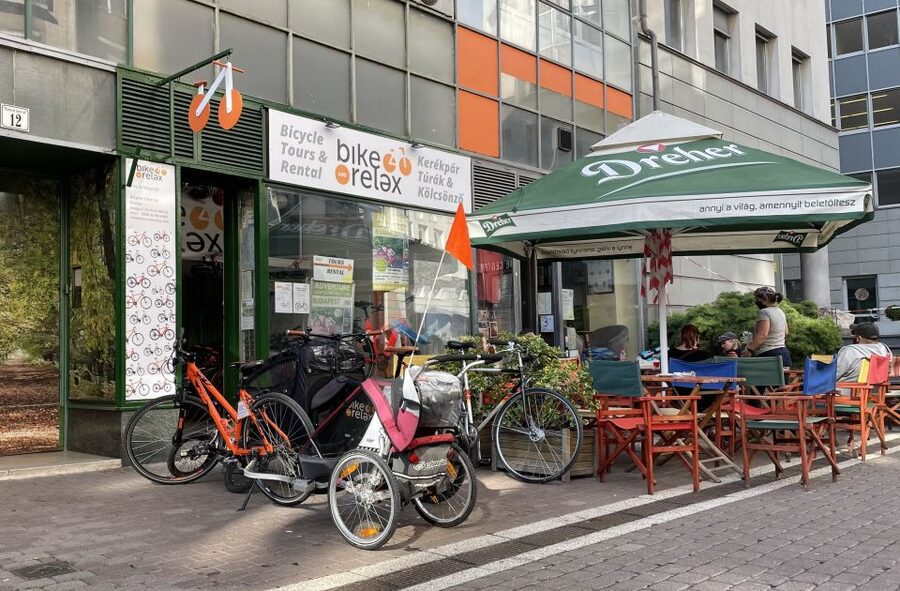
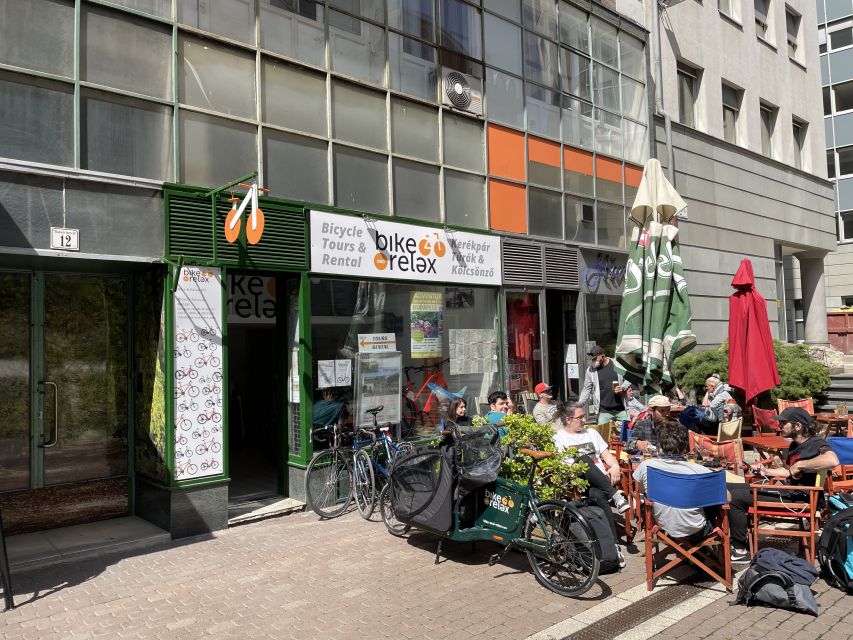
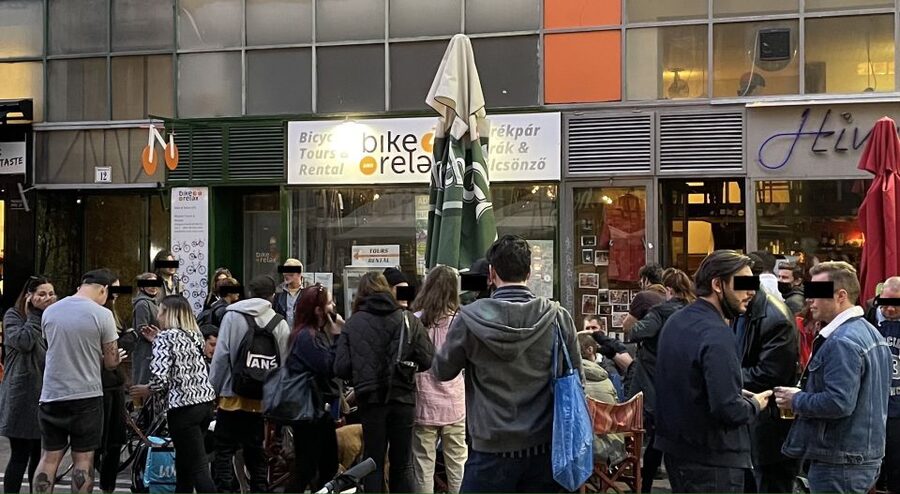
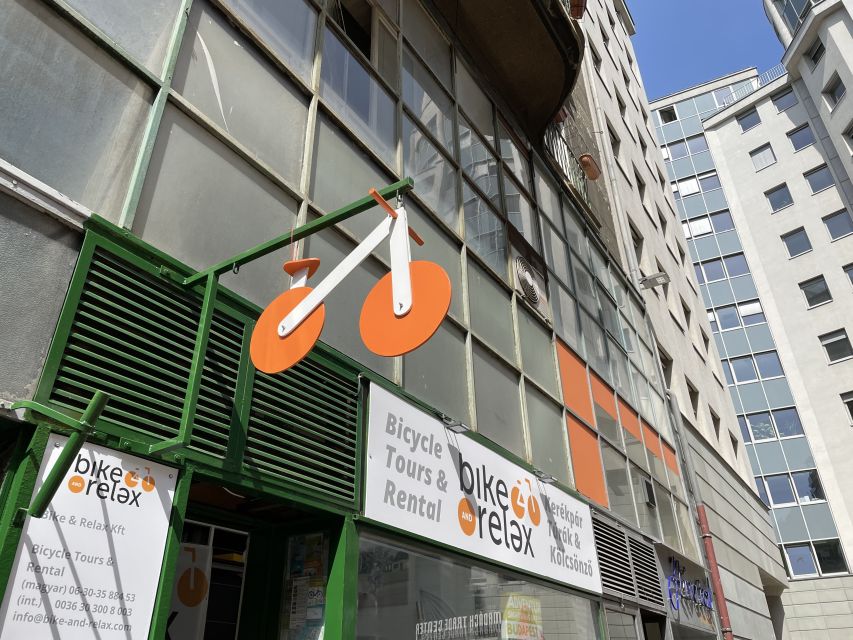
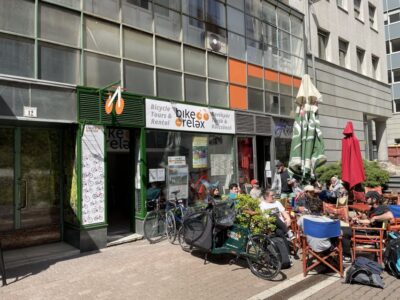
The meeting point is at Madách Imre út 12, near Cafe Hivatal and the connection between Madách Square and Gozsdu Court. Look for the Bike & Relax shop. The location is central and close to Deák Square, which is served by the M1, M2, and M3 metro lines, several trams, and the airport bus.
Allow a few extra minutes to find the shop. One past participant had trouble because the doorway was not well marked and the directions showed a different GPS point. That is a small issue, but it is worth checking the location before you leave your hotel.
The Jewish Quarter is a fitting starting point. It is now one of the city’s main areas for restaurants, bars, and nightlife, but it also carries important Jewish and 20th-century history. You begin with a short guided introduction here before heading toward Andrássy Avenue.
The tour finishes in the same district. That is convenient, since you can sit down for a meal or drink immediately afterward. There is no substantial food break during the ride, so this ending location is especially useful.
Andrássy Avenue, the Music Academy, and Heroes’ Square
The first major stretch follows Andrássy Avenue, one of Budapest’s grand ceremonial roads. The Franz Liszt Academy of Music provides an early photo stop, followed by the Hungarian State Opera House later on the route. These buildings help show the cultural ambition of Budapest during the period when the city was developing into a major European capital.
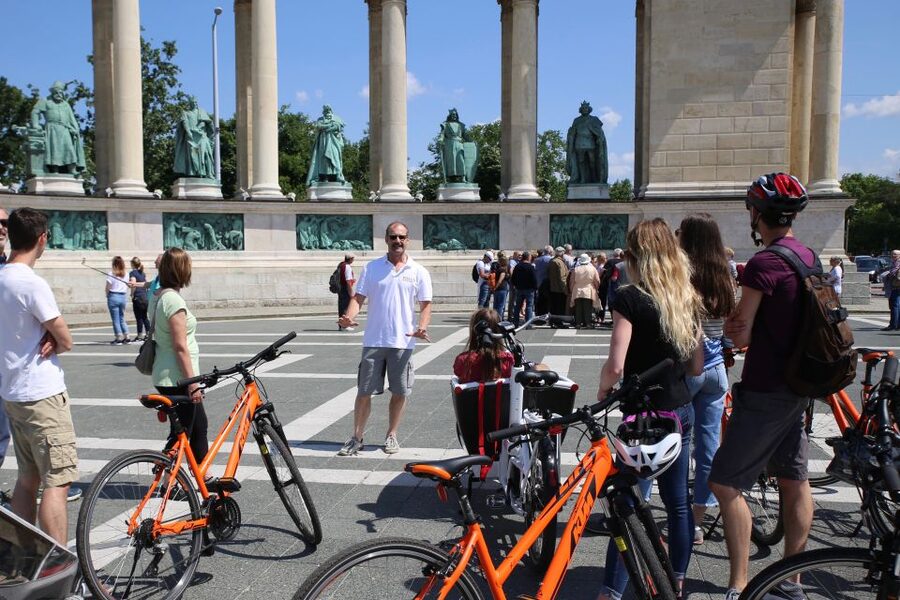
You then ride toward Heroes’ Square. This is one of the city’s most recognizable public spaces, with its tall central column and statues of important figures from Hungarian history. The stop lasts about 15 minutes, enough for photographs and a short explanation.
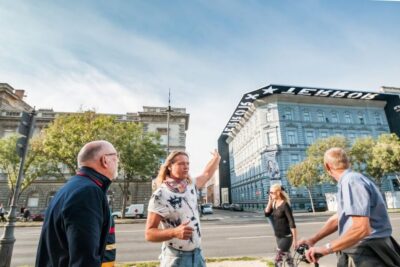
Next comes the House of Terror. The tour stops outside for pictures rather than taking you through the museum. That distinction matters. The House of Terror is an interior museum focused on the country’s fascist and communist dictatorships, so you would need a separate visit if you want the full exhibition.
This part of the route combines grand architecture with difficult modern history. It is a good example of what the ride does well: you get the setting and context, then decide which places deserve a longer return visit.
City Park and the Szechenyi Thermal Bath
From Heroes’ Square, you continue into Városliget, or City Park. The park gives the ride a change of pace after the formal avenue. You get more open space, tree-lined roads, and a look at one of Budapest’s best-known recreation areas.
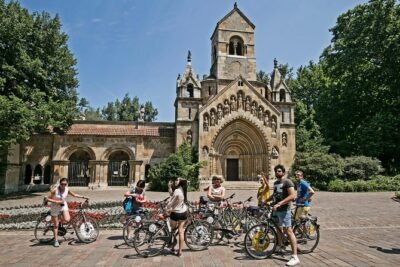
The Vajdahunyadi Castle is one of the visual treats here. Its unusual design brings together architectural details inspired by different periods and places in Hungary. The tour provides a guided look and photo opportunities, but it does not include an extended interior visit.
The Szechenyi Thermal Bath is another stop outside the entrance. Budapest’s thermal bathing tradition is central to the city’s identity, and Szechenyi is among its most famous bath complexes. You will not have time to swim during this bicycle tour, but the stop helps you understand why a bath visit belongs high on your later plans.
This section also shows the practical value of using a bicycle. City Park is a comfortable distance from the Jewish Quarter, but reaching it, then continuing to the center and the river, would take much longer on foot.
More City Highlights Bike Tours in Budapest:
- Budapest: Grand Sightseeing Bike Tour
★ 4.8 · 984 reviews - Budapest Highlights Bike Tour
★ 5.0 · 770 reviews - Budapest: Guided Downtown Electric Bike Tour
★ 4.9 · 595 reviews - Budapest: Monster Bike Roller Guided City Tour
★ 5.0 · 538 reviews
From the Opera House to St. Stephen’s Basilica
The route returns toward central Pest and pauses at the Hungarian State Opera House. The exterior is ornate and makes a strong photograph, while the guide can place the building within Budapest’s musical and architectural story. Again, this is an outside stop, not an opera performance or interior tour.
St. Stephen’s Basilica follows. Its large dome and prominent position make it one of central Pest’s key landmarks. You have about 10 minutes for a photo stop and short explanation. If the basilica interests you, note it as a place to revisit, since the bicycle tour does not provide a full interior visit.
The timing here is sensible. You see two important central buildings without spending the whole afternoon inside one attraction. For a first look at Budapest, that balance works well.
Liberty Square, Parliament, and the Danube
Liberty Square brings a more recent chapter of Hungarian history into the ride. The square contains monuments and buildings tied to the country’s 20th-century political story. It is not just another attractive plaza, and a good guide can help connect the symbols to the events that shaped modern Hungary.
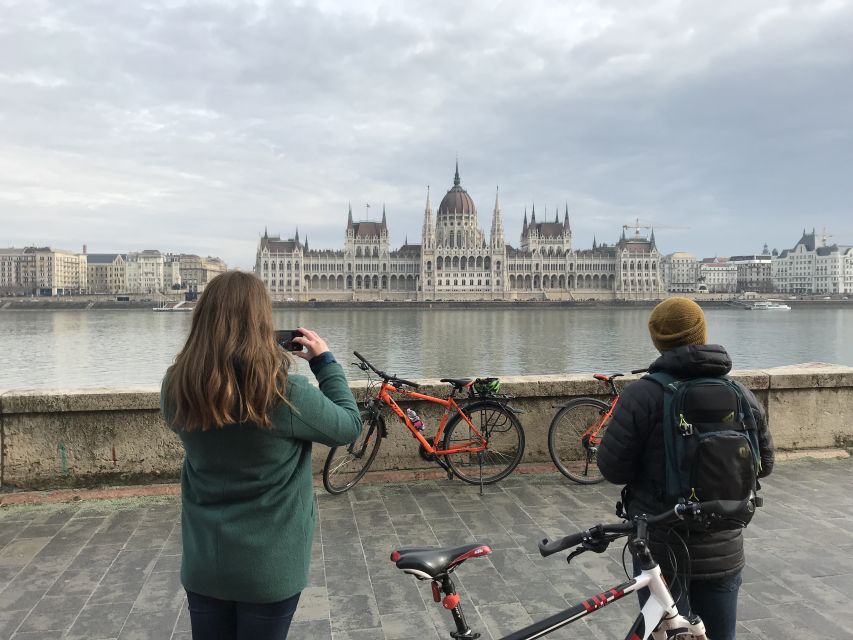
From there, the route continues to the Hungarian Parliament Building. This is one of the most dramatic views in Budapest, especially from the river side. You stop for photographs and commentary rather than entering the building. Parliament visits require a separate ticket and a longer time commitment.
The ride then reaches the Shoes on the Danube Bank memorial. The tour stops nearby for about five minutes, but direct access to the monument is not granted as part of the route. Keep that in mind if this memorial is a major reason for booking. You will see its location and receive context, but this is not a dedicated memorial visit.
The riverfront is one of the best parts of the ride. You get clear views across the Danube and a practical sense of the relationship between Parliament on the Pest side and the hills and historic buildings of Buda.
Crossing Chain Bridge into Buda
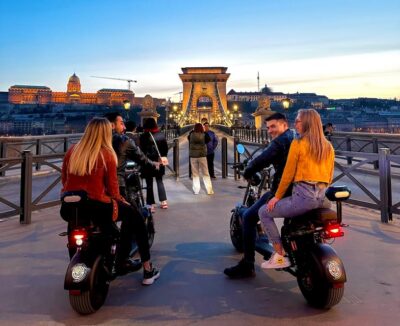
Chain Bridge is both a landmark and a working part of the route. You cross the famous bridge into Buda, which gives you a memorable transition from the flat Pest side to the hillier western bank.
The crossing also offers a strong view back toward the Pest waterfront. Stop safely when instructed, since the route continues through an active city rather than a closed tourist circuit. The guide’s traffic management matters here, and the small group format helps keep everyone together.
The itinerary includes photo stops at Matthias Church and Fisherman’s Bastion. These sights sit in Buda’s Castle District and are among the city’s finest viewpoints and architectural highlights. The information provided does not promise an extended climb or interior tour, so treat these as orientation stops with time for pictures.
You should expect some changes in surface and terrain on the Buda side. The tour is described as easygoing, and one rider found it relaxed rather than physically demanding, but you still need to be comfortable handling a bicycle in an urban setting.
Rudas Bath, Gellért Baths, and the return to Pest
The route continues past Rudas Thermal Bath and Gellért Baths. These stops offer two more reminders that Budapest’s bathing culture is not confined to Szechenyi. You will see the exteriors and hear about their place in the city, but bathing is not included.
The ride then crosses Liberty Bridge back toward Pest. This bridge is a fine contrast to Chain Bridge, with a different design and a lower, more direct feel over the river. Crossing it gives you another angle on the Danube and the city’s bridges.
The route is ambitious, but the stops are short. That is the tradeoff. You can see many major sights in one outing, but you will not spend long at any single one. I see this as a strength for first-time visitors and a weakness for anyone hoping for detailed visits at each landmark.
Central Market Hall, the National Museum, and the Great Synagogue
Back on the Pest side, the tour passes the Central Market Hall. This is one of the best places to return for food, paprika, produce, and local shopping, but the bicycle stop is brief. Do not expect time to browse the stalls at length or sit down for lunch.
The Hungarian National Museum follows as another photo stop. Its exhibitions require a separate visit, yet seeing the building helps place Hungarian history within the wider city center.
The final major sight is Dohány Street Synagogue, also called the Great Synagogue. It is one of the Jewish Quarter’s defining buildings and gives the route a meaningful return to its starting area. The bicycle tour does not include an interior visit, so add that separately if you want to see the synagogue complex and its memorial spaces.
Ending near the Jewish Quarter is practical. You can eat, rest, or continue exploring on foot without finding another way across the city.
What the $45 price includes
At $45 per person, the tour is priced as a sightseeing service rather than a simple bicycle rental. You are paying for the bike, an English-speaking guide, route planning, safety leadership, and the chance to cover a large part of Budapest in 3.5 hours. A refreshing drink is included.
The value is strongest if you are visiting Budapest for the first time. You can use the ride to identify the sights you want to revisit and understand how far apart they are. It is also useful if your stay is short and you want a broad first look.
The price is less compelling if you prefer long museum visits, detailed photography, or independent cycling. You will pass many places that deserve more time, and meals and additional drinks are not included.
The ride is listed as a small group limited to 10 people. A private option is also presented, but you should confirm the exact arrangement when booking. Smaller groups usually make it easier to hear the guide and ask questions.
Fitness, equipment, and practical limits
You need to know how to ride a bicycle confidently. This is not suitable for people who cannot cycle, have no cycling experience, or have mobility impairments. It is also not intended for wheelchair users, people with epilepsy, visually impaired participants, pregnant women, people with motion sickness, or anyone over 110 kilograms.
Those limits are firm enough to take seriously. One past rider found the pace relaxed and easy, while another described the bicycles as comfortable and the route as safe. That does not mean the experience is suitable for a complete beginner. You still ride through a city and must follow the guide’s instructions.
Wear comfortable shoes and clothing suited to the weather. Large bags and luggage are not allowed, so leave suitcases at your accommodation. If you are traveling with young children, children’s bicycles and child seats are limited. Contact the local provider in advance for children or anyone below 1.50 meters tall.
Bring water and consider a snack. The included drink is welcome, but there is no proper meal opportunity during the route. Public toilets may require a small payment, so carrying a little Hungarian forint or euros is sensible.
Free cancellation is available up to 24 hours before the start, and you can reserve without paying immediately under the pay-later option. Check the available start times before committing, since the tour runs for a full 3.5 hours.
Who should book this Budapest bike ride?
I would choose this tour early in a Budapest visit, especially on the first day or second morning. It gives you a mental map of the city and shows you which attractions deserve a return visit. Several past riders used it this way and found later planning easier.
It suits active couples, friends, solo visitors, and families with older children who can manage a city ride. It is also a good match for anyone who wants history and orientation without spending the entire day in museums.
I would not choose it for a relaxed bath day, a dedicated food tour, or a serious cycling workout. It is sightseeing by bicycle, not a sport ride. You should also skip it if you want interior access to Parliament, the House of Terror, the baths, the synagogue, or the museums.
Should you book it?
Book this ride if you want a broad, well-paced introduction to Budapest and are comfortable on a bicycle. The route covers an impressive range of sights, the $45 price is reasonable for a guided 3.5-hour city overview, and the small group size should keep the experience personal.
Book something else if you need step-free access, cannot ride confidently, want a slower visit to fewer places, or dislike short photo stops. For most first-time visitors who want to get their bearings quickly, this is a useful and enjoyable start to Budapest.
FAQ
How long is the bicycle tour?
The tour lasts 3.5 hours.
What language is the tour conducted in?
The live guided tour is conducted in English.
How many people are in the group?
The small group is limited to 10 participants.
Where does the tour start?
It starts at Madách Imre út 12 in central Budapest’s Jewish Quarter. Look for the Bike & Relax shop beside Cafe Hivatal, near the connection between Madách Square and Gozsdu Court.
Which major sights are included?
The route includes or passes the Jewish Quarter, Franz Liszt Academy of Music, Andrássy Avenue, Heroes’ Square, the House of Terror, City Park, Szechenyi Thermal Bath, the State Opera House, St. Stephen’s Basilica, Liberty Square, Parliament, the Shoes on the Danube Bank area, Chain Bridge, Matthias Church, Fisherman’s Bastion, Rudas Bath, Gellért Baths, Central Market Hall, the National Museum, and Dohány Street Synagogue.
Is food included?
No. A refreshing drink is included, but meals and additional drinks are not.
Can children join the tour?
Children may be able to join, but the number of children’s bicycles and child seats is limited. Contact the local provider in advance for small children or anyone below 1.50 meters tall.
What should I bring?
Bring comfortable shoes and clothing suited to the weather. Large bags and luggage are not allowed. Water and a snack are sensible because there is no meal stop.
Can I cancel the booking?
You can cancel up to 24 hours before the tour for a full refund. A reserve-now, pay-later option is also available.
More History Tours in Budapest
- Historical Singapore Bike Tour on Full-Sized Bicycles
★ 5.0 · 1,421 reviews - Barcelona: 2.5-Hour Bike or E-Bike Historical Tour
★ 4.5 · 1,262 reviews - Asheville Historic Downtown Guided Electric Bike Tour with Scenic Views
★ 5.0 · 1,234 reviews - Historic Athens: Small Group Electric Bike Tour
★ 4.9 · 966 reviews
Just added around Budapest
- Choose a bicycle and make your own tour in Budapest-24 hrs★ 4.6 · 16 reviews
- Budapest Highlights Bike Tour with a local guide★ 4.9 · 66 reviews
- Budapest ❤️Winter Bike Tour with Coffee Stop❤️★ 4.8 · 20 reviews
- Budapest: Sunset guided bicycle ride★ 4.9 · 12 reviews
- Budapest: Guided City Tour by E-Bike★ 4.9 · 87 reviews
- Budapest: Guided Bike Tour Plus★ 4.7 · 62 reviews
- Budapest: Guided Bike & E-bike Tour with a Goulash★ 4.8 · 220 reviews
- Budapest: E-Bike Guided Tour and Castle Hill★ 4.9 · 241 reviews
Budapest Bike Tours, compared.
Budapest Historic Downtown Bicycle Tour in small groups
Read our review →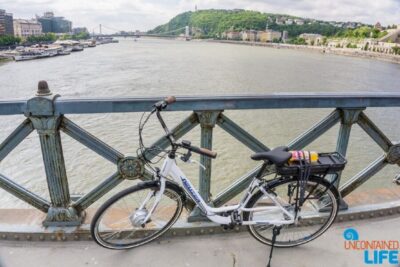
Browse the lists this tour appears in