
REVIEW · CROATIA
Best of Zagreb: 4-Hour Cycling Tour
Zagreb is small enough to cross by bicycle, but varied enough to feel like several cities in one. This four-hour ride takes you from the grand squares and medieval lanes of the old center to Bundek and the broad, modern districts of New Zagreb. You get the main sights, but also a look at how ordinary city life changed from the Yugoslav period to today.
I like the efficient route, which lets you cover ground that would take much longer on foot. I also like the local angle: guides such as Alida, Rosa, and Roza add personal context about Zagreb’s past and present, not just dates and building names. The main consideration is simple: you are on a bicycle for much of four hours, so even an easy ride may feel like too much if cycling is not your thing.
Key points at a glance
- Old Zagreb and New Zagreb in one ride: See the medieval Upper Town, Lower Town parks, Bundek, and the planned districts south of the Sava.
- A gentle, adjustable pace: The rhythm is set by the slowest person in the group, with frequent stops and time for questions.
- Local stories, not just landmarks: Learn about Zagreb’s daily noon cannon, Bloody Bridge, the Stone Gate, and the city’s changing life.
- Practical advice from a local guide: Get suggestions for coffee, beer, rakija, restaurants, and shopping.
- Small-group feel: The tour is designed to feel more like a friend showing you around than a large sightseeing procession.
- Useful for families: Bicycles, helmets if wanted, and child seats are available, and the tour is described as suitable for all ages.
Why a bicycle makes sense in Zagreb
Zagreb’s central sights are close together, but the city’s full story is spread out. A walking tour can cover the Upper Town and Lower Town well, yet reaching Bundek and New Zagreb takes extra time. On this ride, you can move between these areas without spending the afternoon on public transport or retracing your steps.
The bicycle also gives you a better sense of scale. You see how quickly the ornate center gives way to broad avenues, open spaces, and postwar architecture. That change is one of the most interesting parts of the tour. Zagreb’s history is not confined to a single old quarter.
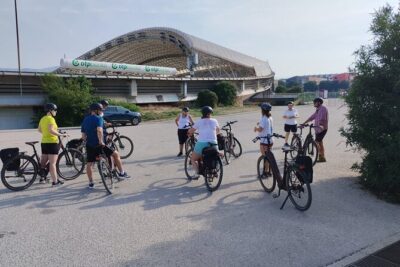
The pace is meant to be easy. You make regular stops, and the guide adjusts the rhythm to the slowest person in the group. You can also request a coffee break. That flexibility matters, especially if your group includes children, older adults, or people who have not cycled much recently.
The tour lasts four hours, though the listed route breaks the riding into several sections. Expect time off the bike for stories, orientation, and photos. You are not being pushed through Zagreb in a race.
A few more bike tours around Croatia worth a look
- City Bike Tour of Split
★ 5.0 · 331 reviews - Pula Highlights Bike Adventure
★ 5.0 · 254 reviews - Elafiti Islands Sea kayaking: Full-Day Bike and Kayak tour on Lopud and Šipan
★ 4.5 · 236 reviews
Starting at the main square
The meeting point is Blue Bike Zagreb at Trg bana Josipa Jelacica 15, Zagreb’s main square. The office is inside an alley, in the direction pointed to by the statue in the square. Give yourself a little time to find that entrance, since a central square can have several nearby side streets and passages.
The square is a sensible starting point. It is the city’s natural reference point, and beginning here lets you quickly get your bearings. From here, the ride heads into the Lower Town before climbing toward the Upper Town and later crossing into a very different part of Zagreb.
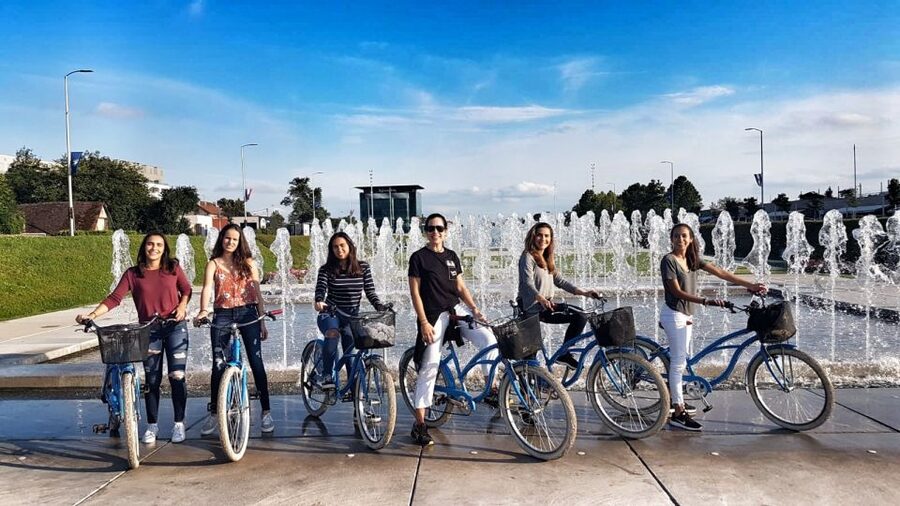
You receive a comfortable bicycle and can take a helmet if you want one. A child seat is also available. The tour is offered in English, and the guides named in the feedback include Alida, Rosa, Roza, and Alidra. Guide assignments can change, but the format stays focused on local explanation and conversation.
Lower Town and the Green Horseshoe
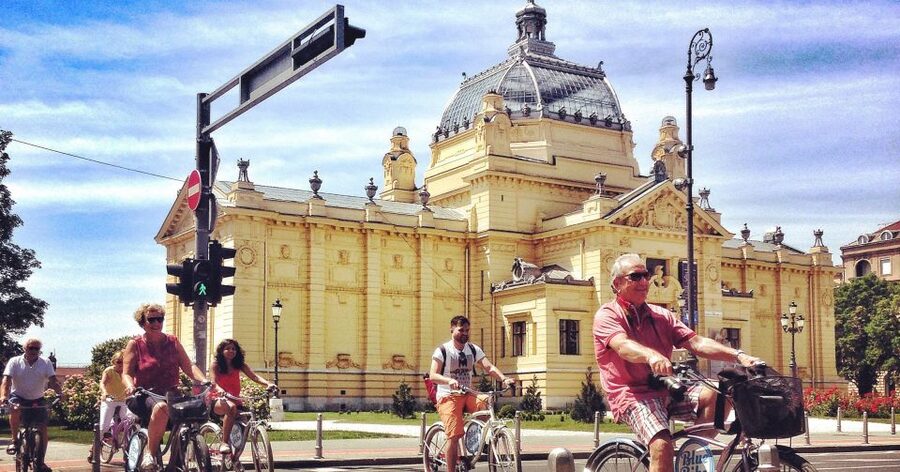
The first major section takes about 45 minutes through Zagreb’s Lower Town. This is the part of the city known for broad streets, formal public buildings, and a chain of parks often called the Green Horseshoe.
You will pass important civic and cultural sights, including the National Theatre, Parliament, and the Government house. These are not isolated photo stops. Together, they help explain how Zagreb presents itself as a capital, with institutions arranged around open public spaces and formal city planning.
The Green Horseshoe is especially useful early in the tour because it gives you a calm introduction to the city. You can see how Zagreb combines traffic, daily business, grand architecture, and large planted areas within a compact center.
Your guide also uses this part of the ride to explain local customs and stories. You will learn why Zagreb has a big bang at noon, a reference to the cannon fired from the Upper Town each day. You will also hear about Bloody Bridge and the Stone Gate, two names that sound dramatic but make much more sense once you know the stories behind them.
This portion is a good fit if you want the major sights without spending hours inside museums. The tradeoff is that the tour gives you an overview rather than long interior visits. You see the buildings and hear their place in Zagreb’s story, but this is not a museum-focused experience.
Bundek and the city beyond the center
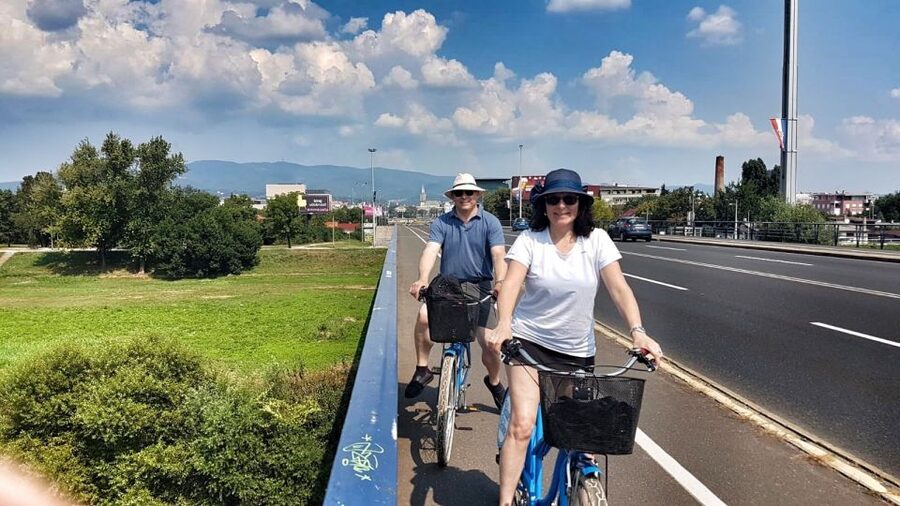
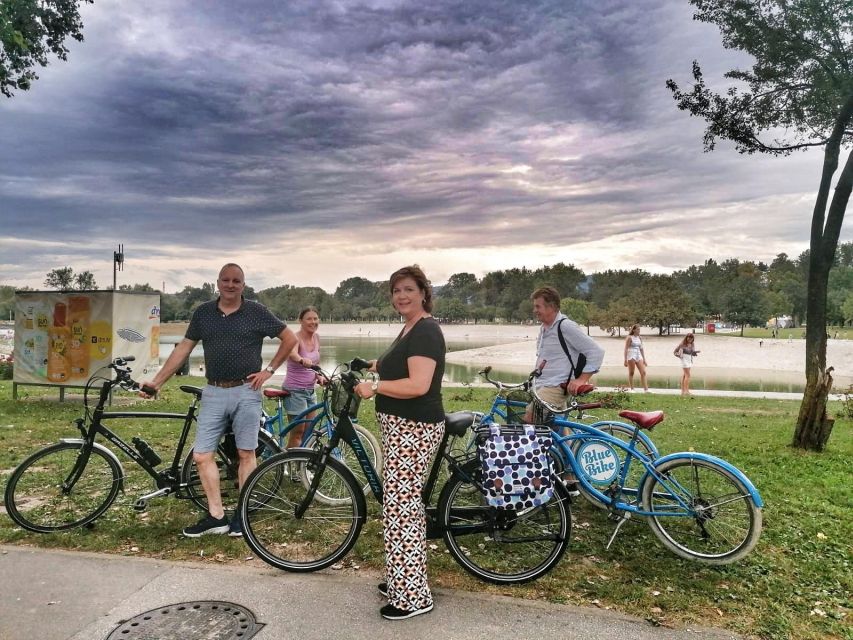
The route then heads to Bundek, with about 45 minutes set aside for this section. Bundek offers a change of mood from the central streets. Instead of historic façades and tight lanes, you get open space and a clearer sense of Zagreb as a modern city where people live, relax, and move about beyond the old core.
This stop also helps explain the city’s geography. You are not just checking off another attraction. You are seeing the relationship between the historic center and the newer districts south of the Sava River.
For you, Bundek may be one of the more restful parts of the ride. The route is still active, but the setting gives the guide room to talk about daily life and the city’s growth. If you have already spent a morning among churches, museums, and old streets, this change keeps the tour from feeling repetitive.
The cycling time listed for Bundek is 45 minutes, but the overall experience includes stops and commentary. That means the exact rhythm can vary. Ask questions, take photos, or request a short pause if your group needs one.
Same city, a different ride:
- Zagreb Highlights Bike Tour
★ 5.0 · 208 reviews - Hvar Island Self-Guided E-Bike Tour
★ 5.0 · 144 reviews - Cycle Hvar Tour
★ 5.0 · 131 reviews - Split 3-Hour Guided Bike Tour
★ 4.8 · 117 reviews
Zagreb Welcomes You and the shift to New Zagreb
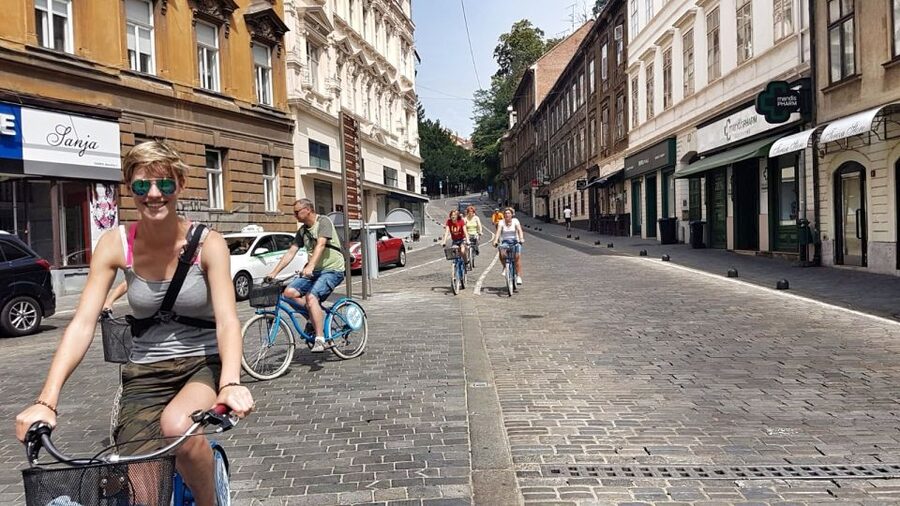
The section called Zagreb Welcomes You lasts about 30 minutes. The name points to the city’s transition into a different visual and social setting as the route moves toward New Zagreb.
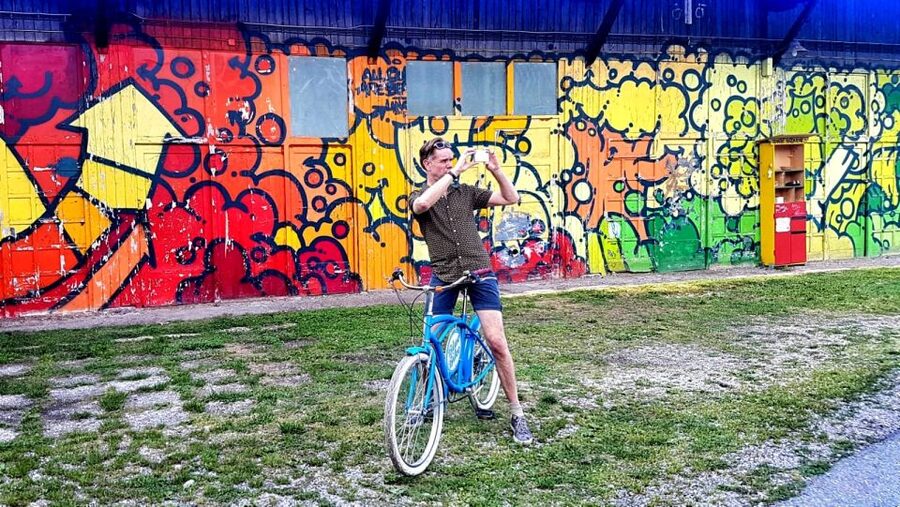
This is where the tour’s wider purpose becomes clear. Zagreb is not only its medieval hill and nineteenth-century center. New Zagreb shows the city’s later development, including Yugoslav-era planning and postwar architecture. The buildings and open spaces reflect different ideas about housing, transport, and public life.
You may find this section more rewarding if you have an interest in twentieth-century Europe. It gives you a chance to compare the old city with districts shaped by a later political and architectural period. The contrast is one of the strongest reasons to choose this ride instead of a standard old-town walk.
The route does not treat history as something sealed in the past. Guides such as Alida have explained Zagreb through personal memories and local experience, including changes from Yugoslav times to the present. That sort of context can make the buildings easier to understand, even if architecture is not normally your main interest.
Upper Town stories and Zagreb’s oldest corners
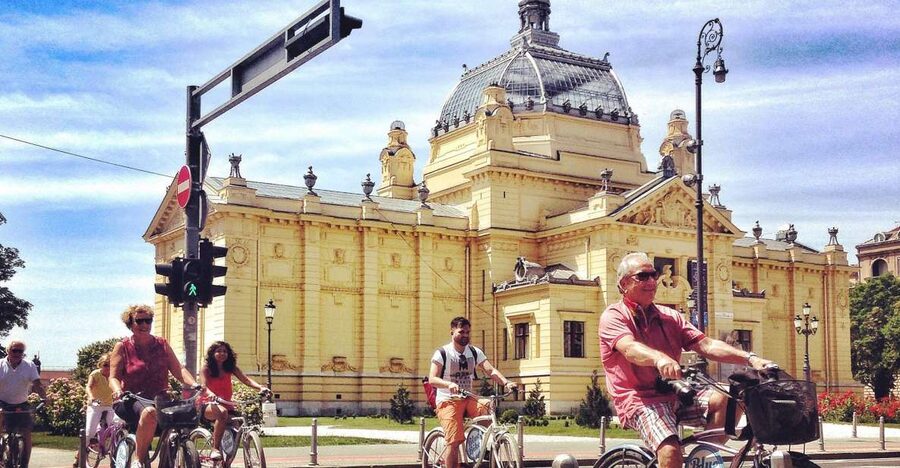
The Upper Town section takes about 45 minutes and returns you to Zagreb’s older core. Here, the streets become more intimate and the stories more specific.
This is where you encounter the Stone Gate and learn who is stoned at the Stone Gate, along with the story behind Bloody Bridge. The names are memorable, but the value lies in hearing how local places gained their unusual titles and how people still relate to them.
The Upper Town also brings you close to Zagreb’s historic institutions and religious landmarks. Your guide can connect what you see here with the Lower Town, showing how the two areas function as parts of one capital rather than separate attractions.
Cycling through old streets has limits. Some parts may require a slower approach or a brief pause, and you should not expect to ride at full speed through every lane. That is not a flaw in the tour. The point is to move between areas efficiently, then stop and listen where the setting deserves attention.
The local advice you get along the way
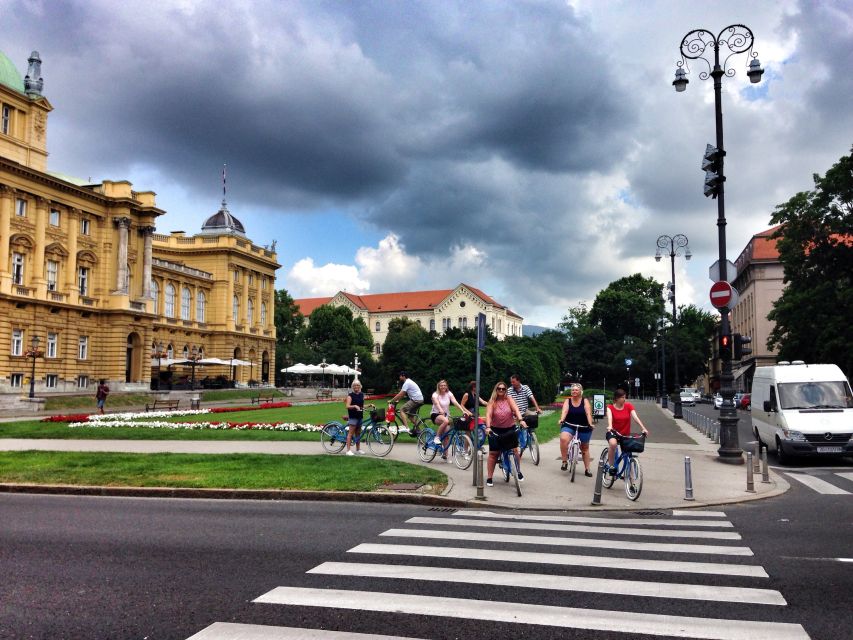
A city tour becomes more useful when it helps with the rest of your stay. This one includes suggestions for shopping areas, restaurants, coffee, beer, and rakija, the Croatian fruit brandy.
I especially value the drink advice because café culture is part of the local rhythm in Zagreb. A coffee stop is available at your request, so you can use the guide’s suggestions during the tour or save them for later. You can also ask for practical ideas based on your interests.
The guide’s role is not limited to pointing at landmarks. The best version of this tour feels conversational, like meeting a local friend who wants to show you around. The guide names in the feedback, especially Alida and Rosa or Roza, are repeatedly associated with lively explanations and strong knowledge of Zagreb. Since the specific guide is not guaranteed, treat those names as examples rather than a promise.
You should also ask questions about the city’s recent past. The route through New Zagreb creates a natural opening for discussion of Yugoslavia, postwar change, and how local life has shifted over the decades. That personal perspective is one of the tour’s most useful features.
Is $94 a fair price?
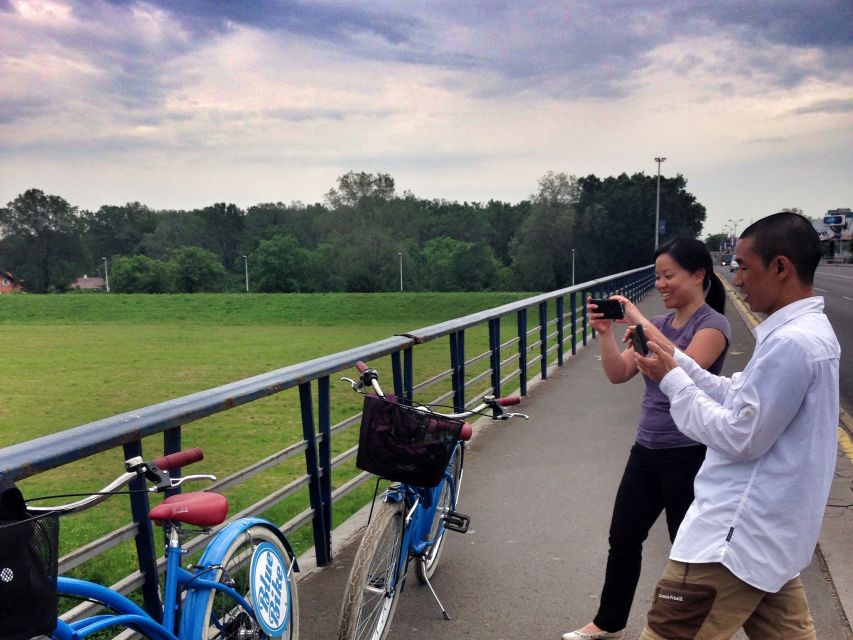
At $94 per person, this is not the cheapest way to see Zagreb. You are paying for a four-hour guided experience, a bicycle, local interpretation, and a route that connects several parts of the city. The value depends on how much ground you want to cover and how much context you want while doing it.
I consider the price easier to justify if you have only a short stay in Zagreb. You can see the old center, major civic sights, Bundek, and New Zagreb in one outing. A walking tour may cost less, but you would likely cover less distance and may need another outing to understand the newer parts of the city.
The price is also more worthwhile for people who enjoy asking questions. If you want only a quick ride and a few photographs, four hours may feel long for the cost. If you want history, local advice, and a broad view of Zagreb’s development, the package offers more than simple bicycle rental.
The small-group format helps preserve the value. You get room to hear the guide and adjust the pace, instead of being part of a large line of bicycles. Exact group size is not provided, so do not assume the group will be private, but the experience is presented as small-group touring.
Who should book this ride?
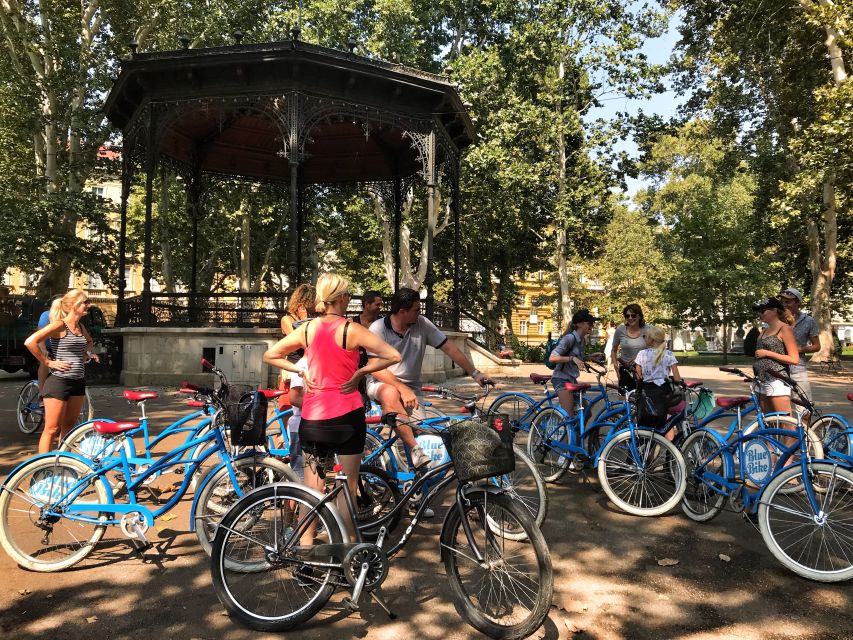
This tour suits first-time visitors who want a clear introduction to Zagreb. It is also a good choice if you have already seen the main center and want to understand New Zagreb and the city’s more recent past.
Families can consider it because the pace is easy, child seats are available, and the tour is described as suitable from babies to grandparents. Still, every family should think honestly about four hours outdoors and on bicycles. The guide can adjust the rhythm, but the outing remains a cycling tour.
You should also consider it if you want a local perspective on Yugoslav times and postwar change. The route gives those subjects a physical setting, which is more useful than hearing a general lecture in a hotel or classroom.
I would skip it if you dislike bicycles, want extended time inside museums, or prefer a tightly scripted sightseeing schedule with no pauses. This outing works best when you are comfortable stopping, asking questions, and letting the guide shape the rhythm.
Practical details before you go
Wear outdoor clothing suited to the day. You do not need to bring meals or drinks, since those are not included, though you can request a coffee break during the tour.
The meeting point is central Zagreb, at Blue Bike Zagreb, Trg bana Josipa Jelacica 15. Look for the office inside the alley indicated by the statue on the main square.
Free cancellation is available up to 24 hours before the start for a full refund. You can also reserve now and pay later, which helps if your Zagreb schedule is still changing. Starting times vary, so check availability when booking.
The activity is conducted in English with a live guide. A helmet is available if wanted, and a child seat can be provided. The pace is adjusted to the slowest person in the group, but you should still be ready for regular outdoor cycling.
Should you book the Best of Zagreb cycling tour?
Book it if you want to see Zagreb as a living city rather than only a collection of old monuments. The strongest feature is the range: Lower Town, the Green Horseshoe, Upper Town, Bundek, and New Zagreb all fit into one guided ride.
The tour is especially useful early in your stay. You will leave with a map in your head, local suggestions for coffee and food, and a better sense of how the city changed over time. At $94, it is a considered purchase, but the broad route and personal storytelling can make it good value for a short visit.
Skip it only if cycling feels like work or you want a slower, building-by-building walking tour. For most reasonably comfortable cyclists, this is an easy and practical way to get oriented fast.
FAQ
Where does the cycling tour start?
The tour starts at Blue Bike Zagreb, Trg bana Josipa Jelacica 15, on Zagreb’s main square. The office is inside an alley in the direction pointed to by the statue on the square.
How long does the tour last?
The tour lasts four hours. The route includes time in the Lower Town, at Bundek, around Zagreb Welcomes You, and in the Upper Town.
What language is the tour conducted in?
The live tour is conducted in English.
Is the cycling pace difficult?
The pace is described as easy and suitable for all ages. The rhythm is adjusted to the slowest person in the group, and the tour includes frequent stops.
Are bicycles and helmets provided?
A comfortable bicycle is included. A helmet is available if wanted, and a child seat can also be provided.
Can I take a coffee break?
Yes. You can request a coffee break during the tour. Meals and drinks are not included in the price.
Can I cancel or pay later?
You can cancel up to 24 hours in advance for a full refund. Reserve now and pay later is also available.
Just added around Croatia
- Bike & Wine Korčula Adventure – Half Day Guided Bike Tour★ 5.0 · 46 reviews
- Korcula Island Mountain E Bike Private tour with lunch★ 5.0 · 20 reviews
- Taste of Korcula by Bike Tour | Korcula Wine & Food Tasting★ 5.0 · 33 reviews
- Korcula Bike & Wine Tour | Wine Tasting in Lumbarda★ 5.0 · 78 reviews
- Private Hvar Island E-Bike Tour (Self-Guided)★ 5.0 · 23 reviews
- Hvar Island Self-Guided E-Bike Tour★ 5.0 · 144 reviews
- Cycle Hvar Tour★ 5.0 · 131 reviews
- Hvar Island Guided E-Bike Adventure★ 5.0 · 29 reviews
Croatia Bike Tours, compared.
Elafiti Islands Sea kayaking: Full-Day Bike and Kayak tour on Lopud and Šipan
Read our review →

Browse the lists this tour appears in