
REVIEW · PARIS
Best of Paris Bike Tour
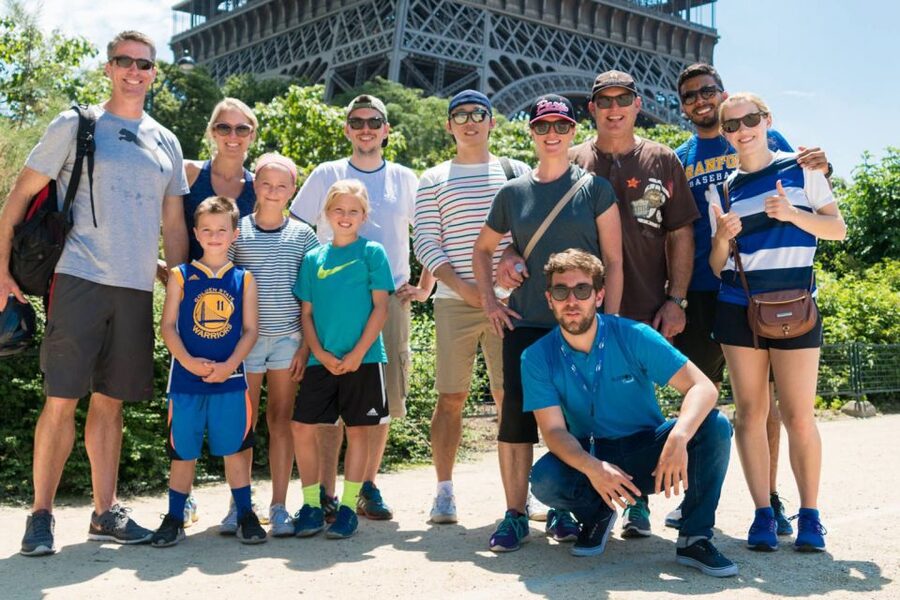
Paris reveals itself best at street level, and this four-hour bike tour gives you a fast, friendly introduction to the city without trapping you in a bus. You pedal from the Saint-Michel area past Notre-Dame, the Louvre, the Seine, the Eiffel Tower, and the Champs-Élysées, stopping often for short stories and photos.
I like two things especially: the route covers a lot of ground on mostly flat streets, and the guide helps you handle Paris traffic rather than leaving you to guess. I also like the Rue Cler market break, which gives you time to choose a snack and see a more everyday side of Paris.
The main drawback is that these are not electric bikes. They have one gear, and you need to be comfortable cycling in city traffic. The pace is manageable for most active riders, but hot weather, a large group, or a child who tires easily can make the four hours feel longer.
Key points at a glance
- A broad first look at Paris: Ride from Notre-Dame to the Eiffel Tower, then continue past the Grand Palais, Champs-Élysées, Place de la Concorde, and the Louvre.
- A useful route for a short stay: You can see the outside of many major sights in half a day and decide where to return on foot later.
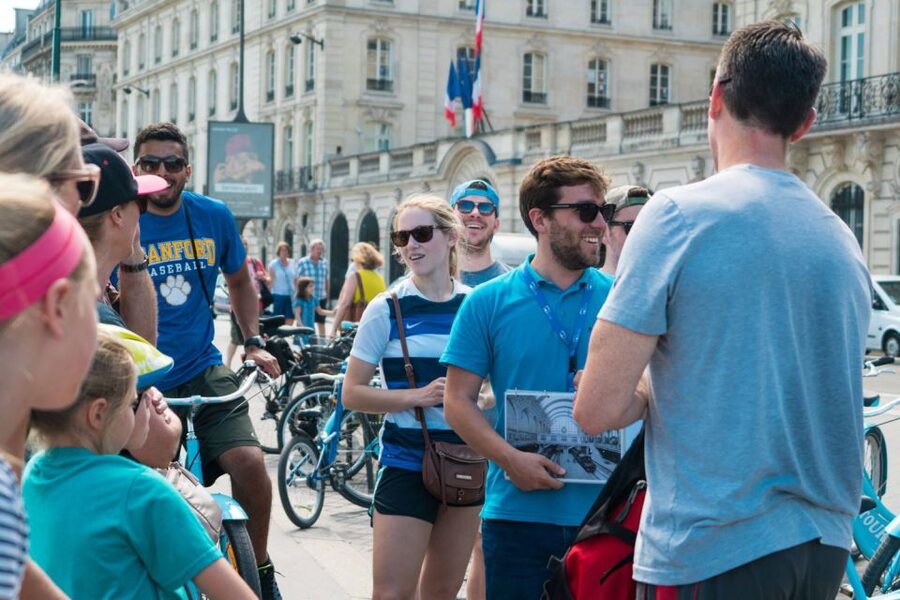
- Guides shape the experience: Past guides including Joe, Arnold, Vanessa, Pierre, Lucien, and Thibault have been praised for humor, safety, stories, and help with photos.
- A real food stop: You get about 30 minutes at the Rue Cler outdoor market. Food and drinks cost extra.
- Flat but not traffic-free: The route uses cycle paths and roads. You must stay alert, follow the guide, and keep a steady pace.
- Useful in mixed weather: Rain gear is supplied if needed, with gloves and a scarf available in cold weather.
Why a bike is a smart way to meet Paris
Paris is compact on a map, but the famous sights are spread across several districts. Walking between Notre-Dame, the Louvre, the Eiffel Tower, and the Arc de Triomphe can consume much of a day. A bus gives you less contact with the streets. A bike fills the gap nicely.
You move quickly enough to cover ground, yet slowly enough to notice bridges, courtyards, grand facades, and small street scenes. The route also lets you stop close to the places you came to see. You are not simply looking through a window as the city passes by.
This is best treated as an orientation ride, not a museum tour. You see the major monuments from outside and hear short explanations at each stop. The payoff comes later, when you return to the Louvre, Orsay, Notre-Dame, or the Eiffel Tower with a better sense of where everything fits.
The tour costs $53 per person. For four hours with a bike, helmet, guide, city route, and market break, that is a reasonable price if you want to see many landmarks quickly. It is less useful if you already know Paris well or plan to spend the whole day inside museums. Admission to sights, food, and drinks are not included.
A few more bike tours around Paris worth a look
- Versailles Palace Bike Tour with Market & Marie-Antoinette hamlet
★ 5.0 · 2,680 reviews - Paris: Charming Nooks and Crannies Bike Tour
★ 4.8 · 2,585 reviews - Paris: City Highlights Bike Tour
★ 4.7 · 1,835 reviews
Starting at Fontaine Saint-Michel
Meet in front of Fontaine Saint-Michel, a convenient central location near the Saint-Michel-Notre-Dame Metro and RER station. Metro line 4 and RER line C serve the area, while Cluny station on line 10 is also close.
Look for the guide beside a bright blue bike. This detail matters because the fountain area can be busy and the listed meeting address may not put you directly beside the bicycles. One person had difficulty finding the guide near the market area, so arrive early and keep your phone available in case you need help.
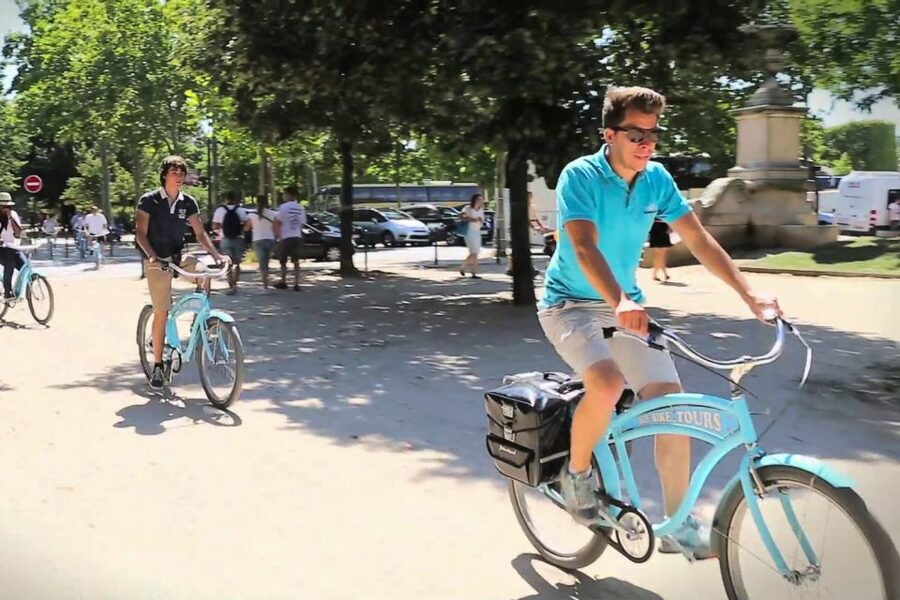
The actual bikes are kept nearby, and the group walks to collect them. You receive a helmet and a safety briefing before setting off. The bikes are aluminum-framed, comfortable, and easy to ride, but they are single-gear bikes rather than e-bikes.
That simplicity works well on this mostly flat route. You will not be changing gears or managing a motor. You will, however, be doing the pedaling for four hours, with breaks along the way.
Notre-Dame and the Seine begin the story
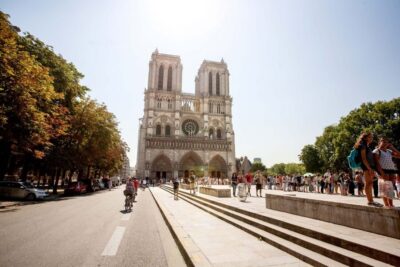
The first major stop is Notre-Dame Cathedral, reached after a short ride. You have about 15 minutes here, enough for photographs and an introduction to the cathedral and its place in Paris.
The value of beginning here is practical. Notre-Dame sits on Île de la Cité, close to the meeting point, so you start with one of Paris’s central landmarks rather than spending the first hour just getting across town.
From here, the route continues toward the Musée d’Orsay. The guide points out details along the way and keeps the group together at crossings. If you have not cycled in Paris before, this early section helps you learn the rhythm of following a leader through streets and cycle paths.
The Seine is part of the route rather than just a backdrop. Riding beside the river gives you long views and a sense of how the city is organized around its bridges and islands. You will stop for explanations and photographs, but this is still a moving tour, so do not expect a long riverside walk.
The Orsay, Alexandre III, and the grand westward route
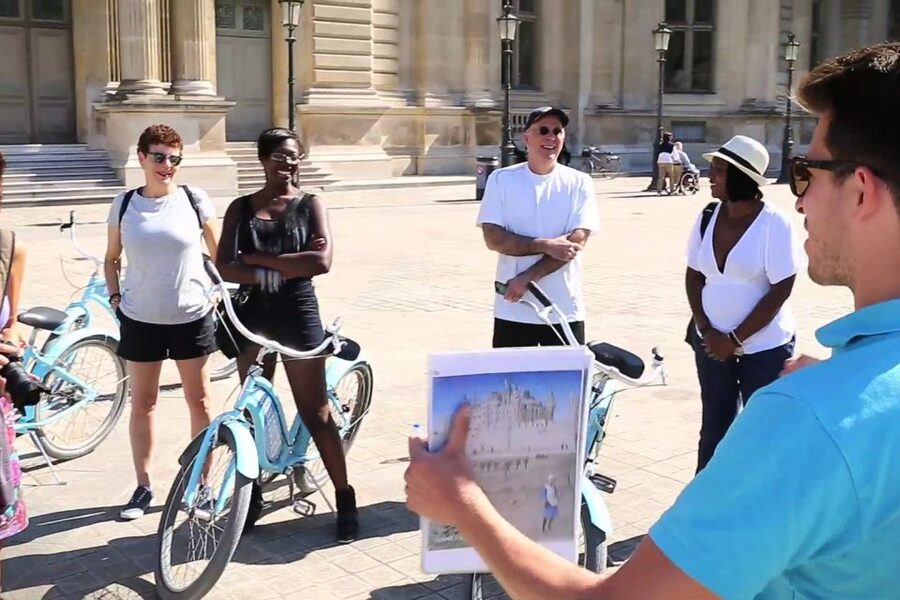
The Musée d’Orsay stop lasts about 10 minutes. You see the building from outside and hear about its connection to the Impressionists. If you want to visit the museum, plan a separate time slot. The bike tour does not include entry.
Next comes Pont Alexandre III, one of the city’s most decorative bridges. The stop gives you a strong view of the river and the grand axis leading toward the Invalides and the Champs-Élysées. It is also one of the better places for photographs, especially if you want a wide Paris scene rather than a close-up of one monument.
The route then passes the Army Museum in the Invalides area. Again, the stop is brief, around 15 minutes. You get context and a look at the impressive complex, but you do not tour the interior.
This sequence is one reason the ride works well during a first visit. You see art, military history, river views, and monumental architecture without spending the day on a single subject. The tradeoff is that each stop stays fairly short. You need to enjoy learning in small portions.
Same city, a different ride:
- Electric Bike Tour of Paris’ Hidden Gems
★ 4.9 · 1,377 reviews - Paris Local Districts and Stories Off the Beaten Track Guided Bike Tour
★ 5.0 · 1,264 reviews - Best of Paris Electric Bike Tour
★ 5.0 · 1,179 reviews - Highlights of Paris Bike Tour w/ a Local Guide (English or Dutch)
★ 4.5 · 1,176 reviews
The Rue Cler break gives the tour a local pause
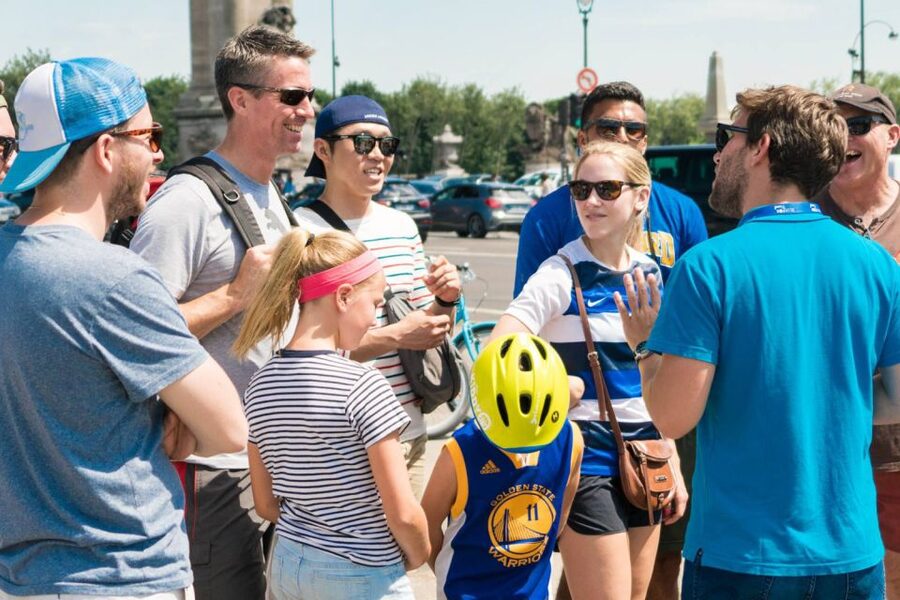
About halfway through, you get a 30-minute break around Rue Cler, an outdoor market street known for food stalls and shops. This is the one part of the route where you can set the bicycle aside and choose something to eat or drink.
Food is not included, so bring money or a payment method for your own snack. Thirty minutes is enough to browse and pick up a treat, but it is not a full sit-down meal. The stop also gives your legs a rest, which is welcome on a warm day.
I consider this pause one of the tour’s best choices. A long run of monuments can feel like a parade of photo stops. Rue Cler gives you a chance to see Paris through its food shops and daily shopping habits. It also helps split the ride into two more manageable sections.
Use the restroom before the tour starts, since one person specifically found this useful advice. The supplied information does not promise a restroom stop during the route.
The Eiffel Tower from the streets
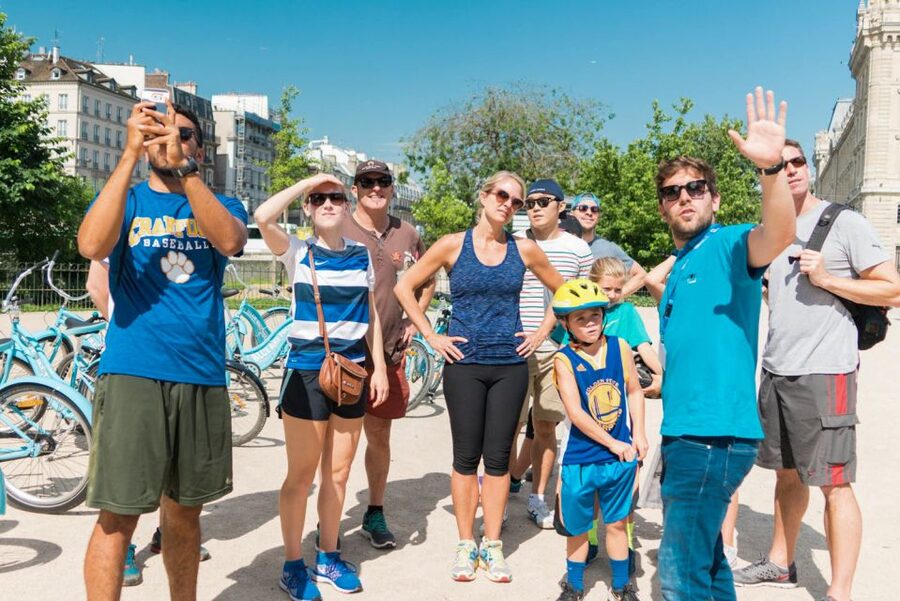
After the break, you ride toward the Eiffel Tower. You spend around 15 minutes there, with time for photographs and a short explanation.
The tour does not take you up the tower, and no entry ticket is included. That is not a flaw if your aim is to get oriented. You can use the guide’s advice to decide if you want to return for the tower later, perhaps at a reserved time.
The bike makes the approach memorable because you see the tower emerge as part of the surrounding streets and open spaces. You are also spared the effort of walking there from the central monuments.
Parents should judge the day’s weather carefully. Children from about 8 to 12 have handled the route well, but one family found that an eight-year-old tired near the end in temperatures above 30 degrees Celsius. Pack water, use sunscreen, and do not assume a child who can ride around a neighborhood will automatically enjoy four hours in the sun.
Grand Palais, Champs-Élysées, and Place de la Concorde
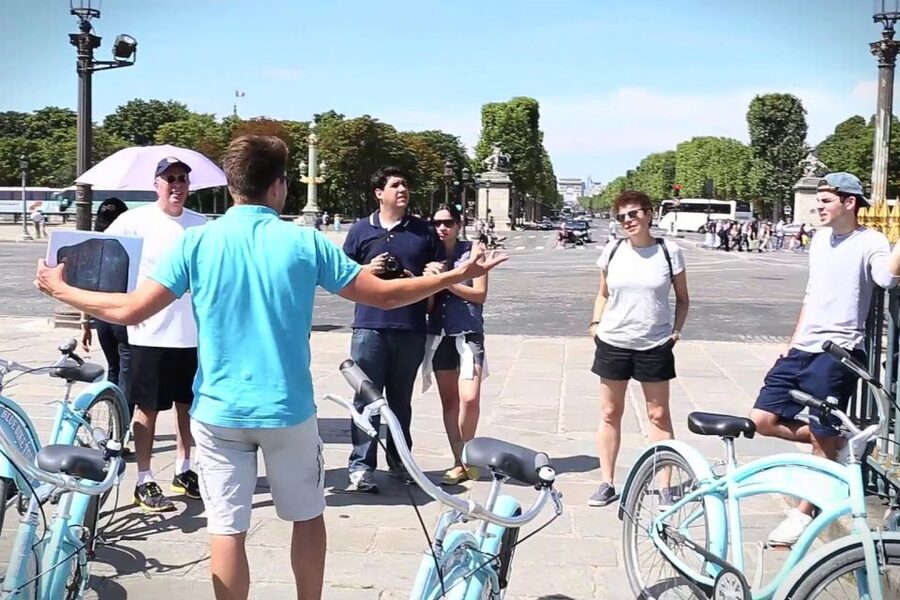
The ride continues past the Grand Palais and onto the Champs-Élysées. These stops show you Paris at its most formal and monumental, with broad avenues and grand buildings rather than intimate lanes.
The Champs-Élysées is not a quiet cycling path. Traffic can be heavy and unpredictable, so you need to watch the road, obey the guide, and avoid drifting away from the group. Several guides have been praised for giving clear instructions and keeping riders together, which is especially helpful here.
At Place de la Concorde, you get a wide view toward the Champs-Élysées and the Arc de Triomphe. The square also helps you understand the scale of the city’s main east-west axis.
The route is not a race. Good guides adjust the pace and make frequent stops. Still, you should be able to ride confidently without constant help. A guide can manage crossings and group movement, but cannot replace basic road awareness.
The Louvre courtyard and a useful shortcut
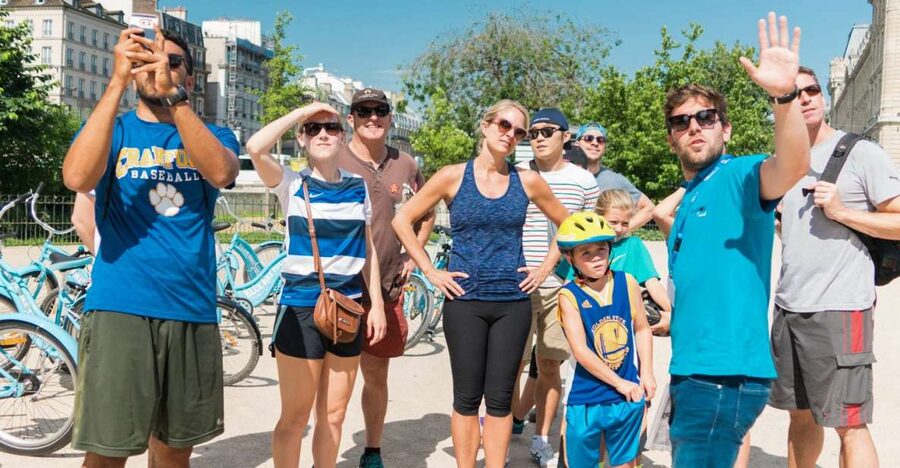
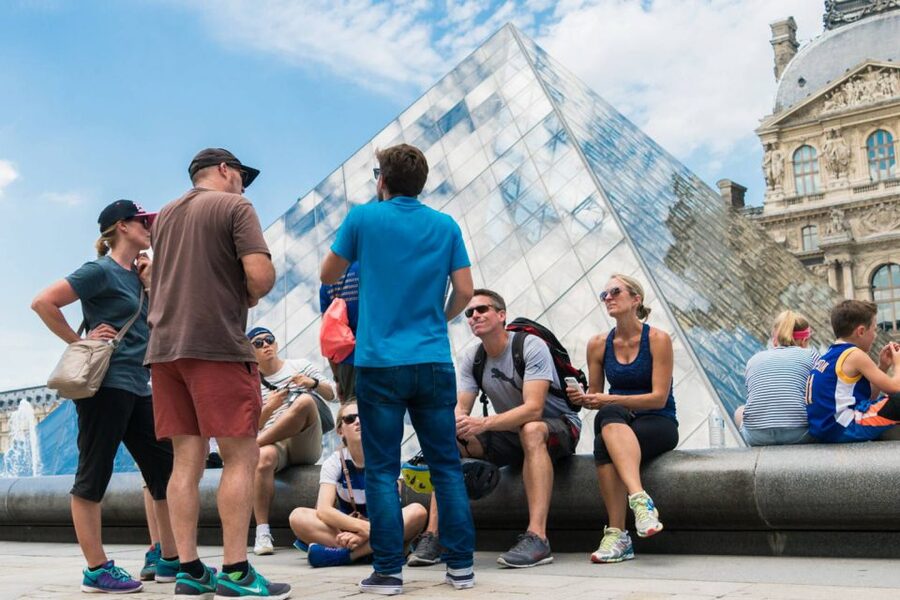
The final major section takes you back toward the Louvre. You ride around the glass pyramids in the courtyard and hear about the museum complex.
This is another outside visit, with roughly 10 minutes for the stop. You will not enter the galleries, so save the Mona Lisa and the rest of the collection for another visit. The guide may explain a shortcut into the Louvre that can save a long wait, a practical tip with real value if you intend to return.
That kind of advice is more useful than a long list of dates. A good guide can help you understand which sights deserve extra time, how to plan your day, and where you can avoid wasting hours in line. Several guides, including Arnold and Vanessa, have been praised for offering recommendations beyond the official stops.
The tour returns to the Saint-Michel area. By then, you have crossed a large portion of central Paris and gained a working map in your head.
The guides make the difference
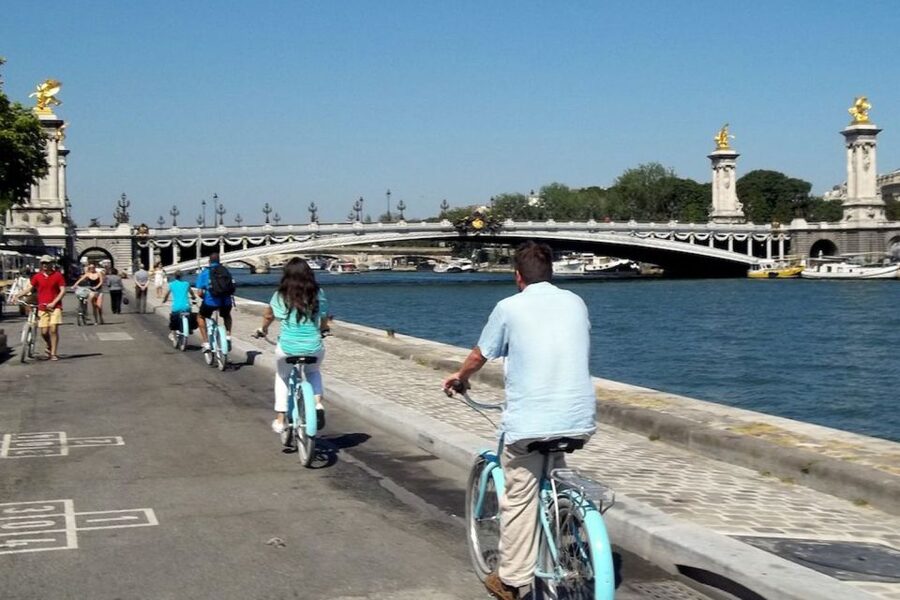
The company uses English-speaking local guides, and the tone varies by person. Joe has been described as funny and warm, while Arnold is known for strong storytelling and even bringing photos to support his explanations. Vanessa, Pierre, Lucien, Thibault, Arnaud, Cecilia, Lena, and others have also led groups.
You should expect short talks rather than formal lectures. The best moments come when a guide answers questions, adds an unplanned stop, or points out an ordinary bit of Paris life. One group paused to watch movers sending furniture through a fifth-floor window because the building’s stairs were too narrow. Small scenes like that can make a city feel more real than another date from a textbook.
Guide volume can be an issue in noisy areas. One rider found it difficult to hear at times when the streets were busy. Stay close during explanations and speak up if you miss something.
The strongest pattern is personal attention. Guides have waited for delayed riders, taken photos, checked on children, and kept groups together. That care matters more than a polished script when you are cycling through an unfamiliar city.
What to wear and how to ride comfortably
Dress for the forecast. In summer, wear light clothing and bring a cap and sunscreen. In winter, use warm layers, gloves, and a scarf. Rain gear is available if the weather turns wet.
Comfortable shoes are essential. You are not racing, but you are pedaling for several hours, with short stops and one longer break. Carry only what you need and secure anything loose.
The route includes roads and cycle paths. You should be a reasonably confident cyclist, not an expert, but you need to control the bike, stop when asked, and keep up with the group. The route is mostly flat, which helps, and the guide sets the pace.
A helmet is included. Quality rain gear, warm gloves, and a scarf are also provided when conditions require them. These extras make the tour more practical in changeable weather, but they do not remove the need to check the forecast before you leave.
Who should book this Paris bike tour?
I would choose this tour early in a Paris visit, especially if I had only one or two days. It gives you a fast look at the main sights and helps you decide which places deserve a longer return visit.
It suits solo visitors, couples, families with active children, and anyone who prefers outdoor sightseeing to long indoor visits. It also works well for people arriving in Paris who want a gentle introduction before tackling the city alone.
I would think twice if you dislike cycling near traffic, tire easily, need frequent private breaks, or want detailed time inside museums. The route passes the Louvre, Orsay, Army Museum, and Notre-Dame, but it does not replace visiting them.
You can cancel for a full refund up to 24 hours before departure, and the reserve-now, pay-later option keeps plans flexible. Check the available start times before booking, since the tour lasts four hours and you will want to fit meals or museum reservations around it.
Should you book it?
Book this tour if you want to see the main Paris landmarks in one active half-day and prefer a local guide to a fixed sightseeing bus. At $53, the combination of bicycle, helmet, guide, safety support, city overview, and Rue Cler stop offers good value.
Skip it if your Paris plan centers on museum interiors or if you want a very slow, quiet ride. For most first-time visitors who can cycle comfortably, this is a practical way to get your bearings, save walking time, and begin the rest of the trip with a clearer sense of the city.
FAQ
Where does the Best of Paris Bike Tour meet?
Meet your guide in front of Fontaine Saint-Michel in central Paris. Look for the guide beside a bright blue bike.
How do I reach the meeting point?
The closest station is Saint-Michel-Notre-Dame, served by Metro line 4 and RER line C. Cluny station on Metro line 10 is also nearby. During summer maintenance, RER line C may not run through central Paris.
How long does the bike tour last?
The tour lasts four hours. Starting times vary, so check availability when booking.
Is the tour conducted in English?
Yes. The tour includes a live English-speaking guide.
Are bikes and helmets included?
Yes. You receive a comfortable aluminum-framed bike and a stylish helmet. The bikes have a single gear and are not electric.
Is food included at the Rue Cler stop?
No. You get about 30 minutes to explore the market and choose local snacks, but food and drinks are not included in the tour price.
Just added around Paris
- Private Paris electric bike ride with video★ 5.0 · 24 reviews
- Paris: 2 hours Emily Tour in a Private Rickshaw bike★ 4.7 · 38 reviews
- Private Secrets of Paris Bike Tour★ 4.5 · 59 reviews
- Private Paris E-bike city highlights tour★ 5.0 · 228 reviews
- Paris Evening Bike Tour with 1-hour Seine River Cruise★ 4.5 · 210 reviews
- Paris: Scenic E-bike tour with optional Seine Cruise★ 4.8 · 97 reviews
- Best of Paris Small Group E-bike Guided tour (w/ optional Cruise)★ 5.0 · 65 reviews
- Paris Evening City of Lights Small Group Bike Tour & Boat Cruise★ 5.0 · 97 reviews
Paris Bike Tours, compared.
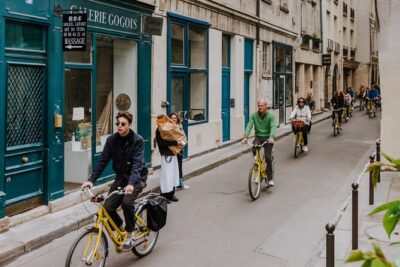
Paris Local Districts and Stories Off the Beaten Track Guided Bike Tour
Read our review →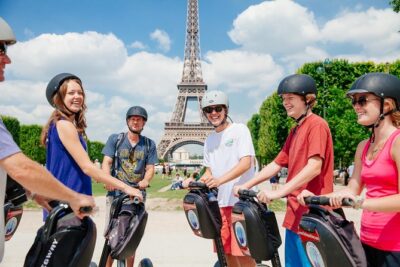
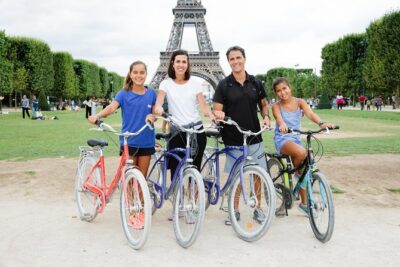
Highlights of Paris Bike Tour w/ a Local Guide (English or Dutch)
Read our review →
Versailles Bike Tour with Market, Gardens & Guided Palace Tour
Read our review →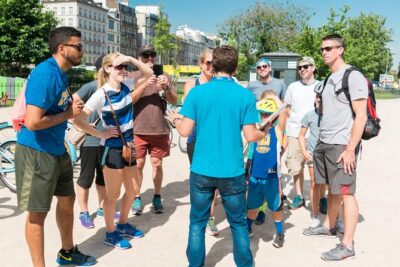
Paris Highlights Bike Tour: Eiffel Tower, Louvre and Notre-Dame
Read our review →Browse the lists this tour appears in