
REVIEW · BARCELONA
Barcelona: 4-Hour Off-the-Beaten-Track Small Group Bike Tour
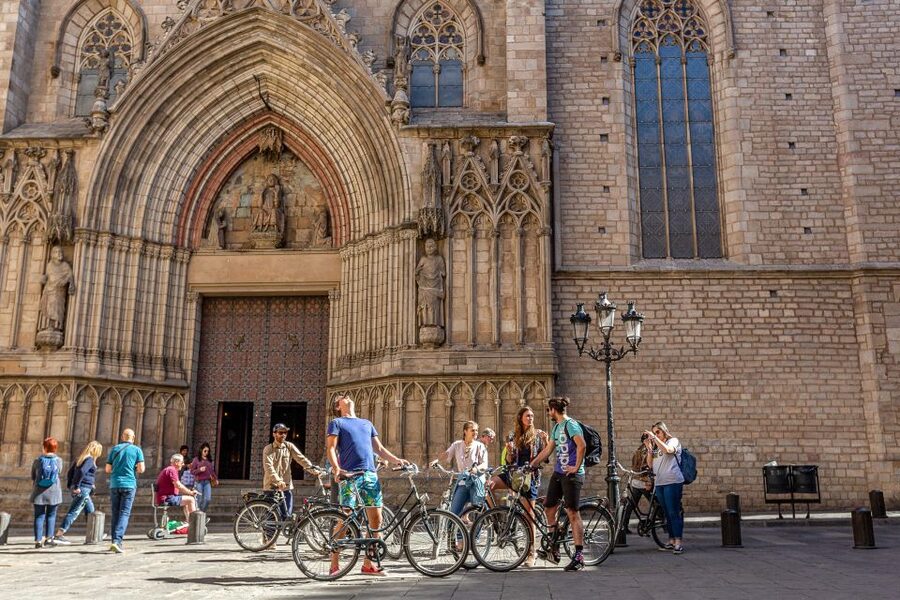
Barcelona’s best stories often sit beyond the famous Modernista façades. This four-hour ride takes you through back streets, bohemian neighborhoods, parks, beaches, and street-art corners, with a local guide filling in the city’s stranger chapters, from medieval brothels to modern social life.
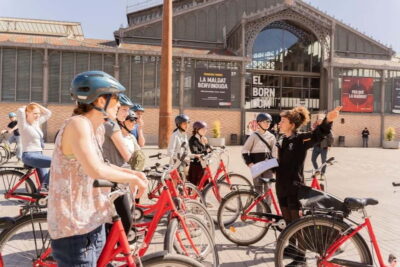
I like the small maximum group of eight, which makes city riding less awkward and gives you real time with guides such as Bella, Ale, Claudia, Julio, and Augustin. I also like the relaxed route: about 10 miles for some riders, mostly flat, with cycle paths, parks, short stops, and time to look around.
The main catch is simple: you need to be comfortable on a bicycle. The route covers a lot of ground, and Barcelona traffic includes cars, scooters, bikes, and crowds. The meeting point inside the Olympic port can also be hard to spot, so allow extra time to find the Business Yacht Club.
Key points to know before you book
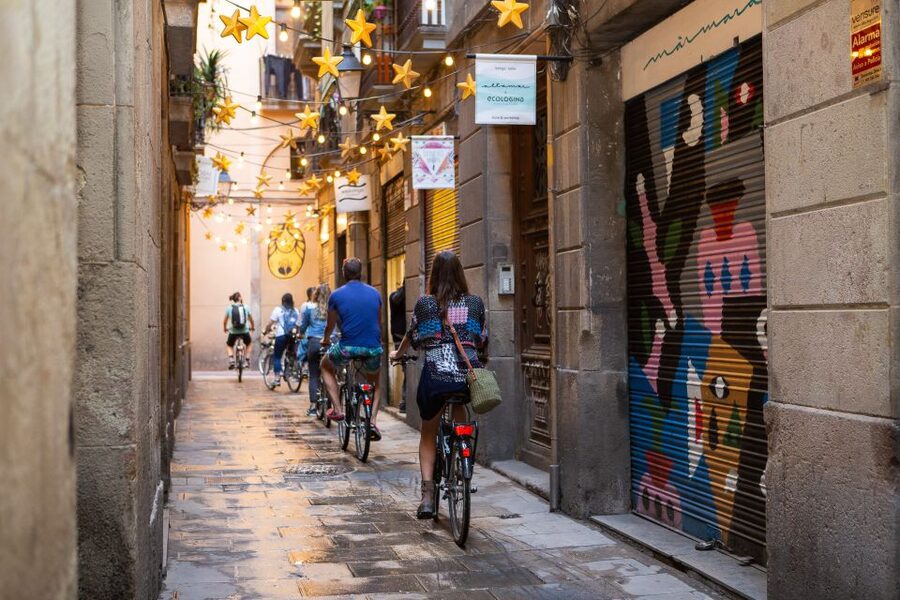
- A four-hour ride through the less-touristy Barcelona: Expect El Born, Raval, Gracia, Eixample, Poblenou, Barceloneta, parks, plazas, and beach areas rather than a checklist of famous monuments.
- A small group of up to eight people: You can hear the guide, ask questions, and move through city streets more easily than with a large cycling group.
- A relaxed, mostly flat route: Some riders cover around 10 miles, with much of the journey on cycle paths and through parks.
- Food stops are part of the experience: You might stop at a market, tapas bar, bodega, or orxateria, but food and drinks cost extra.
- A useful first or second-day activity: Guides offer neighborhood advice and restaurant tips, helping you get your bearings early in your stay.
- English only: The live tour is led in English, with a bicycle, lock, helmet, and child seat available on request.
Why this ride shows you a different Barcelona
Barcelona is easy to reduce to a few famous sights: the Sagrada Família, Park Güell, the Gothic Quarter, and Gaudí’s grand apartment blocks. Those places matter, but they do not explain the whole city. This tour takes a broader view.
You move through neighborhoods where daily life matters as much as architecture. A plaza may carry traces of medieval trade. A wall may serve as a canvas for street art. A former industrial area may now hold parks, towers, cultural spaces, or a beachside promenade.
The route has no fixed list of monuments. That is an advantage if you have already seen the major sights or prefer a city with some surprise in it. Your guide shapes the ride around the group and reveals personal corners of Barcelona rather than delivering the same rigid speech at every stop.
You might hear about old brothels, neighborhood customs, social change, local food, and the city’s relationship with the sea. The point is not to collect photographs of famous buildings. It is to understand how Barcelona grew, changed, and functions today.
A few more bike tours around Barcelona worth a look
- Highlights & Hidden Spots of Barcelona Bike Tour w/ Local Guide
★ 4.5 · 3,009 reviews - Barcelona 3-hour Bike or E-Bike Tour: Highlights and Hidden Gems
★ 5.0 · 1,429 reviews - Barcelona: Private Group Bike Tour
★ 4.8 · 1,420 reviews
The opening ride from the Olympic port
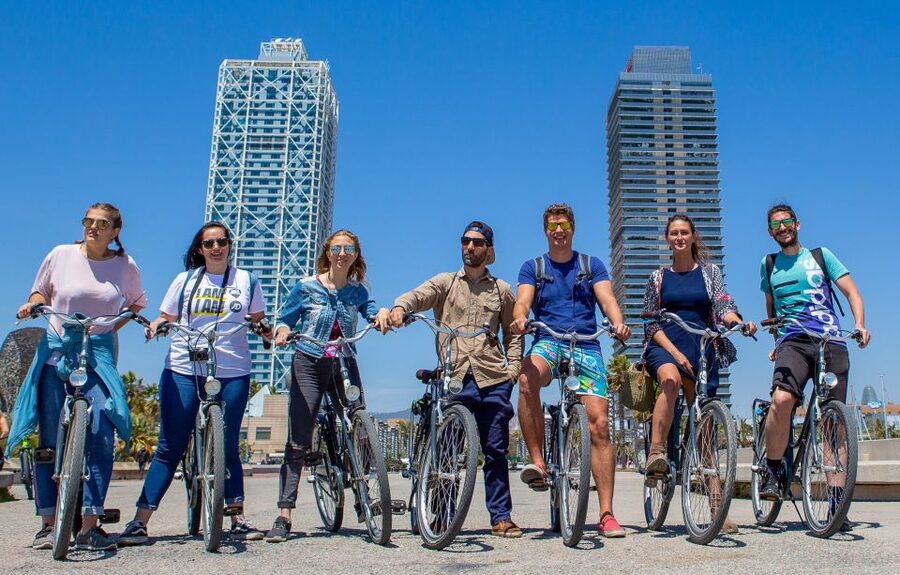
The tour begins at the Business Yacht Club, Space to Sail, on the bottom level inside the Olympic port, next to the boats. When you walk down the stairs into the port, it is the first shop on the right.
This location places you near the water from the start, but it can be confusing to find. One rider specifically found the directions poor and suggested using the casino as a landmark because the business name may not appear clearly on maps. I would arrive early rather than trying to roll in at the last moment.
After collecting your bicycle and lock, you can request a helmet or child seat. The exact bikes are not described, so do not expect a particular style or model. What matters more is that the route is designed for ordinary city riding, with the guide leading through a mix of paths, streets, parks, and public spaces.
The Olympic port is also a practical starting point because the ride can connect the seafront with inner neighborhoods. You get a sense of Barcelona’s coastal side before turning toward the city’s older and more creative districts.
El Born and the older city’s side streets
El Born is one of the likely early neighborhoods, and it gives the ride a useful contrast. The area has medieval lanes, handsome plazas, food spots, cultural venues, and a strong connection to Barcelona’s past, but the tour does not treat it as a quick photo stop.
Here, your guide may point out small details that are easy to miss on foot. A narrow lane can carry a rougher story than its polished storefronts suggest. A quiet corner may reveal how the neighborhood changed from working district to fashionable meeting place.
The route has included the El Born Centre de Cultura i Memòria, the Gothic area, and a coffee stop in Born. These details matter because they show the tour’s rhythm. You are not pedaling nonstop. You ride, stop for a short explanation, look around, and continue before the afternoon becomes tiring.
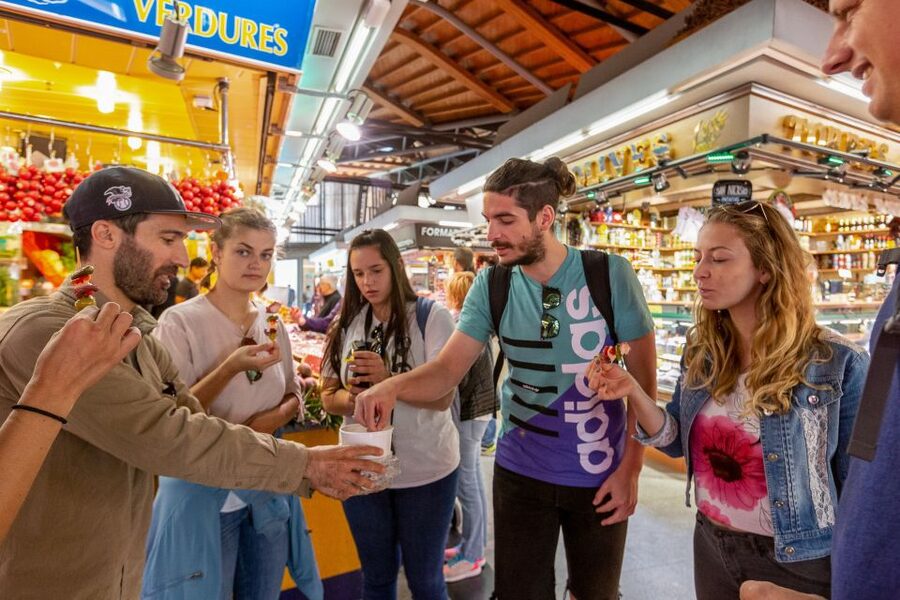
A refreshment stop may happen in this part of town. Depending on the day, it could be coffee, a market snack, tapas, a bodega, or an orxateria. You pay for your own food and drinks, but the stop adds a local pause that a standard sightseeing bus cannot offer.
Raval, Gracia, Eixample, and Poblenou
The tour may also reach Raval, Gracia, Eixample, or Poblenou. Not every ride will necessarily cover every district, since the guide has flexibility and the route can change.
Raval offers a look at a denser, more mixed side of central Barcelona. Street art and local businesses share space with major cultural sites, older lanes, and busy streets. It is a neighborhood where the city feels less polished and more real, which is precisely why it suits this type of tour.
Gracia has a different character, with smaller plazas and a neighborhood feel. Eixample opens up into its famous grid, giving you a clearer sense of the city’s planning and expansion. Poblenou brings the story toward Barcelona’s former industrial side and its newer urban spaces.
You should not expect a full architectural tour of Eixample or a detailed visit inside museums. This is a moving introduction, not a specialist lecture. The value comes from seeing how separate districts connect and hearing why they feel different.
One useful benefit is orientation. A first-time rider described the tour as a way to understand where things are and how Barcelona fits together. That is especially helpful in a city whose streets can look similar at first. After four hours, you should have a better mental map for deciding where to return on foot.
Same city, a different ride:
- Barcelona: 2.5-Hour Bike or E-Bike Historical Tour
★ 4.5 · 1,262 reviews - Barcelona: Sagrada Familia or City Tour by Bike or eBike
★ 4.8 · 928 reviews - Barcelona E-Bike Photography Tour
★ 5.0 · 843 reviews - Barcelona: E-Bike Tour with Montjuic Cable Car & Boat Ride
★ 4.6 · 817 reviews
Parks, plazas, and a ride near the sea
Parks provide natural breaks in a route that covers substantial ground. The ride has included Ciutadella Park, the zoo area, and other urban green spaces. These stops give you room to slow down and listen without competing with heavy traffic.
The pace is not meant to be a race. Several riders described it as easy or gentle, and one estimated about 10 miles with most of the distance flat. The guide may pause for explanations, short rests, and group checks.
That said, 10 miles is still a real ride. You need to be able to pedal for four hours with stops. The tour is not suitable for anyone who cannot ride a bike, and the information does not suggest an electric-bike option.
On a sunny day, the route is likely to include Barcelona’s city beaches. Barceloneta and the seafront bring a completely different mood, with open views, cyclists, walkers, restaurants, and a carnival-like atmosphere. The beach portion can feel lively and fun, but it is also where crowds, scooters, and other bikes may require extra care.
Your guide’s role matters here. Marian was praised for keeping the group safe among people, scooters, cars, and other cyclists. A good city guide does more than point out buildings. They choose safe lines, watch the group, and set a pace that lets everyone stay together.
What the guides add to the experience
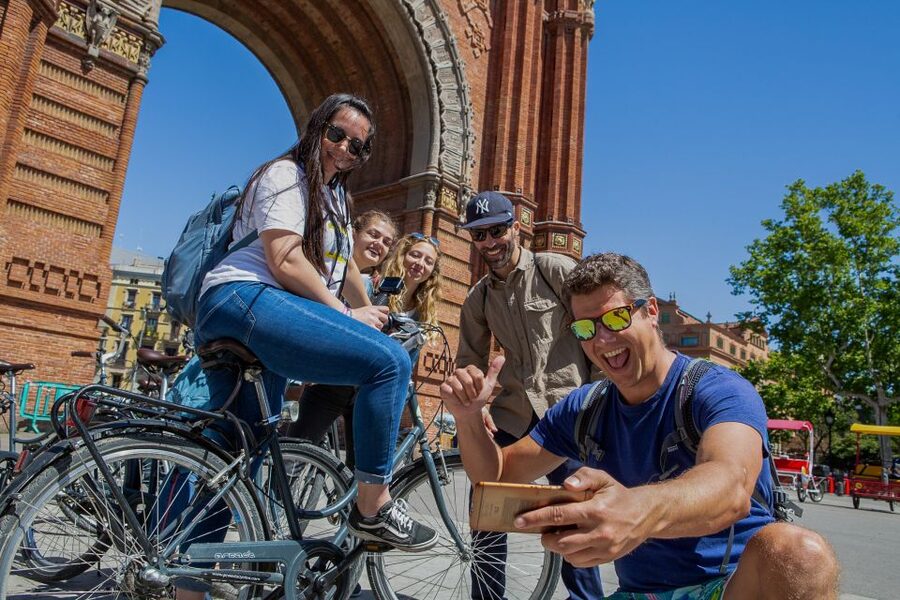
The strongest feature of this tour is the guide. You are not simply following a colored flag through town. You are riding with someone expected to explain the city’s culture, social history, food, and everyday habits.
Claudia has been praised for connecting places with Barcelona’s wider social story. Julio made history a major part of the ride, while Bella is known for a warm, patient approach and practical restaurant advice. Ale has guided riders through the city at a steady pace, with clear English and useful explanations.
Augustin has also led rides described as having a good balance of activity, information, and time near the ocean. Mariana and Marian have received similar praise for warmth, safety, and enthusiasm. Guide assignments can change, so you cannot book a particular person based on the names above.
The small group helps the conversation. With no more than eight riders plus the guide, you can ask about a restaurant, a neighborhood, a museum, or something you just passed. In a larger group, those questions often disappear. Here, the guide can usually respond without stopping the whole afternoon.
I would take notes on restaurant and nightlife suggestions. One guide recommended a jazz bar and restaurant in Born, while others offered tips for the rest of a first visit. Those small recommendations can be more useful than another list of famous sights.
Food stops, with a practical warning
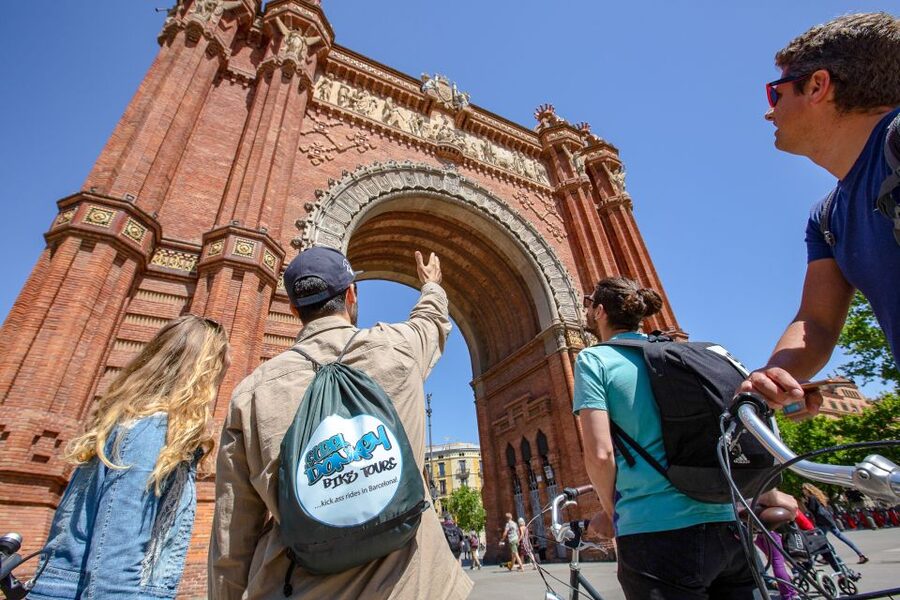
The tour includes at least one refreshment stop, and sometimes two. The setting may be a local food market, tapas bar, bodega, or orxateria. You may also stop at a street-food kiosk.
This is one of the nicest parts of the design because food gives you a quick connection to local routines. You can ask what people order, how a neighborhood eats, or which treats are typical. An orxateria, for example, offers a chance to try a style of refreshment that is different from the usual café stop.
Food and drinks are not included in the $46 price. That is not a surprise, but budget a little extra if you want to join the stop rather than simply wait outside.
The timing of the stop can also vary. If you need a full meal, do not assume this activity replaces lunch. Think of it as a short break and a chance to sample something, followed by more riding.
Is $46 a fair price?
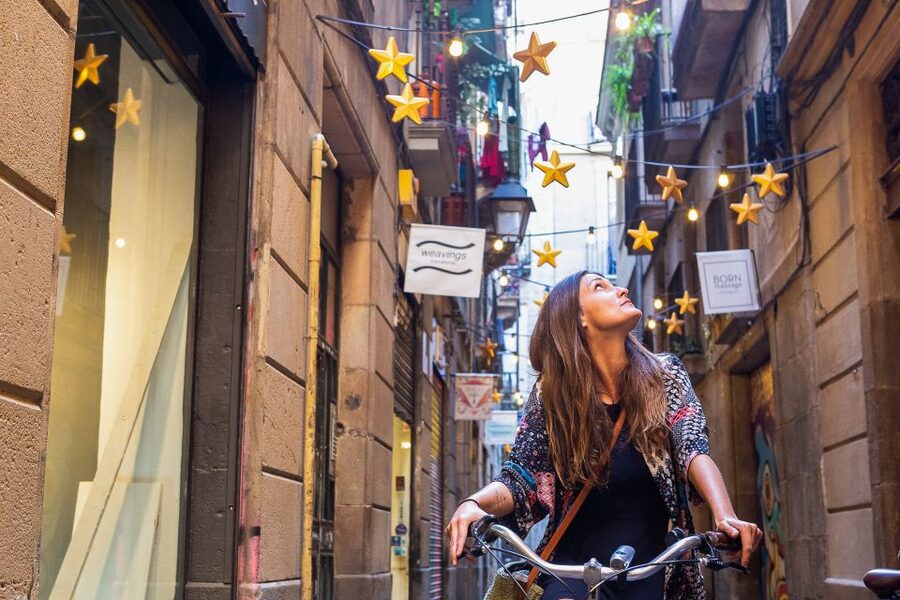
At $46 per person, the tour is reasonably priced for four hours with a bicycle, lock, local English-speaking guide, and a small group capped at eight. You are paying for both transportation and interpretation, which makes the price stronger than a basic bike rental.
The value is highest if you want orientation and local context. In four hours, you can cover much more ground than on foot and still stop often enough to hear the stories. You also avoid spending money on taxis between districts.
It is less useful if your only goal is to see Barcelona’s headline monuments. The tour does not focus on the Sagrada Família, and it is not built around the standard Modernista circuit. You can see key highlights near the route, but the emphasis is on overlooked streets, neighborhoods, beaches, and urban life.
For many people, I would schedule it early in the stay. The ride gives you a working map of the city, and the food advice can guide the rest of your visit. If you book it on your last day, you can still have a fine outing, but you lose the chance to use those suggestions.
Weather, fitness, and group comfort
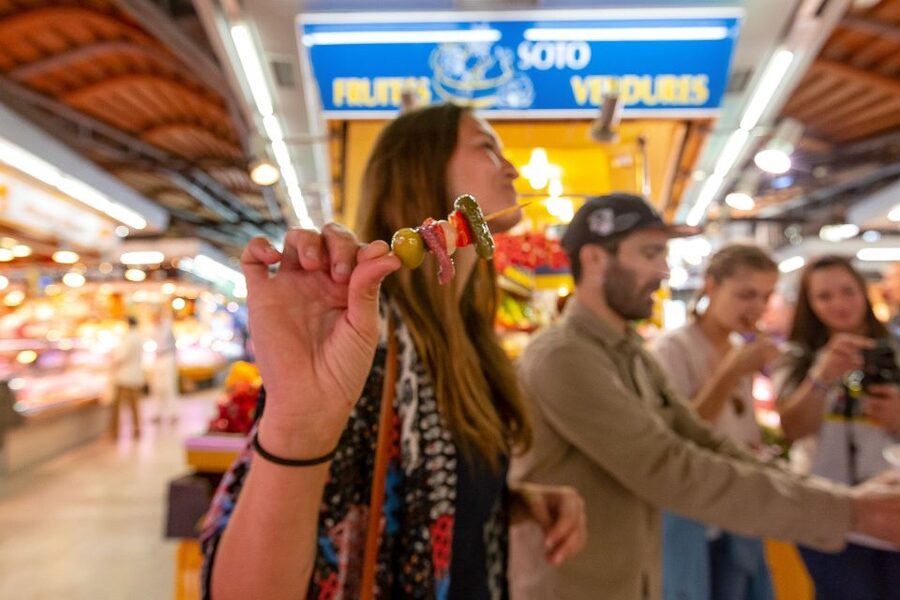
The ride operates in most weather, including light rain. Heavy rain can cancel the tour, with a full refund offered. Barcelona’s weather can change the feel of a bicycle outing, so bring suitable clothing if the forecast looks uncertain.
You should be comfortable starting, stopping, turning, and riding in a city. The route is mostly flat, but flat does not mean effortless. Four hours and roughly 10 miles can be tiring, especially in hot weather or if you have not ridden recently.
The group size is one of the tour’s practical strengths. Eight riders is small enough for the guide to keep track of everyone, but large enough to give the ride some social energy. Solo riders should find it easier to join in, since the guide has more chance to include each person.
The tour is offered in English only. If you want a Catalan, Spanish, or multilingual experience, this is not the right choice based on the available details.
Who should book this Barcelona bike tour?
I would book this if you want a real sense of the city’s layout, enjoy light exercise, and prefer local stories over a fixed monument checklist. It works especially well for first-time visitors on day one or two, since the route introduces several districts and provides ideas for later.
It also suits repeat visitors who have already seen the Sagrada Família and Gothic Quarter. The changing route, street art, food stops, and neighborhood focus give you a reason to return to Barcelona without repeating the usual circuit.
Families may appreciate the child seat available on request, but every rider needs to be comfortable with city cycling. People seeking a slow walking tour, a fully indoor activity, or a guaranteed visit to one specific monument should choose something else.
Should you book it?
Book this tour if you want to cover a lot of Barcelona without spending four hours on the standard sightseeing route. The strongest reasons are the small group, relaxed pace, practical neighborhood advice, and guides who explain social life as well as monuments.
Skip it if you cannot ride a bicycle, dislike traffic, or need a fixed itinerary. Otherwise, $46 buys a useful and active introduction to Barcelona, with enough flexibility to feel personal rather than mass-produced.
FAQ
How long is the Barcelona off-the-beaten-track bike tour?
The tour lasts four hours.
How many people can join the small group?
The group is limited to eight participants, plus the guide.
What language is the tour offered in?
The live tour is offered in English.
Does the tour visit the Sagrada Família?
The tour does not focus on the Sagrada Família. Its emphasis is on lesser-visited neighborhoods, back streets, parks, beaches, street art, and local areas.
Which Barcelona neighborhoods may be included?
The route may include El Born, Raval, Gracia, Eixample, Poblenou, Barceloneta, and the Gothic area. The route does not follow one fixed itinerary.
Are food and drinks included?
No. The tour includes at least one refreshment stop, and sometimes two, but you pay separately for food and drinks.
What equipment is provided?
A bicycle and lock are included. A helmet and child seat are available upon request.
Can I join if I cannot ride a bike?
No. The activity is not suitable for people who cannot ride a bicycle.
What happens if it rains?
The tour runs in most weather, including light rain. Heavy rain may lead to cancellation, with a full refund offered.
Just added around Barcelona
- Barcelona: Bike Rental for 2 – 24 Hours★ 4.7 · 33 reviews
- Barcelona: 3-Hour Bike Tour with Spanish Tapas★ 4.9 · 14 reviews
- Barcelona: Private 5 Neighborhoods Tour by Electric Bike★ 4.9 · 17 reviews
- Barcelona: 4-Hour E-Bike Photography Tour★ 4.8 · 36 reviews
- Barcelona: 3.5-Hour Street Art Tour by Bamboo Bike★ 5.0 · 56 reviews
- Barcelona Beach 3-Hour Bike Tour★ 4.8 · 65 reviews
- Barcelona: 3-Hour Montjuic Mountain E-Bike Guided Tour★ 4.8 · 16 reviews
- Barcelona: Gaudi Guided E-Bike Tour★ 4.8 · 17 reviews
Barcelona Bike Tours, compared.
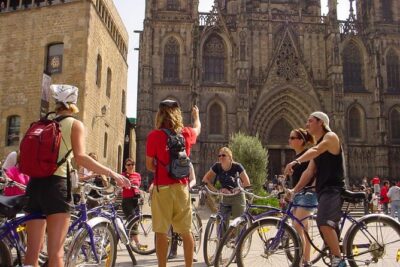
Highlights & Hidden Spots of Barcelona Bike Tour w/ Local Guide
Read our review →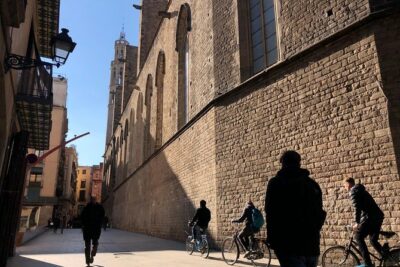
Barcelona 3-hour Bike or E-Bike Tour: Highlights and Hidden Gems
Read our review →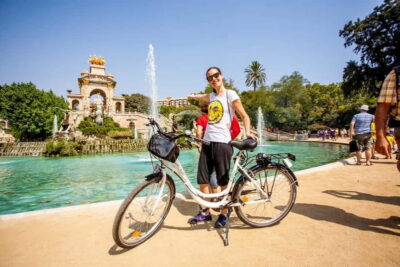
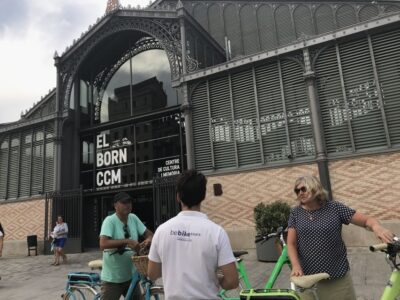
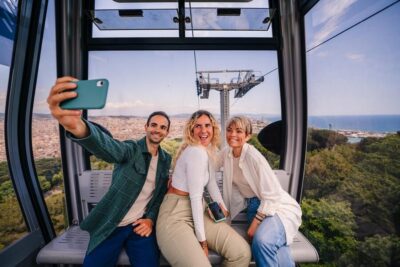
E-Bike Tour with Montjuic Cable Car & Boat Ride
Read our review →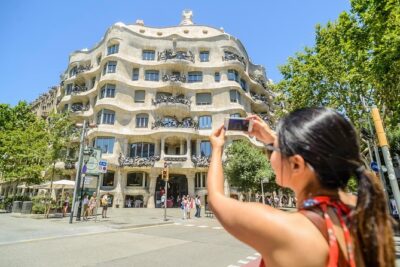
Barcelona e-Bike Tour: Gaudí & Old Town Small Group
Read our review →Browse the lists this tour appears in