
REVIEW · CHIANG MAI
Colors of Chiang Mai Guided Bicycle Tour
The best part of the Colors of Chiang Mai Bicycle Tour is how quickly it leaves the city’s main roads behind. You pedal through green lanes, village settlements, rice fields, fruit orchards, and riverside neighborhoods before reaching the old Lanna site of Wiang Kum Kam. It is Chiang Mai seen at ground level, with time to notice what passes by.
I like the easy pace and the guides’ careful handling of traffic crossings. I also like the human side of the route: women making Thai products, temple visits with Buddhist explanations, a local market, and a freshly prepared bowl of Khao Soi Kai. The main consideration is distance. Twenty to 25 kilometers over about four and a half hours is manageable for many people, but it is still a real bike ride, not a quick city spin.
Key points at a glance

- A quiet 20 to 25 kilometer route: Most riding follows calm lanes and green roads rather than busy city streets.
- A personal view of Buddhism: Guides such as Wit, a former monk, have explained temple customs from direct experience.
- The Ping River and local countryside: Rice fields, orchards, village roads, and riverside life give you a look beyond central Chiang Mai.
- Wiang Kum Kam ruins: Visit the former Lanna capital, founded in 1286, including old temples and a Chedi dating back about 700 years.
- Food is part of the ride: The tour includes water or soft drinks and a Thai snack or meal, often Khao Soi Kai at a local restaurant.
- Good support for cautious cyclists: Guides use clear hand signals and help you through the few busier road crossings.
Leaving Chiang Mai on two wheels

This half-day outing covers about 20 to 25 kilometers in 270 minutes. That sounds like a lot on paper, but the route is generally taken at a relaxed pace, with stops for temples, food, photographs, local life, and short rests.
The first useful surprise is how quickly the surroundings change. Instead of spending the morning threading through central traffic, you move along quieter roads through local communities. The route has a rural feel without requiring a long transfer out of Chiang Mai.
The ride is not completely traffic-free. You may need to cross busier roads, and this is where the guide matters. Guides have used clear hand signals, positioned themselves to help groups cross safely, and adjusted the pace for people who are not regular cyclists. If busy roads make you nervous, tell the guide early. The few more stressful sections can then be handled calmly.
The bicycles and helmets are provided. Water or soft drinks are included, along with insurance. You should still wear practical clothing, bring sun protection, and arrive at the meeting point five to 10 minutes before departure.
More Guided Tours in Chiang Mai:
- Chiang Mai Countryside Guided Bike Tour
★ 5.0 · 153 reviews - Half-day E-bike Nam Phrae (hilly, fully paved roads, GUIDED)
★ 5.0 · 122 reviews - Half-day E-bike Countryside and rice paddies (flat land, GUIDED)
★ 4.5 · 94 reviews
Green lanes, rice fields, and village work
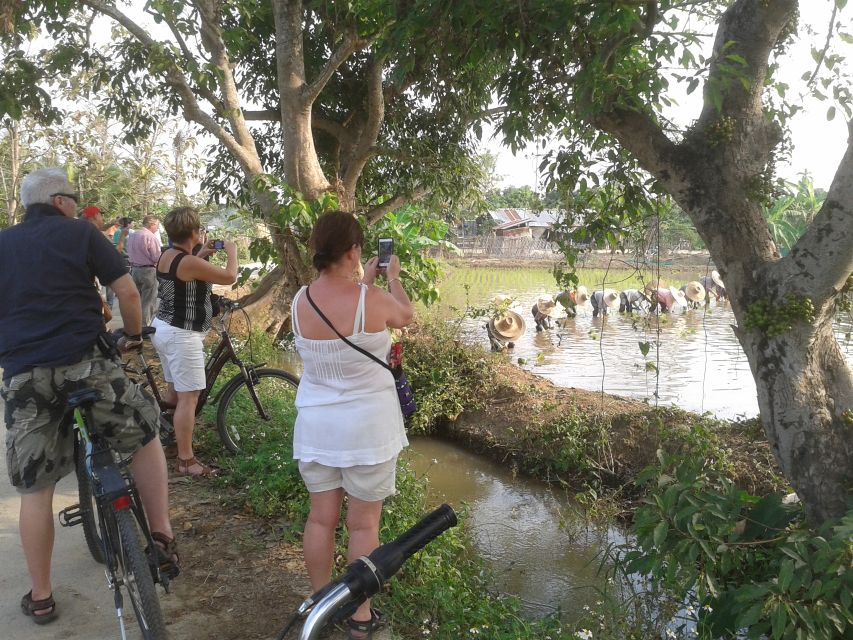
The early part of the route is about ordinary Chiang Mai life rather than famous sights. You pass local communities on narrow, leafy roads and see how quickly housing, small workshops, gardens, and open farmland can blend together.
The rice fields are one of the most appealing parts of the ride, especially for anyone who has spent time only in the old city. Fruit orchards add more color and shade, though the operator can change this part of the route when crops are not in blossom. That seasonal note matters. You should expect the countryside, but not assume that every field or orchard will look the same throughout the year.
A stop to see women from a local village making traditional Thai products gives the ride a useful human focus. This is not just scenery viewed from a saddle. You get a chance to see local skills and small-scale production close up, with your guide explaining what you are seeing.
The route has also included places such as a public school, a pottery-making site, and a coffee-roasting stop. These details can vary, since local shops, schools, and community activities may close on weekends, school holidays, or national holidays. Still, the basic idea remains consistent: the tour aims to show working communities, not just postcard sights.
Temples with room to ask questions

A temple stop gives the tour more substance than a simple countryside ride. Your English-speaking guide explains the temple and introduces Buddhist traditions, so you can ask questions instead of trying to decode every detail on your own.
Wit, also spelled Wee or Weet in different accounts, has worked as a guide and spent six years as a monk. If he is leading your ride, he can add personal context when you visit temples. Other guides, including Dong, Koi, and Wichan, have also been praised for knowing the route well and keeping the group comfortable.
The value here is not just the temple itself. A guide can explain how a place fits into daily religious life and local customs. That helps you notice details you might otherwise pass without understanding.
Remember that this is a bicycle tour with several stops, not a dedicated temple tour. You will not spend the entire morning studying one complex. Instead, the temple visit works as one part of a wider picture that includes food, work, farming, riverside life, and old ruins.
A market stop and a proper northern Thai lunch
At some point, the route pauses for a snack or fresh fruit at a local market. A market is a useful stop because it gives you a chance to see what people buy and eat in the area, rather than simply being handed a packaged snack.
The market schedule is not fixed every day. One Saturday ride included a market that was not operating on other days, so treat this as a possible highlight rather than a promise of a full market visit. If the market is closed, the operator may adjust the stop.
Food is one of the strongest parts of the experience. The tour includes a Thai snack or small meal, and several rides have included Khao Soi Kai at a local restaurant. This northern Thai dish combines noodles, curry, and chicken, and it makes a satisfying break after several hours in the saddle.
You may also stop for coffee, ice cream, or another local bite depending on the guide and the day. The exact food sequence can change, but you should not need to plan a separate lunch immediately after the tour. Personal expenses are not included, so carry some money if you want extra food or drinks.
A few more bike tours around Chiang Mai worth a look
- Chiang Mai: Historic Old City Bike Tour – Morning or Night
★ 4.7 · 263 reviews - Chiang mai Hike & Downhill Bike Adventure –Suthep National Park
★ 4.5 · 204 reviews - Chiang Mai: Historic Old City Bike Tour – Morning or Night
★ 5.0 · 202 reviews - From Chiang Mai: Mae Taeng Valley and Waterfalls Cycle Tour
★ 4.9 · 159 reviews
Following the Ping River

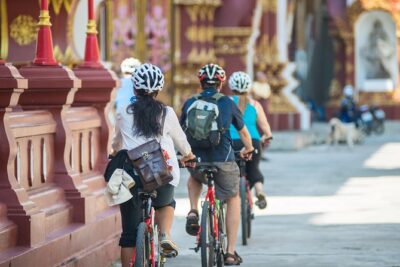
The ride along the Ping River gives you a different view of Chiang Mai. The river is not treated as a grand sightseeing stop. Instead, it forms part of the route, allowing you to ride beside local neighborhoods and absorb the quieter pace of life near the water.
I like this section because cycling keeps you close to small details. You can pause for a photograph, notice homes and trees along the route, and see how the river connects different parts of the area. A vehicle would carry you through too quickly, while walking would make the full route impractical in one morning.
The Ping River section also helps link the modern city with the older settlements beyond it. You are not simply ticking off separate attractions. The ride shows how countryside, river communities, and old Lanna sites sit near present-day Chiang Mai.
Wiang Kum Kam and the old Lanna capital
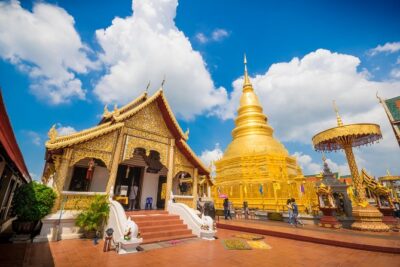
The final major section reaches Wiang Kum Kam, a historic settlement founded by King Mengrai in 1286. It served as the capital of the Lanna empire for only about ten years before the center of power moved elsewhere.
Today, the area contains temples and ruins dating back hundreds of years. The tour gives you time to stop, photograph the remains, and hear the story from your guide. The setting is more spread out than a single temple complex, which makes arriving by bicycle especially fitting.
The old Chedi is a key sight. At about 700 years old, it provides a strong link to the period when northern Thailand was developing its own Lanna identity. You will not get the same concentrated monument experience as at Chiang Mai’s best-known temples, but you do get a broader sense of an old settlement scattered through a living area.
That mix is important. Wiang Kum Kam is not presented as an isolated archaeological display. You reach it through ordinary roads and communities, then return to the starting point by bicycle. The contrast between old stonework and present-day life is one of the tour’s best features.
How hard is the ride?

The ride is described as easy to moderate in feel, with a mostly relaxed pace and many pauses. People who do not consider themselves keen cyclists have completed it comfortably, but you should still be honest about your fitness and comfort on a bicycle.
The distance is the main factor. Twenty kilometers can pass quickly when the route is flat and broken up by stops, but it remains more demanding than a short urban rental. Expect to spend about three to four hours cycling within the total 270-minute tour.
The guide’s approach makes a difference. Guides have been praised for patience, clear signals, safe crossings, and adjusting the speed to the group. If you are worried about traffic, the route’s quieter roads should help, though no bicycle tour in or around Chiang Mai can guarantee that every section will be free of cars.
Comfortable bikes and helmets are included. You should bring water if you prefer to have your own supply, though drinks are provided during the excursion. Light clothing, closed shoes, sunscreen, and a hat are sensible choices.
Group size, timing, and changing stops

The tour is available as a private outing or in a small group. A private ride gives you more control over pace and questions, while a small group can make the meal and stops feel more social.
Solo visitors are welcome to reserve, but the tour needs at least two participants to operate. If that minimum is not reached, the operator may offer another date, time, or tour, or cancel the booking.
The itinerary can shift for practical reasons. Rice fields and fruit orchards do not look the same year-round, and schools or local shops may close during weekends, holidays, and national holidays. This is worth accepting as part of a community-based route. The benefit is a more local experience, but the trade-off is less certainty about every stop.
The meeting point is the operator’s place, and you should arrive five to 10 minutes before departure. Starting times depend on availability. English and Thai are the available guide languages.
Is $38 a fair price?
At $38 per person, the tour offers good value if you want more than a bicycle and a map. The price includes the bicycle, helmet, English-speaking guide, food or snack, drinks, insurance, and the full half-day route.
A self-guided ride might cost less, but it would not give you the same help with traffic, temple customs, local production, or the history of Wiang Kum Kam. You would also need to arrange your own food and decide which rural roads are practical.
The strongest value comes from the guide. Names such as Wee, Wit, Dong, Koi, and Wichan appear among the people who have led this route, and the best guides do more than point out sights. They answer questions, explain local traditions, keep the group safe, and sometimes help arrange transport back into the city if returning by bicycle or public transport becomes difficult.
Transport back is not listed as a standard inclusion, so do not assume it is covered. One group was helped with a tuk-tuk return at 50 baht per person, but that should be treated as an example of practical assistance rather than a guaranteed service.
Who should book this ride?
I would choose this tour if you want to see Chiang Mai beyond the old city without giving up comfort or guidance. It suits people who enjoy gentle exercise, local food, small cultural stops, and a mixture of countryside and history.
It is especially useful for:
- First-time visitors who want an overview of life outside central Chiang Mai
- Solo visitors who want a guided activity but are happy to join a small group
- Couples and families comfortable with a 20 to 25 kilometer ride
- Cyclists who prefer quiet roads over busy urban streets
- Anyone curious about Buddhism, village crafts, northern Thai food, and Lanna history
I would think twice if you dislike cycling, struggle with several hours outdoors, or want a tightly fixed sightseeing schedule. The route can change, some roads carry traffic, and the countryside stops depend partly on the season and local opening hours.
Cancellation is free up to 24 hours before the activity for a full refund, and you can reserve now and pay later. Those policies make it easier to keep the ride in your plans while you sort out the rest of your Chiang Mai schedule.
Should you book the Colors of Chiang Mai ride?
Book it if you want a calm, active morning that connects several parts of Chiang Mai: village work, Buddhist temples, local food, the Ping River, rice fields, and the remains of Wiang Kum Kam.
The ride’s biggest strengths are its quiet roads, careful guides, and personal explanations. Its main limits are the 20 to 25 kilometer distance and the fact that some stops depend on season, day, and local opening times. For $38, that is a reasonable trade if you value local context and do not mind a few itinerary changes.
FAQ
How long is the Colors of Chiang Mai Bicycle Tour?
The tour lasts 270 minutes, or about four and a half hours.
How far do you cycle?
The route covers approximately 20 to 25 kilometers.
What places does the tour visit?
The route includes quiet land roads, local communities, rice fields, fruit orchards, the Ping River, temples, and the historic settlement of Wiang Kum Kam. The tour also includes a visit to a Chedi about 700 years old.
Is food included?
Yes. The tour includes a Thai meal or snack, and the ride may include Khao Soi Kai at a local restaurant, fresh fruit, coffee, or ice cream depending on the day.
Are drinks included?
Yes. Water or soft drinks are provided during the excursion.
Are bicycles and helmets provided?
Yes. A bicycle and bicycle helmet are included in the price.
What languages do the guides speak?
Guides are available in English and Thai.
Can solo visitors join?
Solo visitors are welcome, but the tour operates only when at least two participants are booked.
Can I cancel the booking?
Yes. You can cancel up to 24 hours before the tour for a full refund. You can also reserve and pay later.
Just added around Chiang Mai
- Buffalo Soldier Trail Mountain Biking Tour from Chiang Mai with Lunch★ 5.0 · 15 reviews
- Rural Explorer Mountain Biking Tour Chiang Mai★ 5.0 · 55 reviews
- Sticky Waterfall Cycling Tour★ 5.0 · 68 reviews
- Smoke on the Water Trail Mountain Biking Tour Chiang Mai★ 5.0 · 47 reviews
- Stairway to Heaven Trail Mountain Biking Tour Chiang Mai★ 5.0 · 12 reviews
- Half-day E-bike Nam Phrae (hilly, fully paved roads, GUIDED)★ 5.0 · 122 reviews
- Full-Day Hike and Bike Tour from Chiang Mai★ 5.0 · 14 reviews
- LIFECYCLING – Half Day City Bike Tour★ 5.0 · 68 reviews
Chiang Mai Bike Tours, compared.
Chiang mai Hike & Downhill Bike Adventure –Suthep National Park
Read our review →
Suthep National Park Hiking & DH Mountain Biking
Read our review →
Half-day E-bike Nam Phrae (hilly, fully paved roads, GUIDED)
Read our review →Browse the lists this tour appears in