
REVIEW · SEVILLE
Seville Highlights Bike Tour (English)
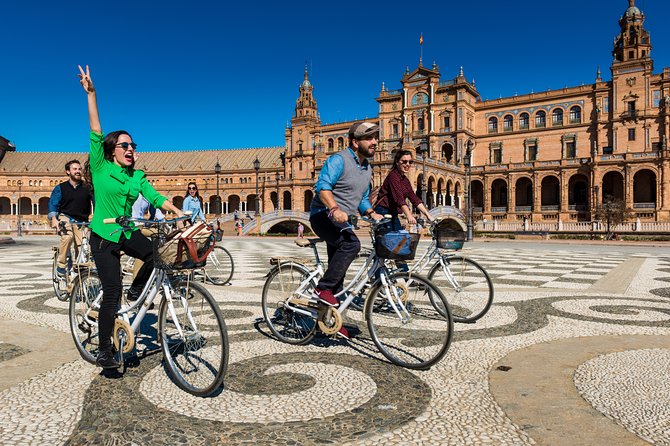
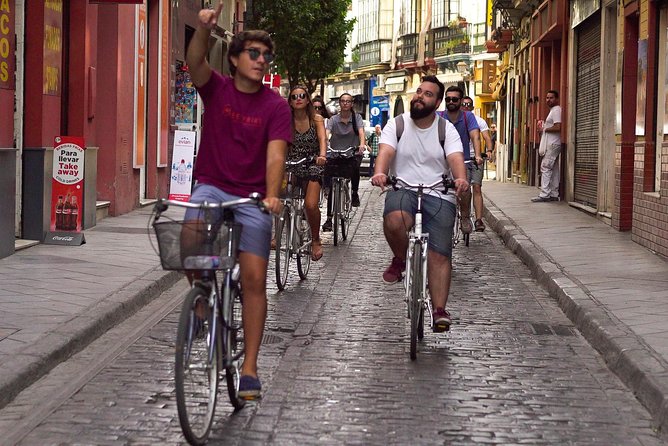
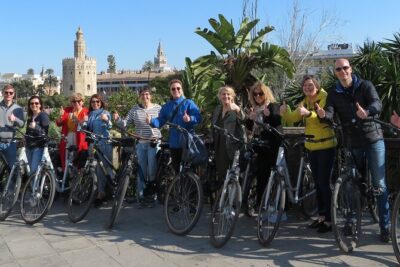
Seville reveals itself best at street level, and this three-hour ride covers a remarkable amount of ground. You pedal from the cathedral and Alcázar through Santa Cruz, Triana, María Luisa Park, and Plaza de España, with plenty of stops for photos and short explanations. It is a fast, pleasant way to get your bearings early.
I like the relaxed pace and the mix of grand sights with everyday Seville. I also like the guides’ personal touch: Laura, Daniel, Marta, Ivan, and Mario are singled out for clear English, humor, local history, and useful tapas and flamenco tips. The main tradeoff is simple: most stops are exterior visits, so you will need separate tickets and time if you want to tour the cathedral or Alcázar inside.
Key points at a glance
- A smart first-day orientation: Cover central Seville by bike before deciding where to spend more time on foot.
- Twelve varied stops: The route links royal architecture, medieval lanes, a former tobacco factory, river landmarks, and grand exhibition grounds.
- Easy, supported cycling: A bike, helmet, basket, insurance, and a map are included, with an e-bike upgrade available.
- Small-group format: The maximum group size is 15, allowing more room for questions and guide attention.
- Strong guide-led experience: Guides including Laura, Daniel, Marta, Ivan, Mario, Natalia, Marco, and Daniel are praised for history, humor, and local advice.
- Weather matters: The tour requires good weather, though a new date or full refund is offered if poor conditions cause cancellation.
Why a bike is ideal for seeing Seville
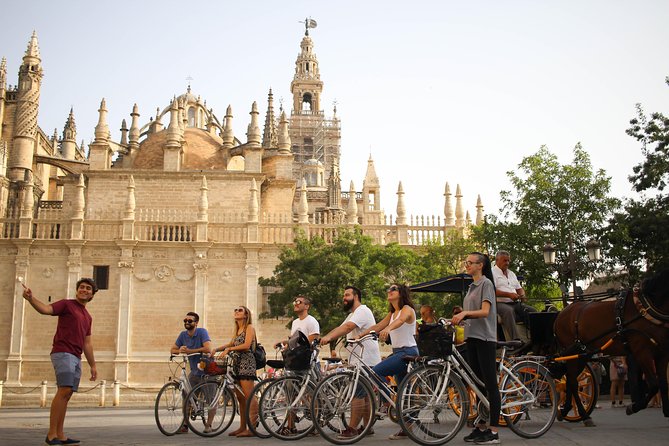
Seville’s center is packed with sights, but they are spread across several distinct areas. Walking between the cathedral, Triana, Plaza de España, and María Luisa Park can take time, especially in warm weather. A bike lets you connect these places without turning the day into a long march.
The pace is designed for sightseeing rather than exercise. You stop often, listen to the guide, take pictures, and then ride on. The route is also useful because it gives you a practical sense of the city’s shape. After three hours, you will know where the old center ends, where the river runs, and how Triana relates to the cathedral quarter.
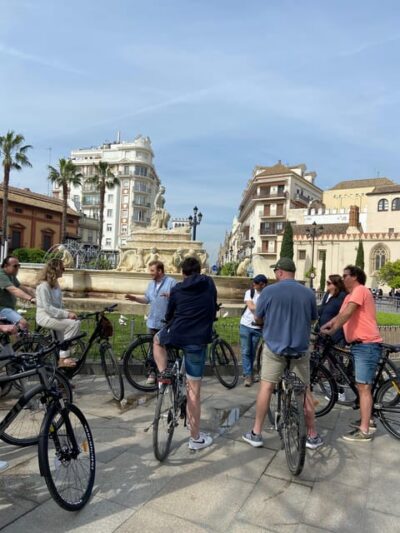
The group limit of 15 is a helpful middle ground. You get the social feel of a group ride without the size of a city tour that can become hard to hear. A support rider at the back has also been noted as part of the setup, which can make a group ride feel more orderly.
More City Bike Tours in Spain
- Highlights & Hidden Spots of Barcelona Bike Tour w/ Local Guide
★ 4.5 · 3,009 reviews - Valencia: City Highlights Guided Bike Tour
★ 4.7 · 2,373 reviews - Seville: Highlights City Bike Tour
★ 4.8 · 2,168 reviews
Meeting at Mercado del Arenal
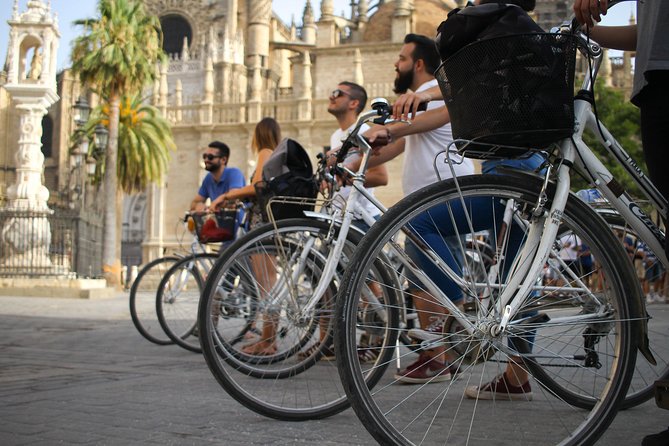
The tour begins at SeeByBike in Mercado del Arenal on Calle Pastor y Landero, in the old center. The meeting point is near public transportation, and the activity returns there at the end. Hotel pickup and drop-off are not included, so you need to make your own way to the market.
Allow a few minutes at the start for bike pickup and a short test ride. One account describes the beginning as busy, but also notes a test ride, water, a friendly guide, and an easy pace. That small check is worth taking seriously. Adjust the saddle, test the brakes, and make sure the basket and helmet feel comfortable before the group leaves.
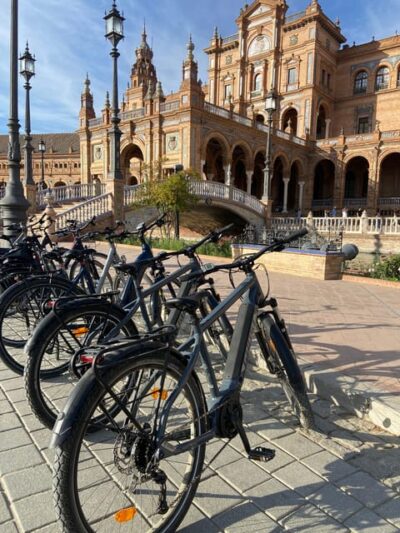
Standard bikes and helmets are included. An e-bike upgrade is available if you prefer extra help, have concerns about the heat, or simply want to save energy for sightseeing afterward. The tour is suitable for most people, but children must be accompanied by an adult.
Cathedral, Giralda, and the medieval quarter
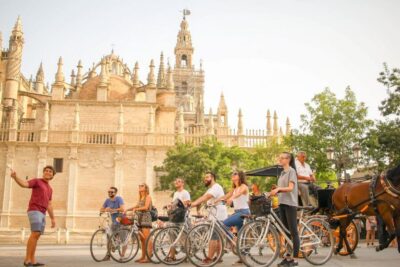
The first major stop is the exterior of Seville Cathedral, one of the largest Gothic cathedrals in the world. Fifteen minutes is enough to understand its scale and hear the key story, but not enough for an interior visit. If you want to see the tomb of Christopher Columbus, the chapels, and the great interior spaces, plan a separate visit.
Nearby, the Giralda gives the city one of its most recognizable profiles. The tower began as the minaret of Seville’s Great Mosque during the period of al-Andalus and later became the cathedral bell tower. That change is one of the clearest examples of Seville’s layers of Islamic, Christian, and later European architecture.
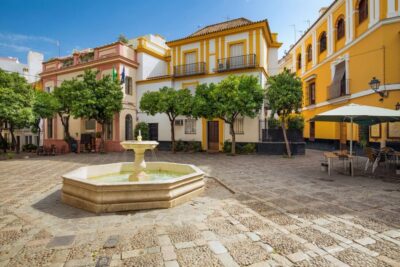
The ride then enters Barrio Santa Cruz, the former Jewish quarter and one of Seville’s oldest districts. Its narrow lanes, small squares, and shaded corners are better appreciated at a slow pace than from a tour bus. Fifteen minutes will give you a useful introduction, though you should return on foot if you want to wander without a schedule.
This early section is especially good for first-time visitors. You get the main facts, but you also learn how the old center fits together. Guides such as Daniel, Marta, and Laura have been praised for making the history clear without piling on too many dates.
The Alcázar and the Torre del Oro
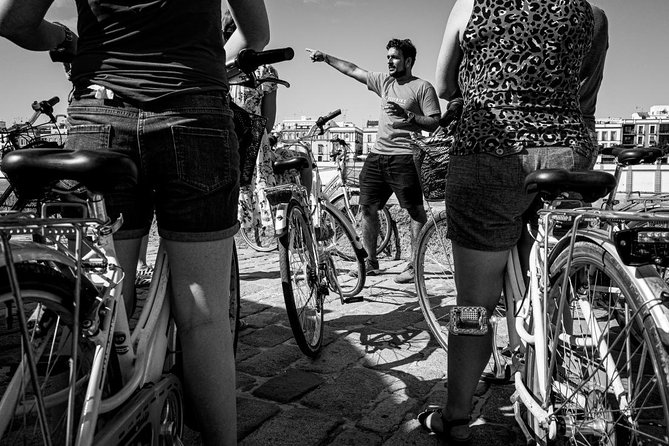
The exterior of the Real Alcázar is another major stop. This royal palace combines Moorish, Gothic, Mudéjar, and Renaissance elements, which makes it one of the best places in Seville to see different periods layered into one complex.
The tour gives you about 15 minutes here. That works well as an introduction, but it is not a substitute for entering the palace. The gardens and rooms deserve a longer visit, so I would use the bike tour to learn what you are looking at and then return with a timed admission if the Alcázar is high on your list.
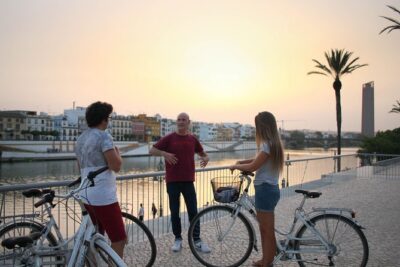
The route continues to the Torre del Oro, a 13th-century tower built to control access to Seville’s port. It sits beside the river and is one of the city’s most photographed landmarks. The stop is brief, around 10 minutes, but the location helps explain Seville’s connection to shipping, trade, and river traffic.
The value here is context. Instead of seeing the tower as a pretty riverside building, you understand its practical purpose. The same is true of the Alcázar and Giralda: the guide connects the buildings to the city’s changing rulers and cultures.
More City Highlights Bike Tours in Spain:
- Madrid Highlights Bike Tour
★ 5.0 · 1,731 reviews - Madrid: 3 h. Guided Highlights Bike Tour with Optional Tapas
★ 4.9 · 1,623 reviews - Seville: Relaxing City Bike Tour with a Tour Guide
★ 4.8 · 1,588 reviews - Barcelona 3-hour Bike or E-Bike Tour: Highlights and Hidden Gems
★ 5.0 · 1,429 reviews
Crossing into Triana
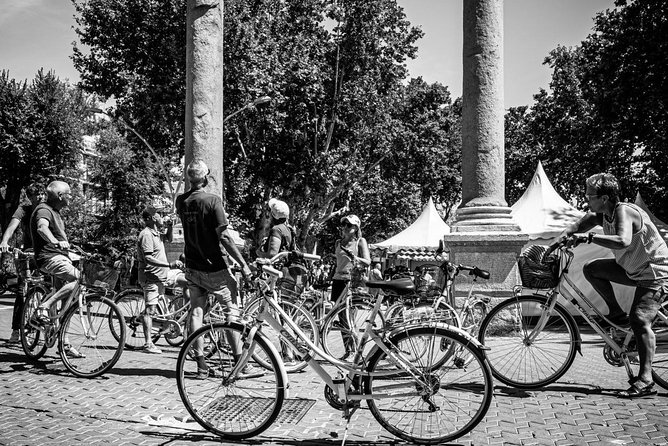
Triana adds a different feel to the route. Across the river, this neighborhood is linked with pottery, painted tiles, flamenco, and its own festivals. The 20-minute stop gives you time to notice that Triana is not simply an extension of the old center. It has a distinct identity.
This is one of the places where a guided ride earns its price. You could rent a bike and reach Triana yourself, but you might miss the details that make the neighborhood worth visiting. The included map also offers suggestions for restaurants and flamenco, useful if you want to return later in the evening.
The guide can also help you decide how much time to give Triana after the tour. If your main interest is ceramics, local food, or flamenco culture, this short visit is a starting point rather than the complete experience.
Plaza de España and María Luisa Park
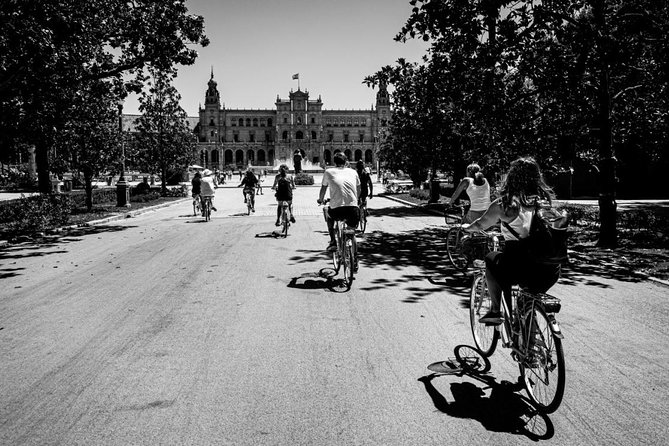
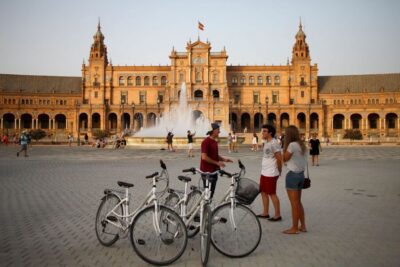
Plaza de España is the grandest visual stop on the route. Built for the 1929 Ibero-American Exposition, it curves around a large open space decorated with tiled alcoves representing Spain’s provinces. The scale is impressive, and the 20-minute stop gives you time to walk a little, take pictures, and hear why the plaza was built.
It is easy to rush through Plaza de España, snap a picture, and move on. A guide helps you notice the tile work, bridges, water channel, and unusual blend of regional references. You will not have unlimited time, but the stop is long enough to make the place more than a quick photo backdrop.
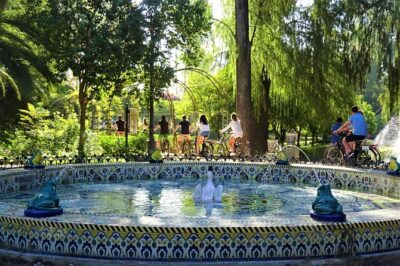
Next comes María Luisa Park, the broad green area beside the plaza. Shady paths, exotic trees, Moorish-style fountains, tiled benches, and storybook buildings make this a welcome change from the dense old center. The park is also where several later stops are located, so the bike route saves considerable walking.
Plaza de América sits inside the park and was also created for the 1929 exhibition. It is framed by three buildings in different styles: the Museum of Popular Arts in Neo-Mudéjar style, the Archaeological Museum in Neo-Renaissance style, and the Royal Pavilion in Gothic style. The 10-minute visit is short, but the architectural contrast is easy to grasp.
Santa Ana, the tobacco factory, and San Telmo
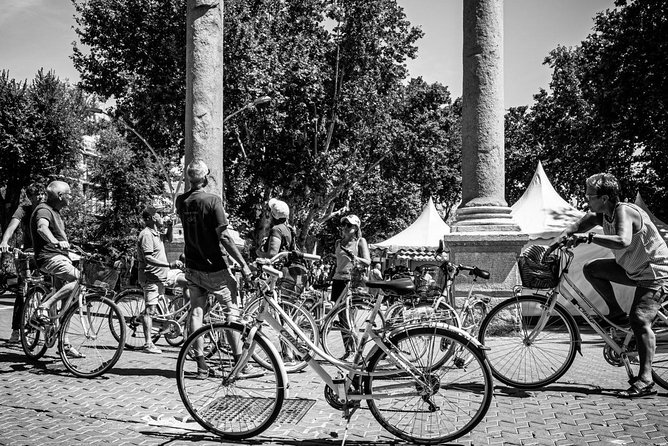
The Iglesia de Santa Ana in Triana dates to 1276 and is one of Seville’s oldest churches. Its Gothic-Mudéjar design includes a high vaulted interior and extensive religious decoration. The scheduled 15-minute stop provides a useful look at the church and its place in Triana.
The route then returns toward the old center and stops at the Real Fábrica de Tabacos. Once one of Europe’s most important tobacco factories, the building is now home to the University of Seville. You get time to look inside, making this stop different from the exterior-only palace and cathedral visits.
The building also helps broaden the story of Seville. The tour is not limited to royal buildings and religious monuments. It includes a place tied to manufacturing, trade, education, and everyday work. That variety gives the ride more substance.
Palau de San Telmo follows, with about 10 minutes for the exterior. It is one of the city’s finest Baroque buildings and was originally built for the University of Navigators. Its ornate façade can feel easy to miss after the larger sights, so a guide’s explanation helps put it on your route for a later, slower look.
What the guide adds
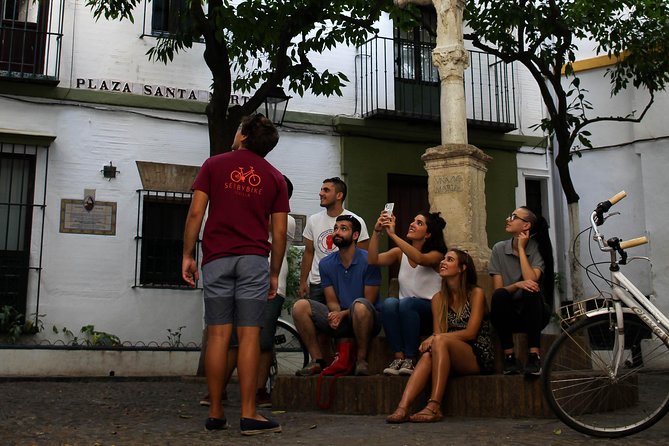
The strongest part of this experience is the human layer. The route is fixed enough to cover the main sights, but the guide shapes how the city feels. Laura is repeatedly praised for her history, friendly manner, and clear English. Daniel is noted for humor, passion, and making even poor weather worthwhile.
Marta receives similar praise for warmth, clear explanations, and useful follow-up advice. Ivan is described as relaxed, funny, and well informed about the city. Mario is also praised for making the ride enjoyable while covering a lot of history in a short time. Natalia and Marco are mentioned positively for their command of the city and engaging explanations.
English ability is generally strong, though one account found a guide’s fast speech and accent a little hard to follow. That is worth keeping in mind if you prefer very slow, simple explanations. The guides appear to vary in personality, but the repeated strengths are consistent: local history, humor, friendliness, and practical suggestions.
The map provided after the ride can be more useful than it first sounds. Recommendations for restaurants and flamenco give you a way to keep exploring after the tour ends. I would save the map and mark the places you did not have time to revisit.
Is the $42.33 price good value?
At $42.33 per person, the tour costs more than renting a bike alone. You are paying for the guide, the planned route, helmets and baskets, insurance, and the time saved by linking far-flung sights efficiently.
I think the price is fair for a first day in Seville, especially if you have only a short stay. In three hours, you cover the cathedral area, Santa Cruz, the Alcázar, the river, Triana, Plaza de España, María Luisa Park, the former tobacco factory, San Telmo, and Plaza de América. Recreating that route on your own would require planning and a good sense of direction.
The value is lower if you already know Seville well or enjoy researching routes yourself. One stop is also brief, and many landmarks are viewed from outside. The tour works best as an orientation and history lesson, not as a replacement for a full day visiting interiors.
Weather, timing, and practical planning
The activity requires good weather. If poor conditions lead to cancellation, you are offered another date or a full refund. Rain has not always prevented an enjoyable ride, but you should not book this as your only plan if the forecast looks uncertain.
For the best use of the tour, I would schedule it near the start of your stay. You can then return to the Alcázar, cathedral, Santa Cruz, Triana, or the park with a better sense of what deserves your time. If you take it on your final day, the ride can still be a pleasant farewell, but you will have less chance to use the restaurant and flamenco advice.
Free cancellation is available up to 24 hours before the start time. Changes or cancellations inside that window are not accepted for a refund. The tour ends back at Mercado del Arenal, making it easy to continue exploring the center afterward.
Who should book this Seville bike tour?
I would recommend it to first-time visitors, short-stay visitors, couples, families with older children, and anyone who wants an efficient introduction without spending three hours on foot. It is also a good fit for people who enjoy history but prefer stories tied to real streets and buildings.
Choose the e-bike upgrade if you want less effort, are worried about heat, or simply want a more relaxed ride. The standard bike is enough for most participants, based on the generally positive comments about comfort and condition, though one person felt the bikes could be improved.
Skip it if your priority is spending long stretches inside the cathedral, Alcázar, or museums. You should also think twice if you dislike group rides or want to explore only quiet local streets. The route is built around Seville’s famous sights, even though it includes some less obvious corners.
At 4.9 from 2,225 ratings, with 99 percent recommending it, the numbers point to a dependable experience. My practical verdict is simple: book it early in your Seville stay, use it to map out the city, and return on foot to the places that catch your eye.
FAQ
How long is the Seville Highlights Bike Tour?
The tour lasts approximately three hours.
What language is the tour offered in?
The tour is offered in English.
What is included in the price?
A bike, helmet, basket, guide, insurance, and a map with recommendations for restaurants, flamenco, and other activities are included.
Is an e-bike available?
Yes. An e-bike upgrade option is available.
Where does the tour start?
It starts at SeeByBike in Mercado del Arenal, Calle Pastor y Landero 4, in Seville’s old center.
Where does the tour finish?
The activity ends back at the Mercado del Arenal meeting point.
Does the tour enter the cathedral or Alcázar?
The listed visits to the cathedral and Alcázar are exterior stops. Admission tickets are not included.
How many people can join the tour?
The maximum group size is 15 travelers.
What happens if the weather is poor?
The tour requires good weather. If it is canceled because of poor conditions, you are offered a different date or a full refund.
Just added around Spain
- Barcelona: Bike Rental for 2 – 24 Hours★ 4.7 · 33 reviews
- Barcelona: 3-Hour Bike Tour with Spanish Tapas★ 4.9 · 14 reviews
- Barcelona: 4-Hour Off-the-Beaten-Track Small Group Bike Tour★ 4.8 · 63 reviews
- Barcelona: Private 5 Neighborhoods Tour by Electric Bike★ 4.9 · 17 reviews
- Barcelona: 3.5-Hour Street Art Tour by Bamboo Bike★ 5.0 · 56 reviews
- Barcelona: 4-Hour E-Bike Photography Tour★ 4.8 · 36 reviews
- Barcelona Beach 3-Hour Bike Tour★ 4.8 · 65 reviews
- Marbella: E-Mountain Bike Explorer Tour★ 4.8 · 70 reviews
Seville Bike Tours, compared.
3-hour Guided Bike Tour along the Highlights of Seville
Read our review →Browse the lists this tour appears in