REVIEW · BUENOS AIRES
Buenos Aires: North or South Buenos Aires Bike Tour
Buenos Aires is huge, mostly flat, and spread across very different neighborhoods. A bicycle lets you connect those areas in one morning or afternoon, from old San Telmo streets to modern Puerto Madero or from grand Retiro buildings to Palermo’s parks. I especially like the small groups of up to eight and the chance to hear local stories from guides such as Santiago, Ana, Pilar, and Florencia. The main drawback is that some North Circuit stretches use busier roads, so you need to feel steady riding near traffic.
I also like the choice between two sharply different routes. The South Circuit gives you tango, La Boca, football, the old port, and the presidential center. The North Circuit focuses on Belle Epoque buildings, Recoleta, Palermo, and broad green spaces. Four hours is enough for a useful first look, but not enough to explore every stop in depth.
Key points before you book
- South Circuit: San Telmo, La Boca, La Bombonera, Caminito, Puerto Madero, the Ecological Reserve, and Plaza de Mayo.
- North Circuit: Retiro, Plaza San Martin, Recoleta, Floralis Genérica, Palermo, the Rose Garden, Planetarium, and Congress Square.
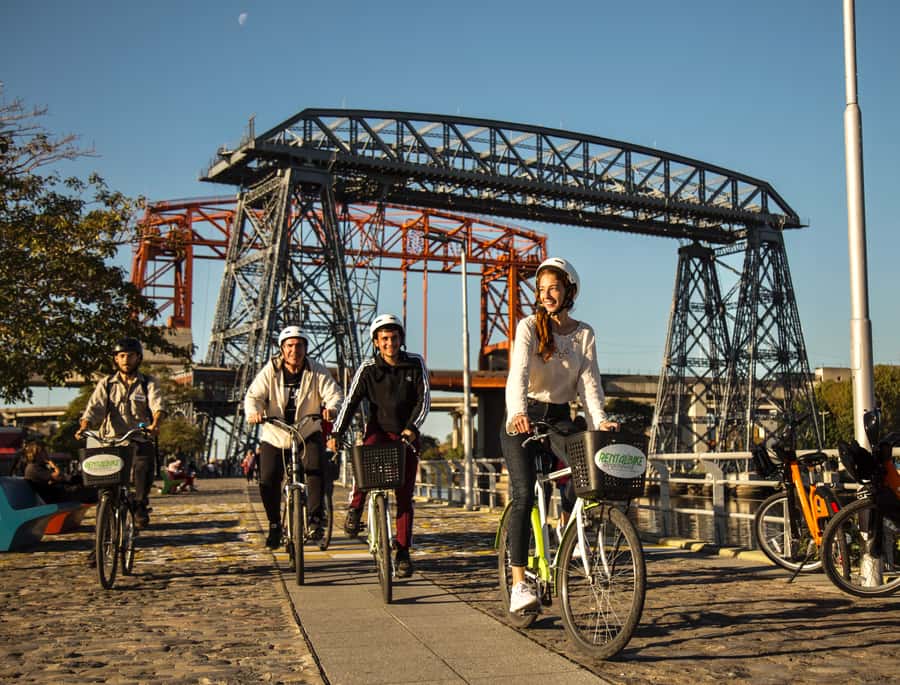
- Comfortable setup: Cruiser bike, helmet, basket, bell, and access to a water refilling machine.
- Small-group feel: Groups are limited to eight, and some departures have only two or three people.
- Good city orientation: You cover far more ground than on foot and get history, neighborhood context, and local tips.
- Important riding note: You must be at least 12 years old and 1.50 meters tall, and the North route can include busier streets.
Why a bicycle works so well in Buenos Aires
Buenos Aires can feel confusing at first. Its main sights are not all packed into one historic center, and the character changes quickly from neighborhood to neighborhood. On foot, you may spend much of a day moving between them. By bike, you can cover the major links while still noticing street life, statues, apartment facades, parks, and changing architecture.
The pace is generally easy rather than athletic. You stop often for explanations and photos, and the guides adjust to the ability of the group. Ana, Florencia, Santiago, Pilar, Flo, and Dilson are among the guides praised for clear English, calm leadership, humor, and useful recommendations for later meals, tango, and evening plans.
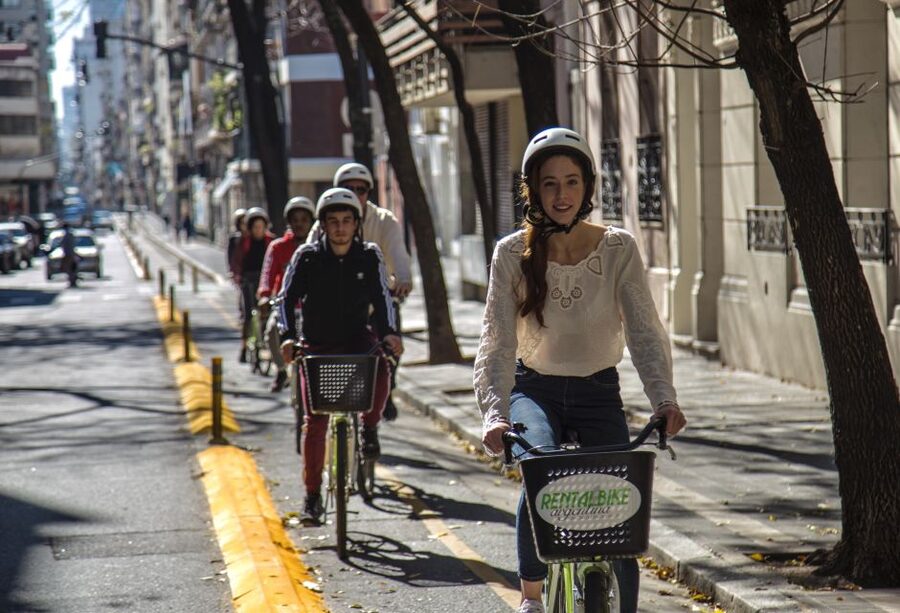
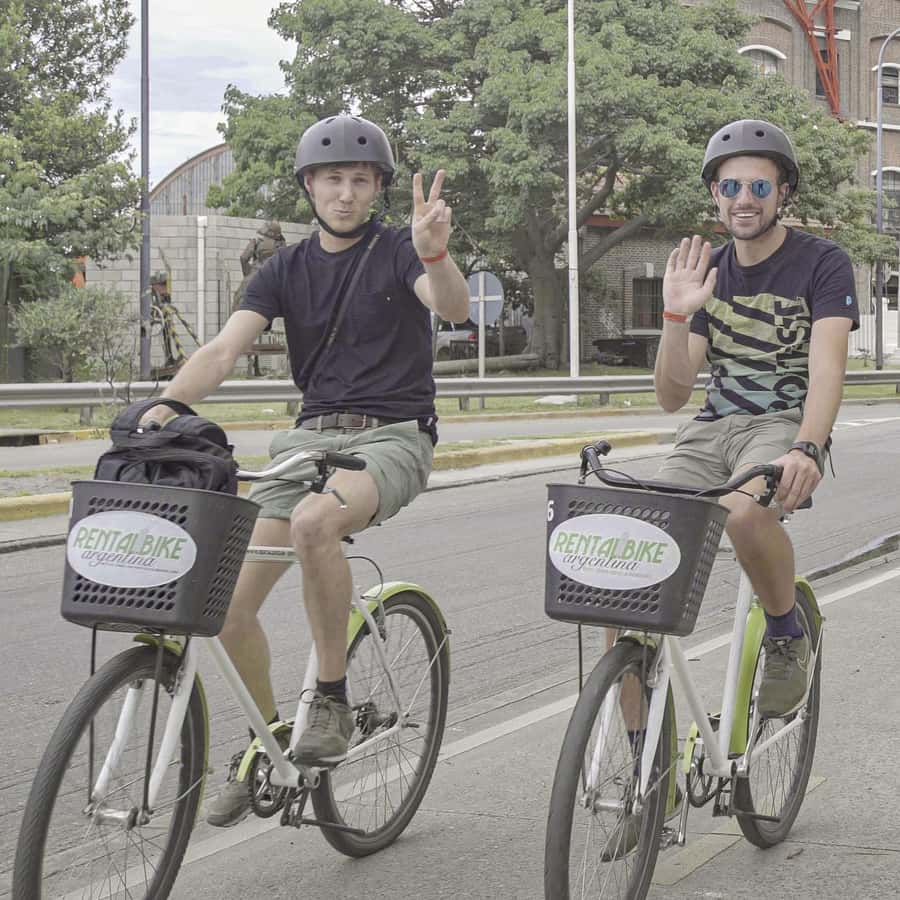
The bikes are cruiser-style, with baskets for a water bottle or small belongings. Helmets are supplied, and the tour begins with safety instructions. Most of the ride uses bike lanes, though you should expect a few sections on open roads. Bring comfortable shoes, clothing for the forecast, and your own reusable bottle. The shop has a water refilling machine, but the bottle itself is your responsibility.
At $38 per person, the tour offers a fair amount of city coverage for four hours. You are paying not only for the bicycle, but also for route planning, traffic guidance, translation, and the story that connects each neighborhood. It is especially good value early in your stay, when you want to decide which districts deserve a longer return visit.
A few more bike tours around the world worth a look
- Lion City Bike Tour of Singapore
★ 5.0 · 6,211 reviews - Big Bike tour Amsterdam – See all in 3 unforgettable hours
★ 4.7 · 4,929 reviews - 3-Hour Porto Highlights on a Electric Bike Guided Tour
★ 5.0 · 4,392 reviews
The South Circuit: old neighborhoods and new waterfront
The South Circuit is the stronger choice if you want Buenos Aires history, tango connections, football culture, colorful streets, and major civic sights in one ride. It begins around Montserrat and heads toward the older southern districts.
Parque Lezama and the city’s early story
Parque Lezama is an easy first major stop. Here the guide explains the early foundations of Buenos Aires, waves of immigration, and the roots of tango. The park gives you space to pause after the opening ride and helps place the southern neighborhoods in context.
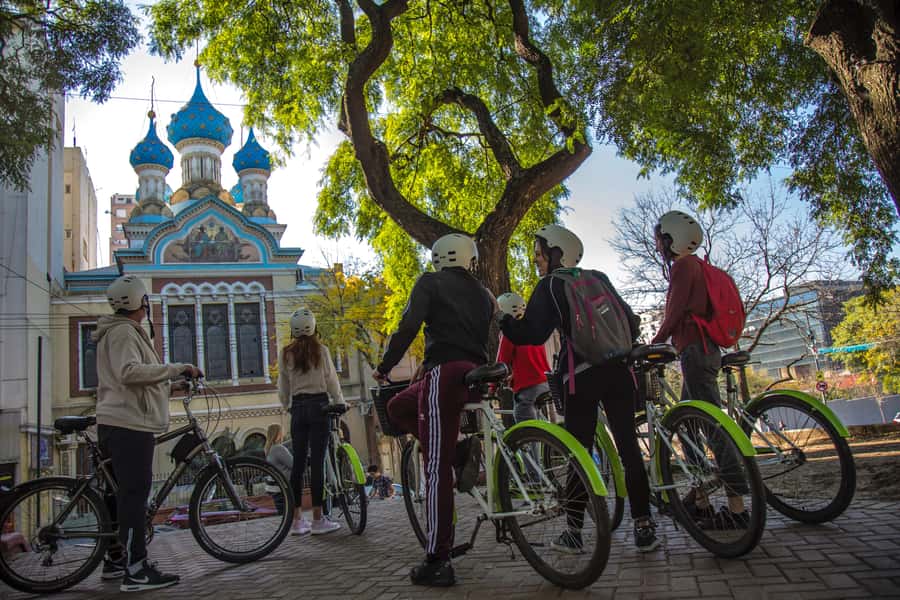
Nearby, the Russian Orthodox Church of the Holy Trinity adds a quick architectural stop. It is not a long visit, but it breaks up the ride and shows how immigrant communities shaped the city’s religious and cultural identity.
San Telmo, La Boca, and football passion
San Telmo is one of the tour’s best settings. It is known as Buenos Aires’ old quarter, and the streets offer a sense of an earlier city, with a slower rhythm and older buildings. You do not spend the whole four hours here, so treat this as an introduction rather than a full San Telmo visit.
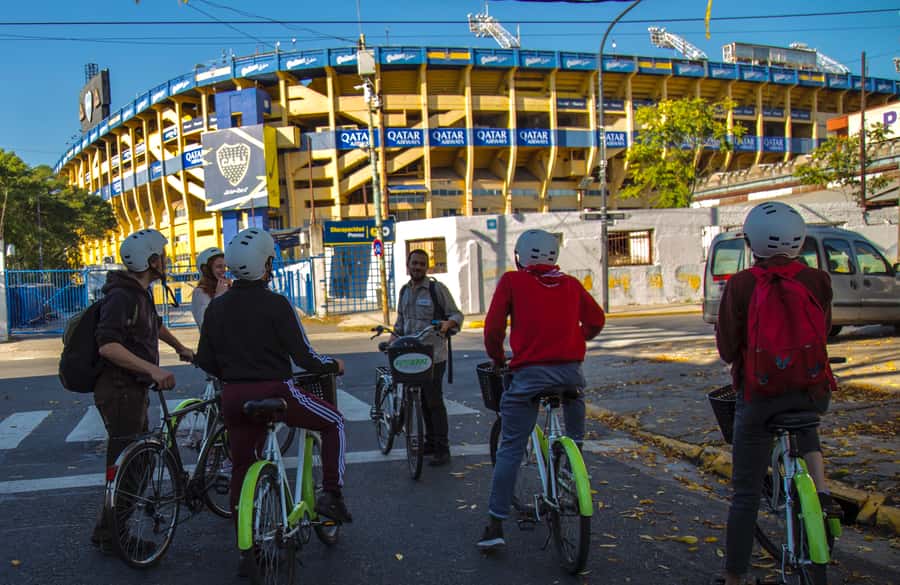
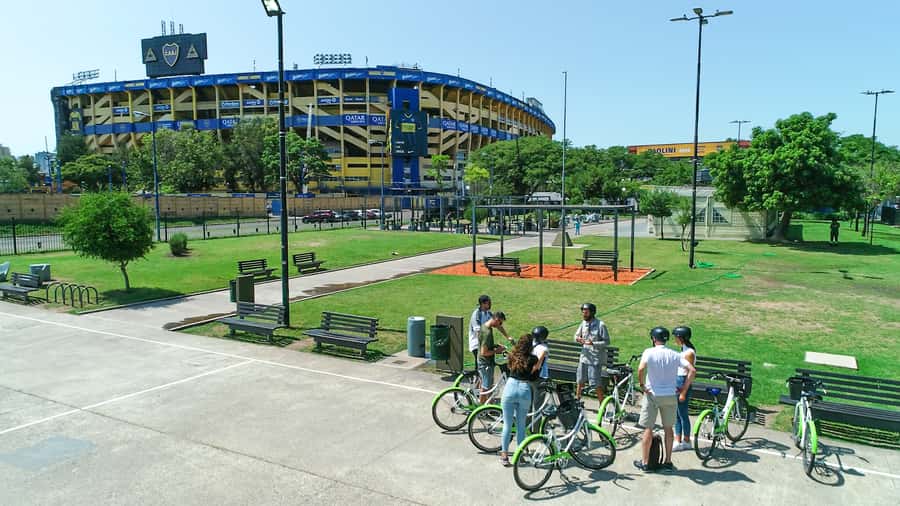
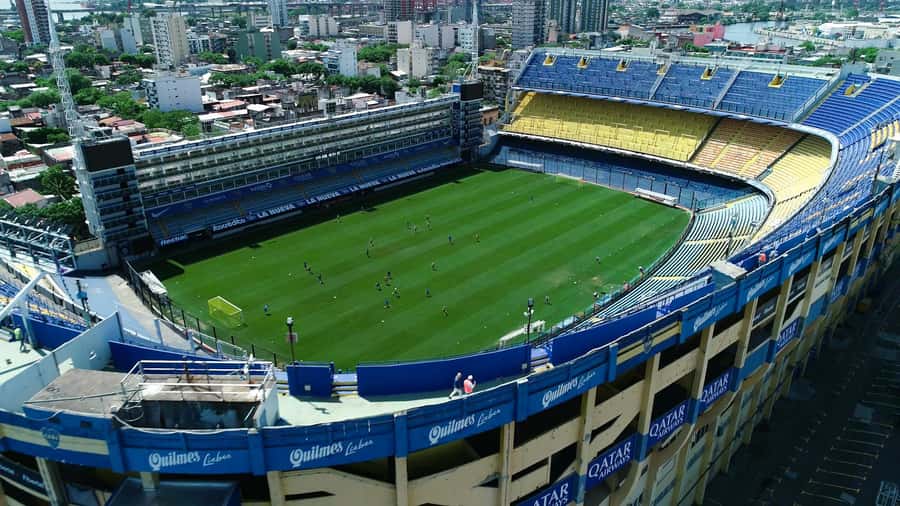
The route then approaches La Boca, one of Buenos Aires’ most recognizable districts. At La Bombonera, the famous Boca Juniors stadium, you get a look at one of the city’s great football symbols. The guide explains why football is not simply a sport here, but part of neighborhood identity and local pride.
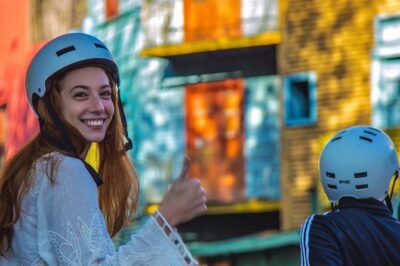
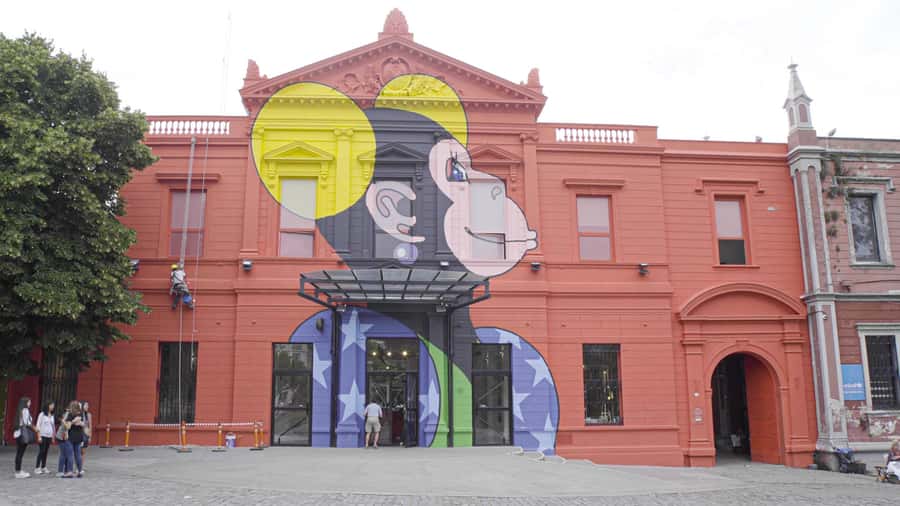
Caminito is the South Circuit’s most colorful stop. Brightly painted facades, street art, tango imagery, and local artists give this former port area its famous look. You receive about 20 minutes for photos and a little wandering, which is useful because this is one of the few points where you can explore at your own pace.
That short stop is also a limitation. If you want to browse galleries, watch tango, shop for art, or take your time with the street scenes, you will need to return independently. The bike tour gives you a strong first impression, not a complete visit.
Same city, a different ride:
- Ninh Binh Full-Day Tour from Hanoi to Hoa Lu, Tam Coc & Mua Cave Via Boat & Bike
★ 5.0 · 4,384 reviews - Small Group Guided Bike Tour of Amsterdam’s Hidden Gems
★ 5.0 · 3,936 reviews - 3-hour Complete Prague Bike Tour
★ 5.0 · 3,674 reviews - Party Bike Private Party Up To 14 People in Old Town Scottsdale
★ 5.0 · 3,541 reviews
Puerto Madero and the Ecological Reserve
After La Boca, the route changes character at Puerto Madero. The former harbor area has been reshaped into one of Argentina’s most modern districts, with contemporary buildings, renovated waterfront spaces, and a very different city feel from San Telmo and La Boca.
The Ecological Reserve follows as a surprising change of scenery. This 865-acre nature reserve lies between the city and the Rio de la Plata. You may see wildlife and open views that feel far removed from the traffic and buildings only a short ride away.
The reserve is weather-sensitive. It is closed on Mondays, and heavy rain or poor conditions can prevent the cycling section. A recent route was shortened there after rain, so do not book the South Circuit solely for the reserve. Think of it as a valuable bonus when conditions cooperate.
Plaza de Mayo and the political center
The final South Circuit section brings you to Plaza de Mayo, the symbolic civic heart of Buenos Aires. The plaza is linked to the definitive foundation of the city in 1580 and gives the tour a strong ending.
You see the Casa Rosada, the presidential offices, along with the Metropolitan Cathedral and the Old Cabildo. The cathedral is especially notable as the former home parish of Pope Francis. The Cabildo, once the city hall, helps complete the picture of colonial Buenos Aires.
This group of sights works well at the end because the guide can connect the city’s early foundations, colonial rule, independence, modern government, immigration, tango, and football culture. You leave with more than a collection of photographs.
The North Circuit: grand buildings, Recoleta, and Palermo parks
Choose the North Circuit if you are more interested in architecture, parks, elegant neighborhoods, and the city’s late 19th-century growth. It reaches farther from the starting point, so it includes somewhat more cycling. The route can also place you on busier roads, a point worth considering if you are not comfortable riding near traffic.
Downtown, Retiro, and Plaza San Martin
The ride begins through downtown, the business district and central urban core. The guide introduces the city’s late 19th-century expansion before heading toward Retiro.
At Plaza San Martin, the mood becomes grander. Palaces, monuments, and large civic buildings reflect the Belle Epoque period, when Buenos Aires adopted many European architectural styles and presented itself as a major international capital.
Stops include the Monument to the Fallen in the Malvinas, the Kavanagh Building, the Basilica of the Most Holy Sacrament, and the Monumental Tower. These are mainly photo and explanation stops rather than interior visits. That suits a bicycle tour, since the aim is to read the city from the street.
The Kavanagh Building and Monumental Tower are particularly useful for understanding how different eras sit side by side. You get a quick look at residential modernism, historic civic design, and the grand scale of Retiro without spending the whole day in one museum.
Recoleta, the embassy area, and Floralis Genérica
Recoleta brings another change. This district is known for its cemetery, cafes, ice cream shops, museums, and polished streets. The route passes through the neighborhood and includes a stop connected with La Recoleta Cemetery, but the tour does not enter the cemetery.
That distinction matters. If you want to see the tomb of Eva Perón or study the cemetery’s elaborate mausoleums, plan a separate visit. The bike stop gives you orientation and helps you decide where to return.
The route continues by the Israeli Embassy area and toward Floralis Genérica, the giant metal flower. This is a good pause for photographs and a short break. The sculpture is one of the city’s most memorable modern landmarks, and the open setting gives you a chance to stretch before continuing north.
Palermo, the Planetarium, and the Rose Garden
Palermo is where the North Circuit feels most open. You pass through the district’s parks and reach the area around the Galileo Galilei Planetarium and Paseo El Rosedal, the Rose Garden.
The parks provide a welcome contrast to downtown traffic and dense blocks. On a good-weather day, this may be the most relaxing part of the ride. One guide gave the group extra time around the Tres de Febrero Park, which shows how a small group and flexible guide can make the route feel less mechanical.
Still, you should not expect a long park visit. The tour has a lot of ground to cover, and some sights are pass-by points. If Palermo is high on your list for museums, gardens, cafes, or a longer walk, use this tour to get oriented, then return on another day.
Congress Square on the way back
The route returns toward Congress Square beside the impressive building that houses Argentina’s legislative power. It is a fitting final stop because it brings the tour back from the parks to the formal political center.
Depending on the season and departure time, the square can work especially well in late light. You get a final architectural photo and a reminder that Buenos Aires is a city of grand public spaces as much as private neighborhood life.
What the guides add to the ride
The best part of this experience is not simply the number of sights. It is the explanation between them. A strong guide turns a church, monument, stadium, or park into part of a larger story.
English-language guiding has been a consistent strength. Ana’s clear explanations, Santiago’s friendly local tips, Florencia’s history and neighborhood detail, Pilar’s attentive riding support, and Dilson’s calm storytelling are the kind of qualities you want on a city bike tour. Guides also adjust the pace when a group has mixed cycling ability.
The small-group limit matters here. With eight or fewer riders, it is easier to hear the guide, ask questions, stay together, and pause for a quick photo. Some departures have been nearly private, with only two people, though you should not book expecting a private tour.
Guides can also handle ordinary city complications. Routes may change around protests, rain, or traffic conditions. The important thing is that you follow the leader and accept that the exact order or length of a stop may shift.
Timing, weather, and practical limits
The experience lasts four hours and begins and ends at the bike shop at Chile 1145 in Montserrat, though your booking confirmation should be checked because the meeting point can vary by option. Arrive 15 minutes early. The maximum wait is 10 minutes, after which the group leaves without a refund.
The tour runs in light to moderate rain. It can be suspended for heavy rain, strong winds, or an official weather alert, and the company may reschedule it based on availability. Bring weather-appropriate layers. Winter can feel chilly on the North Circuit, and rain can reduce conversation and sightseeing comfort even when the ride continues.
The tour is not designed for children under 12, pregnant people, riders under 1.50 meters, or people with mobility, back, heart, respiratory, seizure, vision, or recent-surgery concerns. A maximum weight of 118 kilograms applies. Tips are not included, so bring some cash if you want to thank your guide.
Free cancellation is available up to 24 hours before the start, and you can reserve now and pay later. Those terms are helpful if your Buenos Aires schedule is still changing.
Should you choose North or South?
Choose the South Circuit if this is your first visit and you want the strongest mix of old Buenos Aires, La Boca, tango culture, football, modern waterfront development, nature, and national landmarks. It is also the better choice if you prefer more historic and cultural contrast.
Choose the North Circuit if you care most about architecture, Retiro, Recoleta, Palermo, parks, and broad city views. It is a good introduction to the elegant side of Buenos Aires, but remember that it involves more riding and may include busier roads.
I would book this tour for an active first look at the city, especially at the start of a longer stay. You will not replace a full visit to La Boca, the Recoleta Cemetery, Palermo, or the Ecological Reserve, but you will learn where to return and why each area matters. At $38, with a bike, helmet, small group, bilingual guide, and four hours of coverage, it is a practical way to get your bearings fast.
FAQ
How long does the Buenos Aires bike tour last?
The tour lasts four hours, including riding, guided stops, photo opportunities, and short breaks.
Can I choose between a North and South route?
Yes. The South Circuit visits San Telmo, La Boca, Puerto Madero, the Ecological Reserve, and Plaza de Mayo. The North Circuit visits Retiro, Recoleta, Palermo, the city parks, and Congress Square.
Is the tour offered in English?
Yes. Live guiding is available in English and Spanish.
What equipment is included?
You receive a cruiser bike, helmet, bell, and basket. A water refilling machine is available, but you should bring your own reusable bottle.
Does the North Circuit enter Recoleta Cemetery?
No. The route passes through the Recoleta area and includes a stop connected with the cemetery, but the tour does not enter it.
What happens if the weather is bad?
The tour can run in light to moderate rain. It may be suspended for heavy rain, strong winds, or an official weather alert, and the company may reschedule it according to availability.
Just added around the world
- Barcelona: Bike Rental for 2 – 24 Hours★ 4.7 · 33 reviews
- Barcelona: 3-Hour Bike Tour with Spanish Tapas★ 4.9 · 14 reviews
- Barcelona: 4-Hour Off-the-Beaten-Track Small Group Bike Tour★ 4.8 · 63 reviews
- Barcelona: Private 5 Neighborhoods Tour by Electric Bike★ 4.9 · 17 reviews
- Barcelona: 4-Hour E-Bike Photography Tour★ 4.8 · 36 reviews
- Barcelona: 3.5-Hour Street Art Tour by Bamboo Bike★ 5.0 · 56 reviews
- Thai culture and Bangkok local life guided bike tour★ 4.9 · 32 reviews
- Barcelona Beach 3-Hour Bike Tour★ 4.8 · 65 reviews
Buenos Aires Bike Tours, compared.
Buenos Aires Bike Tour: North Districts, Recoleta and Palermo
Read our review →