REVIEW · TOURS
Bucharest: Communist Bike Tour
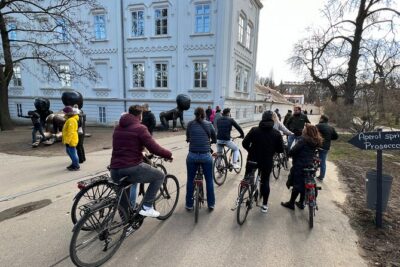
Bucharest’s communist past is easier to understand from a bicycle. In four hours, you’ll ride from the old city center to the first Romanian parliament, a Stalin-era neighborhood for Soviet generals, Casa Radio, and the square where Ceaușescu gave his last speech. I like the way this route connects buildings with political events instead of treating them as isolated sights.
I also like that cycling lets you cover a large section of Bucharest without spending the whole morning in a car. Guides such as Horia and Alex add more than dates and names, bringing in economic, political, religious, and everyday city life. The main caution is traffic: the tour is not recommended for people with limited mobility, and you should feel comfortable riding a bicycle in dense city streets.
Key points
- Four hours on two wheels: A useful way to cover several widely separated communist-era sites in one morning.
- A clear political route: The tour links Coral Temple, the first Romanian parliament, Soviet-era housing, Casa Radio, and Revolution Square.
- Strong historical context: Expect discussion of Romania’s communist movement, Soviet occupation, city planning, and the 1989 Revolution.
- English-speaking guides: Horia and Alex are named in past tour feedback, with special praise for clear and wide-ranging explanations.
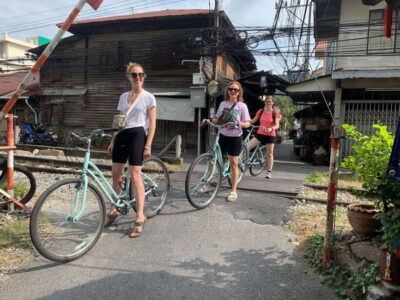
- Bikes and helmets included: Locks are also provided, so you do not need to arrange equipment separately.
- A practical Bucharest introduction: The route can help you understand the city before exploring it on your own.
Why a Bike Is the Right Tool for Communist Bucharest
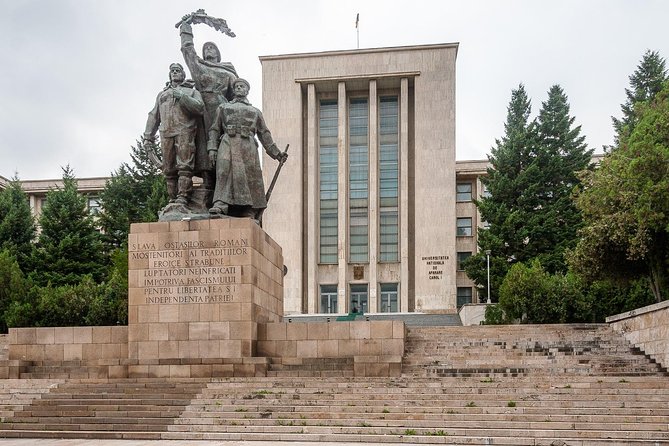
Communist Bucharest is not contained in one museum or one attractive square. Its story is spread across the center, former government areas, large housing districts, and unfinished projects. That makes a bicycle especially useful.
On foot, you could see a few central sights, but the four-hour route covers more ground and shows how political power reshaped the city. You get a sense of scale, too. Large communist schemes were not built as small additions to the old city. They often replaced older streets, changed traffic patterns, and imposed a new idea of how Bucharest should look.
I like this format for a first or second day in the city. You are not only looking at buildings. You are learning why they were built, who used them, and what happened around them. That context can make later walks through Bucharest far more meaningful.
The tradeoff is physical. You must ride for a substantial part of four hours, and one past participant specifically noted that the extended range is worthwhile for anyone comfortable cycling in dense city traffic. If that description makes you uneasy, this may not be the right tour for you.
A few more bike tours around the world worth a look
- Lion City Bike Tour of Singapore
★ 5.0 · 6,211 reviews - Big Bike tour Amsterdam – See all in 3 unforgettable hours
★ 4.7 · 4,929 reviews - 3-Hour Porto Highlights on a Electric Bike Guided Tour
★ 5.0 · 4,392 reviews
Starting in the Old City Center
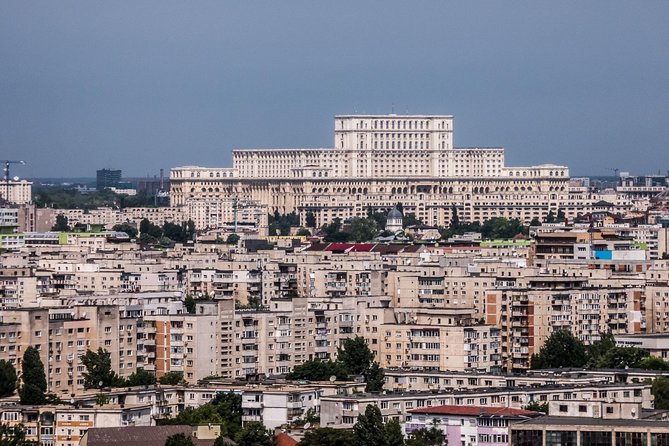
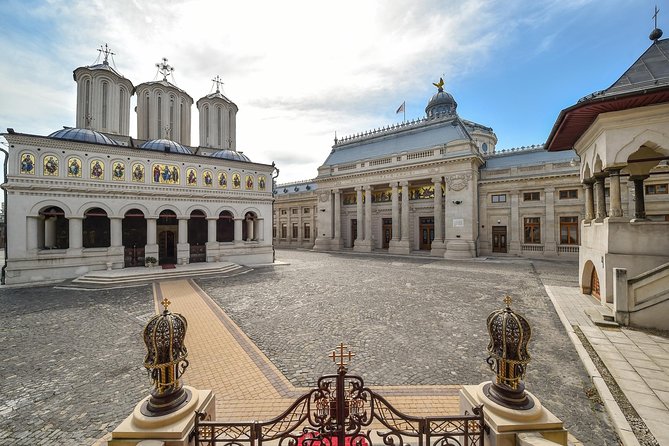
The meeting point is just across from Hanu’ Berarilor, at Casa Oprea Soare. From here, the guide begins with Bucharest’s old city center and explains how the communist period damaged this older part of town.
This is a useful opening because the old center does not tell the whole story at first glance. It is easy to focus on restaurants, streets, and surviving buildings without noticing the political decisions that changed the area. Your guide sets the old center against the wider story of communist redevelopment.
The introduction also helps you get your bearings. Bucharest is a large city, and the tour uses its streets as a kind of open-air classroom. You will hear about the city’s earlier development before moving into the political events that shaped modern Romania.
Guides Horia and Alex received especially strong praise for giving wider context rather than sticking to a narrow list of communist facts. You might hear about the city’s founding days, the Orthodox Church, economic pressures, and daily life today alongside the main subject. That makes the tour useful even if you already know the basic outline of Romanian communism.
Coral Temple and the Early Communist Movement
The next stop is Coral Temple, an important Jewish religious building in Bucharest. Here, the tour connects the Jewish community with the early communist movement in Romania during the 1920s.
This stop gives the route a needed complication. Communist history is not only about the final dictatorship under Nicolae Ceaușescu. It also involves earlier political movements, different groups, and changing ideas about how Romania should be governed. Coral Temple provides a place to discuss those beginnings before the tour moves to the postwar Soviet period.
I like this kind of stop because it broadens the story beyond government architecture. You are not simply riding from one concrete building to another. You are looking at people and communities involved in the political currents of the time.
The supplied information does not promise an interior visit, so you should think of Coral Temple as a historical stop rather than a scheduled temple tour. The value comes from the explanation and the connection to the wider political story.
The First Romanian Parliament and the Communist Bomb Attack
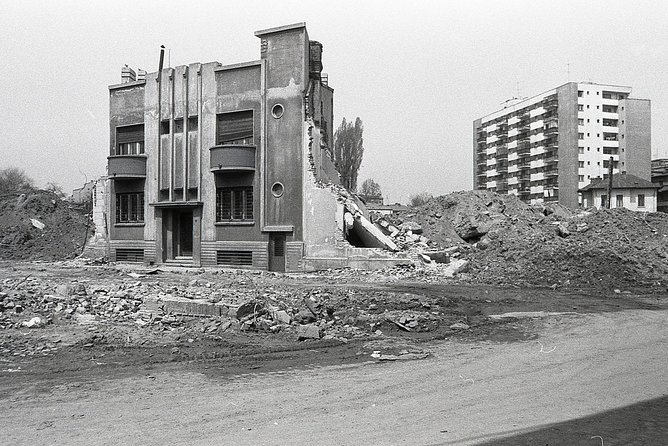
The route continues to the site of the communist bomb attack against the democratic Romanian government, described as the first Romanian parliament. This is one of the most politically charged points on the route.
The stop helps explain how the communist movement challenged Romania’s existing democratic institutions. It also shows why the early period matters. The later Soviet-backed system did not appear out of nowhere after the Second World War. Political violence and attempts to weaken democratic government were already part of the story.
Your guide’s job here is important. A bare description of a bomb attack would tell you what happened, but not why the event mattered. The tour is designed to place the site within the political and social conditions of early twentieth-century Romania.
This is also where the bicycle format works well. You arrive at a real urban location rather than reading about the event in a distant gallery. You can connect the address, the surrounding streets, and the movement of the tour into one timeline.
Same city, a different ride:
- Ninh Binh Full-Day Tour from Hanoi to Hoa Lu, Tam Coc & Mua Cave Via Boat & Bike
★ 5.0 · 4,384 reviews - Small Group Guided Bike Tour of Amsterdam’s Hidden Gems
★ 5.0 · 3,936 reviews - 3-hour Complete Prague Bike Tour
★ 5.0 · 3,674 reviews - Party Bike Private Party Up To 14 People in Old Town Scottsdale
★ 5.0 · 3,541 reviews
Soviet Occupation and the Generals’ Neighborhood
After the early communist period, the route moves to the years after the Second World War, when Romania was occupied by the Soviet Union for 12 years. You will pass through a neighborhood where Russian army generals responsible for ruling the country lived.
This section shifts the focus from political organization to foreign control. It shows how Romania’s communist system was tied to Soviet power and how the people directing the country were connected to that occupation.
The neighborhood itself is valuable because it turns an abstract political fact into a physical setting. You are not simply told that Soviet influence was strong. You see where key military figures lived and how power occupied space in the city.
The Stalin-era setting also offers a useful contrast with the old city center. Bucharest’s architecture and street layout reflect several different periods, and the tour brings those layers together. You might not leave with a full architectural study, but you should have a clearer sense of how Soviet-era priorities affected Bucharest.
Expect the guide to discuss more than buildings here. Past feedback praised the tour’s economic and political context, as well as its attention to population groups. That wider explanation matters because Soviet occupation affected institutions, homes, work, and daily life, not only official residences.
Casa Radio and Bucharest’s Unfinished Vision
One of the striking stops is Casa Radio, described as the largest unfinished communist urban project in Bucharest. It is an especially useful sight because unfinished buildings often reveal political ambition more clearly than completed ones.
A completed monument can look inevitable. Casa Radio shows that huge plans can run into changing politics, money problems, or the end of a regime. Its unfinished state gives you a direct look at the scale of communist urban planning and the gap between official ambition and what could actually be delivered.
The route also passes the National History Museum, described in the tour material as a building reshaped by the communist regime. The information connects this stage with buildings that were altered during the regime’s most active period. You should expect the guide to explain the changes and their political setting rather than treat the museum as a standard museum visit.
Do not confuse this part of the route with a long indoor museum session. The listed highlights focus on cycling past and explaining these places. Food, drinks, and museum admission are not included, and no interior visit is promised.
For me, this is one of the strongest reasons to book the tour. Communist city planning can be difficult to grasp from photographs. Seeing a major unfinished project in the city gives the subject a physical scale that a short history lesson cannot match.
Revolution Square and Ceaușescu’s Last Speech
The final stop is in front of the former Communist Central Committee, at Revolution Square. This is where Ceaușescu gave his last speech and where the December 1989 Revolution began.
The stop brings the route to its emotional and political climax. You have followed the movement from early communist organizing, through Soviet occupation and state planning, to the collapse of the regime. Revolution Square gives that final stage a precise location.
Ceaușescu’s last speech is important because it marks the moment when the authority of the regime began to break down in public. The square is not just a backdrop for a famous event. It helps you understand how a political system that had shaped the city for decades could suddenly lose control.
This is a good place to pause and ask your guide questions. The supplied tour information does not promise a fixed question session, but the named guides are praised for being friendly and helpful, and the format allows the historical story to build toward this point.
I would pay close attention here even if you have already read about the 1989 Revolution. The route gives you the sequence needed to place the event in context, rather than treating it as a dramatic but disconnected ending.
What the Four Hours Feel Like
The tour lasts four hours, which is long enough to cover a broad route without becoming a quick sightseeing loop. You will have time to ride between stops and listen to explanations along the way.
The experience is active rather than museum-like. You need comfortable shoes, and you should be ready to spend much of the morning on a bicycle. Bikes, helmets, and locks are included in the $53 price, so the fee covers the basic equipment as well as the live English-speaking guide.
The tour does not include food or beverages. Plan accordingly, especially if you prefer to eat before a morning activity. The supplied information does not list a meal or a scheduled food stop, though one past description referred to a pit stop across Bucharest. Treat that as a possible pause, not a promised meal.
The ride also gives you a practical introduction to Bucharest. One past participant described it as a good way to begin a city visit, and I can see why. You learn the broad layout, hear about several periods of the city’s past, and collect ideas for places to revisit later.
You should not expect a quiet ride through empty streets. Dense city traffic is part of the practical consideration. If you are comfortable cycling in an urban setting, the distance covered is a major benefit. If you rarely ride or have limited mobility, choose a walking or vehicle-based history tour instead.
The Guides and the Quality of Explanation
The guide can make or break a history tour, and this route depends heavily on clear storytelling. Horia is named repeatedly in the supplied feedback, while Alex is praised for covering historical, economic, and political context. Both are English-speaking guides for the activity.
The strongest praise focuses on explanation rather than entertainment alone. You can expect the guide to connect the communist era with Bucharest’s founding, the Orthodox Church, population groups, economics, and present-day city life.
That range is useful, but it can also mean a lot of information in four hours. If you prefer a simple list of dates and buildings, the tour may feel dense. I would treat the broad coverage as a strength, especially because the route moves through several periods rather than focusing only on Ceaușescu.
A rating of 4.8 from 15 reviews points to consistently strong satisfaction, though the sample is not large. The comments repeatedly praise the guides, the amount learned, and the usefulness of cycling across the city. The most reliable takeaway is that the quality of the guide is central to the experience.
Is $53 Good Value?
At $53 per person, this is not the cheapest way to see Bucharest. The price makes more sense when you count the four-hour duration, bike, helmet, lock, and live guide.
You are also paying for the route design. These sites are spread across the city, and arranging a similar visit on your own would require research, navigation, and a way to move between them. The guide adds the political links that are hard to find on a simple self-guided ride.
I think the value is strongest for a first visit, especially if you want a fast but serious introduction to Bucharest’s twentieth-century story. It is also useful if you have only a short stay and want to cover more than the old center.
The value is weaker if you already know the city well, dislike cycling in traffic, or want long visits inside museums. This is a moving history lesson, not a private car tour or a full museum itinerary.
You can cancel for a full refund up to 24 hours before the tour, and you can reserve now and pay later. Those terms help if your schedule is still changing, but the main decision should be your comfort with the physical format.
Who Should Book This Bucharest Bike Tour?
I would book it if you want historical context, can ride comfortably for four hours, and prefer seeing a city through real streets rather than only through museums. It suits curious first-time visitors, history-minded couples, and anyone who wants to understand how communism changed Bucharest’s shape.
It is also a good fit if you enjoy asking questions. The guides are praised for being friendly and helpful, and the route covers subjects that benefit from explanation, from the early communist movement to Soviet control and the 1989 Revolution.
I would skip it if you have limited mobility, do not feel safe cycling in dense city traffic, or need frequent rest breaks. The tour is conducted in English, and no other language is listed.
FAQ
How long is the Bucharest Communist Bike Tour?
The tour lasts four hours.
What language is the tour conducted in?
The tour is conducted in English with a live guide.
What equipment is included?
Bikes, helmets, and bike locks are included in the ticket price.
Where does the tour meet?
Meet just across from Hanu’ Berarilor, at Casa Oprea Soare, in Bucharest’s old city center.
What places does the route visit?
The route includes the old city center, Coral Temple, the site of the first Romanian parliament, a Stalin-era neighborhood associated with Russian army generals, Casa Radio, the National History Museum area, and Revolution Square.
Is the tour suitable for people with limited mobility?
No. The tour is not recommended for people with mobility impairments because it involves cycling. Comfortable shoes are recommended.
Should You Book It?
Book this tour if you want Bucharest’s communist past explained as a connected story rather than a collection of buildings. The route covers early political violence, Soviet occupation, Stalin-era planning, unfinished urban ambition, and the 1989 Revolution in one active morning.
The best reason to go is the combination of range and context. You cover a lot of ground, and guides such as Horia and Alex bring in the political and everyday details that make the sights easier to understand. The main question is simple: are you comfortable riding through a large city for four hours? If yes, the $53 price is fair for the equipment, coverage, and live historical guidance.
Just added around the world
- Napier: Cycle to Wineries – Half Day, self-guided★ 4.0 · 12 reviews
- Napier Bike Hire★ 5.0 · 40 reviews
- Guided Bike Tour – Downtown Naples Florida★ 4.5 · 22 reviews
- Independent Hassle-free Bike Rental in Sonoma★ 5.0 · 62 reviews
- Healdsburg Cycling Wine Tour★ 4.5 · 14 reviews
- Full-Day Electric Bike Rental★ 5.0 · 38 reviews
- Sonoma Valley Pedal Assist Bike Tour★ 5.0 · 32 reviews
- Bike Tour at Hell’s Gate National Park, Boat Ride at L. Naivasha★ 5.0 · 27 reviews
Tours, compared.
Big Bike tour Amsterdam – See all in 3 unforgettable hours
Read our review →
3-Hour Porto Highlights on a Electric Bike Guided Tour
Read our review →
Ninh Binh Full-Day Tour from Hanoi to Hoa Lu, Tam Coc & Mua Cave Via Boat & Bike
Read our review →
Small Group Guided Bike Tour of Amsterdam’s Hidden Gems
Read our review →