

REVIEW · FLORENCE
Florence Untold Bike Tour
Florence Untold is less about racing between monuments and more about hearing the stories that make familiar streets come alive. On a two-hour ride with Roberto, you’ll connect the Duomo, Ponte Vecchio, Palazzo Vecchio, Medici landmarks, Dante’s world, and odd corners most visitors pass without a second glance.
I especially like the storytelling and the way a bike lets you cover much of central Florence without committing to a long walking route. Roberto’s humor, energy, and gift for explaining complicated local history have made this tour work well for couples, families, teenagers, and repeat visitors.
The main drawback is simple: the bicycle costs an extra €8, paid on the day, so the real cost is higher than the advertised $42.05. You also need to be comfortable riding a bike, and two hours can feel short if you want to linger at every stop.
Key points at a glance

- Roberto’s storytelling is the main attraction: Expect lively tales about Medici power struggles, artists, pranks, plague legends, and Florentine customs.
- You see a wide slice of central Florence: The route links the Duomo, Baptistery, Ponte Vecchio, Palazzo Vecchio, Uffizi area, and Dante-related sites.
- The ride is sightseeing first, cycling second: You cover ground efficiently, but the experience is built around frequent stops and explanations.
- Families and teens fit the format well: The stories are humorous and easy to follow, with enough art and politics to hold adult interest.
- Night departures are available: A late evening ride offers a different feel and can work well when daytime museum plans are full.
- Budget for the bike separately: The listed tour price does not include the €8 bicycle hire.
Why Roberto’s stories make the ride work
Florence can feel like a history book compressed into a few city blocks. One corner points to Roman rule, the next to Medici power, and the next to a Renaissance artist whose work changed European art. A guide can either list dates or show you how these pieces connect. Roberto’s approach, based on the experience described here, is firmly in the second camp.
His strongest tool is storytelling. You may hear about Lorenzo the Magnificent, Giuliano de’ Medici, the Pazzi Conspiracy, popes, dukes, grand dukes, and Catherine de’ Medici in the same broad story of who controlled Florence and why. That can sound like a lot, but the humor helps keep the names from blurring together.
I also like that the route does not stick only to postcard views. You’ll hear about a statue known as the Devil of Giambologna, a plague-era tale linked to a Tuesday afternoon, and the pillar of San Zanobi. There are stories about Pisan buckets, a cheating cow, and the Florentine wine windows. These details give you something to remember after the big monuments start to blend together.
The tone seems to suit families especially well. Children and teenagers get stories with characters, tricks, rivalries, and strange local customs, while adults get a useful explanation of Florence’s political and artistic past. Several families found the two-hour format held their children’s attention, including children around 11 to 15 years old.
A few more bike tours around Florence worth a look
- Tuscany Bike Tours Through the Chianti Hills with Wine Tasting
★ 5.0 · 1,300 reviews - Florence: Guided E-Bike Tour to Piazzale Michelangelo
★ 4.4 · 1,204 reviews - Florence: 2-Hour Guided Sightseeing Bike Tour
★ 4.5 · 1,004 reviews
Starting near the old hospital and the Duomo

The meeting point is Via della Pergola 8 R, in central Florence. The tour begins with the old hospital, described as the oldest hospital in the world, and its connection to anatomy teaching and figures such as Leonardo and Michelangelo.
This is a smart opening because it places art and medicine side by side. Florence was not only a city of painters and grand churches. It was also a place where the study of the human body helped shape art, science, and medical teaching. You get an early reminder that the Renaissance was not limited to museum walls.
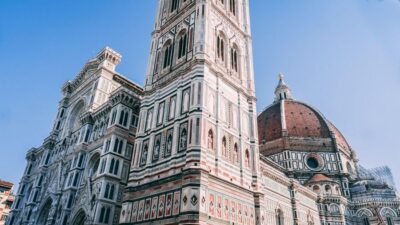
From there, the ride reaches Brunelleschi’s Dome and the Cathedral of Santa Maria del Fiore. The scale of the dome is easier to appreciate when you approach it as part of the surrounding city rather than as an isolated photo stop. The Baptistery of San Giovanni is included too, giving you three major religious buildings in one compact area.
Do not expect time to enter the cathedral or climb the dome. This is an exterior sightseeing route, not an admission tour. If you want to visit the interior, arrange that separately and treat this ride as a way to understand the buildings before or after your visit.
Roman Florence, Medici drama, and local pranks
The route also touches the Roman Forum and the Column of Abundance. These stops widen the story beyond the Renaissance. Florence did not begin with Brunelleschi, and the remains of earlier periods help explain the city’s layout and symbols.
The political story then comes forward. You’ll hear about the Medici family, Lorenzo the Magnificent, Giuliano, the Pazzi Conspiracy, the papacy, the Vatican, dukes, and grand dukes. This is where Roberto’s style matters most. Florence’s power struggles involve a long list of names and titles, but told as rivalry and danger, they become easier to follow.
The unusual stories keep the ride from becoming a formal lecture. The Devil of Giambologna, placed in a corner and linked to a plague-era memory, is the sort of small point you might miss on your own. The stories about Pisan buckets and the cheating cow add a lighter side to a city often presented only through serious art and politics.
You’ll also hear about the miracle of San Zanobi and the column associated with it. These are useful stops for understanding how faith, civic identity, rumor, and public memory overlap in Florence. I like this part of the route because it gives you local color without requiring a long detour.
Wine windows and the medieval street of prostitution

One of the more unusual portions takes you to a wine window and a medieval street associated with prostitution. The wine window is a reminder that Florence’s food and drink traditions have old roots, while the former prostitution street opens a less polished chapter of city life.
These stops are valuable because they move beyond the standard list of churches and palaces. You see how ordinary trade, drinking, sex work, and street life shaped the city alongside its famous art. The material may suit older children and adults better than very young participants.
The tour does not present Florence as a perfect Renaissance stage. That is a strength. A city built by merchants, bankers, artists, religious leaders, and powerful families also had practical trades, private scandals, and rougher corners. Those details make the grand monuments easier to place in everyday life.
Same city, a different ride:
- Private Self-Guided E-Bike Ride in Tuscany with Vineyard Visit
★ 5.0 · 775 reviews - Florence: 2-Hour Guided Bike Tour
★ 4.7 · 646 reviews - Florence Vintage Bike Tour–guided, small group or private option
★ 4.5 · 524 reviews - Florence: Guided Bike Tour in Small Group
★ 4.6 · 432 reviews
Tornabuoni Street, Strozzi, Corsini, and the Negroni

On Tornabuoni Street, the focus shifts toward elegant palaces and modern Italian cocktail culture. You’ll learn about Palazzo Strozzi and Palazzo Corsini, two reminders of the wealth and rivalry that shaped Florence’s elite families.
The route also passes Bar Giacosa, identified as the home of the Negroni cocktail. That gives you a pleasing break from church facades and political intrigue. Florence’s culture is not only found in paintings and architecture. It also lives in cafés, bars, recipes, and the habits people carry forward.
The Ferragamo Museum and the Column of Justice add another change of subject. Salvatore Ferragamo connects Florence with modern fashion and design, while the column points back toward public symbols of law and civic authority. In a short tour, this mix helps you see Florence as a living city rather than a collection of Renaissance exhibits.
Ponte Vecchio and the jewelry bridge

Ponte Vecchio is one of the tour’s major visual moments. You’ll learn how the bridge became associated with jewelry and why it is regarded as Florence’s oldest bridge.
The bridge is easy to photograph and easy to oversimplify. Roberto’s explanation gives you a reason to look at its shops and structure more closely. Instead of simply crossing, you consider how the bridge changed use over time and how commerce helped define its identity.
This is also a good example of the bike’s value. You can reach the bridge without spending the whole morning walking from one major sight to another. Still, the bicycle is not a magic shortcut. Florence’s central streets can be busy with pedestrians, and the tour includes stops, not continuous fast riding.
One useful expectation to set is that you may not do a great deal of cycling. The bike helps connect the route, but the heart of the experience is listening at each place. If you want an athletic ride or a long trip into the countryside, this is not that kind of tour.
Palazzo Vecchio, the Uffizi area, and famous Florentines

At Palazzo Vecchio, you’ll hear about the building’s role as Florence’s government headquarters since 1299. The nearby Uffizi Gallery brings in Leonardo da Vinci, Michelangelo’s David, Benvenuto Cellini, and Cosimo I.
Again, this is an outside orientation rather than a museum visit. You will not receive gallery admission through the tour, and you should not expect to stop for detailed viewing of every artwork mentioned. The benefit is context. You learn why these buildings and names matter before exploring them on your own.
The government story also helps explain how public power was displayed through architecture. Florence’s palaces were not simply beautiful backdrops. They announced wealth, authority, family loyalty, and control. Once you understand that, the city’s grand facades become less decorative and more political.
For a first visit, this section can help you plan later sightseeing. You may leave with a clearer sense of which museums deserve your time. For a repeat visitor, the political connections and lesser-known anecdotes can make places you already know feel fresh again.
Dante’s neighborhood and the final stop

The final section brings in the Tower of Corbizi and Donati, Gemma Donati, and Dante Alighieri. Dante’s wife is included in the story, along with Dante’s role as a major figure in the development of modern Italian.
This is a fitting end because it brings the tour back to people rather than buildings. Florence is often reduced to its art, but its language and literature also shaped Italy. Dante’s connection to the city gives you another way to understand Florence’s influence.
The Donati and Corbizi material also returns to family power and rivalry, themes that run through much of the ride. By this point, the Medici, artists, church leaders, merchants, and poets are no longer separate subjects. They are part of one city where private families and public institutions constantly crossed paths.
What the $42.05 price really includes
The advertised price is $42.05 per person, but the bicycle costs another €8 per person on the day. That extra charge matters when you compare this tour with walking tours or other bike outings. You should calculate the total before booking.
Even with the bike fee, the value can be good if you want a compact introduction to central Florence. In two hours, you get a guide, a bicycle, a broad route, and stories about many major sights. You also avoid spending your first day trying to work out how the historic center fits together.
The value is weaker if you already know the city well and want long stops inside museums or churches. It is also not the best choice for someone who wants strenuous cycling. The ride is a moving history lesson, not a fitness session.
The group can have up to 20 people. That is large enough for some variation in pace and attention, though the guide’s energy matters. Roberto’s clear speaking style and humor are especially important in a group setting, and his ability to keep families involved is one of the tour’s strongest qualities.
Timing, weather, and who should book
Multiple start times are offered, including a late night departure. The evening option can fit neatly after daytime museum visits and gives you a different view of Florence’s streets and monuments. It also suits anyone who prefers seeing the city after the hottest part of the day, though the supplied details do not specify the exact conditions or lighting.
Good weather is required. If poor weather cancels the tour, you can choose another date or receive a full refund. You can also cancel for a full refund up to 24 hours before the start time. Changes or cancellations inside that 24-hour window are not accepted.
I would choose this for:
- First-time visitors who want a quick city orientation
- Families with children or teenagers who prefer stories to formal lectures
- Repeat visitors looking for unusual details about familiar places
- Couples who want an easy way to connect central sights
- Anyone interested in Florence’s scandals, legends, food traditions, and local characters
I would think twice if you cannot ride a bicycle, need luggage storage, or want extensive time inside museums. Service animals are allowed, and the experience is near public transportation. Most people can participate, but the basic requirement remains the ability to ride.
Should you book Florence Untold?
Yes, if you want Florence explained through memorable people, odd stories, political plots, and small street details. Roberto’s humor and storytelling appear to be the core of the experience, and that makes the tour more than a simple list of monuments.
Book it early if your dates are fixed, since it is often reserved well ahead of time. Bring the extra €8 for the bicycle, allow for possible weather changes, and keep your expectations realistic: you’ll see a lot, but you will not tour the interiors of every major sight.
For a short first look at Florence, this is a strong choice. For an intensive bike ride or a museum-focused tour, choose something else.
FAQ
How long does the Florence Untold Bike Tour last?
The tour lasts approximately two hours.
How much does the bicycle cost?
The bicycle is not included in the advertised tour price. Bike hire costs an additional €8 per person, paid on the day of the tour.
What language is the tour offered in?
The tour is offered in English.
Where does the tour start?
The meeting point is Via della Pergola, 8 R, 50121 Firenze FI, Italy.
Where does the tour end?
The activity ends back at the meeting point.
How many people can join the tour?
The maximum group size is 20 people.
What happens if bad weather cancels the tour?
You can choose a different date or receive a full refund if the experience is canceled because of poor weather.
Just added around Florence
- Fiesole: Tuscan Countryside Half Day E-Bike Tour & Farm visit★ 5.0 · 85 reviews
- Private Tuscany Cycling Tour from Florence★ 5.0 · 68 reviews
- Florence Night Bike Tour with Wine and Aperitivo Picnic included★ 4.5 · 61 reviews
- E-bike Chianti Classico & Tuscany tour with Wine & Lunch at Farm★ 5.0 · 38 reviews
- Full-Day Tuscan Countryside Bike Tour★ 4.5 · 26 reviews
- Full-Day Tuscany and Chianti Hills Bike Tour With Lunch at Farm★ 5.0 · 45 reviews
- Private Secrets of Florence Electric Bike Tour★ 5.0 · 73 reviews
- Florence to Michelangelo Square by E-bike with Wine and Food stop★ 5.0 · 18 reviews
Florence Bike Tours, compared.
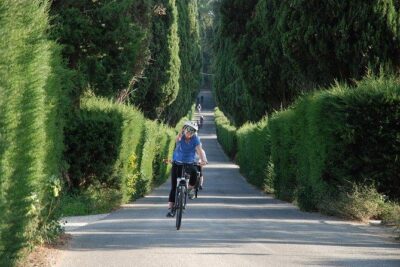
Tuscany Bike Tours Through the Chianti Hills with Wine Tasting
Read our review →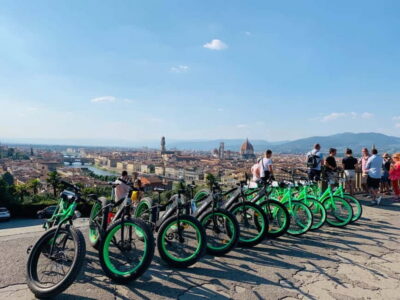
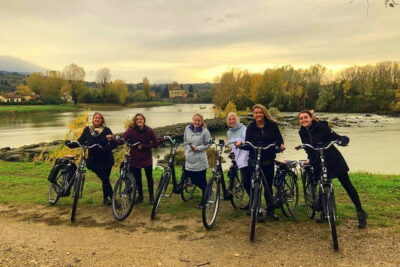
Private Self-Guided E-Bike Ride in Tuscany with Vineyard Visit
Read our review →
Florence Vintage Bike Tour–guided, small group or private option
Read our review →
Browse the lists this tour appears in