REVIEW · THAILAND
Full Day Cycling tour to Sukhothai Historical Park
Sukhothai is best understood at bicycle speed. This full-day ride begins on dirt roads outside town, passing rice paddies, canals, villages, and the Kao Laung mountain range before reaching the old royal city. I especially like the rural start, which gives you a feel for present-day Sukhothai, and the way guides such as Miaow and Jib connect temples with daily Thai life, Buddhism, and local geography.
The tour also gets the practical details right: a 24-speed mountain bike, helmet, water, snacks, lunch, admission, and hotel pickup are included. The main consideration is the distance, about 20 miles or 32 kilometers, in Thailand’s heat. The pace is generally manageable, but this is still an active day, not a short spin around the ruins.
What makes this bike tour worth your time

- You begin among rice fields and villages, not at a bus parking area beside the ruins.
- Ban Kluai provides a quiet launch point for dirt-road riding and views toward the Kao Laung mountain range.
- The route combines old and new Sukhothai, including a teak furniture factory and rural homes before the historical park.
- Major temple stops are built into the ride, including Wat Chang Lom, Wat Si Chum, Wat Mahathat, Wat Si Sawai, Wat Sa Si, and Wat Chetuphon.
- Local guides explain more than dates, covering Thai society, Buddhism, geography, food, and life in a small city.
- Lunch, local snacks, drinks, park admission, and hotel transfers make the $53.78 price easier to justify.
From Ban Kluai to the rice fields

Pickup begins around 8:15 a.m. from hotels in Sukhothai’s new city or old city, with the main tour start listed at about 8:30. Transport may be by covered pickup truck, car, or tuk-tuk. You are then taken to Ban Kluai, a small village on Sukhothai’s outskirts.
This starting point matters. You do not spend the first hour negotiating city traffic or cycling straight through an urban strip. Instead, the route moves quickly onto dirt roads beside rice paddies and irrigation canals. You get a calmer view of the region, with open fields and the Kao Laung mountain range in the distance.
The cycling is not described as a technical mountain-bike outing. The rugged 24-speed bikes are intended for a mix of paved roads and off-road tracks, so the gears are useful when the surface changes or the road rises gently. A helmet is supplied, and the group is limited to a maximum of 12 people.
I would still treat the distance seriously. Twenty miles is a good chunk of a day, particularly under a strong sun. The supplied water, drinks, snacks, and stops help, but you should arrive ready to pedal. Light clothing, sun protection, and comfortable footwear make sense, though the tour does not specify a required dress code for cycling.
More Historic Bike Tours in Thailand
- Sukhothai: Historical Park & Countryside Cycling Tour
★ 5.0 · 276 reviews - Chiang Mai: Historic Old City Bike Tour – Morning or Night
★ 4.7 · 263 reviews - Chiang Mai: Historic Old City Bike Tour – Morning or Night
★ 5.0 · 202 reviews
Rural Sukhothai before the monuments
The early part of the ride gives you something that a direct temple visit misses: a look at how Sukhothai works beyond its famous ruins. You pass rural villages and rice fields, following irrigation routes that help explain why this plain supported a powerful historic kingdom.
One unusual stop is a local teak wood furniture factory. It adds a present-day craft element to the day and breaks up the cycling with a look at local work. This is the sort of stop that helps connect the old city with modern Sukhothai, rather than treating the ancient park as an isolated museum.
The route may also include other village and countryside stops before the temples. Exact timing can shift because the full outing lasts about six to eight hours, and transfer times depend on traffic. That flexibility is useful in a hot climate, but it also means you should not plan a tightly timed afternoon connection immediately after the tour.
A local snack break is part of the experience. The food is not just fuel. It gives your guide a chance to introduce familiar Thai flavors and lesser-known dishes in a casual setting. Vegetarian food is available if you request it when booking, and you should also mention any other dietary needs at that time.
Entering Sukhothai Historical Park by bicycle
The historic park is the day’s main event, and arriving by bicycle gives it a different rhythm from a quick car tour. You can move between temple sites without repeatedly returning to a vehicle, while the open setting makes the ruins feel connected to the surrounding countryside.
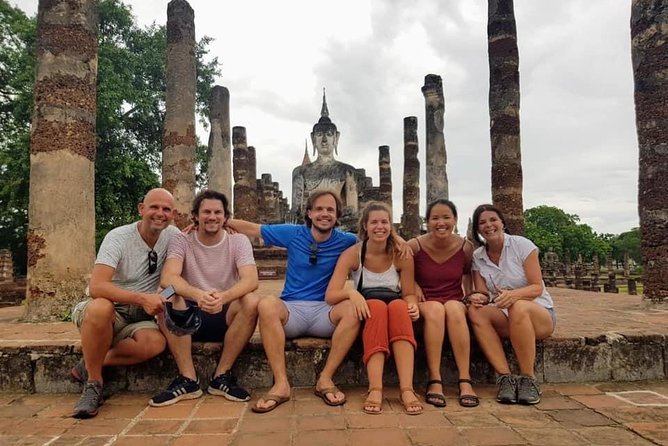
Sukhothai was the center of an early Thai kingdom, and its temples reflect a period when Thai art, religious ideas, and royal power were taking shape. Your guide is there to explain those connections in plain terms. Guides including Miaow, Jib, Sumitra, and Chip are specifically praised for clear English, humor, and their ability to explain history alongside Thai society and Buddhism.
The exact order of the stops can vary, but the listed route covers many of the park’s key sights. You should expect time at the following places.
Wat Chang Lom
Wat Chang Lom is known for the row of elephant sculptures around its central stupa. The elephants appear to carry the base of the structure, creating one of Sukhothai’s most memorable temple images.
This stop works well early in the historic section because it gives you a clear example of how architecture and religious symbolism meet. Your guide can add context about the temple’s purpose and the artistic style of the period.
More Nature Bike Tours in Thailand
- Bangkok Jungle Bike Tour – Hotel-pickup & Lunch
★ 5.0 · 489 reviews - Chiang mai Hike & Downhill Bike Adventure –Suthep National Park
★ 4.5 · 204 reviews - Ayutthaya City and Historical Park Bike Tour
★ 4.8 · 175 reviews - Chiang Mai: Suthep National Park Hiking & DH Mountain Biking
★ 4.8 · 151 reviews
Wat Si Chum
Wat Si Chum is often the emotional high point of the route. Its enclosed mondop contains a huge seated Buddha image, Phra Achana, seen through a narrow opening in the structure.
The view is powerful even before you hear the story behind it. The scale of the Buddha and the tight approach create a strong contrast with the open fields outside. Give yourself time here for photographs, but also look closely at the image and the building that frames it.
The tour may finish at Wat Si Chum, according to the stated itinerary. That makes sense as a final temple stop, since it leaves you with one of Sukhothai’s most recognizable sights rather than ending on a less distinctive ruin.
The Sukhothai kilns
The old kilns point to the city’s production and trade, not just its royal and religious buildings. Ceramics were an important part of Sukhothai’s economic story, and kiln remains help you picture the working side of the historic city.
This is a good reason to choose a guided ride instead of simply collecting temple photographs. Without explanation, kiln sites can be easy to pass quickly. With a guide, they become evidence of how people made goods and supported the kingdom.
Wat Mahathat
Wat Mahathat is the central temple complex and one of the largest sites in the park. Its lotus-bud towers, seated Buddha images, columns, and ponds create the classic Sukhothai view.
Because the complex is extensive, a guide helps you focus on the parts that matter most. You can also use the cycling format to cover more ground without wearing yourself out walking across every open section. Expect time for photographs, but do not count on a private visit or a completely empty setting.
Wat Si Sawai
Wat Si Sawai has a different look from the main Sukhothai style, with three prang towers that reflect Khmer influence. Its compact form makes it an interesting comparison with the broader Buddhist complexes nearby.
This stop adds variety to the temple sequence. Instead of seeing one repeated architectural pattern, you get a reminder that Sukhothai sat within wider regional networks of art, religion, and political influence.
Wat Sa Si
Wat Sa Si sits near water and is known for its elegant central stupa and graceful Buddha image. The setting is among the most pleasant in the park, especially when viewed from the paths around the pond.
It is also a useful place to slow down. A bicycle tour can cover a lot of ground, and the water gives the group a natural pause before moving on to further ruins.
King Monument and Wat Chetuphon
The route also includes a monument to the Sukhothai king and Wat Chetuphon. These stops extend the visit beyond the most photographed central temples and provide more room for discussion about the kingdom and its rulers.
Wat Chetuphon is outside the tight cluster of central monuments, making the bike especially practical. You are not relying on a long walk between each site, and the ride itself becomes part of the visit.
A guide who adds more than dates

The strongest part of this experience is the guiding. Miaow is repeatedly singled out for clear English, warmth, humor, and strong knowledge of local life. Jib, Sumitra, and Chip are also named as guides who explain the temples well and answer broader questions about Thai culture.
That range matters. You will hear about Sukhothai’s history, but also about Buddhism, geography, food, local customs, and life in a small Thai city. This makes the tour useful if you are unsure how the ruins fit into the larger story of Thailand.
The small-group format helps here. The maximum is 12 people, and groups may be much smaller. One reported arrangement had only four cyclists, which allowed for an easier pace and more direct attention. Group size can vary, so do not assume you will always get a private-feeling ride.
Guides also appear willing to help beyond the formal route. Miaow and Jib have helped with onward transportation questions and practical arrangements. That is not a guaranteed extra service, but it reflects the family-run nature of Sukhothai Bicycle Tour and can be useful if you are still organizing your next move.
Lunch, snacks, and keeping comfortable

Food is included, and lunch is served during the day rather than left until the end. That is important because you are cycling for several hours. Snacks and drinks are also provided, along with bottled water.
The food adds another local touch. You may sample Thai snacks that you would not think to order on your own, and lunch gives you a proper break from the bike. Vegetarian meals are available when requested in advance.
Heat remains the main physical challenge. Even with water and rest stops, you should not assume the ride will feel effortless. The route is described as manageable rather than punishing, and one rider completed it while feeling unwell, but that should not be taken as a promise that the day suits everyone.
If you dislike cycling, have limited stamina, or want a slow temple visit with minimal exertion, a vehicle-based tour may fit better. If you enjoy being active and want countryside as well as ruins, the effort pays off.
Is $53.78 good value?

At $53.78 per person, this is a strong package for a full day. The price includes hotel pickup and drop-off within 15 kilometers of the starting point, a mountain bike, helmet, English-speaking guide, food, drinks, snacks, park entrance, and transfers to Ban Kluai.
You are not paying only for entry to the historical park. You are also paying for transport, equipment, route planning, and a guide who can explain sites that would otherwise be easy to skim. The countryside section and teak furniture factory add experiences that a basic park ticket does not provide.
The main value question is how much of the cycling you will enjoy. If you want to see Sukhothai’s temples with little physical effort, the price may not feel like a bargain because the bike ride is central to the day. If you like active sightseeing, the combination of rural roads, food, and major ruins gives you a lot for the cost.
Pickup is offered only for hotels within 15 kilometers of the start point. If you are staying farther away, you may need to arrange your own way to the meeting point, although the operator may be able to help with practical transport questions.
Who should book this experience?

I would choose this tour if you want to see Sukhothai as a living place, not only as a collection of ruins. It suits couples, solo visitors, families with older children, and active adults who are comfortable spending most of a day on a bicycle.
It is especially useful for a short Sukhothai stay. You cover a broad list of important temples while also seeing villages, fields, canals, local food, and a working furniture factory. You get a strong sense of the area in one organized outing.
You should think twice if you are sensitive to heat, uncomfortable on uneven roads, or looking for a quiet, unhurried temple walk. The distance is real, and the route includes dirt roads. Most people can participate, but the tour is not presented as an accessible or low-effort activity.
Free cancellation is available up to 24 hours before the start time. The outing depends on suitable weather and a minimum number of participants, so a cancellation caused by poor weather or low enrollment brings the choice of another date, another experience, or a full refund.
Should you book the Sukhothai cycling tour?

Book it if you want the best mix of countryside and ancient Sukhothai in one day. The strongest reasons are the quiet village approach, the wide temple coverage, the excellent local guiding, and the practical inclusion of food, water, equipment, entry, and transfers.
The only serious caution is the 32-kilometer ride in a hot climate. If that sounds enjoyable rather than daunting, this is a well-priced and unusually complete way to see Sukhothai. If you want the monuments without the exercise, choose another format.
FAQ
How long does the Sukhothai cycling tour last?
The experience lasts approximately six to eight hours. The listed itinerary gives about seven hours, including countryside cycling, temple visits, food stops, and transfers.
How far will I cycle?
You will cycle about 20 miles, or 32 kilometers, through rural Sukhothai and the historical park.
Is hotel pickup included?
Yes. Pickup and drop-off are included for hotels in Sukhothai’s old city and new city, within 15 kilometers of the starting point. Hotels farther away are not covered by the included transfer.
What equipment is provided?
The tour provides a 24-speed mountain bike and helmet. The bikes are intended for both paved roads and off-road routes.
Does the tour include food and entrance fees?
Yes. Lunch, snacks, drinks, bottled water, and admission to Sukhothai Historical Park are included. Vegetarian food is available if requested when booking.
What happens if the weather is poor?
The experience requires good weather. If it is canceled because of poor weather, you will be offered another date or a full refund.
More Historic and Landmark Bike Tours in Thailand
- Chiang Mai: Private Historic Old City Bike Tour – Night
★ 4.7 · 143 reviews - Bangkok: Backstreets and Historic Temples Bike Tour
★ 4.9 · 98 reviews - Chiang Mai: Half-Day Old Town Cycling Tour
★ 4.9 · 87 reviews - Bangkok: Backstreets and Temple Historic Bike Tour
★ 5.0 · 84 reviews
More Park and Nature Bike Tours in Thailand
- The Original Bicycle Tour in the Green Jungle of Bangkok
★ 5.0 · 106 reviews - Explore Bangkok jungle by bike, kayak & boat – small group
★ 5.0 · 103 reviews - No.1 Chiang Mai: Advanced Downhill Mountain Biking, Suthep N.Park
★ 4.5 · 57 reviews - Sukhothai: Full-Day Historical Park Cycling Tour with Lunch
★ 4.9 · 55 reviews
Just added around Thailand
- Half day Koh Klang culture cycling★ 5.0 · 55 reviews
- Krabi Countryside Eco Cycling Tour – Multiple Trails★ 5.0 · 13 reviews
- Cycling in rural Kanchanaburi area★ 5.0 · 12 reviews
- Full Day Cycling Amazing Chiangrai countryside and the White temple★ 5.0 · 53 reviews
- Buffalo Soldier Trail Mountain Biking Tour from Chiang Mai with Lunch★ 5.0 · 15 reviews
- Half Day Cycling Tour to the White temple★ 5.0 · 61 reviews
- Sticky Waterfall Cycling Tour★ 5.0 · 68 reviews
- Rural Explorer Mountain Biking Tour Chiang Mai★ 5.0 · 55 reviews
Thailand Bike Tours, compared.
Night Bike Tour with Temples & Flower Market Visit
Read our review →
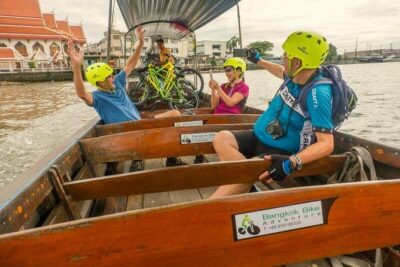
Bangkok Jungle Bike Tour – Hotel-pickup & Lunch
Read our review →