
REVIEW · BUENOS AIRES
Private Off the Beaten Path: Hidden Urban Art Bike Tour
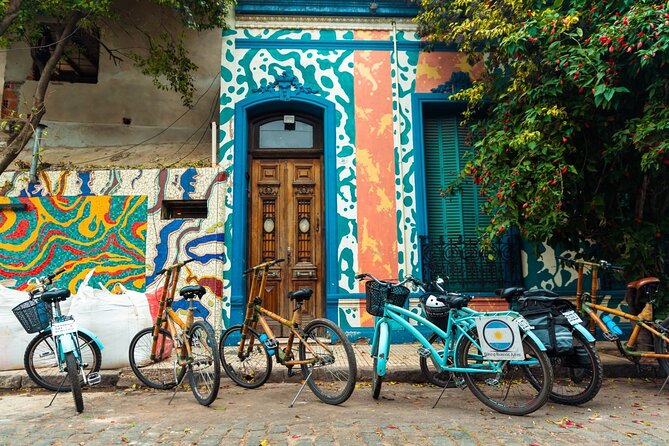
Buenos Aires reveals its best surprises when you leave the postcard streets behind. This private four-hour bike tour rolls from San Telmo into La Boca and Barracas, where murals cover working-class streets, former factories hold art collectives, and local history appears on walls rather than in museums. The route includes Pasaje Lanín, Caminito, works by artists such as Pum Pum and Martin Ron, and Alfredo Segatori’s enormous mural across three buildings.
I like two things right away: the range of neighborhoods you cover by bicycle, and the way street art opens conversations about politics, soccer, religion, community life, and Argentine culture. You also get snacks, bottled water, and a coffee or yerba mate stop. The main catch is simple: you need to feel comfortable riding in city traffic and going through areas that are not set up for sightseeing. Bike upkeep may be basic, and an e-bike costs extra.
Key points to know before you book
- San Telmo to La Boca and Barracas: Cover several southern Buenos Aires neighborhoods without spending the day on a bus.
- Pasaje Lanín: See a once-dull street transformed by artist Marino Santa Maria, now recognized as a site of cultural interest by UNESCO.
- Alfredo Segatori’s huge mural: View El Regreso de Quinquela, spread across three buildings in Barracas.
- Art with local context: Learn how murals connect to football, politics, religion, neighborhood identity, and daily life.
- Private format: Your group rides with an English or Spanish-speaking guide, rather than joining a large scheduled crowd.
- A physical city tour: Expect roughly four hours on a bike, with several walking breaks and an optional e-bike for an added fee.
Why this bike ride shows you a different Buenos Aires
Many first-time visits stay around Recoleta, Palermo, Plaza de Mayo, and the colorful Caminito strip. Those places have their appeal, but they can also give you a polished, partial view of Buenos Aires. This route pushes south, into La Boca and Barracas, where street art is part of the neighborhood fabric rather than a backdrop arranged for sightseeing.
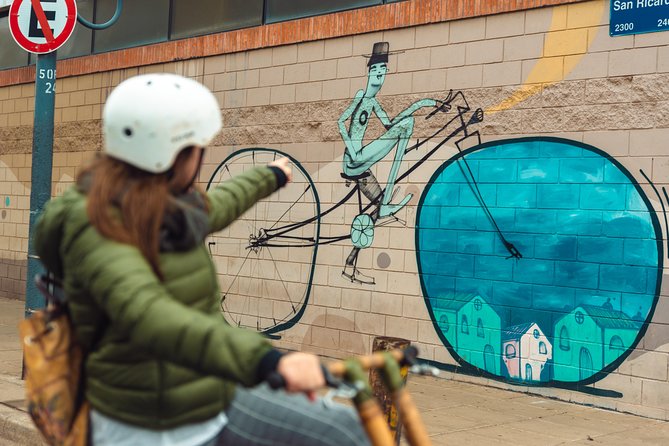
The bike makes the route practical. You can cover ground between murals while still moving slowly enough to notice painted shutters, side streets, old industrial buildings, and small design spaces. A bus would get you from one district to another, but it would skip the pauses that make this tour work.
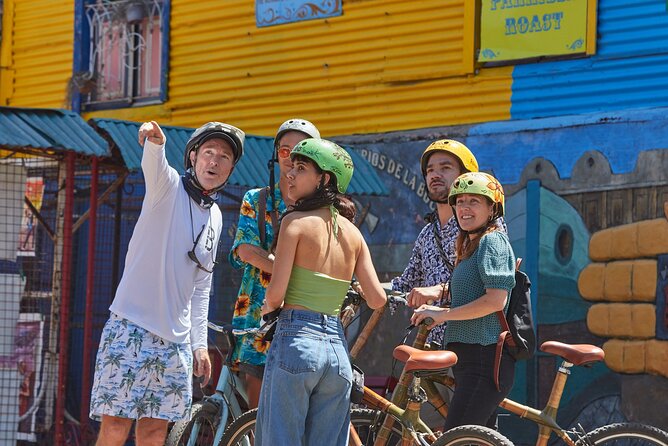
The tour is private, so the pace can suit your group better than a large ride. Guides have room to explain the artwork, answer questions, and adjust the time spent at different stops. Previous guides named in the experience feedback include Raymond and Daniel, though your guide will depend on the date and assignment.
I would schedule this early in your Buenos Aires stay. The ride gives you a useful feel for the city, and the guide can offer ideas for the rest of your visit. One guide also became a source of helpful restaurant and sightseeing suggestions for a solo participant, including a few unexpected local connections. Treat that as a possible bonus, not a promise.
More Private Bike Tours in the world:
- Party Bike Private Party Up To 14 People in Old Town Scottsdale
★ 5.0 · 3,541 reviews - Barcelona: Private Group Bike Tour
★ 4.8 · 1,420 reviews - Private Self-Guided E-Bike Ride in Tuscany with Vineyard Visit
★ 5.0 · 775 reviews
Starting in San Telmo with a bike briefing
You meet at Balcarce 1016 in San Telmo in the early afternoon. San Telmo is one of Buenos Aires’s oldest neighborhoods, and it makes a fitting starting point for a tour centered on old streets, new art, and local culture.
The first portion is practical. You receive a bicycle, helmet, and basic urban riding guidance, then hear how the route will unfold. This matters because the tour is not a gentle park ride. You will ride through city streets, cross between neighborhoods, and spend a good part of the afternoon in the saddle.
The company presents its work as a cultural bridge, not simply a bicycle rental operation. That outlook shapes the experience. The guide uses the ride to talk about how people see their city, how public art changes a block, and how different communities express themselves.
You should have a moderate fitness level and a good comfort level on a bicycle. The tour runs in all weather, so dress for the forecast. Bottled water and snacks are included, but sensible clothing and shoes still matter. Service animals are allowed, and the starting point is near public transportation.
Pasaje Lanín and the art of changing a street
One of the strongest stops is Calle Lanín in Barracas. It was once described as a gray, dark street with a name suggesting something nearly dead. Artist Marino Santa Maria helped bring it back to life with colorful facades and decorative work.
The point here is not just to photograph a pretty lane. You see how one artist and a neighborhood can alter the mood and identity of a public space. The street has been listed by UNESCO as a site of cultural interest, giving the stop added importance beyond its visual appeal.
You get about 15 minutes here, enough for a close look and a short walk. This is a good example of why a bike tour works better than a checklist of major sights. You arrive in a small, quiet place that could easily be missed from a car or bus.
For photographers, Pasaje Lanín offers a more intimate subject than the large murals later in the route. Look at the relationship between the painted surfaces, doorways, and narrow street. The artwork is part of the architecture.
Barracas and Alfredo Segatori’s three-building mural
In Barracas, the scale changes. You see El Regreso de Quinquela, a mural by Alfredo Segatori, also known as Pelado. It spans three buildings and was once described as the longest mural painted by one person. It is now regarded as the longest in Argentina.
The tour material also presents it as the world’s largest street mural, so your guide may frame it in those terms. The important point is easy to grasp on site: this is not a small wall piece you can take in with one glance. The work spreads across an entire section of the neighborhood and changes as you move past it.
The mural is linked to Benito Quinquela Martín, a major Argentine artist associated with La Boca. That connection helps place the modern street art in a longer local tradition of painting working-class life, labor, and neighborhood character.
You spend only about 10 minutes at this formal stop, but the ride includes other art nearby. Works by Pum Pum, Mart, Pol Corona, and Martin Ron add different styles and subjects. You may see decorative imagery, political statements, sports references, and scenes tied to community life. The guide’s job is to help you read those differences rather than treating every painted wall as the same kind of graffiti.
More Private Tours in the world:
- Bilbao: Guided Highlights Small Group or Private E-Bike Tour
★ 4.8 · 608 reviews - Florence Vintage Bike Tour–guided, small group or private option
★ 4.5 · 524 reviews - Bike Tour Copenhagen. Private Guide, Concierge Service, Small Grp
★ 5.0 · 416 reviews - Private Highlights of Florence Bike Tour
★ 5.0 · 400 reviews
Caminito: colorful, famous, and still worth understanding
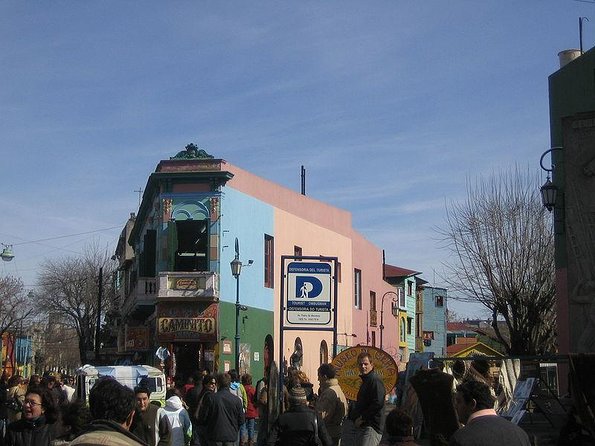
Caminito is the most familiar part of the route. Its painted buildings and connection to La Boca football culture make it one of Buenos Aires’s most visited areas. It is also the point where the tour is most likely to feel touristy.
That contrast is useful. Earlier, you see art in back streets and less polished settings. At Caminito, you see how color, art, tango, football, and tourism have combined to create one of the city’s best-known public scenes. Your guide explains how the neighborhood became so popular, rather than simply sending you out to take pictures.
The stop lasts about an hour and a half, making it the longest pause on the route. You may walk the area, look at murals, and take part in a Stealth Stencil stop. The exact details of that activity are not specified, but it is presented as a hands-on street art moment rather than a standard viewing stop.
You also sample a local drink that became a favorite in Argentina. The included coffee or tea mate stop gives you a chance to pause, talk, and watch the neighborhood instead of rushing from wall to wall. Yerba mate is more than a beverage here. It is part of everyday social life, and learning how it fits into Argentine culture adds a human layer to the art tour.
Caminito can be busy and visually loud. If you want only quiet side streets, this will be the least secluded part of the ride. Still, it earns its place because the guide connects the famous tourist setting to La Boca’s working-class identity and its strong football culture.
La Boca beyond the postcard
The tour continues through parts of the original La Boca neighborhood, including areas connected with the COLOR BA festival. This is where the route returns to its main idea: public art as a way to understand a place.
La Boca is historically Italian and working class, and it is closely tied to Boca Juniors football club. Those influences show up in the colors, symbols, and subjects painted around the neighborhood. You might see art that speaks to sport, politics, religion, local pride, or shared memory.
The guide may take you through quieter back streets and along busier thoroughfares. That mixture is part of the experience, but it also explains the need for urban riding confidence. You are not cycling on a protected museum path.
Several stops let you leave the bikes and explore on foot. That break helps with both safety and appreciation. Street art often works at eye level, but large murals require you to step back, move around, and see how the work relates to nearby buildings.
Design collectives and former industrial spaces
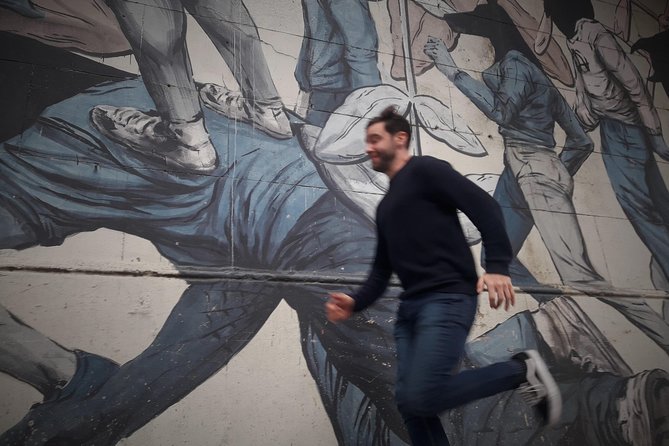
The route includes contemporary design sites such as the Metropolitan Design Center and Cooperativa Vieytes. These stops broaden the tour beyond painted walls.
Cooperativa Vieytes occupies a former ice cream factory and features a symbolic mural. The building’s earlier use, its collective purpose, and its artwork show how old industrial spaces can take on new community roles. You are not just looking at a finished object. You are seeing how art and design function inside a neighborhood.
The Metropolitan Design Center adds another side of Buenos Aires’s creative life. Together, these places help explain why the city’s street art does not exist in isolation. Artists, designers, neighborhood groups, and cultural organizations all contribute to the way public spaces look and feel.
A collaborative mural connected to the Styles Street Art Convention is also part of the route. It gives you a chance to compare the work of many artists in one setting. The variety can be more revealing than a single signature style.
What the guide adds to the artwork
The strongest part of the experience is not simply locating murals. It is having someone explain what they mean in local terms.
One guide, Raymond, used street art as a starting point for discussions about history, culture, soccer, religion, and Argentine life. Another guide, Daniel, was especially strong on the history of working-class neighborhoods and had connections with local artists. A different guide was relatively new but still brought strong subject knowledge. These details suggest that guide quality can vary in personality and experience, while the tour’s themes remain consistent.
The best guides will help you notice how public art can be decorative, historical, political, communal, or all four at once. You may leave with a changed view of graffiti, seeing it less as random marking and more as a record of who lives in a place and what matters to them.
Because the tour is private, ask questions. If a mural catches your eye, say so. The schedule allows about eight stops, but the value comes from the conversation at each one, not from racing to collect locations.
Price, bicycles, and what you receive
At $115 per person, this is not the cheapest way to see Buenos Aires. The price makes more sense if you value a private guide, bicycle access, a four-hour route, local snacks, bottled water, and a mate or coffee stop.
You are also paying for access to places that are awkward to connect on foot. A taxi could move you between La Boca and Barracas, but it would not give you the same steady view of the streets. A standard group tour might cost less, but it would likely offer less control over pace and questions.
The bicycles do the job, though maintenance may not be perfect. That is the clearest practical weakness in the available feedback. If you prefer a little assistance, an e-bike is available for an extra fee. Confirm that added cost before booking if you are counting every peso.
The tour is recommended by 97 percent of participants and has a 4.9 rating from 62 reviews. Those figures point to strong satisfaction, especially with the guides, the off-track route, the art, and the sense of safety. They do not remove the need to judge your own cycling ability or expectations.
Who should book this ride?
You are a good match if you enjoy contemporary art, local history, photography, neighborhood culture, and active sightseeing. It suits people who would rather spend half a day moving through real city streets than checking off major monuments.
It is also a strong choice for a first day or second day in Buenos Aires. The route gives you a feel for the city’s southern neighborhoods, and the guide’s recommendations can help shape the rest of your stay.
I would think twice if you dislike city cycling, want a fully polished tourist route, or have difficulty riding for several hours. The tour operates in all weather, and the less-touristy areas are part of the point. An e-bike can help with effort, but it will not remove traffic, uneven streets, or the need to stay alert.
The tour ends back at Balcarce 1016 in San Telmo. Free cancellation is available if you cancel at least 24 hours before the start time. Cancellations or changes made inside that window are not accepted for a refund.
Should you book the Hidden Urban Art Bike Tour?
Book it if you want Buenos Aires explained through its neighborhoods, not just its monuments. The best reasons are the ride through La Boca and Barracas, the mix of large murals and small art spaces, the time spent with a private guide, and the chance to connect street art with Argentine politics, football, religion, and daily life.
Skip it if you want a slow walking tour, dislike bicycles, or prefer a tightly maintained fleet and a polished tourist setting. For the right rider, though, this is one of the more distinctive ways to see southern Buenos Aires. Bring curiosity, comfortable clothes, and enough confidence to ride in an urban setting.
FAQ
How long does the Hidden Urban Art Bike Tour last?
The tour lasts approximately four hours, including bicycle riding, about eight stops, walking breaks, photo time, and a coffee or yerba mate stop.
Where does the tour begin and end?
It begins at Balcarce 1016 in the San Telmo neighborhood and ends back at the same meeting point.
Which neighborhoods does the tour visit?
The route travels from San Telmo toward La Boca and Barracas. Stops include Caminito, Calle Lanín, and other streets and design sites in the southern part of Buenos Aires.
Is an e-bike included?
A regular bicycle and helmet are included. An e-bike is available as an optional upgrade for an extra fee.
What is included in the price?
The tour includes local taxes, bicycle use, a helmet, an English or Spanish-speaking guide, bottled water, snacks, and a coffee or tea mate stop.
Do I need to be an experienced cyclist?
You need a moderate level of physical fitness and a good level of comfort riding in an urban setting. The tour visits non-touristy areas and operates in all weather, so you should dress appropriately and be ready for city riding.
Just added around the world
- Napier: Cycle to Wineries – Half Day, self-guided★ 4.0 · 12 reviews
- Napier Bike Hire★ 5.0 · 40 reviews
- Guided Bike Tour – Downtown Naples Florida★ 4.5 · 22 reviews
- Independent Hassle-free Bike Rental in Sonoma★ 5.0 · 62 reviews
- Healdsburg Cycling Wine Tour★ 4.5 · 14 reviews
- Full-Day Electric Bike Rental★ 5.0 · 38 reviews
- Sonoma Valley Pedal Assist Bike Tour★ 5.0 · 32 reviews
- Bike Tour at Hell’s Gate National Park, Boat Ride at L. Naivasha★ 5.0 · 27 reviews
Buenos Aires Bike Tours, compared.
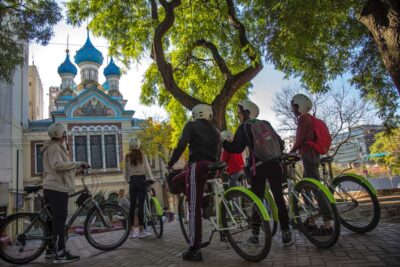
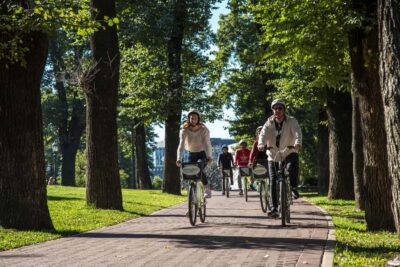
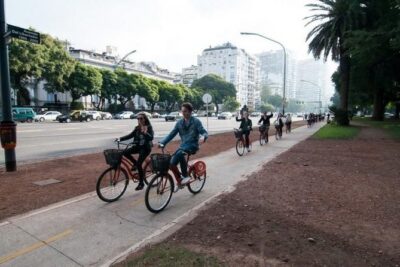
Buenos Aires Bike Tour: North Districts, Recoleta and Palermo
Read our review →
Buenos Aires Bike Tour: San Telmo and La Boca Districts
Read our review →
Cultural Experience by Bike around Palermo and Recoleta Max 6 ppl
Read our review →Browse the lists this tour appears in