
REVIEW · SOUTH AFRICA
Soweto: Bike Tour with a Local Tour Guide
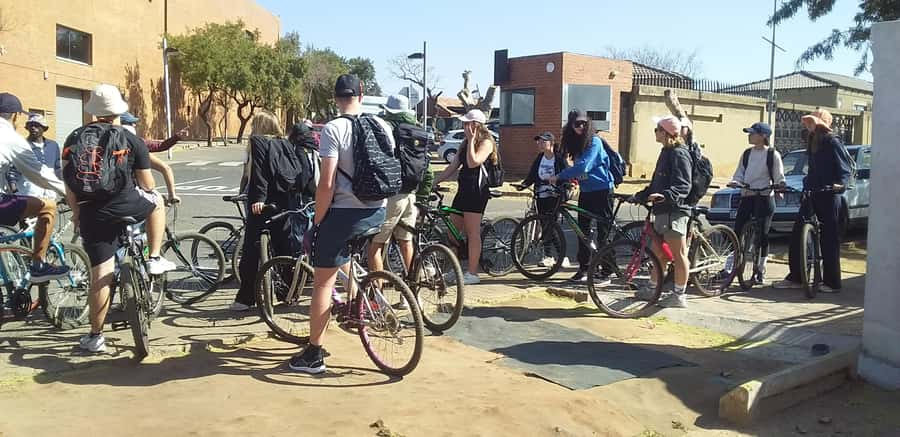
The most meaningful part of this two-hour bike tour is the way it connects Soweto’s famous names with ordinary daily life. You pedal through Orlando West, hear the story of the 1976 student uprising, and pass places linked to Nelson Mandela, Archbishop Desmond Tutu, and Hector Pieterson.
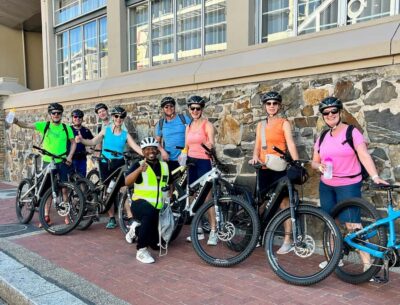
I like the small-group format, limited to 10 people, because it gives you a better chance to hear your guide and ask questions. I also like the mix of history, exercise, and local contact. You are not simply driven between sights. You move through the township at street level.
The main consideration is the condition of the bicycles. Some recent feedback points to bikes that need better maintenance, so check your bicycle, brakes, and helmet before setting off. The route also suits you only if you can ride a bike and manage a little exercise.
Key points to know before booking
- Hector Pieterson Memorial: Learn about the 16 June 1976 student uprising and the death of Hector Pieterson.
- Vilakazi Street by bicycle: Ride along the most famous street on the African continent.
- Orlando West landmarks: See the former homes of Nelson Mandela and Archbishop Desmond Tutu.
- Local guide and small group: An English-speaking guide leads a group of no more than 10 people. Guides such as Pule have been praised for clear, detailed explanations.
- Simple, flexible outing: The tour lasts two hours and includes a bicycle, helmet, and guide, with museum fees, food, drinks, and Orlando Towers bungee jumping extra.
- Practical preparation: You must be at least 8 years old and able to ride. Wear comfortable clothes, sunscreen, and a hat.
Why a bicycle is a good way to see Soweto

Soweto is often presented through a short list of major political names. That list matters, but a bicycle gives you a better sense of how those places fit into the wider township.
On foot, you would cover less ground. From a vehicle, you would see the streets through glass and move past them quickly. Cycling gives you time to notice the surroundings while still covering the main points in a compact two-hour visit.
This is not a long-distance ride or a demanding cycling excursion. The activity description presents it as a modest bit of exercise, combined with a guided tour. You should still be comfortable riding in a town environment and prepared for the physical effort of sitting on a bicycle for two hours.
The group size helps here. With a maximum of 10 people, the guide can usually keep the group together more easily than on a large coach outing. You also have a better chance to stop for an explanation without the visit turning into a private tour.
The tour is led in English. Pule is one guide associated with this experience, and his clear, detailed explanations have earned strong praise. Guide names may vary, so book it for the local guiding rather than assuming a particular person will lead your departure.
More Guided Tours in South Africa:
- Soweto: Guided Bicycle Tour with Lunch
★ 4.9 · 292 reviews - Cape Town: Guided Bike Tour
★ 4.9 · 193 reviews - Guided Bicycle Tour of Soweto with Lunch
★ 5.0 · 180 reviews
Meeting behind the Hector Pieterson Museum
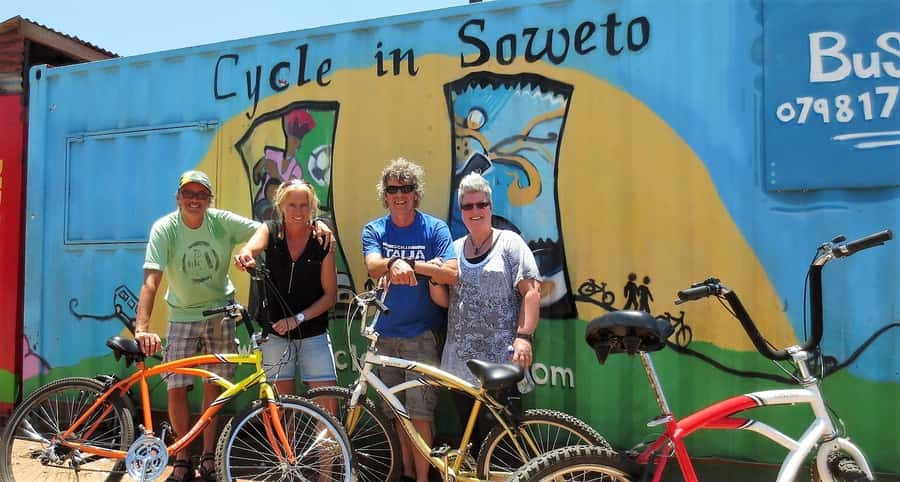
Your meeting point is the Cycle in Soweto shop, behind the Hector Pieterson Museum and next to the bus parking area. This is useful to know because you are not meeting at a vague street corner or at the museum entrance itself.
The shop is also where you begin and finish the ride. The listed starting and drop-off locations are both Cycle in Soweto, so you should not need to arrange a separate return point at the end.
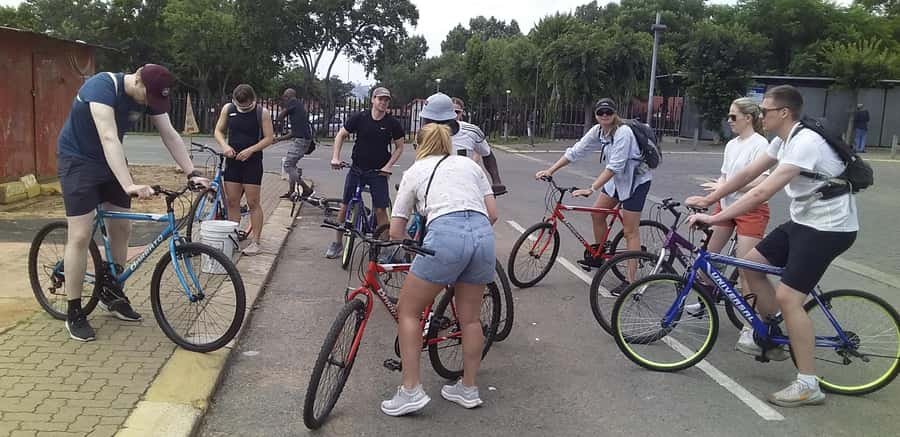
Take a few minutes at the start to check the bicycle. Make sure the saddle feels usable, the tires look properly inflated, and the brakes respond. Recent feedback has praised the guides but raised concerns about bicycle condition and maintenance. That does not mean every bicycle will be poor, but it is a sensible check before leaving the shop.
A helmet is included. Comfortable clothing is recommended, along with sunscreen and a hat. The supplied information does not list food or drinks, so bring what you need for the two-hour outing.
Orlando West and the everyday side of the township
The guided route takes you through Orlando West, one of Soweto’s best-known areas. The value here is not just seeing a famous neighborhood. Your guide helps connect the streets and homes with the people and events that shaped South African history.
The tour is designed to show day-to-day life in the township. That means you should expect more than a string of formal monuments. You may pass ordinary homes, local businesses, and people going about their routines.
Approach this part with respect. You are entering a lived-in community, not an open-air museum. Listen to your guide, ask sensible questions, and avoid treating residents or homes as photo props. The chance to interact with local people is one of the tour’s strengths, but it works best when the contact is polite and unforced.
You also have the opportunity to support small businesses along the way. The advice is to bring small change or items you would like to donate. This is optional, and you should not feel pressured to give. If you do carry cash, keep it modest and practical.
Hector Pieterson and 16 June 1976
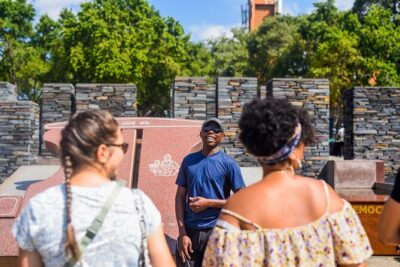
The Hector Pieterson Memorial is the emotional center of the ride. Here, your guide explains the student protests of 16 June 1976 and the police shooting that killed Hector Pieterson.
The event became a major symbol of resistance to apartheid. The tour’s focus is not simply on memorizing a date. It is on understanding why students protested, how the police response turned the day into a national tragedy, and why Hector Pieterson’s name remains so strongly linked with the uprising.
This stop gives the wider tour its historical weight. Before visiting, it helps to allow a little quiet attention rather than rushing through for a photograph. The memorial is a place for listening and reflection.
Museum entrance fees are not included in the tour price. The supplied details do not specify the exact admission cost, so budget separately if your visit includes paid museum entry. The guided bike tour itself still provides the historical explanation, even if you decide not to add museum admission.
The memorial is also a practical meeting point. Since the Cycle in Soweto shop is behind it, next to the bus parking area, you can combine your arrival with a quick look at the surrounding area before the ride begins.
A few more bike tours around South Africa worth a look
- Stellenbosch: Historical Bike Tour & Wine Tasting
★ 4.9 · 248 reviews - Cape Town City Cycling Tour
★ 5.0 · 199 reviews - Franschhoek: E-Bike Guided Winery Tour
★ 4.6 · 96 reviews - Stellenbosch: Wine Farm E-Bike Guided Tour
★ 4.6 · 88 reviews
Vilakazi Street, Mandela, and Tutu
One of the tour’s most distinctive features is cycling along Vilakazi Street. It is described as the most famous street on the African continent, and its importance comes from the people associated with it.
You will see the homes of Nelson Mandela and Archbishop Desmond Tutu. Having the two residences on the same street gives this short tour an unusual concentration of South African political and religious history.
The tour does not include entrance fees to museums, so seeing the outside of a home or landmark should not be confused with a museum visit. If you want to enter a museum, ask your guide about the additional cost and available time. The two-hour schedule is built around cycling and guided stops, not extended indoor visits.
I like this section because it avoids treating Soweto’s history as something confined to one memorial. The story continues along a real street, connected to homes, neighborhoods, and local life. At the same time, you should keep your expectations realistic. This is a short guided ride, not a full-day historical tour with long visits inside every site.
Orlando Stadium and the wider route
Orlando Stadium is another named stop on the route. Its inclusion adds a different side of Soweto to the political story. Instead of focusing only on memorials and famous homes, the ride also points to a major local gathering place.
The supplied details do not promise a stadium tour or entry inside the venue. Expect to see the stadium as part of the bicycle route and hear about its place in the area from your guide.
The route includes several neighborhoods and landmarks within a tight two-hour window. That makes the tour useful if you have limited time in Gauteng and want an introduction rather than an exhaustive visit.
The tradeoff is pace. You will not have unlimited time at each stop. If you prefer to read every display, take a long museum visit, or linger over each site, you may want to pair this outing with a separate visit to the museums and memorials.
What the local guide adds
A local guide is especially important on a tour like this. Names and dates alone do not explain what you are seeing. The guide provides the links between the 1976 uprising, the homes on Vilakazi Street, Orlando West, and present-day life.
Pule has been singled out for being informative and for planning the route well. Other departures may have a different guide, but the activity is consistently described as an English-led tour.
You should use the ride to ask direct questions. Ask about the student protests, the people connected with Vilakazi Street, and how the different parts of Soweto relate to one another. A good question can turn a quick stop into a useful conversation.
There is also a practical advantage to having a local guide on the road. Your guide manages the route and helps the group move together. One piece of feedback noted that two guides were present, with one riding at the back. That may not be guaranteed on every departure, but a rear guide can make a small group feel more secure and organized.
Price, timing, and what you receive

At $34 per person, the tour offers reasonable value if you want transport by bicycle, a helmet, an English-speaking guide, and a focused introduction to major Soweto sites in two hours.
The price is less attractive if you mainly want museum entry. Entrance fees are not included, and neither are food or drinks. Orlando Towers bungee jumping is also separate, so do not treat the $34 as a package covering every attraction in the area.
The value comes from the combination of guiding and access to several important places in a short period. Hiring a bicycle, finding the landmarks, and working out the historical connections on your own would take more effort. The tour gives you a set route and local explanation.
Two hours is a useful length for a first visit. It does not consume a whole day, and you can fit it around other Gauteng plans. It is also short enough for families and casual cyclists, provided everyone meets the minimum age and riding requirement.
The activity has a free cancellation policy up to 24 hours before departure, with a full refund. You can also reserve now and pay later. Starting times vary, so check availability before booking. If the available time does not suit you, the provider asks you to inquire about arranging a different departure time.
Who should book this bike tour
This tour suits you if you want to understand Soweto through both history and present-day streets. It is a good fit for first-time visitors who want the main landmarks without spending an entire day on a formal sightseeing program.
Families can consider it for children aged 8 and older who can ride a bicycle. The activity is not suitable for anyone unable to cycle, and it may not suit people looking for a purely seated or vehicle-based tour.
It also works well for travelers who care about lower-impact sightseeing. Cycling avoids adding a tour vehicle for the route and gives you closer contact with the streets.
You may prefer another format if you want long indoor museum visits, a food-focused experience, or extensive coverage of Soweto. This tour gives you a compact overview, not every possible part of the township.
Should you book the Soweto bike tour?
Book it if you want a short, active introduction to Soweto, especially one that combines the Hector Pieterson story with Vilakazi Street and the homes of Mandela and Tutu. The strongest part is the local guide’s explanation, with Pule receiving particularly good marks for clear and well-planned guiding.
Before setting off, inspect the bicycle and ask about any problem with the brakes, tires, or seat. Bring sunscreen, a hat, comfortable clothes, and water. If you want museum admission, carry extra money because it is not included.
For $34, this is a solid choice for a two-hour visit that gives you history, local contact, and a little exercise. It is best approached with respect and curiosity, not as a quick checklist of famous names.
FAQ
How long does the Soweto bike tour last?
The tour lasts two hours.
Where does the tour meet?
Meet your guide at the Cycle in Soweto shop, behind the Hector Pieterson Museum and next to the bus parking area.
Where does the tour finish?
The listed drop-off point is Cycle in Soweto, the same place used for the starting point.
What is included in the price?
The price includes a bicycle, a helmet, and an English-speaking guide.
Are museum entrance fees included?
No. Entrance fees for museums are not included.
Is food or drink included?
No. Food and drinks are not included.
What age do you need to be to join?
You must be at least 8 years old and able to ride a bicycle.
Can I cancel the booking?
Yes. You can cancel up to 24 hours in advance for a full refund. Reserve now and pay later is also available.
Just added around South Africa
- Cycling The Cradle of Humankind in Game Reserve★ 5.0 · 18 reviews
- bicycle tour soweto★ 4.5 · 20 reviews
- Guided Bicycle Tour of Soweto with Lunch★ 5.0 · 180 reviews
- Franschhoek Winelands Luxury EBike Tour★ 5.0 · 18 reviews
- Franschhoek E-Bike Wine Tour (Half Day)★ 5.0 · 33 reviews
- Franschhoek Cycle Experience Half Day – Private Tour★ 5.0 · 12 reviews
- Franschhoek Sip & Cycle Experience Full Day – Private Tour★ 5.0 · 14 reviews
- Cape Town City and Woodstock Bicycle Tour★ 4.5 · 15 reviews
South Africa Bike Tours, compared.


Browse the lists this tour appears in