
REVIEW · LOS ANGELES
Los Angeles: Arts District Bike Tour & Urban Adventure
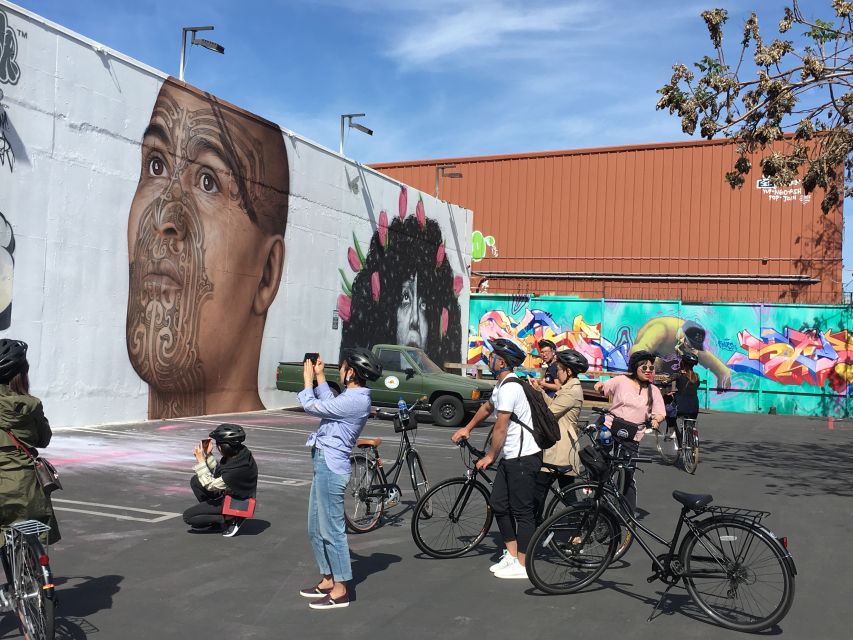
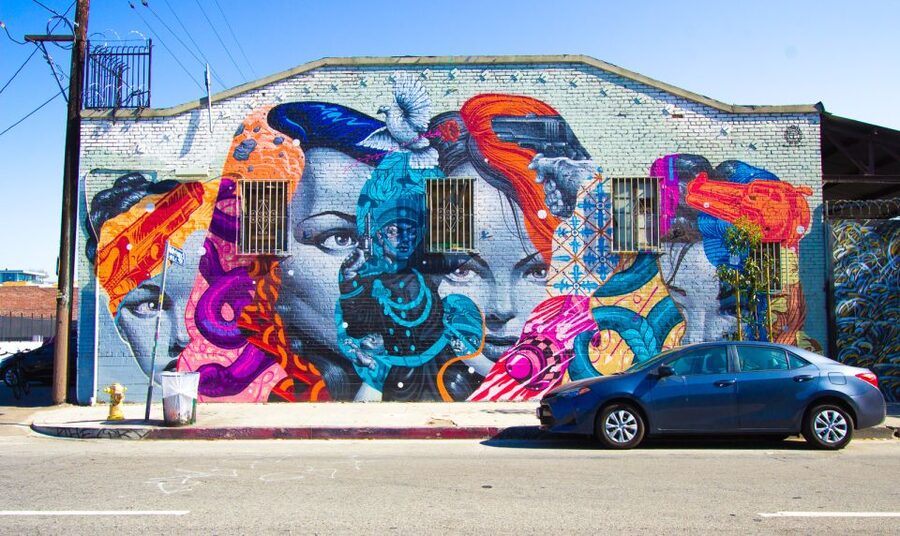
The best part of this Los Angeles bike tour is not a famous landmark. It is the chance to pedal into painted alleys and working industrial streets that most visitors would never find on foot. You move from Grand Central Market through Little Tokyo and into the Arts District, where murals cover warehouse walls and old industrial buildings share space with lofts, breweries, studios, and restaurants.
I like the small group limit of eight, which makes it easier to hear the guide and stop for photos without a crowd. I also like the mix of street art, neighborhood history, and the 15-minute break at Hauser & Wirth. The main drawback is simple: you need to be comfortable riding beside cars, and the sunny route can feel hot in summer.
Key points to know before you book
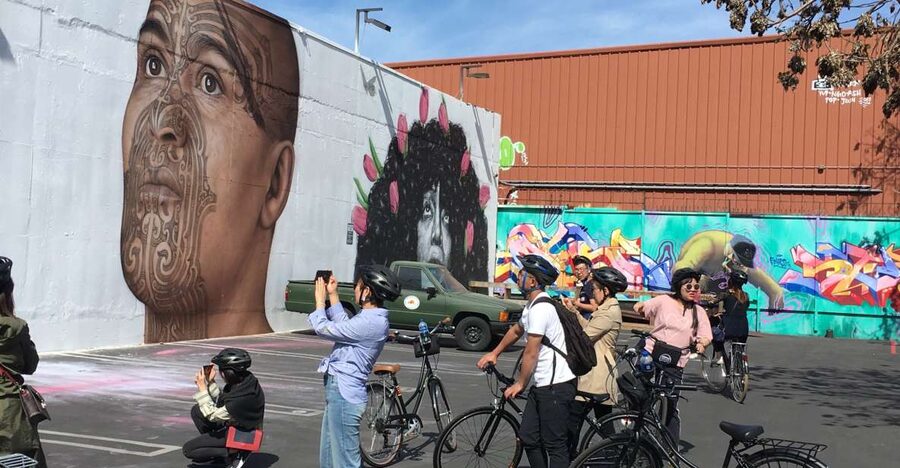
- Six miles of murals and city streets: The mostly flat route runs from Grand Central Market through Little Tokyo, the Arts District, East L.A., and back.
- Jen is a standout guide: Her careful handling of crossings, steady pace, and use of an amplified speaker make the ride easier to follow.
- The art keeps changing: Street art can disappear or be painted over, so the exact sights may vary from one tour to the next.
- Hauser & Wirth adds an indoor pause: You can see gallery art in a converted flour mill and buy a drink or snack nearby.
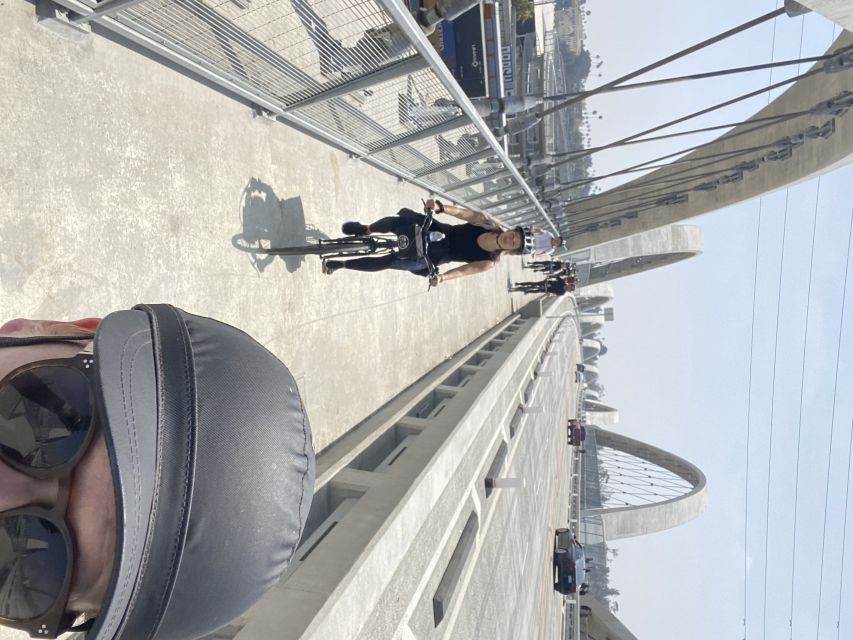
- The Sixth Street Viaduct is a major photo stop: Its dramatic arches give the ride one of its clearest visual landmarks.
- Grand Central Market is useful before or after: The tour begins and ends beside more than 40 food stalls, making lunch or a snack easy to arrange.
Why this bike tour feels different from standard Los Angeles sightseeing
Los Angeles tours often focus on movie studios, celebrity homes, beaches, or broad city views. This one takes a narrower, more local route. Its subject is the changing Arts District and the artists who have used its walls, alleys, and industrial buildings as their canvas.
That gives the ride a clear personality. You are not simply ticking off sights. You are learning how an area near the train station once served the food-storage needs of farms and ranches around Los Angeles, then became an underground artist neighborhood in the early 1980s. Later, galleries, restaurants, breweries, tech firms, entertainment businesses, and new apartments began moving in.
The result is a neighborhood with several eras visible at once. A huge mural may sit beside a warehouse conversion. A former flour mill may now house a museum-quality gallery. First Street can smell of ramen and noodles, while nearby streets carry the harder-edged look of old industrial Los Angeles.
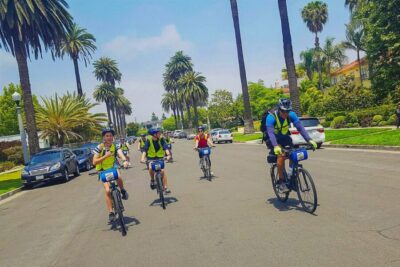
I find that a bicycle is the right tool for this area. You cover more ground than you would on foot, but you still move slowly enough to notice walls, side streets, and small details. The route is about six miles, with stops that break up the riding. One published account put the total distance at roughly 10 kilometers, so you should expect an easy city ride rather than a serious cycling workout.
A few more bike tours around Los Angeles worth a look
- The Ultimate LA Tour: Full Day Sightseeing Tour On Electric Bike
★ 5.0 · 478 reviews - Small-Group Electric Bike Tour of Santa Monica and Venice
★ 5.0 · 458 reviews - Beverly Hills Tour: Movie Star Homes and LA Sightseeing by E-Bike
★ 5.0 · 191 reviews
Starting at Grand Central Market on Hill Street
Meet at 312 South Hill Street, on the Hill Street side of Grand Central Market. Look for the tour sign on the sidewalk and arrive 15 minutes before departure. You do not need to print a voucher because the operator has a guest list.
The tour begins with a 10-minute safety briefing and bike fitting. If you arrive a little late, the group may already be in the first-floor parking garage with the bikes. The tour cannot wait past its scheduled start, so this is one activity where arriving early is sensible.
Grand Central Market is a practical meeting point. You can grab food before the ride, but do not count on eating during the cycling portions. Food and drinks are not included, although you have a chance to buy something during the gallery break. The market also gives you an easy place to eat after returning.
You receive a bike, helmet, and amplified guide system. The speaker matters because the ride includes city streets, traffic noise, and stretches where the guide may be speaking while the group is moving.
Little Tokyo provides the first change of pace
The route heads through Little Tokyo before reaching the Arts District. This gives you a quick look at one of downtown Los Angeles’s most distinctive areas and sets up the return route along First Street.
A 20-minute Little Tokyo portion is scheduled near the end of the ride, when you return through the neighborhood. First Street is known for ramen and noodle restaurants, and the smells can be persuasive after several miles on a bicycle. You may want to save your main meal for after the tour, but this part of the route is useful for choosing where to eat next.
Little Tokyo also helps show how close these downtown districts are to one another. You can move from a food-centered cultural neighborhood to warehouse walls and large murals within a short ride. That contrast is one reason the tour works better than a single-neighborhood walking route.
The Arts District tells a story of change
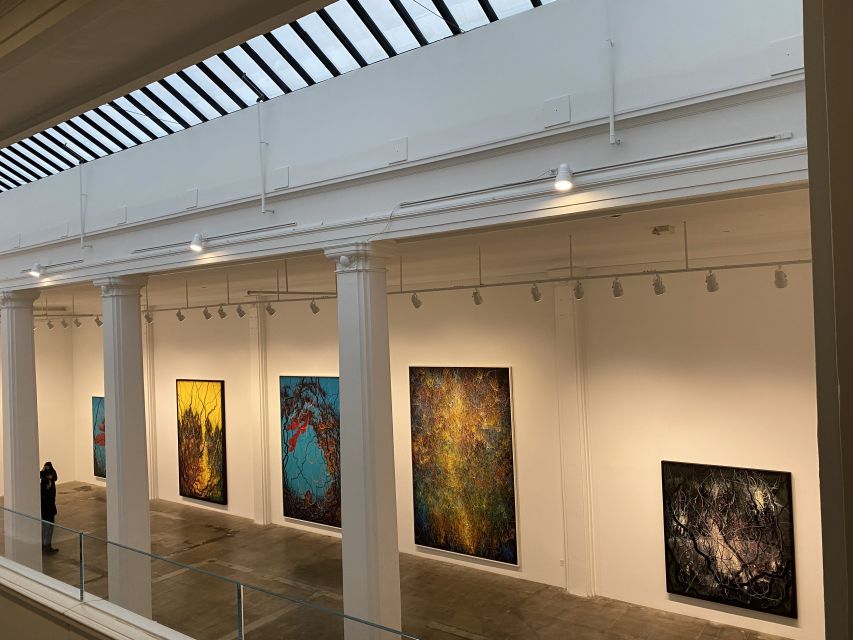
The Arts District is the heart of the experience. Your guide explains how the area grew around the train station and supported cold storage for produce from the farms and ranches that once shaped Los Angeles. In the early 1980s, artists began using the industrial setting in a less formal, underground way.
You hear about street artists and graffiti crews who claimed alley walls, along with artists who later moved into galleries and fine art. That transition is important. It helps you see the murals as part of a social and cultural story, not just as colorful backdrops for photographs.
At the same time, the neighborhood is changing quickly. Celebrity chefs, entertainment venues, technology companies, and new housing are moving into the old industrial district. The guide discusses future development and what may be lost or altered as property values and commercial interest rise.
I like that the tour does not treat change as either entirely good or entirely bad. You get the excitement of new restaurants, galleries, and creative businesses, but you also see how the rougher artist-made character can become harder to protect.
Same city, a different ride:
- Los Angeles: Hollywood Sign Electric Bike Tour
★ 5.0 · 166 reviews - Los Angeles: Santa Monica and Venice eBike Tour
★ 4.9 · 139 reviews - Santa Monica: Bike and eBike Rentals with Map
★ 4.8 · 128 reviews - Los Angeles: LA in a Day Guided Electric Bike Tour
★ 4.7 · 46 reviews
Angel City Brewery and the Arts District Co-op
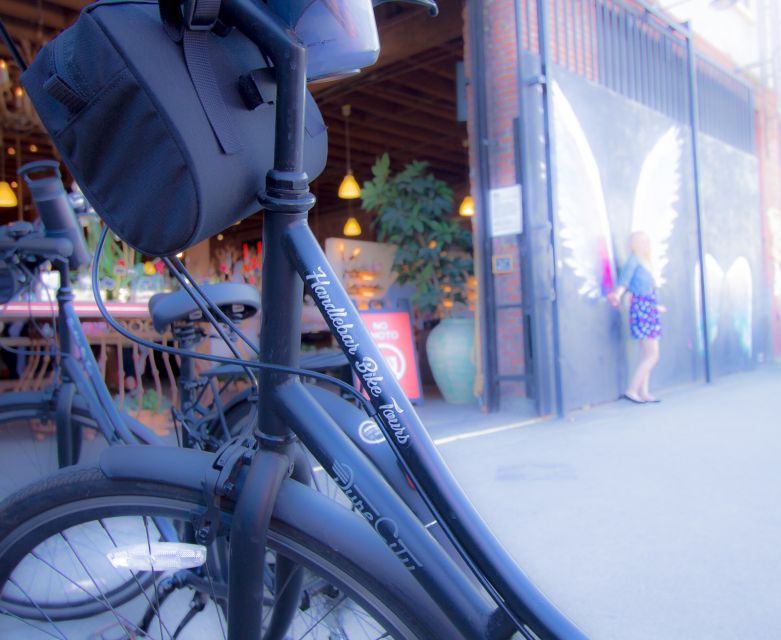
The brief photo stop at Angel City Brewery gives you a quick look at one of the area’s popular creative and social spaces. It is not a long brewery visit, and food or drinks are not part of the tour, so think of this as a visual pause rather than a tasting stop.
The Arts District Co-op follows with a short visit and photo stop. These stops keep the ride moving while giving you time to look around. Because each stop is brief, you will want your phone or camera ready before the group pulls in.
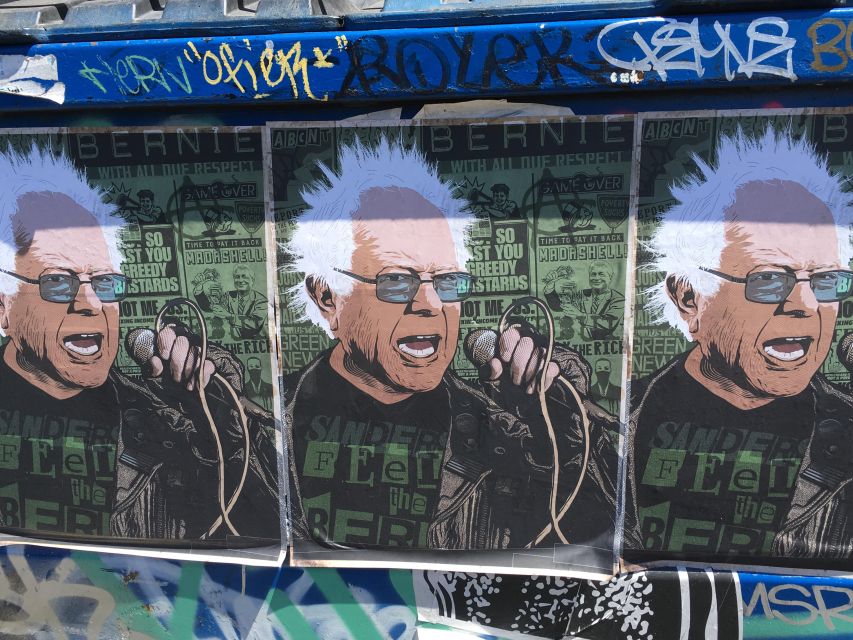
This is a photo-heavy tour. You can take as many pictures as your phone can hold, but keep in mind that murals and alley art can change. Some walls may be repainted, altered, or unavailable on a future date. That changing quality is part of street art, though it means you should not expect every image shown in promotional material to appear exactly as pictured.
The Container Yard is where the alley art comes alive
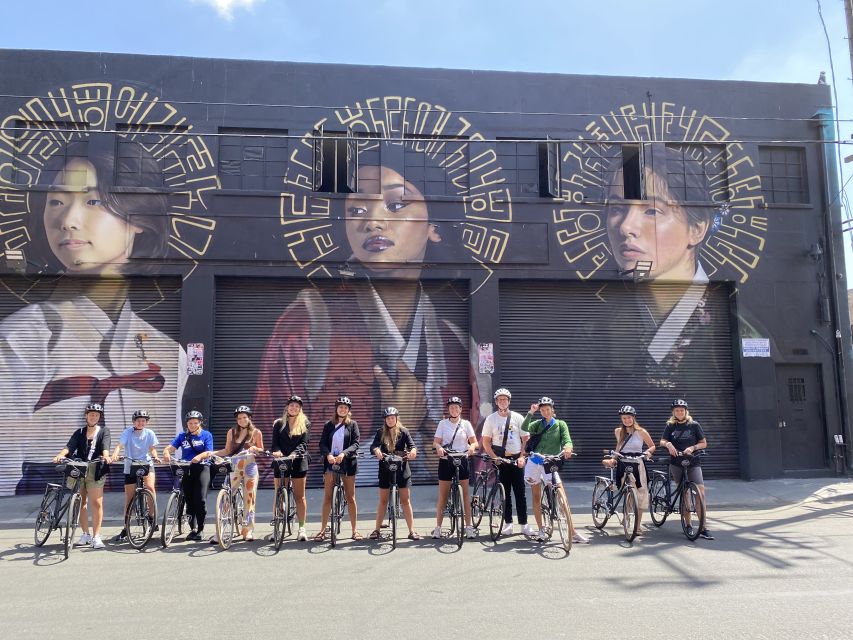
The Container Yard is one of the more distinctive stops. The tour uses lesser-known alleys and passages where large works by local and international mural artists appear on warehouse walls.
This is the point where having a guide makes a real difference. A map can take you into the Arts District, but it will not necessarily show you which alleys are worth a look or explain the crews connected with particular walls. Handlebar Bike Tours says it has been running this Arts District route since 2017 and keeps exploring side passages known to artists and local nightlife crowds.
The short stop is enough for photos and explanation, not a long art lecture. You will get more from it if you are curious about process and place: who controls a wall, how crews use color and scale, and how street artists sometimes move into gallery work.
The exact art selection is not fixed. That is worth knowing before you book. You are paying for access to a route and a guide’s current knowledge, not a guaranteed list of permanent exhibits.
Crossing the Sixth Street Viaduct
The Sixth Street Viaduct gives the ride its strongest piece of modern infrastructure. Its dramatic arches make a natural photo stop and provide a clear change from the enclosed alleys and warehouse walls.
The bridge is also one of the moments when you are most aware that this is an urban cycling tour. You are riding near traffic, not on a fully separated recreational path. The route is described as mostly flat, but flat does not mean traffic-free.
The guide’s handling of crossings is important here. Jen receives especially strong praise for keeping the group together, choosing a careful pace, and helping riders through intersections. Her amplified speaker also lets her explain things without requiring everyone to stop each time.
You should still be an alert cyclist. The tour requires comfort riding next to cars and knowing the rules of the road. If you have not ridden in city traffic before, this is not the place to learn from scratch.
East L.A. adds the less-polished side of the route
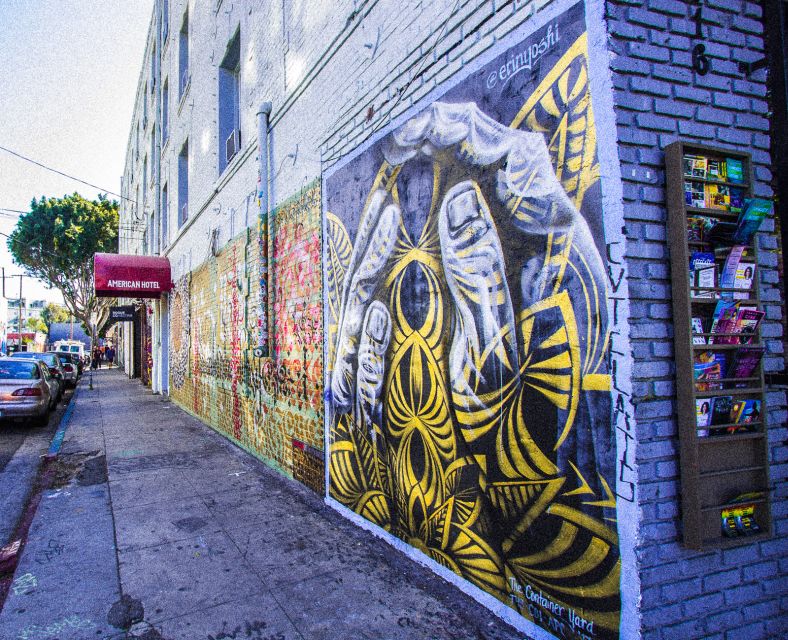
After the bridge, the ride dips into East Los Angeles for more street art. This section is designed to take you away from the better-known Arts District stops and toward walls that social-media visitors are less likely to find.
That makes the route feel more exploratory, though you should keep your expectations practical. This is still a guided bike ride through city streets, not a private art opening or a controlled gallery visit. The reward is seeing how murals appear in ordinary urban spaces rather than only in designated art venues.
The guide also talks about the crews connected with alley walls and the way street art has helped define the area. You may see artists or recognizable local figures during the ride, but that is not promised. The art and neighborhood context are the main attractions.
A useful break at Hauser & Wirth
The 15-minute break at Hauser & Wirth is a smart part of the schedule. After several outdoor stops, you get time off the bike in a converted former flour mill that now houses a gallery.
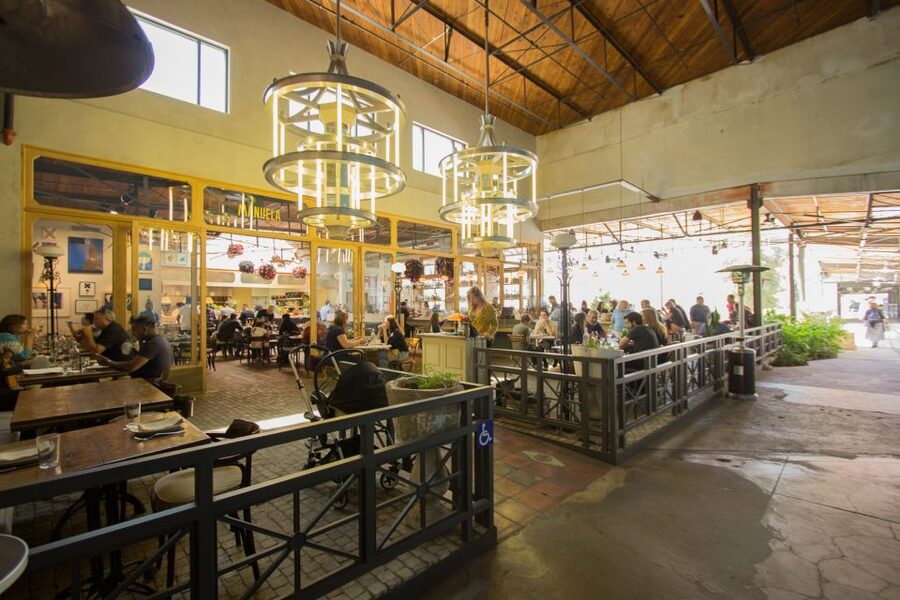
The space presents fine art at a more formal scale than the murals outside. That contrast helps explain the movement of some street artists into gallery settings. You can browse the exhibition, visit Manuela for a drink, or find a nearby café for coffee or ice cream.
This is also your best chance to buy a snack during the tour. Food and drink are not included, so bring water and perhaps plan to purchase something here if you need more than a quick rest.
The break is short. You will not have time for a long gallery visit, leisurely meal, and extended neighborhood wandering all at once. Think of it as a useful pause with a choice of activities.
Riding back through First Street and Little Tokyo
The return route heads through Little Tokyo along First Street. The route brings you back toward Grand Central Market while giving you another chance to notice restaurants and neighborhood details you may have missed at the start.
By this point, the food market becomes part of the tour’s practical appeal. You finish near more than 40 eateries, so you can turn the end of the ride into lunch, dinner, coffee, or a snack. The guide also provides a printed list of local recommendations visited during the tour, which is handy if you want to continue exploring downtown without guessing where to go next.
The full outing lasts 150 minutes, or two and a half hours. That includes the briefing, riding, photo stops, gallery break, and explanations. It is long enough to feel substantial but short enough to fit into a day of downtown sightseeing.
Is $80 a fair price?
At $80 per person, this is not the cheapest way to see downtown Los Angeles. You are paying for the bike, helmet, guide system, small group, route planning, and a local guide who knows the side streets and art locations.
The value is strongest if you would otherwise struggle to find the murals on your own. The six-mile route covers several areas, and the guide adds background about food storage, the early artist community, graffiti crews, gallery careers, and current development. You also receive gallery entry and a printed recommendation list.
The value is weaker if you already know the Arts District well, dislike riding beside traffic, or only want a slow gallery tour. You may also find the cost harder to justify if you plan to spend very little time looking at art and mainly want transportation around downtown.
The small group helps. With no more than eight participants, the ride should feel more personal than a large coach or mass bicycle tour. You can ask questions, hear the commentary, and stop for photos without managing a crowd.
Who should book this ride?
I would recommend it to an active first-time visitor who wants a side of Los Angeles beyond Hollywood and the usual downtown landmarks. It suits people who like street photography, urban design, local history, murals, and neighborhood change.
It is also a good early-trip activity. You get a useful introduction to the Arts District, Little Tokyo, East L.A., and Grand Central Market, then receive suggestions for what to eat or see next. One rider specifically found it helpful to take the tour early in a Los Angeles stay.
You should skip it if you cannot ride a bicycle, use a wheelchair, or feel unsafe beside cars. The route is mostly flat, but the sun can be intense, particularly in summer. Bring sunscreen and water, and wear clothing suitable for a warm outdoor ride.
Jen is the guide name most often associated with the experience, and her careful crossings and comfortable pace are important strengths. Guides can vary, but the tour is conducted in English and uses an amplified system so commentary is easier to follow.
Final call: book it for art, not just exercise
Book this tour if you want to see the Arts District through its walls, alleys, artists, and changing industrial streets. The combination of the Container Yard, Sixth Street Viaduct, Hauser & Wirth, Little Tokyo, and East L.A. gives you more range than a simple mural walk.
Skip it if you want a traffic-free ride, a long gallery visit, or a guaranteed set of permanent artworks. For the right rider, $80 buys a well-planned introduction to a part of Los Angeles that is easy to miss and difficult to understand from a car window.
Free cancellation is available up to 24 hours before departure, and you can reserve now while paying later. That flexibility helps if your downtown schedule is still taking shape.
FAQ
Where does the Arts District bike tour begin?
It begins at 312 South Hill Street, on the Hill Street side of Grand Central Market. Look for the Tour Meets Here sign on the sidewalk.
How early should I arrive?
Arrive 15 minutes before the scheduled start. If you are late, the group may already be in the first-floor parking garage fitting bikes, and the tour cannot wait past its start time.
How long does the tour last?
The tour lasts 150 minutes, or two and a half hours.
How far do you ride?
The route covers about six miles and is mostly flat. One recorded ride described the distance as roughly 10 kilometers.
What is included in the price?
The price includes the bicycle, helmet, amplified guide system, and entrance to the gallery at Hauser & Wirth.
Is food included?
No. Food and drinks are not included, but you can buy a snack or drink during the gallery break. Grand Central Market has more than 40 eateries when you return.
Is the tour suitable for beginners?
You should be comfortable riding a bicycle next to cars and know the traffic rules of the road. The route is mostly flat, but this is not suitable for someone who cannot ride or has no comfort with urban traffic.
Is the tour available in languages other than English?
The tour is conducted in English.
What happens if the weather is very hot?
The route can be very sunny and may feel excessively hot during summer. Bring water and sunscreen, and consider the heat before booking.
Just added around Los Angeles
- Los Angeles: Santa Monica and Venice eBike Tour★ 4.9 · 139 reviews
- Santa Monica: Full Day Bike Rental★ 4.7 · 42 reviews
- Santa Monica: Bike and eBike Rentals with Map★ 4.8 · 128 reviews
- Los Angeles: Beach E-Bike Ride Redondo Beach to Santa Monica★ 5.0 · 13 reviews
- Los Angeles: Hollywood Sign Electric Bike Tour★ 4.6 · 37 reviews
- Los Angeles: LA in a Day Guided Electric Bike Tour★ 4.7 · 46 reviews
- Los Angeles: Scott E-Bike Tours to the Hollywood Sign & More★ 4.9 · 39 reviews
- LA: Santa Monica & Venice Beach Bike Adventure★ 4.9 · 23 reviews
Los Angeles Bike Tours, compared.
The Ultimate LA Tour: Full Day Sightseeing Tour On Electric Bike
Read our review →
Small-Group Electric Bike Tour of Santa Monica and Venice
Read our review →
Beverly Hills Tour: Movie Star Homes and LA Sightseeing by E-Bike
Read our review →
Browse the lists this tour appears in