
REVIEW · GERMANY
Frankfurt: Guided Bike Tour
Frankfurt’s best surprise is how quickly its riverfront, medieval center, and modern skyline connect by bicycle. This 12-kilometer ride begins in Sachsenhausen, crosses the Main, threads through Old Town, follows the green Wallanlagen, and finishes back among the city’s famous cider taverns.
I like the mix of big sights and local detail, especially the look at Sachsenhausen’s apple-cider tradition and the stop at Oosten bar near the European Central Bank. I also like the relaxed pace, frequent photo stops, and personal feel of a small-group ride led by guides such as Marvin, Jürgen, Martin, or Annika.
The main consideration is that you need to be comfortable riding in a city. You may also miss some of the guide’s comments while moving in a single line, so listen closely at the stops and ask questions when the group pauses.
Key points at a glance
- Sachsenhausen sets the local tone: Start among cider taverns, cafés, old architecture, and the former apple orchards of southern Frankfurt.
- A strong first look at Frankfurt: Cover the Römer, Frankfurt Cathedral, St. Paul’s Church, Goethe House, Old Opera, Stock Exchange, and skyline in one ride.
- Mostly calm cycling: Use river paths, green Wallanlagen routes, bridges, and traffic-free sections rather than spending the whole tour beside cars.
- About 12 kilometers in 150 minutes: Expect steady but manageable movement, with regular stops for stories and photographs.
- Good guide-led orientation: Guides including Marvin, Michael, Simon, Jürgen, Martin, and Annika have been praised for clear explanations, local recommendations, and friendly conversation.
- Low extra cost: The tour is $57 per person, with bicycle rental available on site for €5, or you can bring your own bike.
Why a bike is a smart way to see Frankfurt
Frankfurt is compact enough to explore on foot, but its sights are spread across several distinct areas. The Old Town, Museum Embankment, financial district, riverfront, and Sachsenhausen all fit together better on two wheels.
A walking tour would give you more time at individual monuments. This ride gives you a broader first picture. You cover the city’s historic center, cultural institutions, green belt, high-rise district, and eastern riverfront without spending much of your visit retracing the same streets.
I especially like the contrast. One moment you are riding through narrow lanes in Sachsenhausen. Soon after, you are looking across the Main toward museums and towers. Later, the medieval Römer and restored half-timbered houses give way to the sharp lines of the European Central Bank.
The pace is described as relaxed, not athletic. You should still expect to pedal for much of the 150 minutes, but the route includes stops for explanations and photographs. The distance is approximately 12 kilometers, so comfortable shoes, sunglasses, sun protection, and rain gear are sensible additions.
More Guided Tours in Germany:
- Berlin: Sights and Highlights Bike Tour with a Local Guide
★ 4.8 · 2,698 reviews - Munich 3-Hour Guided Bike Tour
★ 4.5 · 1,731 reviews - Cologne: 3-Hour Guided Bike Tour
★ 4.8 · 878 reviews
Starting in Sachsenhausen among cider taverns
Meet at Fahrradverleih bellorange, at Martin-May-Straße 7 in Sachsenhausen. Look for the red and white barrier at the entrance and a guide holding a sign. The meeting point is in the heart of the district, which gives the tour a more local opening than starting beside the main railway station or a major monument.
Sachsenhausen is known for its Gründerzeit buildings, cafés, traditional restaurants, bars, and cider taverns. Its identity is tied to apple orchards and Apfelwein, the lightly tart cider that is one of Frankfurt’s most recognizable local drinks.
Your guide introduces this background before the ride gets under way. That context matters because Sachsenhausen is not just a convenient starting point. It is a neighborhood with its own food and drink traditions, and the tour ends here too, close to the cider taverns.
You can ask your guide for a recommendation for lunch or dinner. Marvin has been especially helpful with restaurant suggestions, and the guides generally offer practical ideas for places you might not find on your own. Save those recommendations in your phone before the tour ends.
Crossing to the Museum Embankment
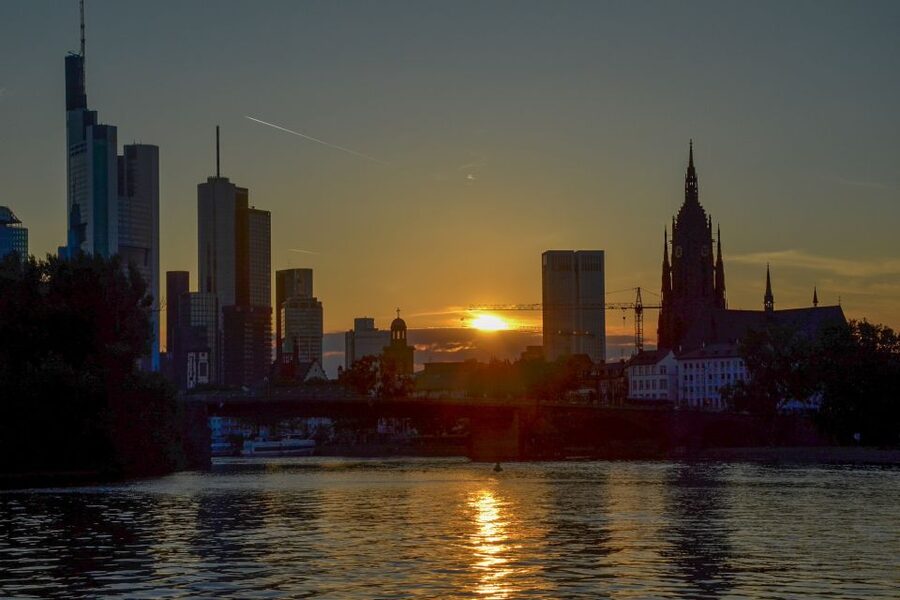
The route passes through narrow lanes and the painters’ quarter before reaching the Museum Embankment on the south side of the Main. This is one of Frankfurt’s most pleasant stretches for a bicycle ride, with open river views and a long line of cultural attractions.
The Städel Museum, Liebighaus, and Museum of Applied Art are among the major institutions along this bank. You will not have time to tour the museums during the bike ride, but the guide can help you understand where they are and which might suit your interests later.
This section is useful for orientation. If you are staying in Frankfurt for a few days, you will know exactly where to return for an art museum visit. It also gives you a break from the tighter streets of Sachsenhausen.
The route crosses the Holbeinsteg pedestrian bridge. Bridges are often the best places to understand a city’s layout, and here you get a clear sense of how the Main divides Frankfurt while still tying its districts together.
Old Town, the Römer, and the roots of German democracy
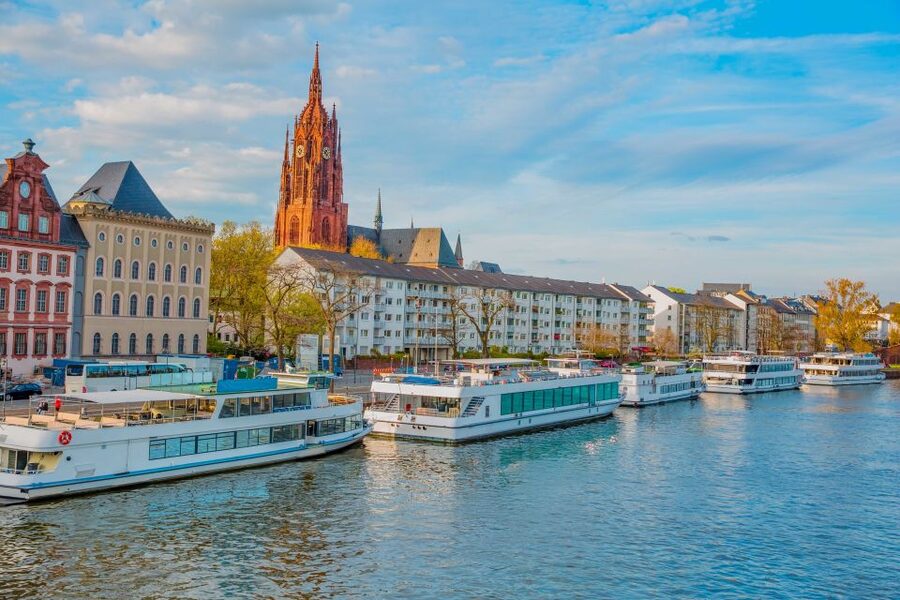
On the north side of the river, the ride enters Frankfurt’s historic center. The Römer, the city’s famous town hall, is the main visual anchor. Its stepped roofline and several centuries of civic use make it one of the city’s essential stops.
From there, you follow part of the old royal route toward Frankfurt Cathedral. The route also reaches a square lined with restored half-timbered houses, giving you a sense of the prewar Old Town and the careful rebuilding that shaped this part of central Frankfurt.
The tour then moves to St. Paul’s Church. This is an important stop for anyone interested in German politics. The church is closely linked with the Frankfurt Parliament of 1848, an early attempt to create a unified German constitution and a key moment in the country’s democratic story.
Nearby Goethe House recalls the early life of Johann Wolfgang von Goethe. You will see the setting connected with his youth, though the bike tour does not replace a full interior visit. I like this pairing of political and literary history. It keeps the Old Town from becoming just a parade of attractive façades.
Cycling is handy here because you can move between these places quickly while still stopping for the guide’s explanation. The drawback is that central Frankfurt can be busy, and you need to stay alert around pedestrians and other cyclists.
A few more bike tours around Germany worth a look
- Hamburg 3-Hour Bike Tour
★ 4.8 · 1,583 reviews - Classic Mike’s Bike Tour daily @ 11.30 incl Beer Garden & Surfers
★ 5.0 · 1,246 reviews - Berlin Highlights 3-Hour Bike Tour
★ 5.0 · 948 reviews - Berlin City Bike Tour with Beer Garden Stop
★ 5.0 · 917 reviews
Green paths through the Wallanlagen
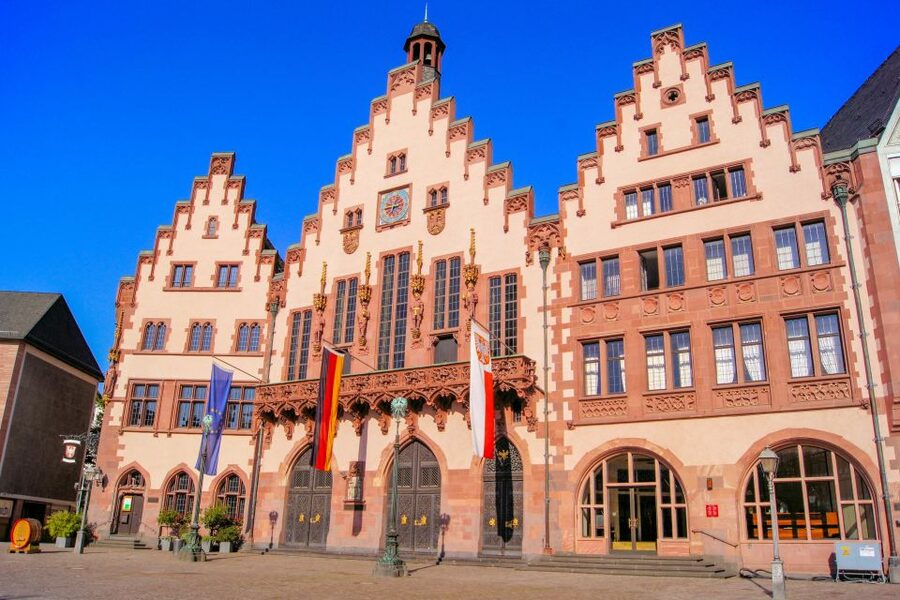
The Wallanlagen is a green belt built on the former medieval fortifications. Instead of seeing the old defensive walls as a preserved monument, you experience their footprint as a chain of gardens and paths running through the city.
This is one of the most enjoyable parts of the ride. The traffic-free sections give you a calmer stretch after the Old Town, and the greenery offers a welcome change from stone façades and office towers.
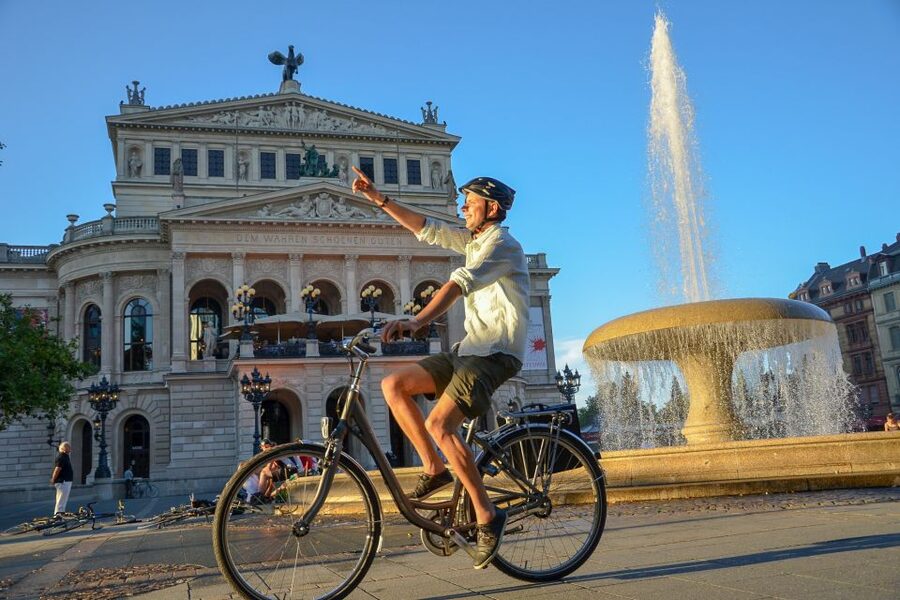
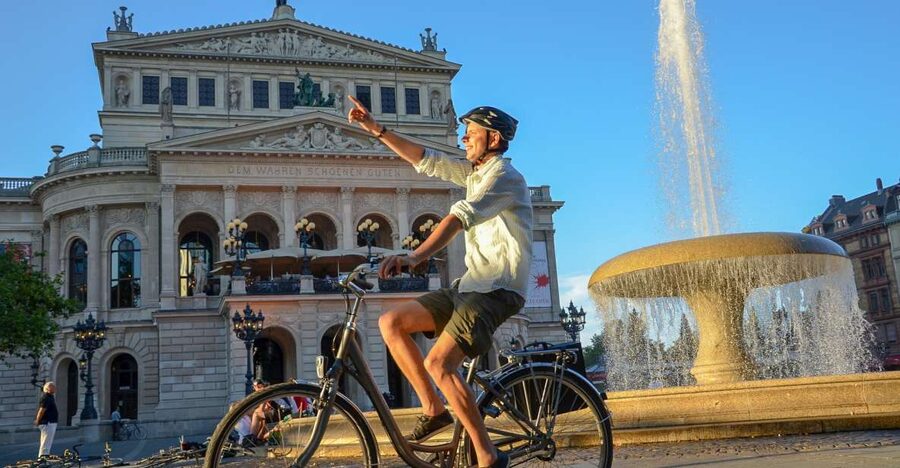
The route passes the Old Opera House and the Neue Oper. These stops help explain Frankfurt’s place as a major cultural and business center. You also get repeated views toward the high-rise district, where the city’s modern identity is easiest to read.
The skyline is a useful reminder that Frankfurt is not a typical medieval German city. Its historic center is relatively compact, while the financial district rises nearby with a distinctly modern profile. A bicycle lets you see both sides within minutes.
The Stock Exchange and Frankfurt’s working city
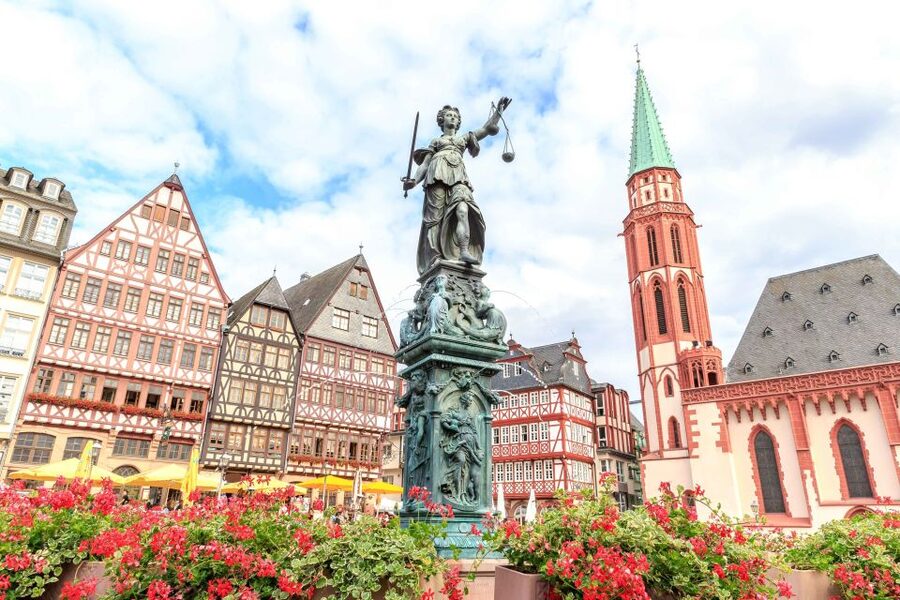
A short detour brings you to the Frankfurt Stock Exchange and its well-known bull and bear statues. The statues have become a popular symbol of financial markets, with the bull suggesting rising prices and the bear pointing to falling ones.
The stop is brief, around 10 minutes, but it adds context to the towers you have been seeing. Frankfurt is not only a destination for old squares and museums. It is also one of Germany’s major financial centers.
This is a good place to ask your guide how the city’s traditional center relates to its banking district. Guides such as Michael have been praised for explaining both historical landmarks and present-day Frankfurt, which is exactly the balance this route needs.
Following the Main to the European Central Bank
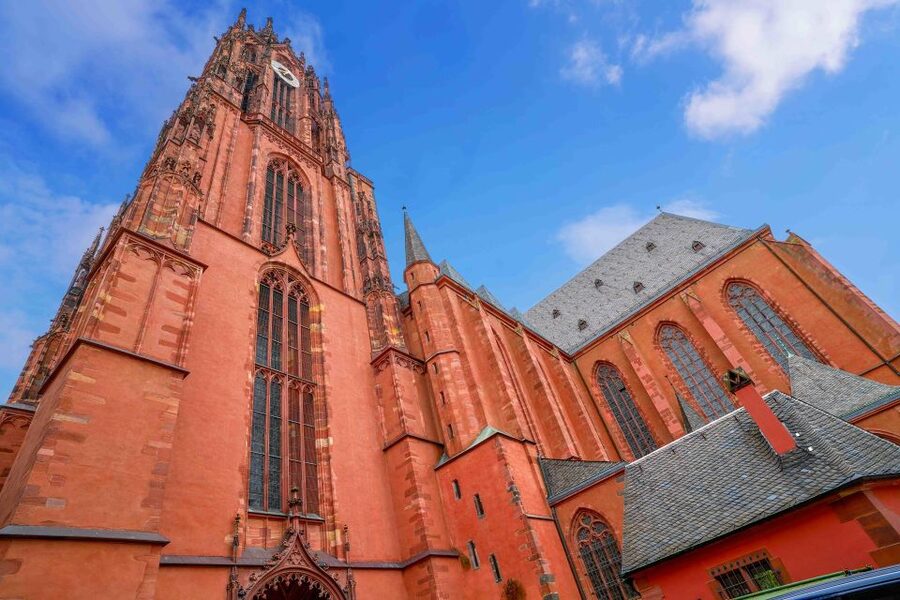
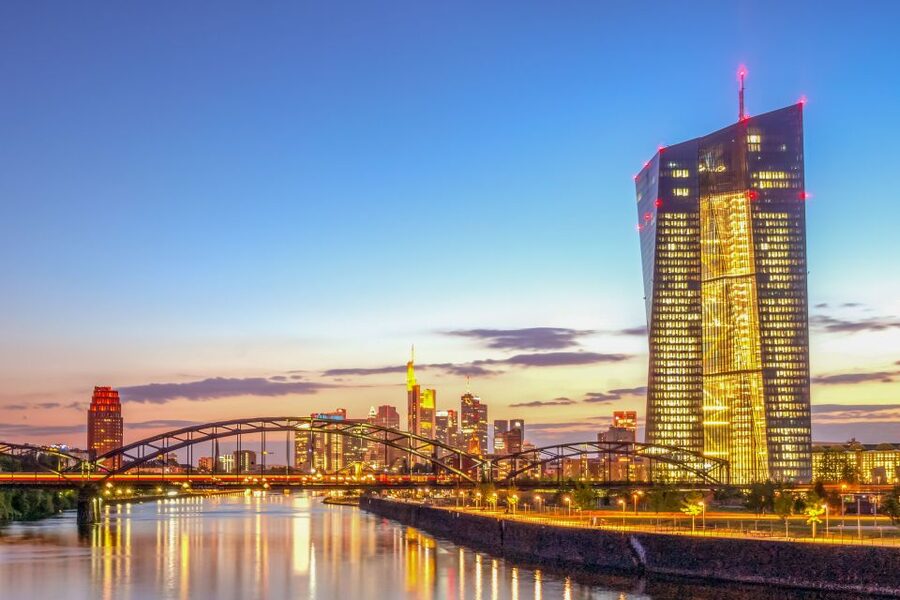
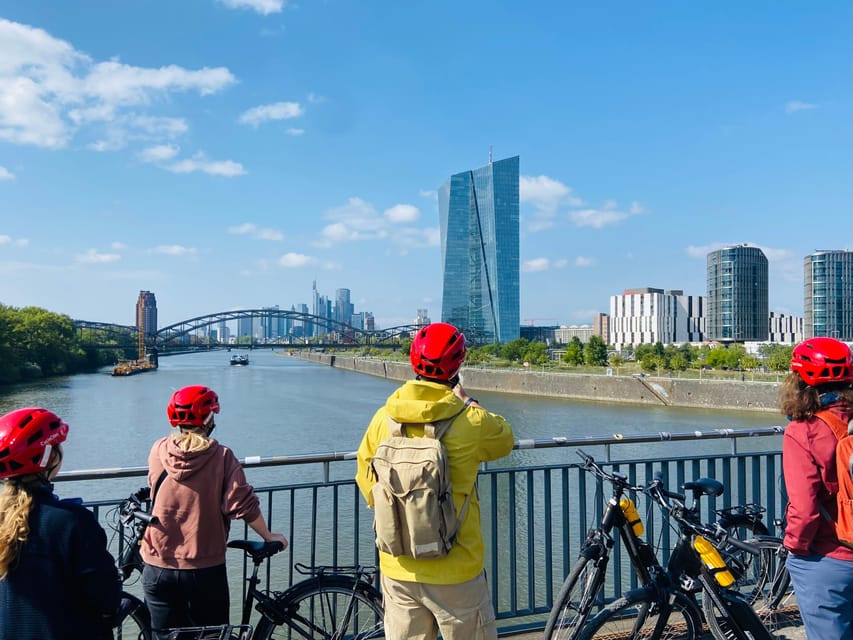
The ride turns east along the Main toward the European Central Bank Tower. The tower rises above the former wholesale market hall, creating one of the city’s strongest examples of old industrial structure beside new European finance.
The building itself is not a museum stop, and you should not expect a long interior visit. Its value here is visual and urban. You see how Frankfurt continues to reuse older spaces while adding major new architecture.
At the foot of the tower is Oosten, a popular riverside bar with a broad terrace and views toward the city. It is a useful pause point and a possible place to return later for a drink. The terrace also gives you a different angle on the skyline, away from the crowded center.
The route then crosses the East Harbor Bridge. This provides another strong river view before the group heads back toward Sachsenhausen. The eastern section makes the ride feel like a real city tour rather than a short circuit of the most photographed buildings.
What the guides add to the ride
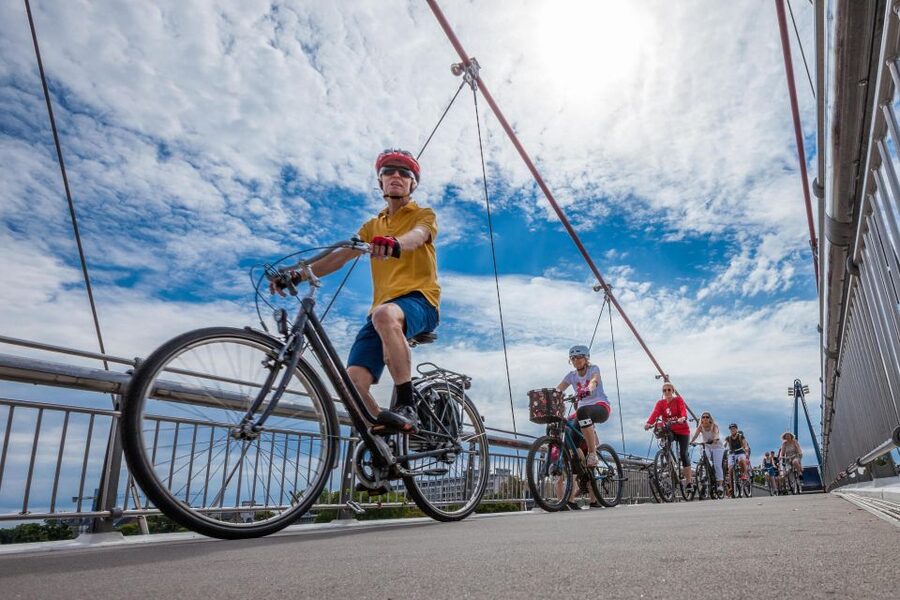
The guide makes a large difference here because the route covers so many subjects. You are not simply following a map from monument to monument. The explanation links Sachsenhausen’s cider culture, Frankfurt’s medieval center, its democratic past, its literary connections, and its financial role.
Marvin has been praised for his architectural background, which adds an extra layer to the inner-city buildings and skyline. Jürgen has been described as funny and informative, while Martin, Michael, Simon, and Annika have also led tours noted for clear explanations and friendly service.
The tour is offered in English or German. English-language ability has been specifically appreciated, including by families and visitors arriving from overseas. You can expect the guide to answer questions, and some guides may allow extra time when the group is engaged.
There is one practical listening issue. When everyone rides in a line, the person near the front may hear more of the guide’s comments than those farther back. Treat the stops as the main teaching moments, stay near the guide when possible, and ask for a repeat if traffic or distance blocks out a sentence.
A short safety briefing is included, but one past comment suggests that a fuller reminder about hand signals, streetcar rails, and riding in unfamiliar traffic would be useful for families. If you are bringing children or have not cycled in a city recently, ask for those pointers before setting off.
Bikes, cost, and who gets good value
The listed price is $57 per person. Bicycle rental is not included, but you can rent one on site for €5 for three hours, or bring your own bike. That puts the total cost into a reasonable range for a guided city overview, particularly because the ride covers several neighborhoods and includes a guide rather than only equipment hire.
The bikes have been described as comfortable and, in one case, brand new and custom-made for the operator. Equipment can vary by day, but the available feedback points to well-maintained bicycles and smooth arrangements.
The value is strongest for a first visit. In two and a half hours, you get your bearings, learn where the main sights sit, and collect ideas for the rest of your stay. It can also work well after a long flight. One visitor used the ride to stay active and remain awake until bedtime, then used the guide’s food recommendations for later meals.
Families with older children can also find this a better fit than a long walking tour. A 14-year-old has enjoyed the experience, and the route gives younger riders movement and variety. Children still need to ride confidently and follow instructions.
The minimum group size is four participants. That is worth checking when you book, especially in a quiet travel period. Luggage storage is available at the meeting point, which helps if you are going between hotels or arriving before check-in.
Getting to Martin-May-Straße 7
Public transport is straightforward. Take U1, U2, or U3 to Südbahnhof, or S3, S4, S5, or S6 to Lokalbahnhof. Trams 14, 15, 16, and 17 stop at Lokalbahnhof or Textorstraße.
If you drive, use the A3 and exit at Frankfurt Süd. Parking is listed on Hedderichstraße, at 60594 Frankfurt am Main. Public transport is likely simpler for most city visitors, since the meeting point is in central Sachsenhausen and Frankfurt parking can add time and cost.
Arrive ready to ride. Comfortable clothing, sunglasses, a hat, sunscreen, and rain gear cover the basic conditions listed for the activity. Intoxication is not allowed, which is especially important in a district known for cider taverns.
Free cancellation is available up to 24 hours before the start, and you can reserve now and pay later. Check the available start times because the 150-minute tour does not operate at every hour.
Should you book the Frankfurt guided bike tour?
I would book this if you want a clear first look at Frankfurt rather than a slow visit to one museum or monument. The route gives you Old Town, the Main, Sachsenhausen, the Wallanlagen, the Stock Exchange, the opera district, and the European Central Bank in one well-planned circuit.
It suits active visitors, families with confident teenage riders, and anyone who likes local food tips along with history. It is also a smart choice at the start of a stay, since you can return later to the Städel, Goethe House, Old Town, or a cider tavern with a better sense of the city.
I would choose something else if you cannot ride a bike, want a completely private tour, or need to hear every explanation while moving. For most visitors who can pedal comfortably, the combination of historic sights, modern Frankfurt, river views, and Sachsenhausen character makes the $57 price, plus the small rental fee, a fair deal.
FAQ
How long is the Frankfurt guided bike tour?
The tour lasts 150 minutes, or two and a half hours.
How far do you cycle?
The route covers approximately 12 kilometers.
Is bicycle rental included?
No. You can rent a bicycle on site for €5 for three hours, or bring your own bicycle.
Where does the tour meet?
Meet at Fahrradverleih bellorange, Martin-May-Straße 7, 60594 Frankfurt Sachsenhausen. Look for the red and white barrier at the entrance and a guide holding a sign.
What languages are available?
The live tour guide speaks English or German.
Can I cancel the booking?
You can cancel up to 24 hours before the tour for a full refund. Reserve now and pay later is also available.
Just added around Germany
- Bicycle Tour from Heidelberg to quaint Ladenburg.★ 4.5 · 14 reviews
- 2 1/2h Guided Bicycle Tour Discover Heidelberg★ 5.0 · 61 reviews
- Guided bike tour Hamburg with neat city bikes, cruisers, mountain bikes★ 5.0 · 44 reviews
- Neuschwanstein ticket+ City Bike from Fuessen★ 4.5 · 21 reviews
- Dresden Highlights – Big city tour with bike★ 4.5 · 31 reviews
- Bicycle tour of Dresden★ 4.5 · 38 reviews
- Private-Group Bike Tour of Cologne with Guide★ 5.0 · 20 reviews
- 3-Hour Cologne Street Art Bike Tour in Small Group with Guide★ 4.5 · 20 reviews
Germany Bike Tours, compared.
Sights and Highlights Bike Tour with a Local Guide
Read our review →
Classic Mike’s Bike Tour daily @ 11.30 incl Beer Garden & Surfers
Read our review →

Browse the lists this tour appears in